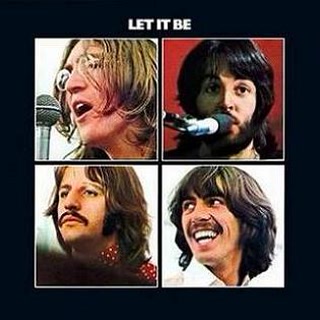
The Beatles · 1970 · Studio album
Let It Be tuning.
E Standard, about 6 cents sharp (A ≈ 442), measured on the CD. 5 of 12 songs are tuned differently.
Album tuning
E Standard +6 ¢
About 6 cents sharp (A ≈ 442), measured on the CD.
MeasuredFrom tabs
Measured by TuneLit
6 ¢ sharp
| Source | Offset | Equivalent A | Songs | Spread | Confidence |
|---|---|---|---|---|---|
| CD, Parlophone CDP 7 46447 2 (1987, stereo) | +6.2 ¢ | A 441.6 | 12 | +2.3 to +19.9 ¢ | High |
Before we measured, sources said: E Standard, with no pitch given (community).
E Standard, about 6 ¢ sharp (A ≈ 441.6) on the 1987 CD, Phil Spector's production. The songs played live with Billy Preston in January 1969 run sharp: Get Back about 18 ¢, Dig a Pony 15 ¢, One After 909 (a weaker reading) about 23 ¢. Two of Us and Maggie Mae sit 7 to 9 ¢ flat. Across the Universe, recorded in 1968 and slowed down for this album, is tabbed in E♭ Standard and sits about 25 ¢ above E♭.
12 songs · 5 tuned differently
Every song, ready to tune
Tune opens the tuner in that song's tuning, pitch included. Play along opens the song player set to that tuning, so the track plays in yours. What the labels mean
-
1. Two of Us
Different pitch
E Standard −7 ¢Measured
Notes
Two acoustic guitars in standard tuning, recorded live in the studio. TuneLit measured about 7 ¢ flat (A ≈ 438.2), 13 ¢ below the album.
The songs are tabbed in E Standard, except Across the Universe (E♭ Standard); For You Blue uses a capo (Songsterr).
-
2. Dig a Pony
Different pitch
E Standard +15 ¢Measured
Notes
TuneLit measured about 15 ¢ sharp (A ≈ 443.9), 9 ¢ above the album.
The songs are tabbed in E Standard, except Across the Universe (E♭ Standard); For You Blue uses a capo (Songsterr).
-
Notes
How to get there from the album's E Standard: Every string down a half step.
E♭ Standard +25 ¢: the record sits about a quarter of a half step above D♭, the same notes as E Standard at A 421. TuneLit's audio check could not decide the semitone; the tabs and the documented slowdown both say D♭.
Recorded in D in February 1968 and slowed down for this album, which lowered it to about D♭. The main tab tunes a half step down (E♭ Standard) and plays D shapes; another uses a capo at the 1st fret with C shapes.
-
4. I Me Mine
E Standard +6 ¢Measured
Notes
Recorded in January 1970 by three of the Beatles. TuneLit measured it at concert pitch, close to the album.
-
5. Dig It
E Standard +6 ¢Measured
-
6. Let It Be
E Standard +6 ¢Measured
Notes
A piano song; the guitar parts are in standard tuning. TuneLit measured about 6 ¢ sharp (A ≈ 441.6), with the album.
-
7. Maggie Mae
Different pitch
E Standard −9 ¢Measured
Notes
A Liverpool folk song, played on acoustics. TuneLit measured about 9 ¢ flat (A ≈ 437.7), 15 ¢ below the album.
The songs are tabbed in E Standard, except Across the Universe (E♭ Standard); For You Blue uses a capo (Songsterr).
-
8. I've Got a Feeling
E Standard +6 ¢Measured
Notes
The reading is weak and points about 33 ¢ sharp; the button uses the album value. If you sound flat against the record, raise the reference.
-
9. One After 909
E Standard +6 ¢Measured
Notes
TuneLit measured about 23 ¢ sharp (A ≈ 446), but the reading falls just short of the confidence needed for a value of its own; the vinyl copies read it 25 to 28 ¢ sharp too, so raise the reference if you sound flat.
On its own, this song measures sharper: CD +23.3 ¢ (medium confidence). Tune uses the album's +6 ¢.
-
10. The Long and Winding Road
E Standard +6 ¢Measured
Notes
McCartney's piano ballad with Spector's orchestra and choir; one tab puts a guitar at the 1st fret. TuneLit measured it at concert pitch, close to the album.
-
11. For You Blue
E Standard +6 ¢Measured
Notes
Capo 5 for Harrison's acoustic; Lennon's lap steel is tabbed in an open D7 tuning (D A D F♯ C D). TuneLit measured about 4 ¢ sharp (A ≈ 440.9), with the album.
Harrison's acoustic is tabbed with a capo at the 5th fret (A shapes sounding in D); Lennon's lap steel is tabbed in an open D7 tuning, D A D F♯ C D.
-
12. Get Back
Different pitch
E Standard +18 ¢Measured
Notes
Lennon plays the lead guitar. TuneLit measured about 18 ¢ sharp (A ≈ 444.6), 12 ¢ above the album.
The songs are tabbed in E Standard, except Across the Universe (E♭ Standard); For You Blue uses a capo (Songsterr).
What the labels mean
- Measured
- TuneLit measured the pitch on an original CD or LP. The tuning name still comes from the sources.
- Official
- The band, a member, their producer or their guitar tech said it.
- Widely reported
- Trusted outlets, guides and tabs agree, but the band did not say it directly.
- From tabs
- From community tabs, or from players who tune along with the record.
- Disputed
- Sources disagree. The likeliest setting is shown; the notes name the other one.
Each song shows one label, the strongest it has, in this order. How we measure recordings →
Questions
What tuning is Let It Be in?
The Beatles recorded Let It Be (1970) in E Standard, about 6 cents sharp (A ≈ 442), measured by TuneLit on the CD. 5 songs use other tunings or pitches, listed song by song on this page.
Why does Let It Be sound out of tune with my guitar?
Dig a Pony sits about 15 cents sharp (A ≈ 444), so a guitar tuned to A 440 clashes with it. The Tune buttons on this page set the tuner's reference to match the record, song by song, so you only tune the strings.