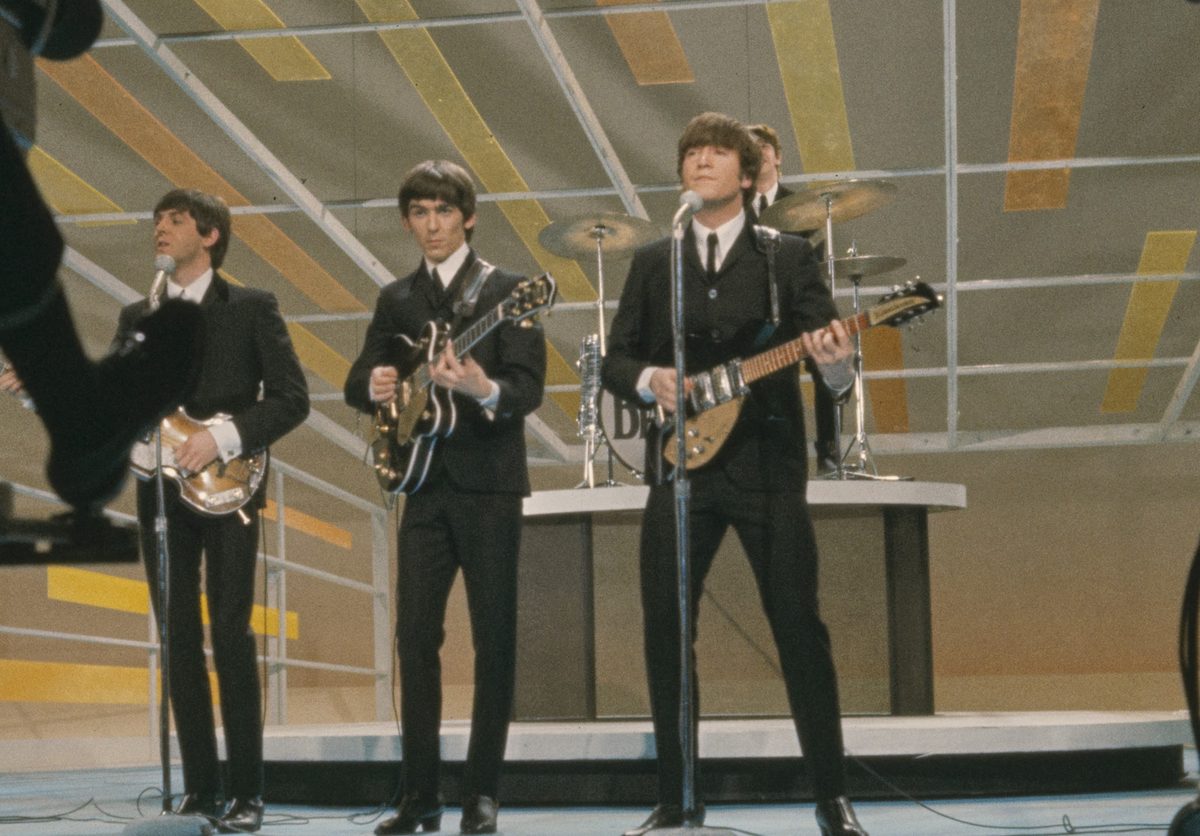
Paul McCartney, George Harrison and John Lennon, with Ringo Starr behind them, playing on The Ed Sullivan Show in New York, February 1964.
In short
How The Beatles tunes
The Beatles played almost everything in standard tuning, with a capo when a song wanted a brighter key: Norwegian Wood at the 2nd fret, Michelle at the 5th, Here Comes the Sun and If I Needed Someone at the 7th. Yesterday is the famous exception, a whole step down, and Dear Prudence drops String 6 to D.
Read more
The records are another matter. TuneLit measured all thirteen UK albums from the 1987 CDs: Please Please Me sits about 28 cents flat, Help! 19 flat, Rubber Soul and Sgt. Pepper 12 to 13 flat, while A Hard Day's Night, Beatles for Sale, Revolver, Abbey Road and Let It Be sit near concert pitch. Inside each album the songs wander, because George Martin's engineers changed tape speeds all the time: Here Comes the Sun runs a third of a semitone sharp, Across the Universe, slowed down by Phil Spector for Let It Be, sits three quarters of a semitone below D, Lovely Rita sits between E♭ and E, Ticket to Ride and Another Girl almost a quarter tone flat. Every Tune button carries the song's own measured offset.
The Beatles almost never left standard tuning. John Lennon, Paul McCartney and George Harrison wrote on ordinary six-string guitars in E A D G B E, reached for a capo when a song needed a brighter key, and only a handful of songs ask for anything else: Yesterday a whole step down, Dear Prudence with the low string dropped to D. So why does a Beatles record so often sound slightly out of tune against a guitar tuned to A 440? Because the records themselves rarely sit at A 440. The band tuned to each other or to the studio piano, George Martin and the EMI engineers changed tape speeds as a matter of routine, and some of the most famous songs were sped up or slowed down by a quarter tone or more after they were played.
This page sets out how to tune for every song on the thirteen UK albums, from Please Please Me (1963) to Let It Be (1970), with Magical Mystery Tour in its 1967 album form. For each album you get the tuning the tabs and sources give, the pitch TuneLit measured on the CDs, the songs that break the pattern, and how to set it all up. The album pages list every song with a Tune button that opens the tuner in exactly that tuning, measured offset included.
Popular songs
How to tune for The Beatles's best-known songs
Each song has its own page: the exact tuning, the record's pitch, how to get there string by string, and how to move the record into your own tuning.
TuneLit measured every song from the owner's set of the first CD issues of the UK albums, released by Parlophone in 1987:
Mono: Please Please Me, With the Beatles, A Hard Day's Night and Beatles for Sale came out on CD in mono only, as the Beatles and George Martin made them in 1963 and 1964.
Stereo, remixed in 1987: Help! and Rubber Soul were remixed for the CD by George Martin.
Stereo, original mixes: Revolver, Sgt. Pepper's Lonely Hearts Club Band, Magical Mystery Tour, The Beatles (the White Album), Yellow Submarine, Abbey Road and Let It Be.
The US albums, the 2009 remasters and other sets in the library were not measured. As a cross-check, TuneLit read two vinyl transfers (the 1978 UK box of stereo LPs and the Mobile Fidelity box). They agree with the CDs within a few cents on most albums, strange songs included, so the odd pitches are on the master tapes. Three albums differ: the vinyl copies of Revolver and A Hard Day's Night read about 8 to 10 cents lower than the CDs, and Beatles for Sale about 5 to 7 cents lower (for the two early albums the CD is the mono mix and the vinyl the stereo one). If you play along with a vinyl copy or another edition of those three, lower the reference a little.
The method is the one behind every TuneLit band page. The estimator reads 90 seconds of each song, from 0:45, and compares the strongest notes with the equal-tempered grid. That gives the record's offset from A 440, known only within one semitone; which semitone the strings sit on comes from the tabs and sources. A song gets its own value when it differs from its album by 8 cents or more with good confidence; the rest share the album's value. Anything within ±4 cents is shown as concert pitch.
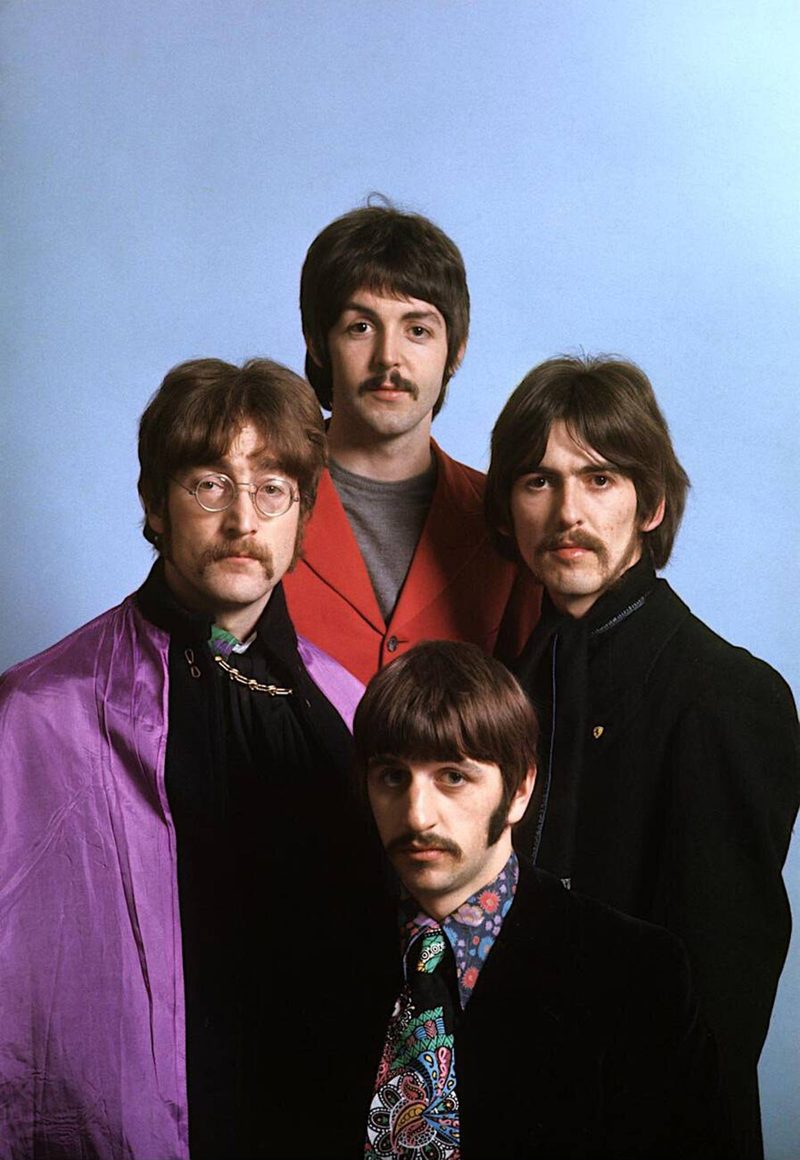
John Lennon, Paul McCartney, George Harrison and Ringo Starr in a 1967 promotional photo for All You Need Is Love.
The story
The tunings in one place
Tuning
Strings, low to high
Songs
E Standard
E A D G B E
nearly everything
D Standard (whole step down)
D G C F A D
Yesterday
Drop D
D A D G B E
Dear Prudence
E♭ Standard (half step down)
E♭ A♭ D♭ G♭ B♭ E♭
I'm Only Sleeping, Yellow Submarine, Across the Universe; Lovely Rita in the tab
Standard, capo 1
E A D G B E
I'm Looking Through You, She Said She Said, Ob-La-Di, Ob-La-Da, I Will
Standard, capo 2
E A D G B E
Norwegian Wood, Julia
Standard, capo 3
E A D G B E
Long, Long, Long (one tab: D Standard)
Standard, capo 5
E A D G B E
Michelle, It's Only Love, For You Blue
Standard, capo 6
E A D G B E
Piggies
Standard, capo 7
E A D G B E
Here Comes the Sun, If I Needed Someone (12-string)
Standard, capo 8
E A D G B E
Girl (the two rhythm acoustics)
Yesterday is the famous exception. McCartney recorded it alone with his acoustic tuned down a whole step, so he fingered the song in G while the record sounds in F. If you play it from a tab in G, tune to D Standard; if your tab is written in F, stay in standard tuning.
Dear Prudence has String 6 down to D for Lennon's picked pattern, which he learned from Donovan in India in 1968. Julia comes from the same lessons and is played in standard tuning with a capo at the 2nd fret.
E♭ Standard appears in the tabs for four songs whose records sit about a half step below the shapes being played: I'm Only Sleeping, Yellow Submarine, Lovely Rita and Across the Universe. For two of them the sources say the tape did it (Across the Universe and Lovely Rita were slowed down); either way the result for you is the same. TuneLit's check of the low notes agrees with the tabs on the first three and cannot decide on Across the Universe.
Capos do most of the work elsewhere. Harrison played D shapes at the 7th fret for If I Needed Someone and, four years later, Here Comes the Sun, both sounding in A; Michelle is C shapes at the 5th fret, sounding in F.
12-string guitars carry a famous share of the catalogue. Harrison's Rickenbacker 360/12 plays the opening chord and the solo of A Hard Day's Night, the riff of Ticket to Ride and the capoed riff of If I Needed Someone; Lennon strums an acoustic 12-string on Help! and You've Got to Hide Your Love Away. All of them are in standard tuning, so a six-string tuned the same way plays the same chords; TuneLit's 12-string tuner is there for those three songs if you own one. Paul McCartney's bass is in standard tuning throughout.
The story
Sped up, slowed down: what the records say
At EMI the tape machines had a speed control, and the Beatles used it constantly: to make a voice sound younger, to fit two takes together, to thicken a sound, or to play a difficult part slowly and hear it fast. A measurement cannot tell a fast tape from a sharp guitar, but it hears where the record ends up, and that is what you need to tune. The sources document these changes, and the CDs show them:
A Hard Day's Night (1964). The guitar-and-piano solo was recorded at half speed and played back at normal speed, an octave up. The song has no steady pitch for the estimator to hold on to, so its button uses the album value.
In My Life (1965). George Martin played the piano solo with the tape at half speed so it would sound like a harpsichord. The song sits about 22 cents above the rest of Rubber Soul.
When I'm Sixty-Four (1967). Recorded in C, then sped up by about a semitone at McCartney's request, so the record is in D♭. It lands about 9 cents flat, right with the rest of Sgt. Pepper: tune to the album value and play in D♭, or play the C shapes with a capo at the 1st fret.
She's Leaving Home (1967). No Beatle plays an instrument on it. The mono mix was sped up; the stereo mix on the CD runs slower and about a semitone lower.
Lovely Rita (1967). Speed changes were used throughout, and the mixdown machine ran slow, which puts the record around E♭. TuneLit's reading is weak, but both vinyl copies give the same pitch: about 59 cents below E, the same as 41 cents above E♭.
Strawberry Fields Forever (1967). The released song joins two takes made in different keys and tempos; one was sped up and the other slowed down until they met, which leaves the record between A and B♭. The CD reads about 14 cents flat over the main part, but the speed drifts and the vinyl copy we checked reads differently, so treat this one as approximate.
Here Comes the Sun (1969). Harrison played in D shapes with the capo at the seventh fret, and the take was then sped up by less than a semitone. TuneLit measured about 35 cents sharp: A major, a third of a semitone sharp.
Across the Universe (1970). Recorded in D in 1968, then slowed down by Phil Spector for Let It Be, so the album version sounds about a semitone lower. TuneLit measured E♭ Standard +25 ¢, a quarter of a half step above D♭.
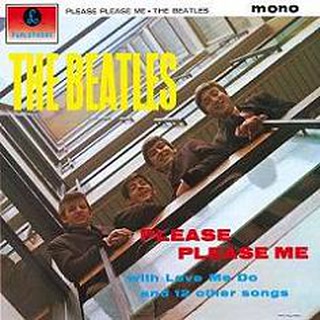
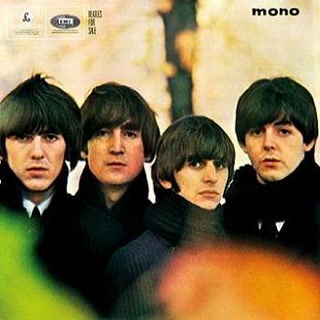
Main tuning: E Standard −28 ¢ (A ≈ 433), measured by TuneLit on the 1987 mono CD.
Ten of the fourteen songs were recorded in a single day, 11 February 1963, and the record shows it. The morning session produced There's a Place and I Saw Her Standing There, and they sit 12 and 9 cents flat. Everything taped in the afternoon and evening, from Misery and A Taste of Honey to Twist and Shout at the end of the night, sits between 23 and 40 cents flat, and so do the two sides of the November 1962 single, Please Please Me and Ask Me Why. Do You Want to Know a Secret is the lowest, about 40 cents flat. Both vinyl copies TuneLit checked give the same picture within a few cents, so this is how the tapes were made, not a slow CD transfer.
Everything is in standard tuning, open chords in first position, no capo. Love Me Do and P.S. I Love You, from September 1962, gave only weak readings; their buttons use the album value.
With TuneLit: E Standard −28 ¢ for most songs; I Saw Her Standing There −9 ¢, There's a Place −12 ¢, Do You Want to Know a Secret −40 ¢.
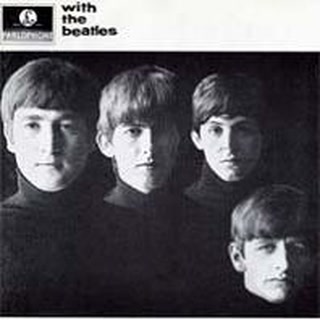
Main tuning: E Standard −12 ¢ (A ≈ 437), measured by TuneLit on the 1987 mono CD.
Steadier than its predecessor, but still well below A 440. The songs spread from about 5 to 24 cents flat. Four sit at the bottom, around 21 to 24 cents flat: All I've Got to Do, Please Mister Postman, You Really Got a Hold on Me and Devil in Her Heart. I Wanna Be Your Man reads closest to concert pitch, about 5 cents flat. Standard tuning throughout; Harrison's solo on Till There Was You is on a nylon-string guitar.
With TuneLit: E Standard −12 ¢; −21 to −24 ¢ for the four songs above.
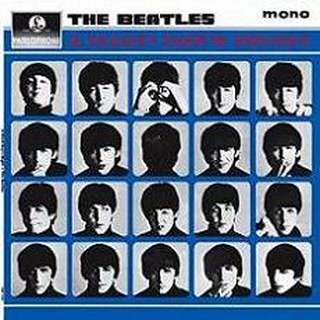
Main tuning: E Standard at concert pitch (+3 ¢, A ≈ 440.8), measured by TuneLit on the 1987 mono CD.
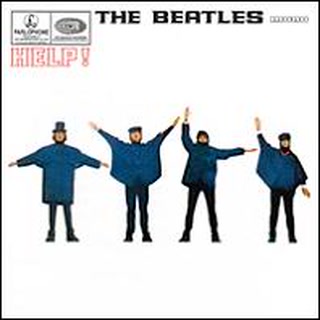
This is the 12-string album. Harrison's Rickenbacker 360/12 rings through the title song, I Should Have Known Better and You Can't Do That, always in standard tuning, so a six-string covers the same chords. Most songs sit within a few cents of A 440. Two run sharp: I'm Happy Just to Dance with You about 21 cents, and Can't Buy Me Love, recorded in Paris in January 1964, about 16 cents. And I Love Her, I'll Cry Instead and I Should Have Known Better sit 6 to 9 cents flat. The title song gave no steady reading; its solo was recorded at half speed and played back an octave up. The stereo vinyl copies TuneLit checked read the album 8 to 10 cents lower than this mono CD.
With TuneLit: E Standard at A 440; +21 ¢ for I'm Happy Just to Dance with You, +16 ¢ for Can't Buy Me Love, −6 to −9 ¢ for the three songs above.
Main tuning: E Standard at concert pitch (+4 ¢, A ≈ 440.9), measured by TuneLit on the 1987 mono CD.
The steadiest of the early albums. Every song but one sits within about 8 cents of A 440, and the one exception, the Kansas City/Hey-Hey-Hey-Hey! medley, is about 13 cents sharp. Standard tuning throughout, with no capos in the tabs. The stereo vinyl copies read the album 5 to 7 cents lower than this CD.
With TuneLit: E Standard at A 440; +13 ¢ for the Kansas City medley.
Main tuning: E Standard −19 ¢ (A ≈ 435.2), measured by TuneLit on the 1987 CD (George Martin's stereo remix).
The album with the widest spread before Revolver, and the vinyl copies confirm every song of it. Ticket to Ride sits about 38 cents flat and Another Girl about 45, close to a quarter tone; I Need You and It's Only Love about 30 cents. At the other end, Act Naturally and Yesterday sit 7 and 10 cents flat. So the album value is only a middle: press each song's button.
Yesterday is the album's one tuning change, D Standard, a whole step down, McCartney alone with a string quartet. It's Only Love is tabbed with a capo at the 5th fret for the acoustics.
With TuneLit: E Standard −19 ¢; −38 ¢ for Ticket to Ride, −45 ¢ for Another Girl, −30 and −31 ¢ for I Need You and It's Only Love (capo 5), −7 ¢ for Act Naturally, D Standard −10 ¢ for Yesterday.
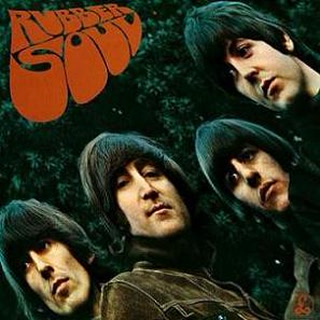
Main tuning: E Standard −12 ¢ (A ≈ 437.1), measured by TuneLit on the 1987 CD (George Martin's stereo remix).
The capo album. The tabs put Norwegian Wood at the 2nd fret, I'm Looking Through You at the 1st, Michelle at the 5th, Girl's two rhythm acoustics at the 8th, and If I Needed Someone at the 7th on Harrison's 12-string. The pitch splits in two groups. Most songs sit 6 to 15 cents flat. Michelle, In My Life and If I Needed Someone sit 8 to 12 cents sharp, about 20 cents above the rest, and I'm Looking Through You at concert pitch. In My Life is the song with George Martin's half-speed piano solo.
Norwegian Wood gave a weak reading that points much lower, about 36 cents flat, and both vinyl copies point the same way. Its button uses the album value; the note on its page explains when to lower it. Run for Your Life gave no usable reading.
With TuneLit: E Standard −12 ¢; +12 ¢ capo 5 for Michelle, +10 ¢ for In My Life, +8 ¢ capo 7 (12-string) for If I Needed Someone, A 440 capo 1 for I'm Looking Through You.
Main tuning: E Standard +8 ¢ (A ≈ 442), measured by TuneLit on the 1987 CD.
No Beatles album spreads wider. She Said She Said, with its rhythm guitars capoed at the 1st fret, sits about 24 cents sharp; Yellow Submarine about 19 cents flat; Good Day Sunshine, Here, There and Everywhere, And Your Bird Can Sing and Doctor Robert 10 to 14 cents flat. Only a few songs sit near the album value of +8 ¢ (Taxman, Eleanor Rigby, For No One, Got to Get You into My Life), so tune each one. Two songs are tabbed half a step down, in E♭ Standard: I'm Only Sleeping (E minor shapes sounding in E♭ minor) and Yellow Submarine (G shapes sounding in G♭).
This is also the CD that differs most from vinyl: both LP copies TuneLit checked read every song 8 to 10 cents lower, in the same pattern, and the Yellow Submarine CD sides with them on Yellow Submarine. With another edition of Revolver, lower these values by about 9 cents.
With TuneLit: E Standard +8 ¢; +24 ¢ capo 1 for She Said She Said, E♭ Standard −19 ¢ for Yellow Submarine, −10 to −14 ¢ for the four songs above; Eleanor Rigby has no guitar at all.
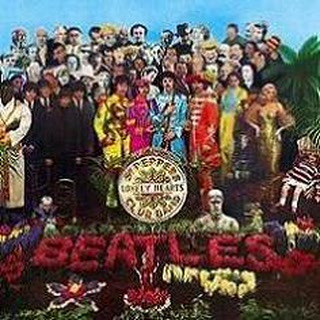
Main tuning: E Standard −13 ¢ (A ≈ 436.8), measured by TuneLit on the 1987 CD.
The varispeed album: When I'm Sixty-Four, Lovely Rita and She's Leaving Home are described above. When I'm Sixty-Four, sped up from C to D♭, lands with the album at about 9 cents flat. Lovely Rita is tabbed in E♭ Standard; its button gives E Standard at A 425, the same notes, and the page offers both readings.
The rest: With a Little Help from My Friends about 6 cents sharp, Fixing a Hole about 22 and Within You Without You about 27 cents flat, the other songs close to the album value. The title song and Good Morning Good Morning gave weak readings that point about 35 to 38 cents flat; their buttons use the album value.
With TuneLit: E Standard −13 ¢; +6 ¢ for With a Little Help from My Friends, −22 ¢ for Fixing a Hole, −27 ¢ for Within You Without You, E Standard · A 425 for Lovely Rita.
Main tuning: E Standard −9 ¢ (A ≈ 437.7), measured by TuneLit on the 1987 CD.
The 1967 American album: the six songs of the British double EP on side one, the year's singles on side two. Most songs sit within a few cents of the album value. The title song is about 20 cents flat; All You Need Is Love sits at concert pitch. Penny Lane, in B with its chorus in A, sits about 16 cents flat, just short of a value of its own.
Strawberry Fields Forever, the famous speed puzzle described above, reads close to the album value on the CD but about 41 cents flat on the vinyl copy, and its tabs disagree on the guitar tuning. Tune it by ear against the record.
With TuneLit: E Standard −9 ¢; −20 ¢ for Magical Mystery Tour, A 440 for All You Need Is Love.
The Beatles (White Album, 1968)
Main tuning: E Standard −7 ¢ (A ≈ 438.3), measured by TuneLit on the 1987 two-CD set.
Thirty songs, most of them close to the album value; the tunings are the interesting part. Dear Prudence drops String 6 to D for Lennon's picked pattern; Julia uses the same picking with a capo at the 2nd fret; Blackbird is McCartney alone in plain standard tuning; Mother Nature's Son is in standard tuning too. The tabs put capos on Ob-La-Di, Ob-La-Da and I Will (1st fret), Long, Long, Long (3rd) and Piggies (6th). Eric Clapton's solo on While My Guitar Gently Weeps is in standard tuning.
The pitch outliers: Ob-La-Di, Ob-La-Da about 22 cents sharp; Happiness Is a Warm Gun and I Will about 7 to 8 cents sharp; Martha My Dear and Honey Pie at concert pitch; Dear Prudence, Revolution 1, Rocky Raccoon and Mother Nature's Son 16 to 25 cents flat. Wild Honey Pie, McCartney alone bending his strings hard, sits half a semitone flat, right between two notes. Yer Blues and Helter Skelter, the two loudest songs, gave no steady reading.
With TuneLit: E Standard −7 ¢; Drop D −16 ¢ for Dear Prudence, +22 ¢ capo 1 for Ob-La-Di, Ob-La-Da, −22 ¢ for Rocky Raccoon, −25 ¢ for Mother Nature's Son, E Standard · A 427 for Wild Honey Pie.
Main tuning: E Standard at concert pitch (+3 ¢, A ≈ 440.8), measured by TuneLit on the 1987 CD.
Side one holds four new songs plus Yellow Submarine and All You Need Is Love; side two is George Martin's orchestral score from the film, played without the Beatles, right at concert pitch. Yellow Submarine reads about 30 cents flat here, 11 cents lower than on the Revolver CD and close to the vinyl copies of Revolver. It is listed in E♭ Standard, G shapes sounding in G♭, as the tabs have it, and the audio check agrees.
Of the new songs, Only a Northern Song sits about 6 cents flat. All Together Now, Hey Bulldog and It's All Too Much gave weak readings: All Together Now points about 24 cents flat, Hey Bulldog about 34 cents sharp, with the vinyl copy agreeing. Their buttons use the album value, so check those three by ear.
With TuneLit: E Standard at A 440; E♭ Standard −30 ¢ for Yellow Submarine, −6 ¢ for Only a Northern Song.
Main tuning: E Standard at concert pitch (+3 ¢, A ≈ 440.8), measured by TuneLit on the 1987 CD.
The last album the Beatles recorded is also one of the closest to A 440, and the vinyl copies agree within a few cents. The exceptions are big ones, though. Here Comes the Sun (capo 7, sped up) sits about 35 cents sharp, close enough to halfway between two notes that the page offers both readings; the history and TuneLit's audio check both point to a sharp A. Oh! Darling sits about 40 cents flat, Octopus's Garden about 18 flat, Come Together about 20 flat on a weaker reading, Something about 8 flat. On side two's medley, Sun King and Mean Mr. Mustard sit 10 to 22 cents flat and She Came In Through the Bathroom Window 12 cents sharp; Golden Slumbers, Carry That Weight and You Never Give Me Your Money are close to the album value.
Everything else is standard tuning. One tab writes parts of I Want You (She's So Heavy) in Drop D, another keeps them all in standard tuning.
With TuneLit: E Standard at A 440; +35 ¢ capo 7 for Here Comes the Sun, −40 ¢ for Oh! Darling, −18 ¢ for Octopus's Garden, −10 ¢ for Mean Mr. Mustard, +12 ¢ for She Came In Through the Bathroom Window, −8 ¢ for Something.
Main tuning: E Standard +6 ¢ (A ≈ 441.6), measured by TuneLit on the 1987 CD.
Recorded mostly in January 1969 and finished by Phil Spector in 1970. The songs played live with Billy Preston that month run sharp: Get Back about 18 cents, Dig a Pony 15, One After 909 about 23 on a weaker reading, I've Got a Feeling higher still on a reading too weak to use. Two of Us and Maggie Mae, played on acoustics, sit 7 to 9 cents flat. For You Blue is tabbed with a capo at the 5th fret for Harrison's acoustic, with Lennon's lap steel in an open D7 tuning.
Across the Universe is the odd one out: the 1968 recording in D, slowed by Spector to about D♭. The main tab tunes a half step down and plays D shapes, and TuneLit measured E♭ Standard +25 ¢. The 1969 charity-album version was sped up instead, so this setting is for the Let It Be album only.
With TuneLit: E Standard +6 ¢; +18 ¢ for Get Back, +15 ¢ for Dig a Pony, −7 ¢ for Two of Us, −9 ¢ for Maggie Mae, E♭ Standard +25 ¢ for Across the Universe, capo 5 for For You Blue.
The story
Playing along: practical advice
Tune per song, not per album. On most rock records one setting covers an album. On a Beatles album it does not: Help! runs from about 7 to 45 cents flat, Revolver from 19 cents flat to 24 sharp, Abbey Road from 40 cents flat to 35 sharp. Each song's Tune button carries its own value, so press it before each song.
Mind the capo. A capo pulls the strings slightly sharp, more on a guitar with high action. Tune first, clamp the capo, then check a chord against the record and touch up.
Check by ear on the doubtful songs. Where TuneLit could not get a steady reading (A Hard Day's Night, Love Me Do, Tomorrow Never Knows, Yer Blues, Helter Skelter and others marked on the album pages), the button falls back to the album value. Play a chord against a sustained chord on the record and move the reference until the beating stops.
Halfway between two notes. Here Comes the Sun and Lovely Rita sit close to halfway between two semitones, so their pages offer both tunings. The documented speed changes settle both: a sharp A for Here Comes the Sun, E slowed toward E♭ for Lovely Rita.
Other editions. The values are for the 1987 CDs; see above for the three albums that read lower on vinyl. The 2009 remasters and later remixes were not measured, and a remix can change a song's speed, as the 2017 Sgt. Pepper did for She's Leaving Home.
Play along without retuning. If you would rather stay at A 440, TuneLit's Play along moves the record to your guitar instead: it shifts the pitch by the measured offset so the song sits in exact standard pitch.
Evidence
How sure are these numbers?
The estimator is accurate to about ±3 cents on clean test mixes; real records with tape hiss and drifting speed are harder, and each album page shows how well a song's notes agreed with one grid. Most Beatles songs read cleanly. The weak ones are the dense, noisy or speed-shifted recordings: A Hard Day's Night, Love Me Do, Tomorrow Never Knows, Yer Blues, Helter Skelter, The End, I've Got a Feeling. Their buttons use the album value, and their notes say which way the weak reading points.
Two doubts remain. A measurement knows the offset only within one semitone, so a record about 50 cents off could be either neighbour; the tabs and the documented speed changes settle all but two songs, which are flagged. And speed can change inside a song built from edited takes, Strawberry Fields Forever above all; the value is for the middle 90 seconds.
The pattern, though, is solid: the vinyl copies reproduce the same song-to-song differences, the documented speed changes show up where the books put them, and Please Please Me's two pitch levels match its recording sessions.
Cheat sheet
Quick reference
Album
Tuning
Record (1987 CD)
Songs with their own setting
Please Please Me (1963)
E Standard
−28 ¢ (A ≈ 433)
I Saw Her Standing There −9, There's a Place −12, Do You Want to Know a Secret −40
With the Beatles (1963)
E Standard
−12 ¢ (A ≈ 437)
All I've Got to Do, Devil in Her Heart −24, You Really Got a Hold on Me −23, Please Mister Postman −21
A Hard Day's Night (1964)
E Standard; 12-string
A 440
I'm Happy Just to Dance with You +21, Can't Buy Me Love +16, And I Love Her −9, I'll Cry Instead −8, I Should Have Known Better −6
Beatles for Sale (1964)
E Standard
A 440
Kansas City/Hey-Hey-Hey-Hey! +13
Help! (1965)
E Standard; Yesterday in D Standard
−19 ¢ (A ≈ 435.2)
Another Girl −45, Ticket to Ride −38, It's Only Love −31, I Need You −30, Yesterday −10, Act Naturally −7
Rubber Soul (1965)
E Standard, many capos
−12 ¢ (A ≈ 437.1)
Michelle +12, In My Life +10, If I Needed Someone +8, I'm Looking Through You 0
Revolver (1966)
E Standard; two songs in E♭
+8 ¢ (A ≈ 442)
She Said She Said +24, Yellow Submarine −19, Good Day Sunshine −14, Here, There and Everywhere and And Your Bird Can Sing −12, Doctor Robert −10
Sgt. Pepper (1967)
E Standard
−13 ¢ (A ≈ 436.8)
With a Little Help from My Friends +6, Fixing a Hole −22, Within You Without You −27, Lovely Rita at A 425
Magical Mystery Tour (1967)
E Standard
−9 ¢ (A ≈ 437.7)
Magical Mystery Tour −20, All You Need Is Love 0
The Beatles (1968)
E Standard; Dear Prudence in Drop D
−7 ¢ (A ≈ 438.3)
Ob-La-Di, Ob-La-Da +22, Wild Honey Pie at A 427, Mother Nature's Son −25, Rocky Raccoon −22, Revolution 1 −17, Dear Prudence −16
Yellow Submarine (1969)
E Standard
A 440
Yellow Submarine (E♭ Standard) −30
Abbey Road (1969)
E Standard; Here Comes the Sun capo 7
A 440
Here Comes the Sun +35, Oh! Darling −40, Octopus's Garden −18, She Came In Through the Bathroom Window +12
Let It Be (1970)
E Standard; Across the Universe in E♭
+6 ¢ (A ≈ 441.6)
Across the Universe +25 (E♭), Get Back +18, Dig a Pony +15, Maggie Mae −9, Two of Us −7
Questions
What tuning does The Beatles use?
Mostly E Standard: 13 of 13 albums. Many albums also have songs in other tunings, and the album pages list them song by song.
Why does The Beatles sound out of tune when I play along?
Some records are not at concert pitch. Please Please Me sits about 28 cents flat (A ≈ 433); Help! sits about 19 cents flat (A ≈ 435); Sgt. Pepper's Lonely Hearts Club Band sits about 13 cents flat (A ≈ 437). A guitar tuned to A 440 clashes with them. Every Tune button on these pages sets the measured pitch for you.
How did TuneLit measure The Beatles's records?
We played original CDs and LPs through TuneLit's pitch analysis: the strongest notes of each song are compared with the A 440 grid, which gives the offset in cents. That cannot tell the semitone, so the tuning name comes from interviews, the press and tabs. The audio is never stored or published.
Colors and font
Font
Colors
Menu
Install the app
Android (Chrome): menu ⋮ → Install app or Add to Home screen.
Computer (Chrome, Edge): the install icon at the right end of the address bar.
iPhone: Safari → Share → Add to Home Screen.
It opens full screen and keeps tuning with no connection.