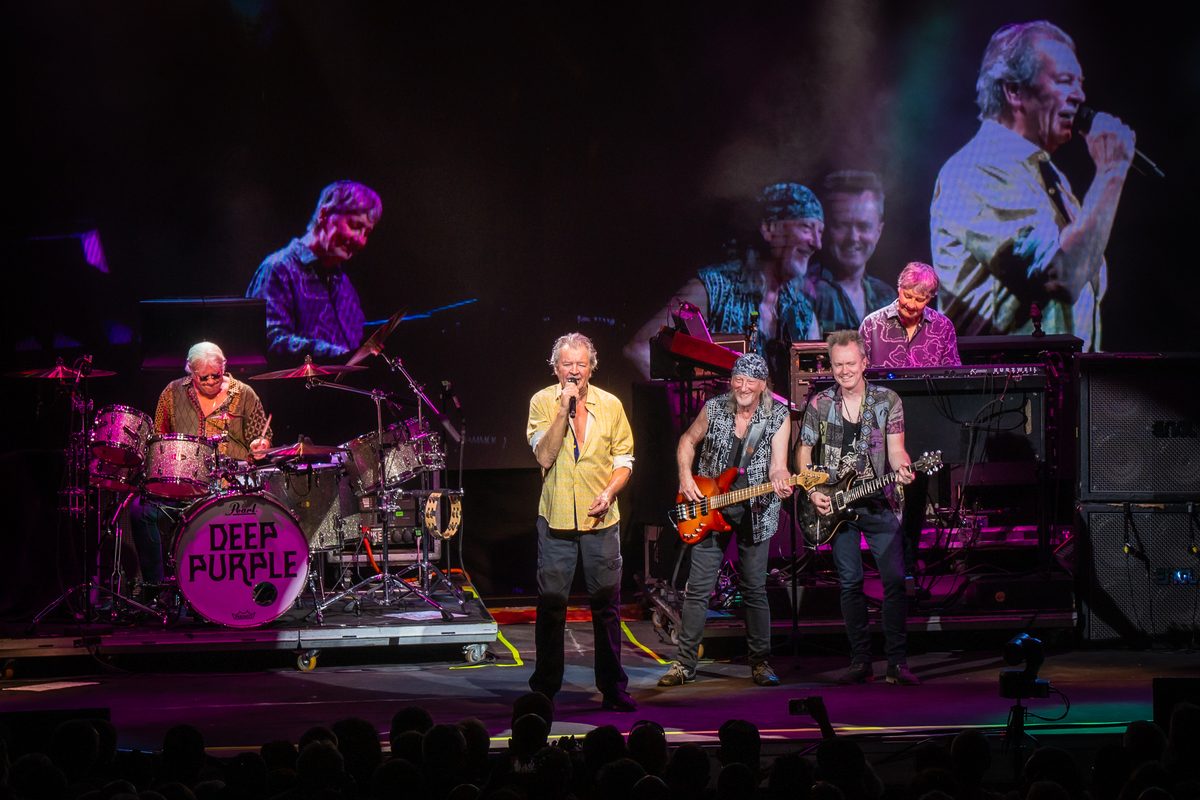
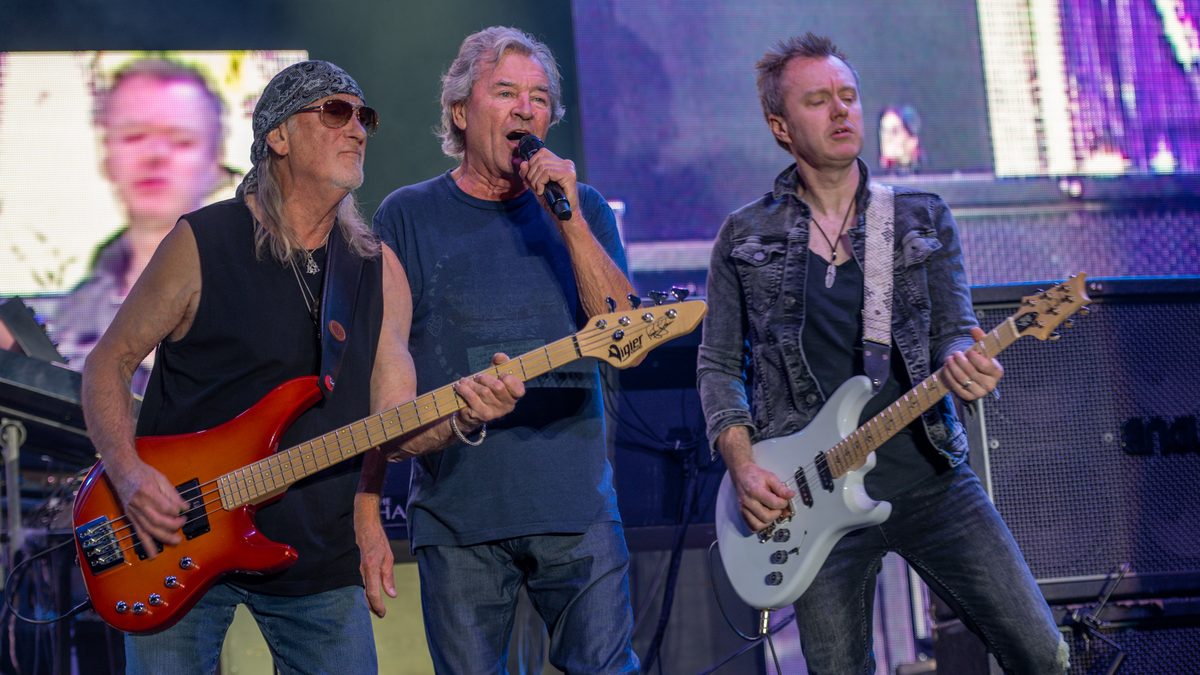
Deep Purple at the Notodden Blues Festival in Norway on 2 August 2024: Ian Paice behind the DEEP PURPLE drum, Ian Gillan, Roger Glover, Simon McBride and Don Airey (left to right).
In short
How Deep Purple tunes
Deep Purple have played in E Standard from the first album to the latest: Ritchie Blackmore, Tommy Bolin, Steve Morse and Simon McBride all kept standard tuning, with a handful of songs in Drop D (The Battle Rages On, Wrong Man, Vincent Price and Show Me among them) and Silver Tongue in D Standard. TuneLit measured the owner's CDs of all nineteen albums from Shades of Deep Purple to Now What?!, and the surprises are in the records, not the tunings.
Read more
Burn sits about 21 cents sharp (A ≈ 445) from start to finish; Machine Head about 6 cents sharp, with Maybe I'm a Leo and Space Truckin' near +20; and the 1968 and 1969 albums mix songs at concert pitch with songs 9 to 30 cents flat, the instrumental And the Address even 55 cents flat. From Purpendicular (1996) on, everything sits at A 440. The Tune buttons carry each record's offset, song by song; the five newest albums are listed from the tabs.
Deep Purple are one of the easiest big rock bands to tune for, and one of the trickiest to play along with. Easy, because almost everything they recorded is in plain E Standard: Ritchie Blackmore, Tommy Bolin, Steve Morse and Simon McBride all kept the normal six notes, E A D G B E, and the bass stayed in E A D G with them. Tricky, because the records themselves do not always sit at A 440. Some are a few cents sharp, one whole album is a fifth of a semitone sharp, and the early records wander from song to song, sometimes by a quarter of a semitone or more. Tune a guitar perfectly to A 440, put on Burn, and the riff will sound sour even though you are in the right tuning.
TuneLit measured the owner's CDs of all nineteen studio albums from Shades of Deep Purple (1968) to Now What?! (2013), song by song, to find where each record really sits. The five newer albums, from Infinite (2017) to Splat! (2026), are not in the library; they are listed from the tabs, at concert pitch. This page explains the band's tuning, the handful of songs that do something different, and what the measurements found, album by album. Every song on the album pages has a Tune button that sets the tuner exactly as listed, offset included, so you never have to do the arithmetic yourself.
Popular songs
How to tune for Deep Purple's best-known songs
Each song has its own page: the exact tuning, the record's pitch, how to get there string by string, and how to move the record into your own tuning.
Ritchie Blackmore built the classic Deep Purple sound on a Stratocaster in standard tuning. The tabs of the albums he played on put his guitar in E Standard, with one Drop D song at the very end and one oddity on the first album (And the Address, below), and so does the record: TuneLit's check from the audio, which listens for the lowest open string, agrees with E on nearly every song it could judge and never points a semitone lower. That includes the reunion albums of the 1980s and 1990s.
The famous riffs show why the tuning matters less than the hands. Smoke on the Water is a G minor blues line played in parallel fourths, two strings at a time, and Blackmore usually plucks it with his fingers rather than a pick. Highway Star hammers a single G for its main riff. Burn sits on G as well, with the low E never played open. Space Truckin', by contrast, leans hard on the open E, A and D strings, which makes it one of the best songs to check your tuning against.
Tommy Bolin, who replaced Blackmore for Come Taste the Band in 1975, stayed in E Standard; every tab of that album agrees. Steve Morse, in the band from 1994 to 2022, described his own set-up on the band's website: standard tuning on his main guitars, and a separate guitar kept in Drop D. Simon McBride, his successor, is in E Standard on every tab of =1 and Splat!.
In TuneLit, pick E Standard, or simply press a Tune button on an album page. The bass is in standard tuning too, so a bass player needs no special setting either, apart from the Drop D songs below.
Roger Glover, Ian Gillan and Simon McBride (left to right) on stage at the Lieder am See festival in Germany on 16 July 2022.
The story
The songs in Drop D, and one in D Standard
A few songs drop String 6 a whole step, from E to D, so the bottom three strings form a power chord under one finger:
The Battle Rages On (1993), the title track and Blackmore's last big riff with the band. The most-viewed tab has the guitar and the bass in Drop D, and on the record the low D is by far the most-played note. TuneLit's check from the audio agrees.
Wrong Man (Rapture of the Deep, 2005), Weirdistan, Out of Hand and Vincent Price (Now What?!, 2013), all from the Steve Morse years, which fits his Drop D guitar. The check from the audio agrees with D on all four, but each rests on a single tab, so treat them as likely rather than certain. On Weirdistan the low D is hardly heard at all.
Show Me (=1, 2024), the opening song of McBride's first album, again from a single tab.
To get there from E Standard, lower String 6 until its open note matches String 4 an octave lower. Everything else stays where it was.
Silver Tongue (Bananas, 2003) goes further: its only tab puts Morse's guitar in D Standard, every string a whole step down, D G C F A D, with the bass tuned down too. On the CD the low D makes up about half of the low notes TuneLit hears, and the check from the audio agrees with D, so the album page lists it that way.
The story
Why the records are off concert pitch
A record made on analogue tape is only at A 440 if the tape ran at exactly the same speed when it was recorded and when it was played back for mastering. A small difference moves everything together, guitar, organ, voice and bass. Guitar, bass and Hammond organ were tuned together in the studio, so a machine running a little fast or slow shifted the whole take at once. It shows clearly on Deep Purple's records of the late 1960s and early 1970s.
Some numbers to keep in mind. One cent is a hundredth of a semitone. Around 5 cents is hard to hear, 10 to 15 cents makes long chords beat against the record, and 20 cents or more sounds plainly out of tune. Around 440 Hz, one hertz is about 4 cents, so Burn's 21 cents sharp is the same as tuning to A ≈ 445.
The Tune buttons allow for all of this: they carry the measured offset ("E Standard +21 ¢" for Burn) or, for the larger ones, a reference A ("E Standard · A 426"). Press the button for the song you are playing, tune to it, and your guitar matches the record, not just the tuning.
The story
Era by era
1968 and 1969: Mark I. The first line-up, with Rod Evans singing and Nick Simper on bass, made three albums in about a year, organ-led and full of covers. Blackmore is in E Standard throughout, but the records are the most uneven of the catalogue. Songs from the same album can sit 15 or 20 cents apart, and And the Address, the very first song on the first album, sits about 55 cents flat on the CD.
1969 to 1973: Mark II. With Ian Gillan and Roger Glover, Deep Purple became a hard rock band: In Rock, Fireball, Machine Head and Who Do We Think We Are. Still E Standard, still analogue tape, and still a spread of pitches, but smaller: In Rock and Who Do We Think We Are sit at concert pitch, Fireball and Machine Head about 6 cents sharp, with a few songs straying up to 20 cents.
1973 to 1976: Mark III and IV. David Coverdale and Glenn Hughes joined for Burn and Stormbringer; Tommy Bolin replaced Blackmore for Come Taste the Band. Burn is the sharpest album of all, about 21 cents sharp from start to finish. Stormbringer sits about 5 cents flat, and Come Taste the Band close to concert pitch, with three songs between 12 and 15 cents off it.
1984 to 1993: the reunion. The classic line-up came back for Perfect Strangers and The House of Blue Light, Joe Lynn Turner sang on Slaves and Masters, and Gillan returned for The Battle Rages On. Blackmore stayed in E Standard, with the title track of his last album in Drop D. The records are steadier now: within 9 cents of concert pitch, The House of Blue Light a little flat and Slaves and Masters a little sharp. Joe Satriani played the shows after Blackmore left in 1993 but made no studio album with the band.
1994 to 2022: Steve Morse. From Purpendicular on, every album sits within 2 cents of concert pitch and every song within 6: the old drift is gone. Morse plays in E Standard and brings out his Drop D guitar now and then. Don Airey took over the keyboards from Jon Lord for Bananas in 2003.
Since 2022: Simon McBride. Two albums, =1 and Splat!, both in E Standard on the tabs, with one Drop D song. Neither is in the owner's library yet, so both are listed at concert pitch.
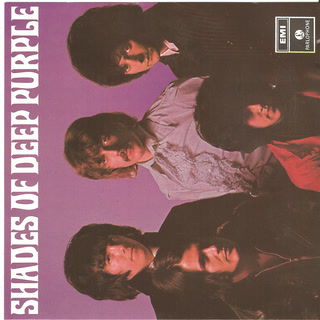
Recorded in three days at Pye Studios in London, with four covers among eight songs: Hush, Help!, Hey Joe and I'm So Glad. E Standard throughout. The 1989 EMI CD is the most uneven record TuneLit has measured for the band. Hush, Mandrake Root and Help! sit at concert pitch. One More Rainy Day, Prelude: Happiness / I'm So Glad and Hey Joe sit 9 to 14 cents flat, which becomes the album value, −13 ¢. Love Help Me sits about 30 cents flat (A ≈ 432).
The opening instrumental, And the Address, is the oddest of all: about 55 cents under E Standard, halfway between E and E♭. Its only tab is written in E♭ Standard, and that is no contradiction: a guitar in E Standard tuned down to A ≈ 426 and a guitar in E♭ Standard tuned 45 cents up play exactly the same notes. TuneLit's check from the audio agrees that the lowest string sits there. Its Tune button gives the setting as E Standard at A 426.
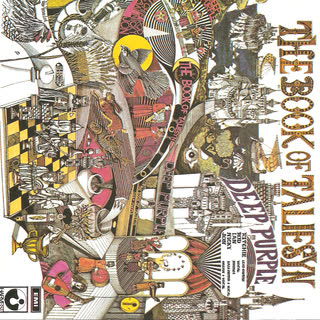
E Standard, with Neil Diamond's Kentucky Woman, the Beatles' We Can Work It Out and Ike & Tina Turner's River Deep, Mountain High among the band's own pieces, including the instrumental Wring That Neck. The 1989 EMI CD sits about 5 cents sharp (A ≈ 441.4). Shield reads about 20 cents sharp, and Anthem, with Jon Lord's string arrangement, sits at concert pitch. Both have their own Tune buttons.
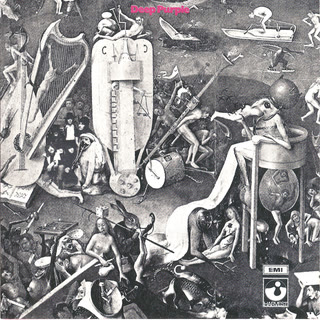
The last Mark I album, with Donovan's Lalena and the twelve-minute April. E Standard. On the 1989 EMI CD the second side and Lalena sit at concert pitch, while Chasing Shadows, Blind and Fault Line / The Painter sit 13 to 18 cents flat.
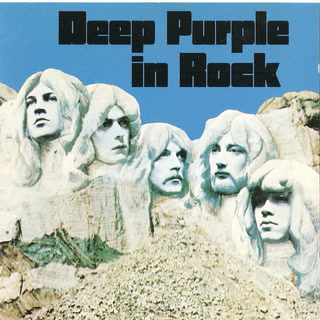
The first Mark II album: Speed King, Bloodsucker, Child in Time, Flight of the Rat, Into the Fire, Living Wreck and Hard Lovin' Man, all in E Standard. TuneLit measured EMI's CD at concert pitch (+0.3 ¢). Three songs stray by about ten cents, Bloodsucker and Living Wreck up, Into the Fire down, and each has its own Tune button. Child in Time, the ten-minute centrepiece, sits right at A 440: its verses move in octaves on String 6 and String 4, stepping down from A through G to F, so tune those two strings carefully.
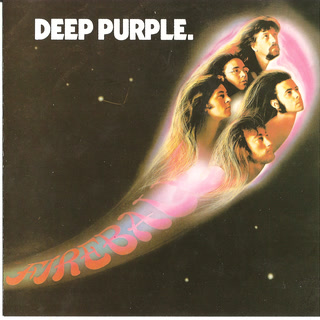
E Standard. The list follows the original European album, with Demon's Eye as track 3; American copies had the single Strange Kind of Woman in its place. The EMI CD sits about 6 cents sharp (A ≈ 441.4). The songs spread from −2 cents (Demon's Eye) to +12 (The Mule), but none sits far enough from the rest for a value of its own, so every Tune button carries the album's +6 ¢.
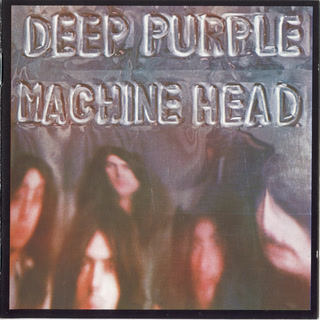
Recorded in December 1971 in Montreux with the Rolling Stones Mobile Studio, after the fire at the casino where the band had planned to work: the story Smoke on the Water tells. E Standard. The EMI CD sits about 6 cents sharp as a whole (A ≈ 441.6), but this is an album to tune song by song. Highway Star reads close to concert pitch, Pictures of Home and Smoke on the Water 6 to 8 cents sharp, Lazy about 14 cents sharp (at low confidence, so it keeps the album's value), and Maybe I'm a Leo and Space Truckin' 19 to 20 cents sharp, each with its own Tune button.
For Smoke on the Water, the album's +6 ¢ is close enough. For Space Truckin', which leans on the open strings, the +20 ¢ setting is worth using: against an A 440 guitar the open E and A will audibly beat with the record.
Recorded with the same mobile studio in Rome and Frankfurt in 1972. E Standard, and the 1987 EMI CD sits at concert pitch (+0.5 ¢). Woman from Tokyo is right on A 440; only Rat Bat Blue reads higher, about 11 cents sharp.
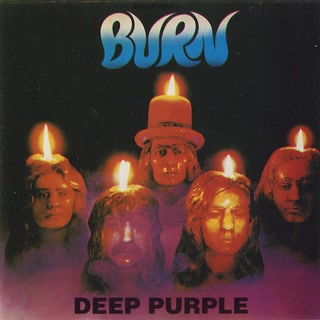
The first Mark III album, recorded in Montreux in November 1973. E Standard, and the sharpest record of the catalogue: TuneLit measured the CD about 21 cents sharp (A ≈ 445.2), and every one of the eight songs agrees, from +16 to +23 cents. That is the clearest single finding for this band. A guitar at A 440 sounds noticeably flat against the title riff, against Mistreated's long bends and against You Fool No One. The Tune buttons all carry +21 ¢.
The CD measured is an Australian EMI mid-price issue (CDMID 166161), the only edition in the library. The whole album moves together, which points to the master rather than to single songs, but whether every edition and the original LP run this fast, only a second copy can tell.
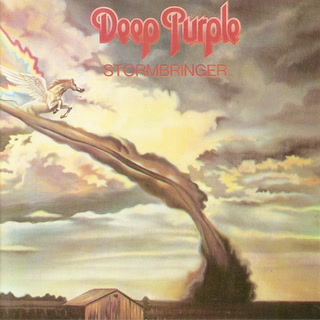
E Standard. The EMI CD sits about 5 cents flat (A ≈ 438.7), close enough to concert pitch for most players. Lady Double Dealer is the exception, about 23 cents flat (A ≈ 434.2), and has its own Tune button. Soldier of Fortune, the acoustic ballad that closes the album, sits with the album.
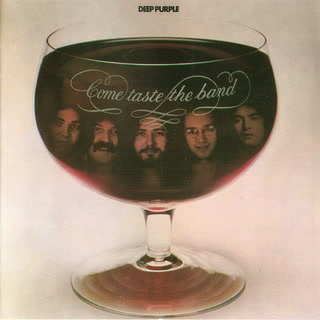
Tommy Bolin's only album with the band, in E Standard. The 1990 EMI CD reads +4 cents as a whole, which TuneLit stores as concert pitch, but three songs stand apart: Gettin' Tighter (+13 ¢) and Drifter (+12 ¢) sharp, Lady Luck (−15 ¢) flat.
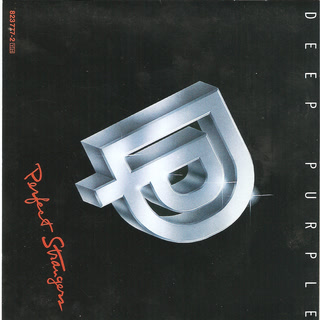
The reunion album, recorded in Vermont in the summer of 1984. E Standard, at concert pitch on the original Polydor CD (+2 ¢). Knocking at Your Back Door and the title track sit right on A 440; Mean Streak reads about 7 cents flat. The first CD also carries Not Responsible, an extra track that was on the cassette too; the album page follows the eight-song LP.
E Standard. The original Polydor CD sits about 9 cents flat (A ≈ 437.8), and this time every song sits below concert pitch, from −4 to −17 cents, The Spanish Archer lowest. Nine cents is on the edge of what most ears notice; the Tune buttons carry −9 ¢.
Joe Lynn Turner's one album as singer. E Standard. Measured from a later RCA pressing, the only one in the library: about 7 cents sharp (A ≈ 441.9), the songs between +2 and +11 cents.
Blackmore's last album with the band. E Standard, except the title track in Drop D. The RCA CD sits about 4 cents sharp (A ≈ 441), and Ramshackle Man about 6 cents flat with its own Tune button.
Steve Morse's first album, with Sometimes I Feel Like Screaming and Vavoom: Ted the Mechanic. E Standard throughout, and at concert pitch (−1.4 ¢), every song within 6 cents.
E Standard at concert pitch (−0.3 ¢). Bludsucker is a new recording of In Rock's Bloodsucker, at concert pitch where the 1970 original reads about 11 cents sharp.
The first album with producer Bob Ezrin, recorded in Nashville. E Standard at concert pitch (−1.7 ¢), with Weirdistan, Out of Hand and Vincent Price in Drop D. The CD measured is from the CD + DVD edition; its bonus track, It'll Be Me, is not listed.
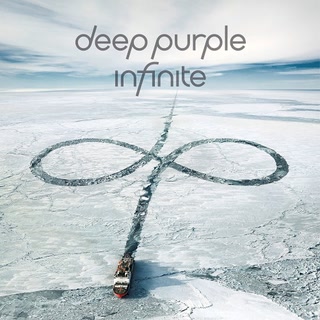
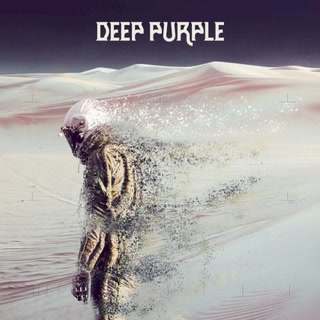
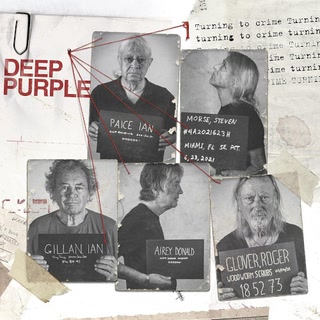
Not in the owner's library, so not measured: the settings are the tabs' tunings at A 440. Every tab found for the new songs on these three albums is in E Standard, including Time for Bedlam, The Surprising and Birds of Prey on Infinite, Throw My Bones and Nothing at All on Whoosh!, and the covers album Turning to Crime, Morse's last with the band. Whoosh! ends with a new recording of And the Address, listed in the album's E Standard; the one tab with that title is in E♭ and does not say which version it follows.
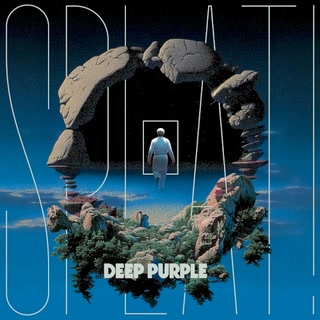
Simon McBride's first two albums, also not measured. The tabs put both in E Standard, with Show Me in Drop D. Keith Urban plays guitar on Splat!'s Diablo.
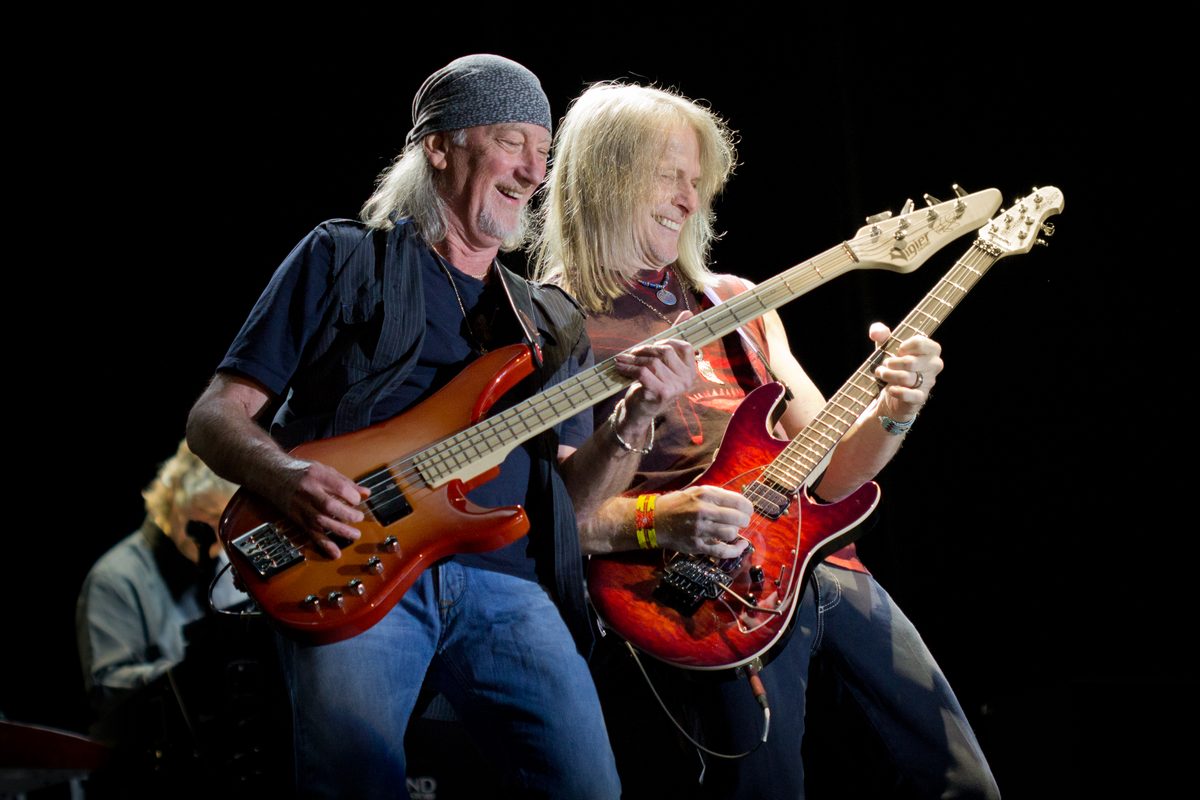
Roger Glover and Steve Morse playing side by side at the Músicos en la naturaleza festival in Hoyos del Espino, Ávila, Spain, on 27 July 2013.
TuneLit lab
What TuneLit measured
TuneLit's recording analysis reads 90 seconds of each song and works out how far the music sits from the A 440 grid. It knows that offset only within one semitone, so the semitone itself (E rather than E♭ or F) comes from the tabs, checked by a second test from the audio that listens for the lowest open string.
Album
Edition measured
Measured
Listed as
Shades of Deep Purple (1968)
Parlophone CDP 7 92407 2, 1989
−13 ¢ (three songs at 0, Love Help Me −30, And the Address −55)
E Standard −13 ¢
The Book of Taliesyn (1968)
Harvest CDP 7 92408 2, 1989
+5 ¢
E Standard +5 ¢
Deep Purple (1969)
Harvest CDP 7 92409 2, 1989
+2 ¢ (three songs −13 to −18)
E Standard
Deep Purple in Rock (1970)
EMI CDP 7 46239 2
0 ¢
E Standard
Fireball (1971)
EMI CDP 7 46240 2 (Italy)
+6 ¢
E Standard +6 ¢
Machine Head (1972)
EMI CDP 7 46242 2
+6 ¢ (Leo +19, Space Truckin' +20)
E Standard +6 ¢
Who Do We Think We Are (1973)
EMI CDP 7 48273 2, 1987
+0.5 ¢
E Standard
Burn (1974)
EMI CDMID 166161 (Australia)
+21 ¢
E Standard +21 ¢
Stormbringer (1974)
EMI CDP 7 91084 2
−5 ¢
E Standard −5 ¢
Come Taste the Band (1975)
EMI CDP 7 94032 2, 1990
+4 ¢
E Standard
Perfect Strangers (1984)
Polydor 823 777-2, 1984
+2 ¢
E Standard
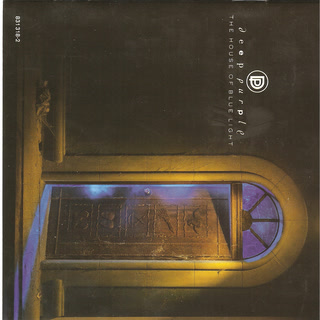
The House of Blue Light (1987)
Polydor 831 318-2, 1987
−9 ¢
E Standard −9 ¢
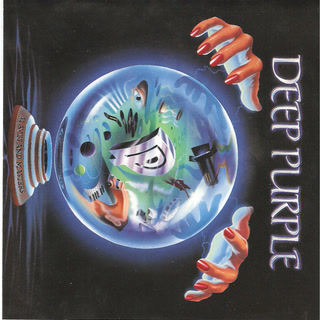
Slaves and Masters (1990)
RCA 74321 18719 2
+7 ¢
E Standard +7 ¢
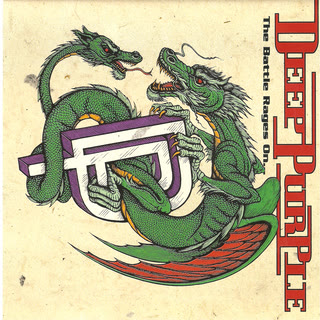
The Battle Rages On... (1993)
RCA 74321 15420 2, 1993
+4 ¢
E Standard +4 ¢
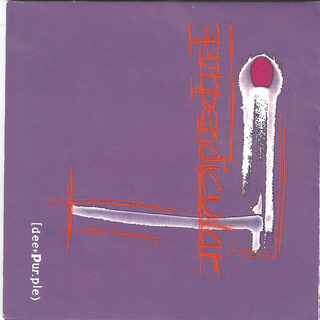
Purpendicular (1996)
RCA 74321 33802 2, 1996
−1 ¢
E Standard
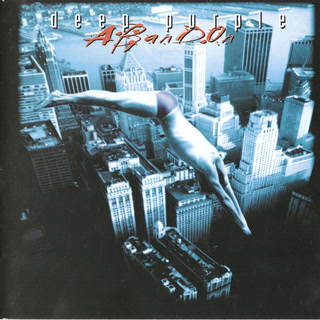
Abandon (1998)
EMI 7243 4 95306 2 1, 1998
0 ¢
E Standard
Bananas (2003)
EMI 7243 5 91048 2 9, 2003
0 ¢
E Standard
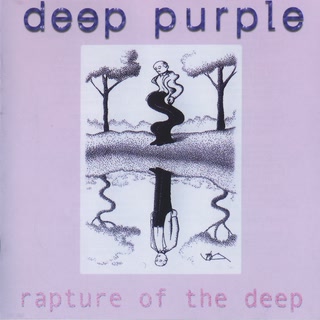
Rapture of the Deep (2005)
Edel 0165342ERE, 2005
0 ¢
E Standard
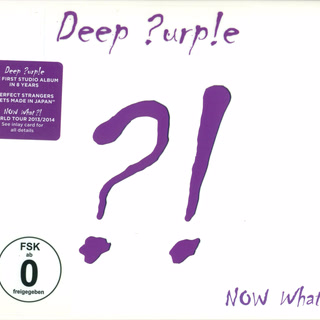
Now What?! (2013)
earMUSIC 0208577ERE, 2013
−2 ¢
E Standard
Offsets within 4 cents are stored as concert pitch: TuneLit's measurement is accurate to about that, and no ear will miss them.
The pattern is clear. The records of 1968 to 1975 drift, by album and by song: the first albums mix songs at concert pitch with songs 10 to 30 cents off it, Machine Head spreads over 19 cents, and Burn sits 21 cents sharp throughout. The 1980s records are steadier but still a few cents off, flat on The House of Blue Light and sharp on Slaves and Masters. From Purpendicular in 1996 on, every album and every song sits within a few cents of A 440. No source explains the early offsets one by one; a tape machine running a little fast or slow is the usual explanation for records of that age.
The semitone check from the audio agrees with the listed tuning on 141 of the 170 songs and never points a semitone lower. Where it points higher, it is for a known reason: Smoke on the Water, Highway Star, Lazy and a few others never play the open low E, and then the check tends to point a half step up, to F. No tab or source names F, and these songs stay in E Standard. The Drop D and D Standard songs all agree with D as the lowest string.
Evidence
How sure are these numbers?
Every tuning on the album pages carries a status label. Most of them read Measured by TuneLit, because the offset comes from our own analysis of the CD. The tuning name still rests on the other kinds of evidence:
Official: a band member said it. Steve Morse's description of his set-up (standard tuning, plus a guitar in Drop D) is the band's own word for the Morse-era albums.
Community: transcriptions, mostly Songsterr. Blackmore's, Bolin's and McBride's albums rest here: no interview spells out "E Standard", but every tab and the check from the audio agree. The Drop D and D Standard songs rest on single tabs, which is why their notes say so.
Measured by TuneLit: our analysis of a CD gives the offset in cents. Only numbers are published; the audio is never stored or shared.
Infinite, Whoosh!, Turning to Crime, =1 and Splat! have no measurement yet: their settings are the tabs' tunings at A 440.
The story
Tips for playing along
Tune to the song, not just the tuning. On Burn, Machine Head and the Mark I albums the offset changes the sound more than any other setting. Press the song's own Tune button.
Check against an open string. Space Truckin' leans on the open E, A and D strings, and Speed King keeps returning to an open E power chord: the best places to hear whether you match. Smoke on the Water and Burn never touch the open low E, so check those against a sustained chord instead.
Drop D only when the song asks. Just String 6 changes, by a whole step; bring it back up for the next song.
Live versions are a different matter. The measurements describe the studio CDs; live recordings from other years can sit anywhere. Songsterr also carries E♭ versions of Smoke on the Water, Burn and Perfect Strangers next to the main E Standard tabs: the studio records are in E.
Not your tuning? TuneLit's Play along can move a recording into the tuning your guitar is already in.
If a song still sounds a touch off, move the reference by a hertz or so; around 440 Hz, one hertz is about 4 cents.
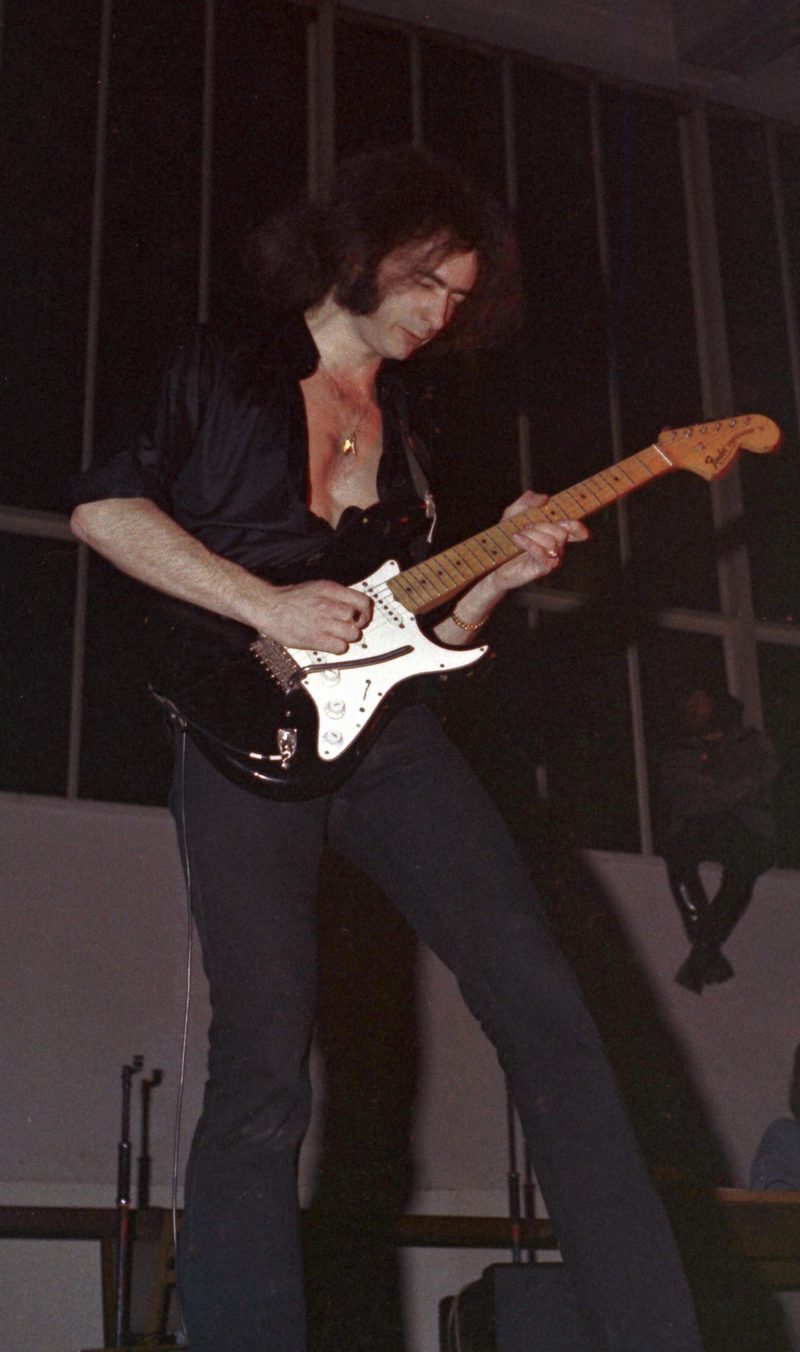
Ritchie Blackmore playing his black Fender Stratocaster on stage in Hamburg in 1971.
Cheat sheet
Quick reference
Default, every album: E Standard (E A D G B E), bass E A D G.
Drop D songs: The Battle Rages On; Wrong Man; Weirdistan, Out of Hand, Vincent Price; Show Me.
D Standard: Silver Tongue (Bananas).
Shades of Deep Purple (1968): E Standard −13 ¢; Hush, Mandrake Root, Help! at A 440; Love Help Me −30 ¢; And the Address at A 426.
The Book of Taliesyn (1968): +5 ¢; Shield +20 ¢, Anthem at A 440.
Deep Purple (1969): A 440; Chasing Shadows −13 ¢, Blind −16 ¢, Fault Line / The Painter −18 ¢.
Deep Purple in Rock (1970): A 440; Bloodsucker +11 ¢, Living Wreck +9 ¢, Into the Fire −10 ¢.
Fireball (1971): +6 ¢.
Machine Head (1972): +6 ¢; Maybe I'm a Leo +19 ¢, Space Truckin' +20 ¢.
Who Do We Think We Are (1973): A 440; Rat Bat Blue +11 ¢.
Burn (1974): +21 ¢ (A ≈ 445).
Stormbringer (1974): −5 ¢; Lady Double Dealer −23 ¢.
Come Taste the Band (1975): A 440; Gettin' Tighter +13 ¢, Drifter +12 ¢, Lady Luck −15 ¢.
Perfect Strangers (1984): A 440; Mean Streak −7 ¢.
The House of Blue Light (1987): −9 ¢.
Slaves and Masters (1990): +7 ¢.
The Battle Rages On... (1993): +4 ¢; title track in Drop D; Ramshackle Man −6 ¢.
Purpendicular to Now What?! (1996–2013): A 440.
Infinite to Splat! (2017–2026, from tabs): E Standard at A 440.
Questions
What tuning does Deep Purple use?
Mostly E Standard: 24 of 24 albums. Many albums also have songs in other tunings, and the album pages list them song by song.
Why does Deep Purple sound out of tune when I play along?
Some records are not at concert pitch. Burn sits about 21 cents sharp (A ≈ 445); Shades of Deep Purple sits about 13 cents flat (A ≈ 437). A guitar tuned to A 440 clashes with them. Every Tune button on these pages sets the measured pitch for you.
How did TuneLit measure Deep Purple's records?
We played original CDs and LPs through TuneLit's pitch analysis: the strongest notes of each song are compared with the A 440 grid, which gives the offset in cents. That cannot tell the semitone, so the tuning name comes from interviews, the press and tabs. The audio is never stored or published.
Colors and font
Font
Colors
Menu
Install the app
Android (Chrome): menu ⋮ → Install app or Add to Home screen.
Computer (Chrome, Edge): the install icon at the right end of the address bar.
iPhone: Safari → Share → Add to Home Screen.
It opens full screen and keeps tuning with no connection.