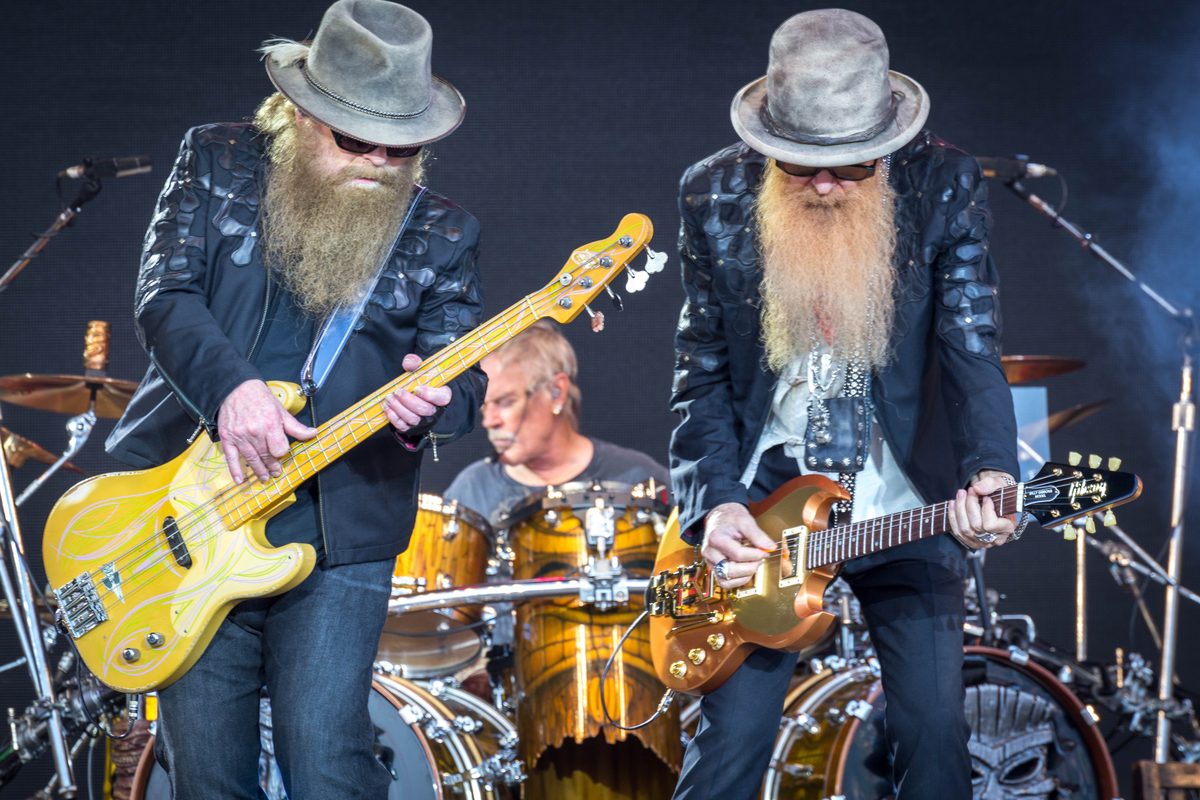
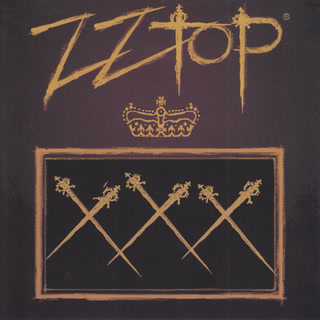
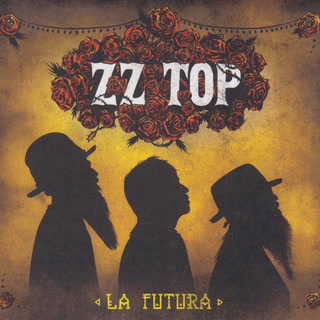
Dusty Hill, Frank Beard and Billy Gibbons on the Pyramid Stage at the Glastonbury Festival, England, 24 June 2016.
In short
How ZZ Top tunes
Billy Gibbons kept ZZ Top in E Standard for two decades and went low in the 1990s. TuneLit measured all fifteen studio albums from CD.
Read more
The 1970s records sit close to A 440 except Tejas (+11 ¢) and Degüello (−6 ¢), the 1980s ones a few cents sharp, Eliminator the most at +9 ¢. The 1987 remixes of the early albums run at the same speed as the original mixes, except Tush. Open G carries the slide of Tush; E♭ Standard, D Standard, Drop D, C Standard and Drop C turn up from Antenna on, with Rhythmeen and Mescalero the most varied. Single songs stray: Jesus Just Left Chicago is 24 ¢ sharp, I Thank You 25 ¢ flat, and Flyin' High sits between two notes.
ZZ Top look like a simple case for a tuner, and for most of the catalog they are. Billy Gibbons built the band's sound on a guitar in plain E Standard: boogie riffs on the low strings, blues licks in A and E, and a tone that came more from his hands, his amps and very light strings than from any special tuning. Fifteen studio albums later, though, the picture is less tidy. The slide part of Tush is in open G, a lead on Degüello was played on a small guitar tuned a minor third up, and in the 1990s Gibbons went the other way, tuning down to D, B and even a low A for Rhythmeen. On top of that, the early albums exist in two different mixes, and the records do not all sit at the same pitch.
This page collects what is known about every studio album from ZZ Top's First Album (1971) to La Futura (2012): the tuning of each song as the sources give it, the pitch TuneLit measured on the owner's CDs, the songs that break the pattern, and how to set it all up in TuneLit. Each album page lists every song with a Tune button that opens the tuner in exactly that tuning, measured offset included.
Popular songs
How to tune for ZZ Top's best-known songs
Each song has its own page: the exact tuning, the record's pitch, how to get there string by string, and how to move the record into your own tuning.
TuneLit measured every song of the fifteen studio albums from CDs in the owner's library. For each album the primary source is the earliest CD pressing in the library, and where the library holds a second edition we measured that too, as a check. Which CD matters more for ZZ Top than for most bands, because of what happened to the early albums in 1987.
The 1987 remixes. When ZZ Top's 1970s albums first came out on CD, as single discs and in the Six Pack box, the first five albums were remixed with new drum sounds and effects to match the sound of Eliminator. Only the live side of Fandango! and El Loco were left alone. For about twenty years those remixes were the only full albums on CD: a few songs returned in their original mixes on the 2003 box Chrome, Smoke & BBQ, whole albums only with the 2006 remasters of Tres Hombres and Fandango! and, for the others, the 2013 box The Complete Studio Albums. The owner's CDs of ZZ Top's First Album, Rio Grande Mud, Tres Hombres, Fandango! and Tejas are the early Warner Bros. pressings, so they carry the 1987 remixes. The library also has the 2006 remasters of Tres Hombres and Fandango!, in the original mixes, and we measured both.
The good news: the remix did not change the speed. Tres Hombres measures the same in both mixes (the album value moves by less than 1 ¢), and so does Fandango!, with one exception: Tush. On the 1987 remix CD it reads about 10 ¢ flat, while the original 1975 mix on the 2006 remaster reads about 1 ¢ sharp. The song's Tune button uses concert pitch, which fits the original mix you hear on streaming services and on the remasters.
The other editions. The two Eliminator CDs in the library (two club pressings) measure the same within a cent, and so do the US and Canadian Recycler CDs and the European and Japanese Mescalero CDs. Degüello is the odd one: two Warner compilations in the library, One Foot in the Blues (1994) and Goin' 50 (2019), put the seven Degüello songs they share 9 to 12 ¢ higher than the German Degüello CD we measured, while the same compilations match the other albums' CDs within about 3 ¢. That German CD may run slightly slow. The compilations are not sources here, but the Degüello section below says what to do about it.
The method. The estimator reads 90 seconds of each song, from 0:45, and compares the strongest notes with the equal-tempered grid. That gives the record's offset from A 440, known only within one semitone; which semitone the strings sit on comes from the tabs and sources. A song gets its own value when it differs from its album by 8 cents or more with good confidence; the rest share the album's value. Anything within ±4 cents is shown as concert pitch. A second check, TuneLit's semitone check, listens for the lowest open string and says whether the tab's tuning fits the record.
Billy Gibbons on stage at the Azkena Rock Festival in Vitoria-Gasteiz, Spain, in June 2015.
The story
Billy Gibbons's tunings in one place
Tuning
Strings, low to high
Songs
E Standard
E A D G B E
almost everything from 1970 to 1990, most songs after that
Open G
D G D G B D
the slide part of Tush; Buck Nekkid (tab)
E♭ Standard
E♭ A♭ D♭ G♭ B♭ E♭
Arrested for Driving While Blind, Asleep in the Desert, Party on the Patio, Lovething, Breakaway, Girl in a T-Shirt, Loaded, Made into a Movie, Que Lastima, Flyin' High (tabs)
D Standard
D G C F A D
Two Ways to Play, What It Is Kid
Drop D
D A D G B E
Poke Chop Sandwich, Crucifixx-A-Flatt (tabs)
C Standard
C F B♭ E♭ G C
Rhythmeen, Prettyhead (tabs)
Drop C
C G C F A D
Alley-Gator (tab)
G Standard, short scale
G C F B♭ D G
the lead of I'm Bad, I'm Nationwide
E Standard is home. The riffs of La Grange, Tush, Cheap Sunglasses, Sharp Dressed Man and Legs all live on an ordinary six-string tuned E A D G B E, and the tabs for nearly every song of the first ten albums agree. Gibbons told Guitar World that La Grange was a 1955 Stratocaster straight into a Marshall Super Lead, with the fuzz coming from the amp alone.
Open G shows up where the slide does. Gibbons recalled that the band stopped to enjoy the G tuning for the slide part of Tush, recorded on his Les Paul, Pearly Gates. Most tabs play the whole song in E Standard, which works for the boogie riff; for the slide, open G is the authentic choice.
Tuned up, not down. For the lead on I'm Bad, I'm Nationwide, Gibbons used a custom half-size guitar with a very short scale, tuned to G: standard tuning raised a minor third. On a full-size guitar that much tension is asking for broken strings; play the part in E Standard with a capo at the 3rd fret instead, which gives the same notes.
The low tunings belong to the RCA years. Gibbons said that for Rhythmeen the band went from D tuning down to B and then to a low A; the experiments began when Rick Rubin pointed him to Barkmarket, whose guitarist used C♯ and B tunings. He credited the album's low growl to a detuned 1955 Les Paul Goldtop. He did not list which song uses which tuning, and tabs for these albums are few, so the database follows the tabs song by song and the album sections below say where the record seems to go lower.
Strings. Gibbons has long played remarkably light strings, a habit he traces to advice from B.B. King, and he keeps them on even when he detunes. If you tune a light set down to C or B, expect floppy strings; a heavier set, or a baritone, keeps the feel under control.
Main tuning: E Standard +4 ¢ (A ≈ 441.1), measured by TuneLit on the 1987 CD remix.
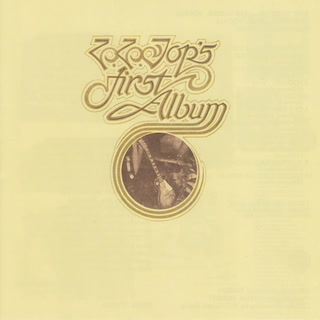
Recorded in 1970 at Robin Hood Studios in Tyler, Texas, the debut is blues and boogie in E Standard from (Somebody Else Been) Shaking Your Tree to Backdoor Love Affair. Brown Sugar here is a blues of Gibbons's own, not the Rolling Stones song.
The album sits a few cents sharp, but four songs stand apart. Squank is the highest, about 20 ¢ sharp (A ≈ 445.2), Brown Sugar about 16 ¢ sharp (A ≈ 444) and Goin' Down to Mexico about 14 ¢ sharp (A ≈ 443.6), while Bedroom Thang sits about 10 ¢ flat (A ≈ 437.4). Each has its own Tune button. One Foot in the Blues, a 1994 compilation, reads Brown Sugar exactly the same, so its high pitch is not an accident of this CD.
With TuneLit: E Standard for every song, with the song's own offset where it has one.
Main tuning: E Standard at concert pitch (A ≈ 439.9), measured on the 1987 CD remix.
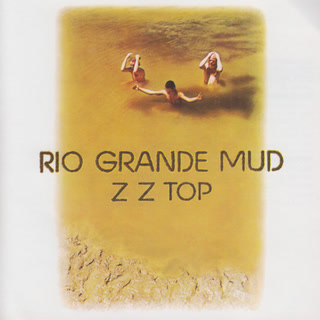
The second album came from the same studio and keeps to E Standard. Just Got Paid is its best-known riff: the most-viewed tab plays both the chopping riff and the slide part in E Standard, while a second, much less viewed tab puts the slide in open E (E B E G♯ B E). Either way the low string is E, and TuneLit's semitone check agrees with it.
Whiskey'n Mama runs about 17 ¢ sharp (A ≈ 444.4) and Down Brownie about 14 ¢ sharp (A ≈ 443.6). Two songs give only weak readings: Mushmouth Shoutin' points about 43 ¢ flat, close to half way between E and E♭, and Ko Ko Blue about 29 ¢ flat. Neither reading is confident enough to set a value, so their buttons use the album's concert pitch; if either song sounds off, try lowering the reference by ear.
With TuneLit: E Standard at concert pitch, with the two sharp songs' own values.
Main tuning: E Standard at concert pitch (+3.5 ¢, A ≈ 440.9), measured on the 1987 CD remix and confirmed by the 2006 remaster of the original mix.
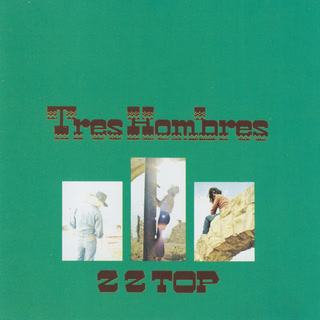
The breakthrough album is E Standard from Waitin' for the Bus to Have You Heard?, including La Grange, Beer Drinkers & Hell Raisers and Precious and Grace. The two mixes agree on every song within about 3 ¢. The one song with a pitch of its own is Jesus Just Left Chicago, the slow blues that follows Waitin' for the Bus without a break: it sits about 24 ¢ sharp (A ≈ 446.1) on both CDs. If you play the two songs as one piece, as the record does, retune between them or settle on a reference in between.
La Grange is the reference point for many players: it measures 4 ¢ sharp, which TuneLit rounds to concert pitch.
With TuneLit: E Standard at A 440, and +24 ¢ for Jesus Just Left Chicago.
Main tuning: E Standard at concert pitch (−1.6 ¢, A ≈ 439.6), measured on an early German CD and checked against the 2006 remaster.
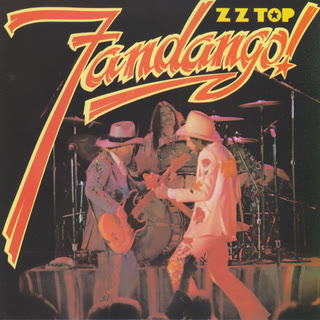
Side one is live, recorded at the Warehouse in New Orleans on 12 April 1974: Thunderbird, Jailhouse Rock and the long Backdoor Medley. Side two is the studio, from Nasty Dogs and Funky Kings to Tush. Everything is in E Standard except the slide of Tush, which Gibbons played in open G. The live tracks give weaker readings than the studio songs, as live recordings usually do, but they land close to concert pitch too.
Heard It on the X is the one song TuneLit could not pin down: the estimator found no steady reading in it on any CD, and its rough reading sits about 28 ¢ sharp. Its button uses the album's concert pitch; it is the song on this album most worth checking by ear. Tush is discussed above: about 10 ¢ flat in the 1987 remix, at concert pitch in the original mix, and listed at concert pitch.
With TuneLit: E Standard at A 440; open G for the slide of Tush.
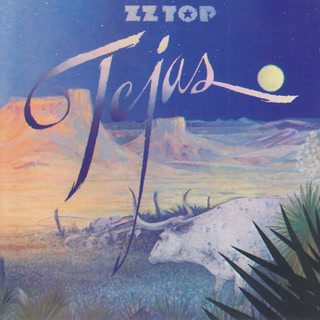
Main tuning: E Standard +11 ¢ (A ≈ 442.8), measured on the 1987 CD remix.
Tejas is the sharpest of the 1970s albums: nearly every song sits 7 to 17 ¢ above A 440, so the album value of +11 ¢ is worth using. Two songs are tabbed lower. The main tab of Arrested for Driving While Blind, one of the band's better-known 1970s songs, is in E♭ Standard; TuneLit's semitone check is not convinced and hears D rather than E♭ as the lowest string, so treat that song with care and check it by ear. Asleep in the Desert, the acoustic instrumental that closes the album, is tabbed in E♭ Standard as well and measures about 5 ¢ flat (A ≈ 438.7), some 16 ¢ below the rest of the album.
With TuneLit: E Standard +11 ¢ for most songs; E♭ Standard for the two tabbed lower.
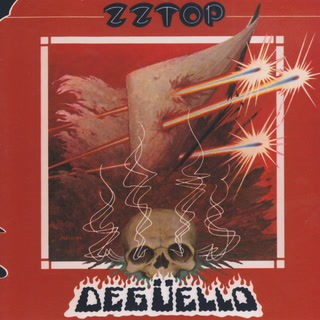
Main tuning: E Standard −6 ¢ (A ≈ 438.6), measured on a German CD.
The first album for Warner Bros. is E Standard throughout, with two covers, I Thank You and Dust My Broom. I Thank You measures about 25 ¢ flat (A ≈ 433.8), the flattest firm reading in the whole catalog. She Loves My Automobile has a single tab in F Standard, which would mean a guitar tuned a half step above normal; the rest of the album is tabbed in E, and TuneLit's semitone check hears E, not F, as the lowest string, so the database keeps it in E Standard. I'm Bad, I'm Nationwide has the short-scale lead described above.
About the pitch: two Warner compilations in the owner's library put the seven Degüello songs they share 9 to 12 ¢ higher than this CD (She Loves My Automobile, A Fool for Your Stockings, Lowdown in the Street, Hi Fi Mama and I'm Bad, I'm Nationwide, plus single versions of I Thank You and Cheap Sunglasses). If your copy is a remaster or a stream and the guitar sounds flat at the button's −6 ¢, raise the reference to about +5 ¢ (A ≈ 441.3).
With TuneLit: E Standard −6 ¢ for this CD, I Thank You −25 ¢.
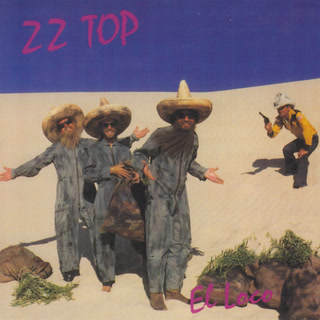
Main tuning: E Standard +7 ¢ (A ≈ 441.8), measured on a German CD.
El Loco was in the 1987 box too, but kept its original mix. It is E Standard, with Tube Snake Boogie, Pearl Necklace and Heaven, Hell or Houston all within a few cents of the album value. The tab of the closing Party on the Patio is in E♭ Standard; TuneLit's reading of that song is weak, and its semitone check hears D rather than E♭, so it is another one to check by ear.
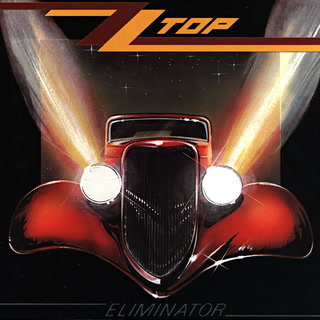
Main tuning: E Standard +9 ¢ (A ≈ 442.4), measured on two club pressings that agree within a cent.
The big hit album is E Standard all the way, as every tab of Gimme All Your Lovin', Sharp Dressed Man, Legs and Got Me Under Pressure says. Most songs sit 6 to 14 ¢ sharp. Got Me Under Pressure (+1 ¢) and I Need You Tonight (−3 ¢) are the exceptions: both are at concert pitch and have their own buttons.
With TuneLit: E Standard +9 ¢; concert pitch for Got Me Under Pressure and I Need You Tonight.
Main tuning: E Standard +6 ¢ (A ≈ 441.5), measured on a German CD.
Synthesizers to the fore, but the guitars are still in E Standard, and every song stays within about 7 ¢ of the album value: Sleeping Bag, Stages, Rough Boy, Velcro Fly.
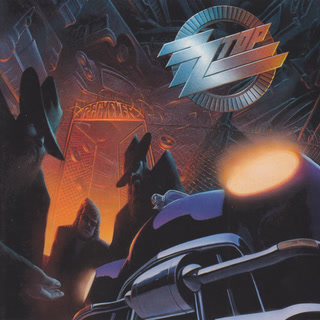
Main tuning: E Standard +4 ¢ (A ≈ 441.1), measured on the US CD and matched by the Canadian one.
The last Warner album is the steadiest of all: every song sits between −1 and +7 ¢. My Head's in Mississippi, Concrete and Steel and Doubleback are in E Standard. Lovething is tabbed in E♭ Standard, and TuneLit's semitone check agrees that its lowest string is E♭.
With TuneLit: E Standard +4 ¢; E♭ Standard for Lovething.
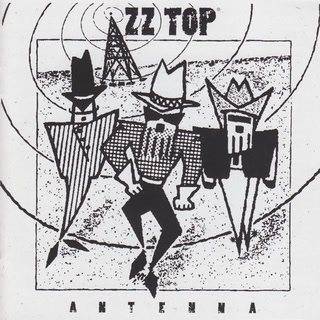
Main tuning: E Standard at concert pitch (+3.6 ¢, A ≈ 440.9), measured on a UK CD.
The first RCA album went back to a stripped-down trio sound. Pincushion, World of Swirl and Fuzzbox Voodoo are tabbed in E Standard. Breakaway and Girl in a T-Shirt are not: their only tabs, made by Songsterr's automatic transcription, put them in E♭ Standard, and TuneLit's semitone check agrees with E♭ for both, with the bass sitting on a low E♭ in each. The UK CD adds Everything as a bonus track, which is not part of the album here.
With TuneLit: E Standard at A 440; E♭ Standard for Breakaway and Girl in a T-Shirt.
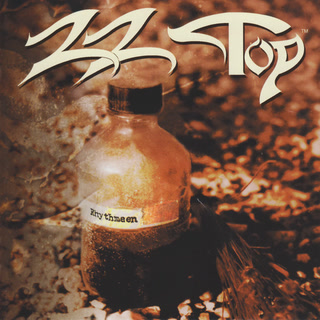
Main tuning: E Standard +4 ¢ (A ≈ 441), measured on a European CD; several songs tuned lower.
This is the album Gibbons described as the low-tuned one, from D down to B and to a low A, on a detuned 1955 Les Paul Goldtop. The tabs only cover part of it: the title track and Prettyhead are tabbed in C Standard (two whole steps down), Loaded in E♭ Standard, and She's Just Killing Me, the most-viewed tab of the album, in E Standard. TuneLit's semitone check agrees with all four. The album value comes out at 4 ¢ sharp.
For the other songs the database falls back on E Standard, and the record hints that some of them go lower. On Bang Bang TuneLit hears much of the bass line on a low B, a fourth below the open E of a standard bass, and on Hairdresser and Vincent Price Blues the bass reaches a low D. Those notes fit Gibbons's account of B and D tunings, but no tab or interview says which guitar tuning each song uses, so check these by ear before trusting E Standard.
With TuneLit: C Standard for Rhythmeen and Prettyhead, E♭ Standard for Loaded, E Standard as the fallback for the rest; all at +4 ¢.
Main tuning: E Standard at concert pitch (−0.8 ¢, A ≈ 439.8), measured on the US CD.
The thirtieth-anniversary album has eight studio songs and, after a spoken introduction, four live ones, including Teddy Bear sung by Dusty Hill and Hey Mr. Millionaire with Jeff Beck. Poke Chop Sandwich is tabbed in Drop D by a fan and Crucifixx-A-Flatt in Drop D by Songsterr's automatic transcription; Made into a Movie is transcribed in E♭ Standard. The semitone check agrees with Crucifixx-A-Flatt and Made into a Movie, but for Poke Chop Sandwich it leans toward E♭ rather than D for the lowest string, so check that one by ear. Fearless Boogie sits about 15 ¢ flat (A ≈ 436.3).
With TuneLit: E Standard at A 440 by default; Drop D and E♭ Standard where the tabs say so.
Main tuning: E Standard +4 ¢ (A ≈ 441), measured on a European CD and matched by the Japanese one.
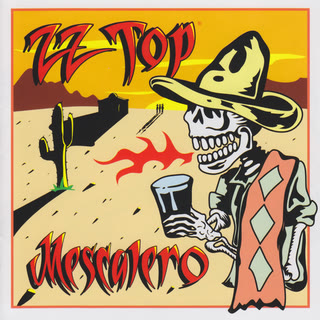
Mescalero has more tunings than any other ZZ Top album. Wikipedia says Gibbons tuned a whole step down for Two Ways to Play (the one tab uses Drop D; both put the low string on D). Alley-Gator is tabbed in Drop C, Buck Nekkid in open G, What It Is Kid in D Standard and Que Lastima in E♭ Standard, and the semitone check agrees with each of them. The title track, Goin' So Good and Liquor are tabbed in E Standard.
The pitch spreads more than on any other album, from about 8 ¢ flat to 22 ¢ sharp: Goin' So Good and Crunchy about 8 ¢ flat, Dusted about 5 ¢ flat, Tramp about 4 ¢ flat, What Would You Do about 12 ¢ sharp and What It Is Kid about 22 ¢ sharp (A ≈ 445.6). Use each song's own button. Stackin' Paper is listed in E Standard after its machine-made tab, but the semitone check hears E♭ as its lowest string; it is worth a listen.
With TuneLit: E Standard +4 ¢ for most songs, and the song's own tuning and offset where it has one.
Main tuning: E Standard at concert pitch (+2.5 ¢, A ≈ 440.6), measured on the US CD.
The Rick Rubin album is E Standard for I Gotsta Get Paid, Chartreuse, Over You and I Don't Wanna Lose, Lose, You. I Gotsta Get Paid sits about 13 ¢ sharp (A ≈ 443.3) and Consumption about 11 ¢ sharp (A ≈ 442.9). Flyin' High is the puzzle: its only tab, a machine transcription, is in E♭ Standard, and the record sits about 37 ¢ above that, almost half way to the next note. TuneLit lists it as E♭ Standard +37 ¢ and offers the reading a semitone lower as well; check by ear which one matches your guitar. The two bonus tracks of the deluxe edition are not part of the album here.
With TuneLit: E Standard at A 440, with the sharp songs' own values and Flyin' High between two notes.
The story
Tuning up for ZZ Top in practice
Start from E Standard. For the first ten albums, a guitar in E Standard plays almost every song. Set the album's offset in TuneLit if you play along with the record: the 1970s albums sit within a few cents of A 440, except Tejas (+11 ¢) and Degüello (−6 ¢ on the CD we measured), and the 1980s albums run a little sharp, Eliminator the most at +9 ¢.
Watch the songs that move. Jesus Just Left Chicago (+24 ¢), Squank (+20 ¢) and I Thank You (−25 ¢) are far enough from their albums to sound sour with the album's setting.
Slide. Use open G for the slide part of Tush. For Just Got Paid, E Standard works and so does open E; both keep the low string on E.
The RCA albums. From Antenna on, check each song's tuning before you play: E♭ Standard, D Standard, Drop D, C Standard and Drop C all appear, and several songs on Rhythmeen and Mescalero may sit lower than the tabs say.
Light strings, low tunings. If you copy Gibbons's light strings, go up a gauge or two before you tune down to C, or the strings will feel loose and buzz.
Remix or original? The 1987 remixes and the original mixes run at the same speed, except Tush. Streaming services and the remasters carry the original mixes.
Questions
What tuning does ZZ Top use?
Mostly E Standard: 15 of 15 albums. Many albums also have songs in other tunings, and the album pages list them song by song.
Why does ZZ Top sound out of tune when I play along?
Some records are not at concert pitch. Tejas sits about 11 cents sharp (A ≈ 443). A guitar tuned to A 440 clashes with them. Every Tune button on these pages sets the measured pitch for you.
How did TuneLit measure ZZ Top's records?
We played original CDs and LPs through TuneLit's pitch analysis: the strongest notes of each song are compared with the A 440 grid, which gives the offset in cents. That cannot tell the semitone, so the tuning name comes from interviews, the press and tabs. The audio is never stored or published.
Colors and font
Font
Colors
Menu
Install the app
Android (Chrome): menu ⋮ → Install app or Add to Home screen.
Computer (Chrome, Edge): the install icon at the right end of the address bar.
iPhone: Safari → Share → Add to Home Screen.
It opens full screen and keeps tuning with no connection.