






US · 1981–2011 · 17 albums

Sonic Youth tunings.

Dozens of home-made tunings, often a different one for every song and every guitar.

See the albums Read the story

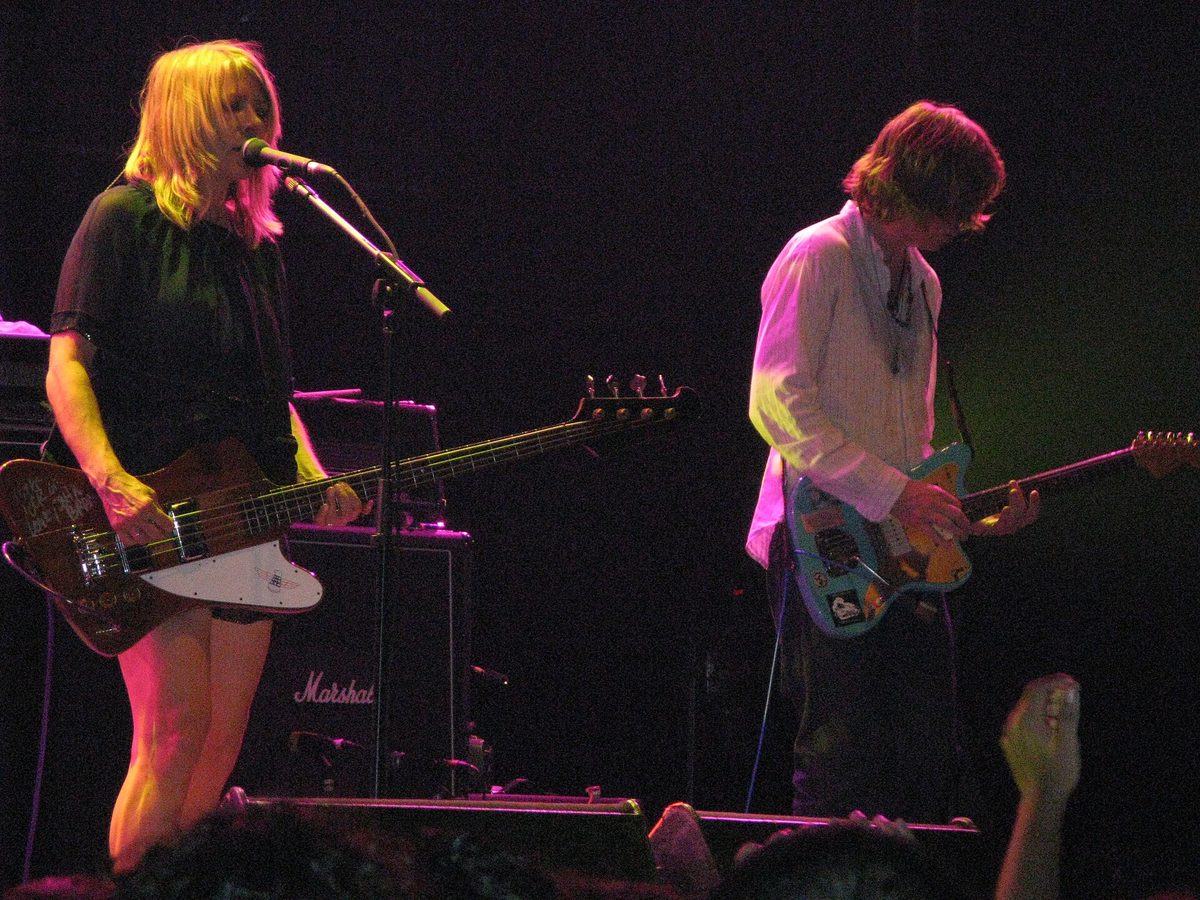
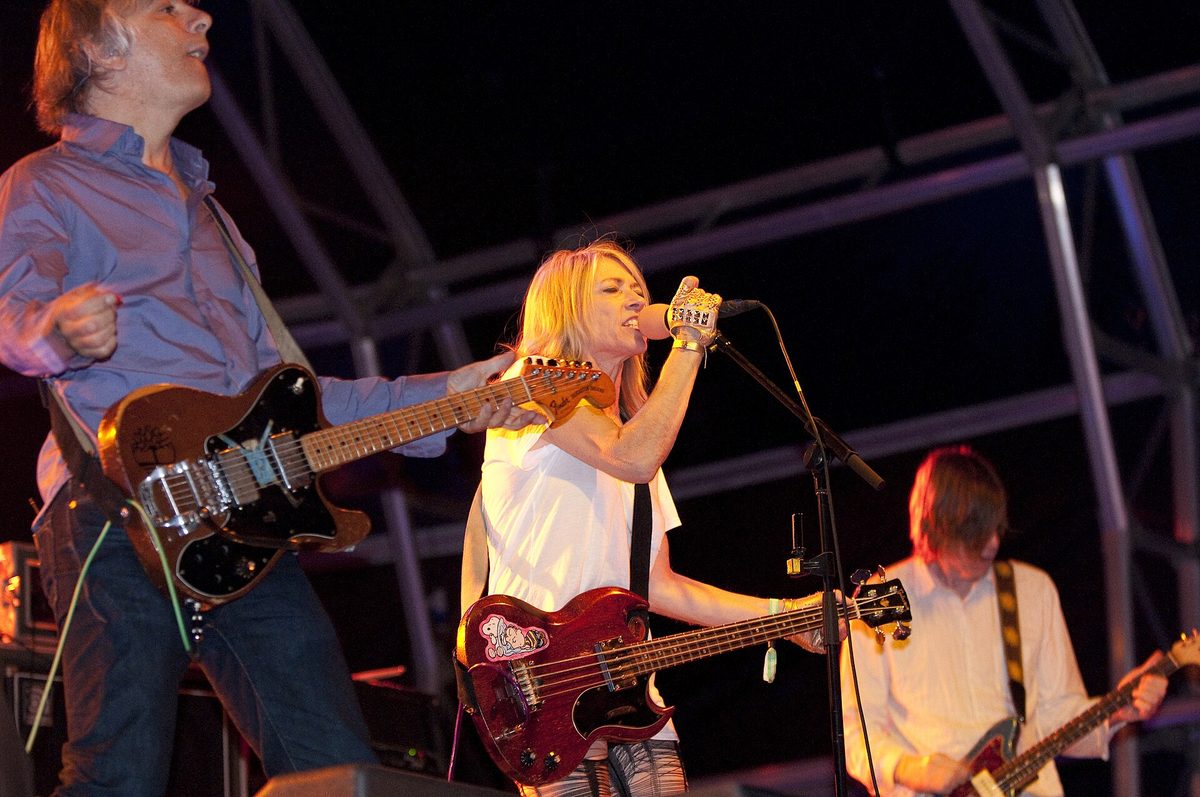
Kim Gordon on bass and Thurston Moore on guitar with Sonic Youth in Santiago, Chile, on 29 March 2009.

In short

How Sonic Youth tunes

Sonic Youth retuned cheap guitars for almost every song after their first EP, often a different tuning on each guitar: F♯ F♯ F♯ F♯ E B on Bad Moon Rising, G A B D E G against G G D D G G on Teen Age Riot, E G D G E D against E E B B E F♯ on Goo and Dirty, C G D G C D from Murray Street on. This page follows the band's own interviews, its techs and the song-by-song tuning list on its website, and names the second guitar for every song. TuneLit measured the fifteen studio albums from the owner's CDs: all sit within about 10 cents of concert pitch (Bad Moon Rising 10 cents flat, Goo 9 sharp), but single songs stray, above all Rain King, almost a quarter tone flat, and Winner's Blues, 26 cents sharp.

Album tunings

  • F♯2 F♯2 F♯3 F♯3 E3 B34 albums
  • E Standard2 albums
  • G2 G2 D3 D3 D♯3 D♯32 albums
  • E2 G2 D3 G3 E3 D42 albums
  • C2 G2 D3 G3 C4 D42 albums
  • A2 C3 C3 G3 G♯3 C41 album
  • C2 G2 D3 G3 B3 B31 album
  • F2 G2 C3 F3 A3 F♯31 album
  • D2 D♯2 A♯2 D♯3 G3 G31 album
  • D2 D2 A2 F♯3 A3 D41 album

Plus the songs that break the pattern, and the pitch of each record.

17 albums · 169 songs

Pick an album

Each album shows its tuning and how far the record sits from A 440. Open it for every song and a Tune button.

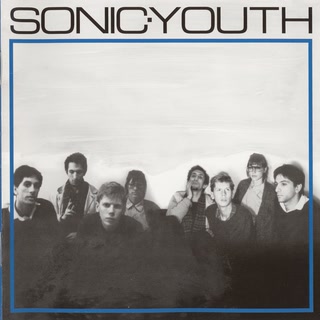
  1. Sonic Youth album cover 1982EP Sonic Youth E Standard A 440 Official · not measured All 5 songs in this tuning
  2. Confusion Is Sex album cover 1983Studio album Confusion Is Sex E Standard A 440 MeasuredCD +2.8 ¢ 2 songs tuned differently
  3. 1983EP Kill Yr Idols G2 G2 D3 D3 D♯3 D♯3 −22 ¢ −22 ¢ · A ≈ 434 MeasuredCD −21.6 ¢ 2 songs tuned differently
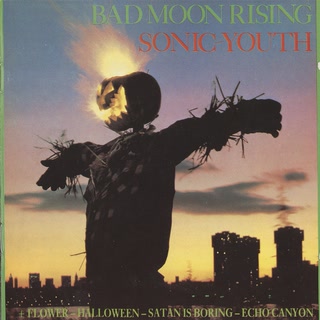
  4. Bad Moon Rising album cover 1985Studio album Bad Moon Rising F♯2 F♯2 F♯3 F♯3 E3 B3 −10 ¢ −10 ¢ · A ≈ 437 MeasuredCD −10.2 ¢ 4 songs tuned differently
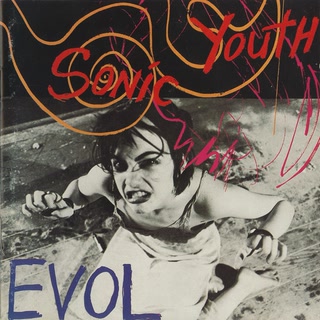
  5. EVOL album cover 1986Studio album EVOL F♯2 F♯2 F♯3 F♯3 E3 B3 A 440 MeasuredCD +0.7 ¢ 5 songs tuned differently
  6. Sister album cover 1987Studio album Sister F♯2 F♯2 F♯3 F♯3 E3 B3 +6 ¢ +6 ¢ · A ≈ 442 MeasuredCD +6.4 ¢ 7 songs tuned differently
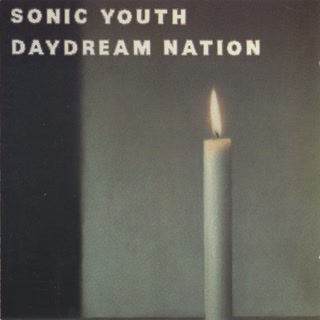
  7. Daydream Nation album cover 1988Studio album Daydream Nation A2 C3 C3 G3 G♯3 C4 A 440 MeasuredCD +2.8 ¢ 9 songs tuned differently
  8. Goo album cover 1990Studio album Goo E2 G2 D3 G3 E3 D4 +9 ¢ +9 ¢ · A ≈ 442 MeasuredCD +8.7 ¢ 7 songs tuned differently
  9. Dirty album cover 1992Studio album Dirty E2 G2 D3 G3 E3 D4 +7 ¢ +7 ¢ · A ≈ 442 MeasuredCD +7.3 ¢ 11 songs tuned differently
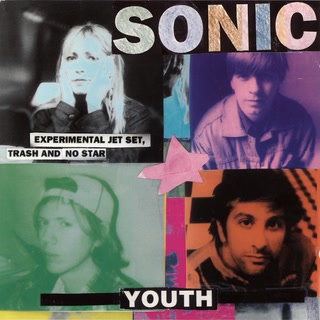
  10. Experimental Jet Set, Trash and No Star album cover 1994Studio album Experimental Jet Set, Trash and No Star G2 G2 D3 D3 D♯3 D♯3 A 440 MeasuredCD +2.7 ¢ 7 songs tuned differently
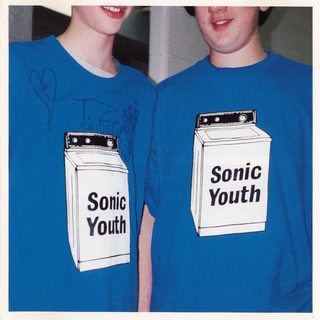
  11. Washing Machine album cover 1995Studio album Washing Machine F♯2 F♯2 F♯3 F♯3 E3 B3 A 440 MeasuredCD −2.2 ¢ 8 songs tuned differently
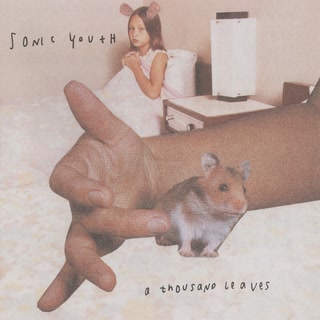
  12. A Thousand Leaves album cover 1998Studio album A Thousand Leaves C2 G2 D3 G3 B3 B3 A 440 MeasuredCD +3.4 ¢ 7 songs tuned differently
  13. NYC Ghosts & Flowers album cover 2000Studio album NYC Ghosts & Flowers F2 G2 C3 F3 A3 F♯3 A 440 MeasuredCD +3.1 ¢ 3 songs tuned differently
  14. Murray Street album cover 2002Studio album Murray Street C2 G2 D3 G3 C4 D4 A 440 MeasuredCD +3.8 ¢ 2 songs tuned differently
  15. Sonic Nurse album cover 2004Studio album Sonic Nurse C2 G2 D3 G3 C4 D4 +6 ¢ +6 ¢ · A ≈ 442 MeasuredCD +6.2 ¢ 5 songs tuned differently
  16. Rather Ripped album cover 2006Studio album Rather Ripped D2 D♯2 A♯2 D♯3 G3 G3 +4 ¢ A 440 MeasuredCD +4.4 ¢ 10 songs tuned differently
  17. The Eternal album cover 2009Studio album The Eternal D2 D2 A2 F♯3 A3 D4 A 440 MeasuredCD +1.6 ¢ 4 songs tuned differently

The full story

Sonic Youth tunings, album by album

Most bands have a tuning. Sonic Youth had a guitar rack. Thurston Moore and Lee Ranaldo almost never played a song in standard tuning after their first EP: they retuned cheap guitars until the open strings rang the way they wanted, gave each song its own guitar, and often played two completely different tunings against each other in the same song. A typical Daydream Nation song has Thurston in A C C G G♯ C and Lee in A A E E A A; a Rather Ripped song has Thurston in D D♯ A♯ D♯ G G. Learning these songs is less about finding the right fret than about setting up the right instrument first.

This page collects what is known about those tunings, album by album, from the 1982 EP to The Eternal in 2009, and adds what TuneLit measured on the owner's CDs: how close each record sits to concert pitch, and which songs drift away from it. Every song in the album list above has a Tune button that sets the tuner to the exact strings, low to high, with the record's offset included.

Popular songs

Each song has its own page: the exact tuning, the record's pitch, how to get there string by string, and how to move the record into your own tuning.

The story

How Sonic Youth tuned

The method grew out of necessity. Michael Azerrad's account of the band, quoted on Wikipedia, puts it simply: they could only afford cheap guitars, and in standard tuning cheap guitars sound cheap. Retuned, with a drumstick or a screwdriver jammed under the strings, the same pawnshop guitar could drone, chime and roar. Joe Gore, who met the band in the late 1980s, remembers them touring with exactly such pawnshop beaters.

A few habits run through almost every tuning:

  • Unison pairs. Many tunings tune two neighbouring strings to the same note: G G D D D♯ D♯, F♯ F♯ G G A A, A A E E A A. A single finger across two strings then plays a fat, chorused note, and a barre across all six makes a big drone chord.
  • A narrow range. Most tunings span an octave or a little more instead of the guitar's usual two octaves. Lower strings go up, upper strings come down. C C E B G D on The Sprawl has its lowest string on the C below middle C.
  • Rubs and clusters. The top pair often sits a half step from the pair below it (D against D♯), so open chords grind. Thurston's G A B D E G for Teen Age Riot does the opposite: no two strings alike, a pentatonic scale across the open strings.
  • Prepared guitars. A screwdriver behind the 9th fret (Lee on The World Looks Red), a drumstick under the 12th fret (Thurston on I Love Her All the Time), a file or chisel over the pickup (Small Flowers Crack Concrete), a bicycle horn in the strings (Lightnin'). With objects on the strings the open tuning matters less than the noise.
  • One guitar per tuning. Rather than retune on stage, the band carried a guitar for nearly every tuning, sometimes one for one song. When almost 30 of the band's guitars and basses were stolen from their van on 4 July 1999, they had to start over with new instruments. Even in 2012 Lee was still hauling five or six guitars to play ten songs with his own band.

Kim Gordon usually played bass in standard tuning. When she picked up a guitar (Washing Machine is the album where she plays guitar on most songs), she had tunings of her own, such as B E G D B B and C G G D D D. Jim O'Rourke (1999–⁠2005) added a third guitar on Murray Street and Sonic Nurse, often in G G D E G B with a capo.

Lee Ranaldo on guitar and Kim Gordon on bass and vocals, playing with Sonic Youth on 30 May 2009.

The story

Where the tunings come from

The band never released official tab books, but they talked about tunings constantly. Guitar Player printed tunings for many songs in February 1989, August 1991, December 1992, July 1994 and November 1995; Guitar World did so in November 1992 and Musician in December 1995. The liner notes of Bad Moon Rising print some of them, and the band's guitar techs and set lists named the guitar for each song. A fan, Chris Lawrence, gathered all of this into the "Sonic Youth Tuning Tutorial" on the band's own website, song by song and guitar by guitar, with a note on where each tuning was confirmed. That list is the backbone of this page. The Songsterr tabs agree with it on most of the songs they cover, octaves included.

Each song on this page shows one guitar's tuning: the guitar that carries the song, usually the singer's when Thurston or Lee sings, otherwise Thurston's. The notes name the other guitars, so a second player can join in. The evidence label tells you how solid it is: official where the band printed or said it (Bad Moon Rising liner notes, Thurston on the F♯ tuning), widely reported where a magazine interview or the band's techs confirmed it, community where it rests on set lists, videos or tabs, and disputed where sources disagree (Youth Against Fascism). Where a tuning was never documented, the notes say so; we list the album's tuning there only so the record's pitch can be set.

A word on octaves. A list like "F♯ F♯ F♯ F♯ E B" does not say which F♯. TuneLit uses the octaves from the tuning list's step-by-step instructions (tune the low E up two frets, the A down three, and so on), checked against the Songsterr tabs, which give exact octaves. F♯ F♯ F♯ F♯ E B is therefore two low F♯s, two F♯s an octave up, then E and B: the low E string goes up a whole step to F♯, the A string down a minor third to the same F♯, the D string up and the G string down to the F♯ an octave higher, the B string down to E and the high E string down to B.

TuneLit lab

What TuneLit measured

TuneLit measured every studio album in the owner's library, one CD per album, from Confusion Is Sex to The Eternal: 162 songs. The short version: Sonic Youth tuned to a tuner. All fifteen studio albums sit within about 10 cents of concert pitch, close enough that most players will hear little difference; Bad Moon Rising is the flattest at about 10 cents, Goo the sharpest at about 9.

Single songs are another matter, because the band recorded loose and noisy:

  • Rain King on Daydream Nation sits about 46 cents flat (A ≈ 428.4), almost exactly halfway between two notes, while the rest of the album is at concert pitch. That fits a story the tuning list tells: when the band relearned the album for its 2007 concerts, Rain King's tuning was the hardest one to reconstruct.
  • Winner's Blues, Thurston alone with an acoustic guitar, opens Experimental Jet Set about 26 cents sharp. Bone on the same album is about 24 cents flat.
  • Contre le sexisme (A Thousand Leaves), an improvisation, reads 30 cents sharp; The Ineffable Me 17 cents sharp.
  • Hot Wire My Heart, a cover in standard tuning on Sister, reads about 20 cents sharp.
  • The Diamond Sea runs about 11 cents flat, a few cents under the rest of Washing Machine.
  • Titanium Exposé on Goo was slowed down a half step on the record, so its E G D G E D guitars sound as D♯ F♯ C♯ F♯ D♯ C♯.

TuneLit also asked its semitone check, which listens for the lowest open string, whether each song really sits where the tunings put it. On 125 of the 162 songs it agrees, a strong result for tunings that never follow a standard pattern. It moved three Rather Ripped songs, where Thurston's guitar has a low D that is hardly heard: the record's lowest string is the D♯ unison of Lee's guitar, and the songs are now listed in D♯ D♯ A♯ D♯ G G. The other disagreements need an ear check: they can come from another guitar or the bass sitting below the listed one, or from a song that rarely plays its lowest open string.

The story

The first EP and Confusion Is Sex (1982–1983)

The five-song Sonic Youth EP is the one record in plain E Standard. The band has said so, and Lee called a song from his 2012 solo album the first original he had released in standard tuning since "that blue one" from 1982. TuneLit has not measured the EP.

Confusion Is Sex is noisier and almost undocumented. Lee's parts on the Stooges cover, Shaking Hell and Making the Nature Scene are in standard tuning; on The World Looks Red and Confusion Is Next he plays E A D E C D with a screwdriver behind the 9th fret. Thurston's guitar on (She's in a) Bad Mood and The World Looks Red is retuned to something nobody has identified. The 1995 CD reads about 3 cents sharp, but the readings scatter: drones and objects on the strings give the measurement little to hold. The World Looks Red reads about 16 cents flat.

The Kill Yr Idols EP from later in 1983 introduced G G D D D♯ D♯, the band's longest-lived tuning, for both guitars on Kill Yr Idols, Brother James and Early American. Those three songs, bonus tracks on the 1995 CD, read about 22 cents flat, but only Early American gives a steady reading.

The story

Bad Moon Rising (1985)

Thurston has called F♯ F♯ F♯ F♯ E B the band's first tuning that was really written down, and named Brave Men Run and Death Valley '69 as the first songs he wrote in it. Both guitars use it on Intro, Brave Men Run, Society Is a Hole and Death Valley '69. The odd ones come from the liner notes: on I Love Her All the Time Thurston plays G G C C A♯ A♯ with a drumstick under the 12th fret and Lee D♯ D♯ C♯ C♯ G G with a screwdriver; I'm Insane is Lee in D D D D E A, Justice Is Might Lee in A A E E F♯ A.

The Blast First CD sits about 10 cents flat (A ≈ 437.4), the flattest of the band's albums apart from the Kill Yr Idols songs, and Intro and Death Valley '69 confirm it with high confidence. If you tune to the F♯ tuning at A 440 you will be a little sharp against the record; the Tune buttons take the 10 cents off.

The story

EVOL (1986)

Steve Shelley's first album on drums. F♯ F♯ F♯ F♯ E B is still the base (Starpower, Death to Our Friends, Thurston on Shadow of a Doubt, where Lee answers in F♯ F♯ A A E E). New are F♯ F♯ G G A A for Tom Violence, G G D D D♯ D♯ for Green Light and E G♯ E G♯ E G♯ for Expressway to Yr. Skull, whose long ending is two guitars ringing in major thirds with Lee on slide. The 1994 DGC CD sits at concert pitch (+1 cent). Secret Girl, a piano piece with feedback, reads 31 cents sharp; there is no guitar tuning to match there.

The story

Sister (1987)

Thurston stays with the F♯ tunings while Lee brings in D D D D A A, the low droning tuning under Schizophrenia, Catholic Block and Tuff Gnarl. Schizophrenia's two parts are the clearest example of the band's method: Thurston's F♯ F♯ G G A A against Lee's D D D D A A, two different instruments that only meet in the song. Beauty Lies in the Eye is Lee in F♯ F♯ C♯ C♯ C♯ C♯, Pacific Coast Highway goes back to E G♯ E G♯ E G♯, and the Crime cover Hot Wire My Heart is in standard tuning. The Blast First CD is about 6 cents sharp (A ≈ 441.6); Hot Wire My Heart reads about 20 cents sharp.

The story

Daydream Nation (1988)

The album where the tunings became famous, and the hardest to set up: nearly every song pairs two different tunings.

  • Teen Age Riot: Thurston G A B D E G, Lee G G D D G G.
  • Silver Rocket, Candle, Kissability: Thurston A C C G G♯ C; Lee A A E E A A (E B E E A B on Kissability).
  • The Sprawl, 'Cross the Breeze: Thurston C C E B G D; Lee G G D D G G and E E E E F♯ F♯.
  • Eric's Trip, Hey Joni: Lee's songs, in E B E E A B. On Eric's Trip Thurston plays an old four-string guitar strung with bass strings and fretted with a drumstick.
  • Total Trash and Trilogy: Thurston in G G D D D♯ D♯; Lee in G G D D G G, and G G C♯ D G G on The Wonder and Hyperstation.
  • Rain King: Lee in E B E E A A, Thurston in D♯ D♯ A A E E, both settled on again for the 2007 shows.

The Blast First CD sits at concert pitch (about +3 cents), with the songs tightly grouped, except Rain King at about 46 cents flat. Set Rain King with its own Tune button: tuned to A 440 you would be almost a quarter tone sharp against the record. TuneLit's semitone check hears a note a half step under Lee's low E on Rain King, which fits Thurston's D♯ strings; an ear check would settle which guitar to follow.

The story

Goo (1990)

The first DGC album brings the pairing that dominates the next few records: Thurston in E G D G E D against Lee in E E B B E F♯ (Dirty Boots; Tunic has Lee in G G D D G G). Kool Thing and Mary-Christ go back to F♯ F♯ F♯ F♯ E B, Mote is Lee in G G D D F F, Disappearer is Thurston's C C E B G D again, and Cinderella's Big Score is Thurston's A C C G G♯ C. On My Friend Goo Kim plays guitar in E G D G E D and Thurston takes the bass. Mildred Pierce is in standard tuning.

The owner's copy is the Mobile Fidelity gold CD, which reads about 9 cents sharp (A ≈ 442.2). Titanium Exposé is the one to watch: the album version was slowed down a half step, so it sounds as D♯ F♯ C♯ F♯ D♯ C♯ and the Songsterr tab is written there. TuneLit lists it as it sounds; if you would rather keep your guitar in E G D G E D, let Play along lower the record a half step.

The story

Dirty (1992)

Butch Vig's production, and the same E G D G E D / E E B B E F♯ pair on Swimsuit Issue, Wish Fulfillment (Lee's song, listed in his E E B B E F♯), Chapel Hill, JC and Purr. 100% is F♯ F♯ F♯ F♯ E B on both guitars; Theresa's Sound-World and On the Strip use A C C G G♯ C against A A E E A A (Lee with a capo at the 3rd fret on Theresa's); Drunken Butterfly is F♯ F♯ G G A A; Sugar Kane is Thurston's G A B D E G against Lee's G G B D G A. Kim adds a guitar in D E G D B B on several songs and carries Crème Brûlée with it. Youth Against Fascism is disputed: Guitar Player gave G G D D D♯ D♯, but live the band used the A C C G G♯ C pair, and Thurston said any tuning would do.

The 1992 DGC CD sits about 7 cents sharp (A ≈ 441.9), and every song that gives a steady reading sits close to it.

Lee Ranaldo singing and playing a Fender Jazzmaster at the Coachella festival in April 2007, with Mark Ibold on bass and Steve Shelley on drums.

The story

Experimental Jet Set, Trash and No Star (1994)

Two pairings carry the album. Thurston's G G D D D♯ D♯ against Lee's G G C G C D (Bull in the Heather, Starfield Road, Self-Obsessed and Sexxee, In the Mind of the Bourgeois Reader, and probably Androgynous Mind, Quest for the Cup and Doctor's Orders), and E G D G E D against E E B B E F♯ (Skink, Tokyo Eye, Sweet Shine; Screaming Skull and Bone with Thurston in E G D G E D). Kim plays guitar in B E G D B B on Skink, Bone and Quest for the Cup. Waist is F♯ F♯ F♯ F♯ E B, and Winner's Blues is Thurston alone on acoustic in E E B E G♯ B.

The 1994 CD is at concert pitch (about +3 cents). Three songs drift: Winner's Blues about 26 cents sharp (A ≈ 446.6), Tokyo Eye about 11 sharp, and Bone about 24 flat (A ≈ 434).

The story

Washing Machine (1995)

Kim plays guitar on most songs, usually in B E G D B B, so many tracks have three guitars and no bass. Thurston's F♯ F♯ F♯ F♯ E B is the commonest tuning again (Becuz, Saucer-Like, Panty Lies), with Lee in A F♯ E F♯ E B, his variation on it. Washing Machine, Unwind and No Queen Blues pair G G D D D♯ D♯ with G G C G C D (Lee changes guitars for the long outro of the title track). Junkie's Promise is Thurston in D A D A B B, Skip Tracer is Lee in A F♯ E F♯ E B, and The Diamond Sea goes back to E G D G E D against E E B B E F♯.

The album disc reads at concert pitch (about 2 cents flat). The Diamond Sea runs about 11 cents flat (A ≈ 437.2) and Panty Lies about 6 sharp.

The story

A Thousand Leaves (1998)

A new family of tunings. Thurston's C G D G B B is close to the C G D G B E tuning Pavement used, with the top string brought down to a second B; the band's tuning list calls it borrowed from Pavement, and Stephen Malkmus in turn credited EVOL with starting his own tuning experiments. Lee mostly answers in G G D A G A, Kim in C G G D D D. Female Mechanic Now on Duty and Hits of Sunshine go back to E G D G E D; Hoarfrost is Lee in G G D E G B with a capo at the 5th fret, Karen Koltrane Lee in G G D A G A♯.

The 1998 DGC CD sits at concert pitch (about +3 cents). Contre le sexisme reads 30 cents sharp and The Ineffable Me 17 sharp; Heather Angel is 5 cents flat.

The story

NYC Ghosts & Flowers (2000)

Recorded after the 1999 theft, on old instruments pulled out of the band's studio, with prepared guitars back in use. Thurston's main tuning is F G C F A F♯; the tuning list has its two low strings slackened almost an octave, while TuneLit lists the same notes at F and G, a step or so from standard, which any guitar reaches. The semitone check hears F as the lowest open string on Nevermind and Small Flowers Crack Concrete. Lee plays D F C D F F and, on Free City Rhymes, Renegade Princess and Side2Side, a 12-string with only ten strings. Free City Rhymes and Renegade Princess have Thurston in the A Thousand Leaves tuning, C G D G B B. The CD sits at concert pitch (about +3 cents), Free City Rhymes 6 cents flat.

The story

Murray Street (2002) and Sonic Nurse (2004)

With Jim O'Rourke in the band, Thurston settled on C G D G C D, the tuning he was still writing in more than twenty years later. Lee mostly plays G G D G G A against it (Karen Revisited is his song in that tuning), sometimes C G D C G D or E E B E B B; Kim's guitar is in D A D A B B, and O'Rourke's third guitar in G G D E G B. Sympathy for the Strawberry keeps Thurston in C G D G B B. Murray Street reads about 4 cents sharp (A ≈ 441), every song within a few cents.

Sonic Nurse keeps C G D G C D for Thurston on most songs. Pattern Recognition and Dude Ranch Nurse have him in G G D D D♯ D♯ with Kim on slide in the same tuning, Paper Cup Exit brings back E G♯ E G♯ E G♯, and I Love You Golden Blue uses F♯ F♯ F♯ F♯ E B with the three lowest F♯s in unison. The CD sits about 6 cents sharp (A ≈ 441.6); Kim Gordon and the Arthur Doyle Hand Cream reads at concert pitch.

The story

Rather Ripped (2006)

Back to a four-piece with Kim on bass, and new tunings confirmed by the band's guitar techs. Thurston plays D D♯ A♯ D♯ G G and Lee D♯ D♯ A♯ D♯ G G: Lee started in Thurston's tuning and raised his low string to the D♯ unison during the sessions. The rest of the album (Reena, What a Waste, Turquoise Boy, Lights Out, The Neutral) uses C G D G C D against Lee's C G D C G D or G G D G G A, and Rats is Lee's song in D♯ A♯ D♯ B C♯ F♯.

On Incinerate, Do You Believe in Rapture? and Or the semitone check hears the D♯ as the lowest open string and almost no low D, so TuneLit lists those songs in Lee's D♯ D♯ A♯ D♯ G G; Thurston's riff shapes are the same either way. The Japanese CD reads about 4 cents sharp (A ≈ 441.1); Jams Run Free is about 7 cents flat.

The story

The Eternal (2009)

The last album, on Matador, with Mark Ibold on bass and Kim on guitar. Thurston's D D A F♯ A D, which he first used on his 2007 solo album, runs through eight songs; Lee goes back to Sister's D D D D A A, and Kim plays D D A F♯ A D or D A D A B D. What We Know (Lee's song, in C G D C G D), Malibu Gas Station and Thunderclap for Bobby Pyn return to C G D G C D, and Walkin Blue is Lee in D D D D A A. The CD reads at concert pitch (about +2 cents), and the songs agree within a few cents: the steadiest record of the catalogue.

The story

Playing these songs

  • Pick one part. Each song lists one guitar. If you play with a friend, give the second guitar the tuning in the song's notes; that is how the songs were built.
  • Use heavier strings for the low unisons. Tuning the A string down to F♯ or the low E up to G or A changes string tension a lot. Joe Gore suggests a simple trick: put a 5th string where the 6th and 5th go, a 4th string on the 4th and 3rd, and a 3rd string on the 2nd and 1st. A guitar set up for one tuning will then hold it.
  • Do not chase a single guitar between tunings. Going from F♯ F♯ F♯ F♯ E B to C G D G C D and back can break strings and will not stay in tune. Like the band, keep a second guitar for the second tuning if you can.
  • Tune string by string, low to high. Most tunings change four or five strings. Tune each string to its note with the tuner rather than by ear against the others; the unisons will then be true and the beating disappears.
  • Watch the record's pitch. Most albums are within a few cents of A 440, which nobody will hear, but Bad Moon Rising (10 cents flat), Goo (9 sharp) and single songs such as Rain King, Winner's Blues and Bone are far enough off to sound sour. The Tune buttons include the offset; Play along can instead move the record to your guitar.
  • Capos and objects. Theresa's Sound-World, Hoarfrost and several Jim O'Rourke parts use a capo, noted with the song. Screwdrivers and drumsticks under the strings are part of the sound on the early records; the notes say where.

Cheat sheet

Quick reference

  • Sonic Youth EP (1982): E Standard, not measured.
  • Confusion Is Sex (1983): mostly undocumented; Lee in E Standard and E A D E C D; CD at concert pitch, scattered.
  • Kill Yr Idols (1983): G G D D D♯ D♯, about 22 cents flat (three songs, uncertain).
  • Bad Moon Rising (1985): F♯ F♯ F♯ F♯ E B, 10 cents flat (A ≈ 437.4).
  • EVOL (1986): F♯ tunings, E G♯ E G♯ E G♯ for Expressway; concert pitch.
  • Sister (1987): F♯ tunings, Lee in D D D D A A; 6 cents sharp.
  • Daydream Nation (1988): a different pair on nearly every song; concert pitch; Rain King 46 cents flat.
  • Goo (1990): E G D G E D / E E B B E F♯ and F♯ tunings; 9 cents sharp; Titanium Exposé a half step low.
  • Dirty (1992): E G D G E D / E E B B E F♯; 7 cents sharp.
  • Experimental Jet Set (1994): G G D D D♯ D♯ / G G C G C D; concert pitch; Winner's Blues 26 sharp, Bone 24 flat.
  • Washing Machine (1995): F♯ F♯ F♯ F♯ E B / A F♯ E F♯ E B, Kim in B E G D B B; concert pitch.
  • A Thousand Leaves (1998): C G D G B B / G G D A G A; concert pitch.
  • NYC Ghosts & Flowers (2000): F G C F A F♯ / D F C D F F; concert pitch.
  • Murray Street (2002), Sonic Nurse (2004): C G D G C D / G G D G G A; 4 and 6 cents sharp.
  • Rather Ripped (2006): D D♯ A♯ D♯ G G / D♯ D♯ A♯ D♯ G G and C G D G C D; 4 cents sharp.
  • The Eternal (2009): D D A F♯ A D / D D D D A A; concert pitch.

Questions

What tuning does Sonic Youth use?

Mostly F♯2 F♯2 F♯3 F♯3 E3 B3: 4 of 17 albums. Sonic Youth and Confusion Is Sex are in E Standard; Kill Yr Idols and Experimental Jet Set, Trash and No Star are in G2 G2 D3 D3 D♯3 D♯3; Goo and Dirty are in E2 G2 D3 G3 E3 D4; Murray Street and Sonic Nurse are in C2 G2 D3 G3 C4 D4; Daydream Nation is in A2 C3 C3 G3 G♯3 C4; A Thousand Leaves is in C2 G2 D3 G3 B3 B3; NYC Ghosts & Flowers is in F2 G2 C3 F3 A3 F♯3; Rather Ripped is in D2 D♯2 A♯2 D♯3 G3 G3; The Eternal is in D2 D2 A2 F♯3 A3 D4. Many albums also have songs in other tunings, and the album pages list them song by song.

Why does Sonic Youth sound out of tune when I play along?

Some records are not at concert pitch. Kill Yr Idols sits about 22 cents flat (A ≈ 434); Bad Moon Rising sits about 10 cents flat (A ≈ 437). A guitar tuned to A 440 clashes with them. Every Tune button on these pages sets the measured pitch for you.

How did TuneLit measure Sonic Youth's records?

We played original CDs and LPs through TuneLit's pitch analysis: the strongest notes of each song are compared with the A 440 grid, which gives the offset in cents. That cannot tell the semitone, so the tuning name comes from interviews, the press and tabs, and for 3 songs from TuneLit's semitone check from the audio, backed by a tab or source. The audio is never stored or published.