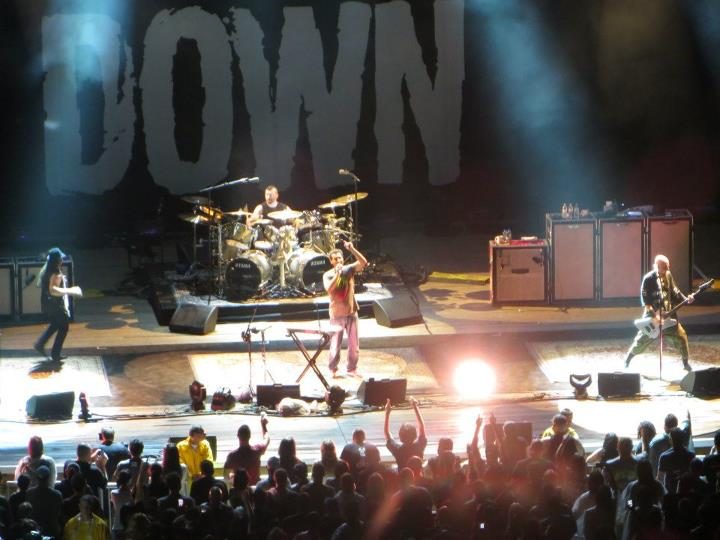
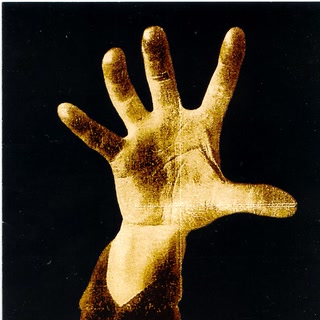
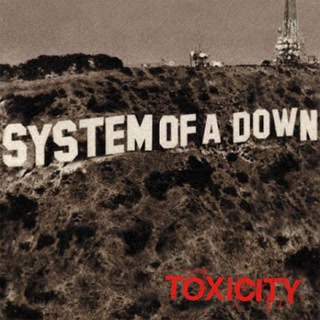
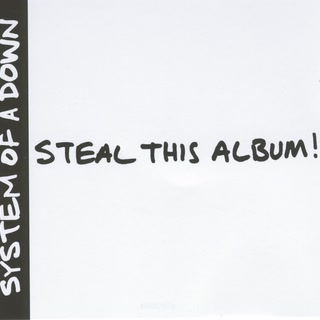
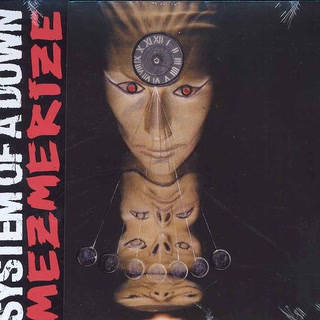
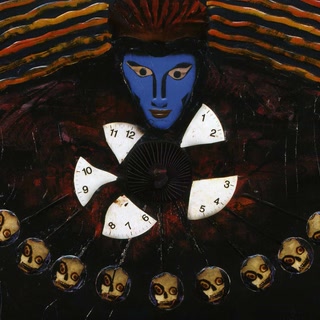
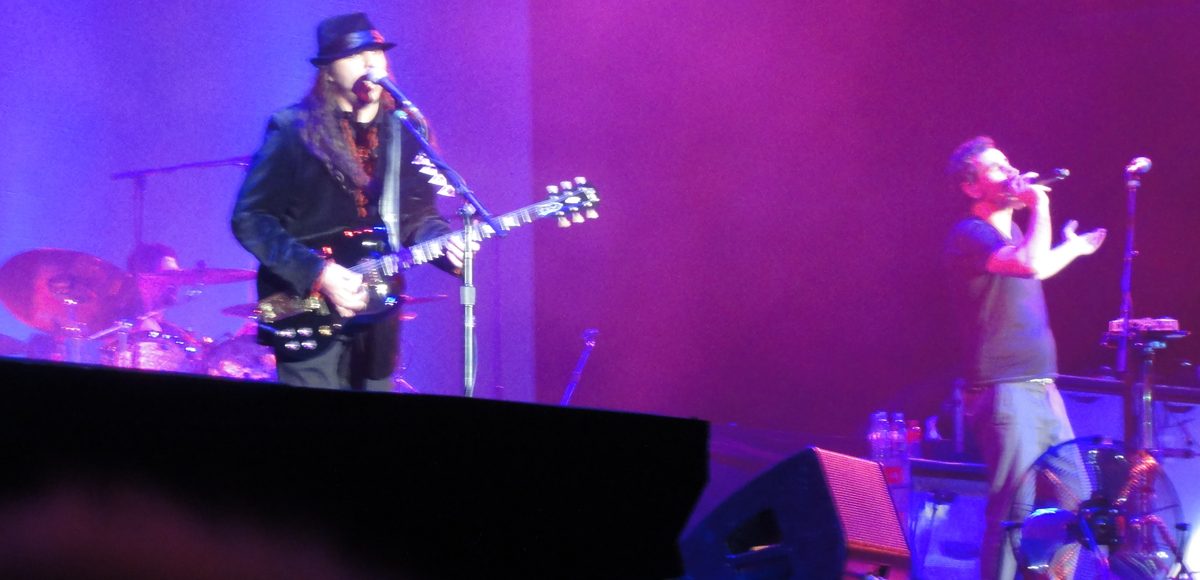
System of a Down at Nikon at Jones Beach Theater in Wantagh, New York, on 5 August 2012, the last word of their name on the backdrop: Daron Malakian (left), John Dolmayan on drums, Serj Tankian at the mic and Shavo Odadjian (right).
In short
How System of a Down tunes
Daron Malakian tuned System of a Down's first three albums, System of a Down (1998), Toxicity (2001) and Steal This Album! (2002), to Drop C (C G C F A D), which he told Guitar World in 2005 was the band's usual tuning. For the Mezmerize and Hypnotize double album he moved everything up a half step to Drop C♯ (C♯ G♯ C♯ F♯ A♯ D♯) so the faster, more intricate parts would cut through.
Read more
Two songs on the double album, Question! and Dreaming, stay in Drop C, and TuneLit's check from the audio confirms both. The bass follows the guitars with C G C F, later C♯ G♯ C♯ F♯. TuneLit measured all five albums from the owner's CDs: the debut sits about 7 cents sharp, the other four within 4 cents of A 440, with a few songs set apart, such as Deer Dance at about 21 cents flat. Many popular tabs move the songs to E Standard or Drop D, and since the reunion the band seems to play live mostly in Drop C, so concert videos of the 2005 songs often sit a half step below the records.
System of a Down sound enormous, but their tuning is simpler than it sounds. Daron Malakian used one dropped tuning for the first three albums and moved it up a half step for the last two. The trouble starts with the tabs. Many popular versions of Chop Suey!, Toxicity, B.Y.O.B. or Lonely Day are rewritten for E Standard or Drop D so that nobody has to retune, and those versions will never line up with the record. A second trap waits on the 2005 double album: Mezmerize and Hypnotize sit a half step higher than everything before, apart from two songs that stay down in the old tuning.
This page collects what is known about System of a Down's tunings, from the 1998 debut to Hypnotize in 2005: what Malakian said himself, what the tab books and transcriptions show, and what TuneLit measured on the owner's CDs. The album list above opens every album, and each song there has a Tune button that opens the tuner in exactly that tuning, record pitch included.
Popular songs
How to tune for System of a Down's best-known songs
Each song has its own page: the exact tuning, the record's pitch, how to get there string by string, and how to move the record into your own tuning.
Drop C is, from the thickest string to the thinnest, C G C F A D. Start from E Standard, lower all six strings a whole step to D Standard (D G C F A D), then lower the 6th string one more whole step to C. The low C is an octave below the 4th string, so a one-finger power chord across the three low strings works anywhere on the neck, and an open C under the riff is always there. This is the tuning of System of a Down, Toxicity and Steal This Album!.
Drop C♯ is the same shape a half step higher: C♯ G♯ C♯ F♯ A♯ D♯. From E Standard, lower every string a half step to E♭ Standard, then drop the 6th string a whole step to C♯. Every fret shape you know from Drop C works unchanged; the whole song simply sits a semitone higher. This is the tuning of Mezmerize and Hypnotize.
The bass follows the guitars. On every main tab the 4-string bass drops the same way, C G C F for the Drop C albums and C♯ G♯ C♯ F♯ for the double album, an octave below the guitar's four low strings. The bass entries on the album pages give that tuning too.
Daron Malakian singing and playing guitar, with Serj Tankian on the right, at the Rock en Seine festival near Paris on 25 August 2013.
The story
How the tuning changed
Writing in E♭, recording in Drop C. Wikipedia, quoting Megan Perry's 2004 book Wired, says Malakian often wrote songs in E♭ Standard and then moved them to Drop C for the band. He described Drop C there as the middle ground he liked: most of his riffs sit on the top strings and stay clear, while the low end gets thicker and heavier. The same source has him saying that the nu-metal sound of a 7-string tuned down to A was not for him. No tab of the five albums calls for a 7-string.
1998 to 2002: Drop C. In his 2005 Guitar World interview with Alan di Perna (printed in the July 2005 issue), Malakian said the band usually tuned down a whole step with the low string down another whole step: C G C F A D. The tabs agree on every song of the first three albums, and Wikipedia's article on Toxicity cites the official Hal Leonard tab book for that album being written mostly in Drop C. Thomann's history of his gear says much of the debut was recorded on a Fender Big Apple Stratocaster, a Strat with two humbuckers, before the Ibanez Iceman became his signature look, and that he brought baritone Icemans, a Gibson SG, a Les Paul and a double-neck to the Toxicity sessions. No source ties a particular song to a baritone, so every song on these records is listed here for a six-string in Drop C.
2005: up a half step to Drop C♯. The same interview gives the change and the reason. Malakian wanted the attack of every note to be heard on the faster, more intricate music of Mezmerize and Hypnotize, so the band tuned up a half step to C♯ G♯ C♯ F♯ A♯ D♯; on Toxicity, he said, he had been after a more bottom-heavy sound. He also moved from very heavy strings to sets with a .048 or .050 low string, and said he was drifting toward standard pitch in his own playing. His main distorted guitar was a 1962 Gibson SG through a Marshall, often doubled by a 1964 SG Special with P-90 pickups. He also recorded most of the bass himself on a Fender Precision, with Shavo Odadjian on two or three tracks. Two songs did not move up: the tabs keep Question! and Dreaming in Drop C, and a 2006 version of his Wikipedia biography names exactly those two as the exceptions.
2020 and the stage today. The band's two 2020 charity singles, Protect the Land and Genocidal Humanoidz, are tabbed in Drop C, back in the old tuning. On stage the picture is similar. Fan transcriptions of 2005 concerts, such as the London Astoria show, play older songs like War?, Highway Song and Roulette in Drop C♯ with the new material (one Science transcription from the same show stays in Drop C). Transcriptions from the reunion years, Cigaro at Rock in Rio 2015, Dreaming in Armenia in 2015 and the Soldier Side solo in Las Vegas in 2021, are all in Drop C, and Premier Guitar's 2025 rig rundown describes Malakian's guitars as predominantly in Drop C. The band has not said so itself, but if a recent live video of B.Y.O.B. or Lonely Day sounds a half step lower than the album, that is why. Start from Drop C for those videos and check by ear.
Main tuning: Drop C +7 ¢ (A ≈ 441.8), measured by TuneLit on the CD.
The Rick Rubin-produced debut has the band's classic line-up, with John Dolmayan on drums since 1997. Every one of its 13 songs is tabbed in Drop C, from the opener Suite-Pee to the closing P.L.U.C.K., the singles Sugar and Spiders included. No source mentions the pitch of the record, and our measurement holds the one surprise of the catalogue: the CD runs about 7 cents sharp. Every song reads above A 440, from about 3 cents (Suite-Pee) to about 13 (Sugar, Soil). Suggestions sits higher still, about 19 cents sharp, and gets its own setting. The Japanese CD, with the bonus tracks Marmalade and Störagéd, reads the same within 2 cents per song, so the offset is in the master, not in one pressing.
The songs use the open low C hard. In the main Sugar tab, the open 6th string and frets 5 to 7 on it carry most of the riffs, and about a third of the bass notes are its own open C. The Spiders tab splits the guitar into two parts that both lean on the open C as well.
With TuneLit: every Tune button opens Drop C at +7 ¢, and Suggestions opens Drop C at +19 ¢. Seven cents is small. If you play along without changing the reference, the record will sound a touch sharp against you, most clearly on held chords.
Live: fan transcriptions of debut songs from 2001 (Soil at Lowlands) and from the reunion years (War? in Armenia, 2015) are in Drop C; one of War? from a 2005 festival is in Drop C♯, as are most transcriptions from that year.
Main tuning: Drop C at concert pitch (measured about 4 ¢ flat, which counts as A 440).
Toxicity is the album most people learn first, and its tuning is not in doubt: Wikipedia, citing the official tab book, says most of it was written in Drop C, Malakian named Drop C as the band's usual tuning, and every tab agrees, the acoustic parts of Prison Song, Needles, Chop Suey!, Science and Toxicity included. The strummed acoustic intro of Chop Suey! is in the same Drop C as its riffs, so there is no retuning mid-song. Aerials adds sitar, and the hidden track Arto rides at the end of its CD track, but neither changes what a guitarist needs.
The record sits close to concert pitch, about 4 cents flat over the whole album. Two songs sit clearly lower and get their own settings: Needles at about 12 cents flat and Deer Dance at about 21 cents flat (A ≈ 434.6), the lowest reading on any System of a Down album. Chop Suey! reads about 10 cents flat and Psycho, Science and the title track 6 to 7 cents flat, close enough to the album to share its setting. The Japanese CD, which slips the bonus track Johnny in at number 8, agrees song for song within 2 cents.
With TuneLit: the album opens Drop C at A 440, Needles at −12 ¢ and Deer Dance at −21 ¢. For Chop Suey!, if the long acoustic chords beat slowly against your guitar after tapping Tune, lower Fine-tune by a few cents.
Live: fan transcriptions of shows from 2002 and 2003 (Psycho, Deer Dance, Forest) stay in Drop C.
Main tuning: Drop C at concert pitch (measured about 3 ¢ flat).
Most of these songs come from the Toxicity sessions. After unfinished versions leaked online in 2002 under the name Toxicity II, the band reworked and released them in November 2002. All 16 are tabbed in Drop C, including the all-acoustic Roulette, whose main tab keeps three acoustic guitars in Drop C; a standard-tuning version on Songsterr is a transposition. Highway Song, Ego Brain and Streamline also have acoustic parts in their tabs, all in Drop C. It is the last album in that tuning.
The CD sits at concert pitch overall, but individual songs spread more than on Toxicity. Bubbles reads about 19 cents flat (with low confidence), Pictures and Streamline about 11 cents flat, and Nüguns and A.D.D. (American Dream Denial) about 7. Roulette, Thetawaves and I-E-A-I-A-I-O read 4 to 5 cents sharp. None is clear enough for a setting of its own. The Russian CD edition matches the European one within a cent.
With TuneLit: every song opens Drop C at A 440. On Bubbles, Pictures and Streamline you may want to lower Fine-tune by ten cents or so if your guitar sounds sharp.
Live: a 2005 Astoria transcription of Highway Song and one of Roulette are in Drop C♯, the double-album tuning, while reunion-era transcriptions are in Drop C.
Main tuning: Drop C♯ at concert pitch (measured about 2 ¢ sharp).
This is where the band went up a half step, to C♯ G♯ C♯ F♯ A♯ D♯, for the reason Malakian gave Guitar World: he wanted the attack of the notes to come through on faster, more intricate riffs. The tabs put ten of the eleven songs in Drop C♯, from the Soldier Side intro through B.Y.O.B. to the closing Lost in Hollywood, whose tab is labelled as the tab-book version. Popular alternatives exist, B.Y.O.B. in Drop C, Drop D or E Standard and Radio/Video in E Standard or Drop C; they are transpositions.
The exception is Question!. Both tabs with Malakian's electric part put it in Drop C, a half step below the rest of the album, with an acoustic part in plain E Standard (Wikipedia credits Serj Tankian with the acoustic guitar). TuneLit's check from the audio agrees: the low string sits on C, not C♯ or B, with 0.997 confidence. The song centres on E: the electric part plays E and A at frets 4 and 9 of its low C string, while the acoustic rings its open E strings. It also reads about 8 cents flat. The short Soldier Side intro reads about 6 cents flat and gets its own setting; the rest sits within a few cents of A 440.
With TuneLit: the album opens Drop C♯ at A 440, Soldier Side – Intro at −6 ¢ and Question! in Drop C at −8 ¢. Retune down a half step for Question! and back up for Sad Statue. If you play the acoustic part, use E Standard at the same −8 ¢.
Live: a 2005 Astoria transcription of B.Y.O.B. is in Drop C♯, like the record; the reunion-era Cigaro transcription is in Drop C, a half step lower.
Main tuning: Drop C♯ at concert pitch (measured about 3 ¢ flat).
The second half of the double album keeps Drop C♯ for eleven of its twelve songs, the title track and Lonely Day included. Malakian told Guitar World the clean intro of Hypnotize was a red 1960s Hagstrom through a small Watkins Dominator amp, with the 12-string neck of his double-neck SG sounding as a drone behind it; the main tab plays that clean part in Drop C♯ like the rest. Lonely Day, with Malakian on lead vocals, is tabbed in Drop C♯ down to the layered harmony solo, and many beginner versions in E Standard or Drop D are transpositions.
Dreaming is the exception. Every tab, including one marked accurate and one labelled as official, puts it in Drop C, and TuneLit's audio check agrees: the open C rings on about a fifth of the guitar notes in the tab, and the audio confirms C rather than C♯ with 0.977 confidence. It also reads about 7 cents sharp, against an album about 3 cents flat. Stealing Society reads about 6 cents sharp and gets its own setting too; Vicinity of Obscenity, at about 5, stays with the album.
With TuneLit: the album opens Drop C♯ at A 440, Dreaming opens Drop C at +7 ¢ and Stealing Society Drop C♯ at +6 ¢. Dreaming is track 2, so retune down a half step after Attack and back up for Kill Rock 'n Roll.
Live: Dreaming stays in Drop C in transcriptions from 2015 and 2025, and the Soldier Side solo from Las Vegas 2021 is in Drop C, a half step below the record.
TuneLit lab
What TuneLit measured
TuneLit's Match-a-recording estimator takes a stretch of each song, finds the strongest notes and compares them with the equal-tempered grid. That fixes the record's offset to within a few cents, but only within one semitone, so the semitone itself (C or C♯) still comes from the sources above. A second check listens to the audio for the lowest open string and tells which semitone it sits on.
We measured one CD of each album, the original European pressings on American/Columbia, and compared them with the Japanese editions of the debut and Toxicity and the Russian edition of Steal This Album!. The audio itself is never uploaded or published; only the numbers appear on this page.
+2 ¢, counted as concert pitch (Soldier Side – Intro −6 ¢, Question! −8 ¢)
A 440
Hypnotize (2005)
Drop C♯; Dreaming Drop C
−3 ¢, counted as concert pitch (Dreaming +7 ¢, Stealing Society +6 ¢)
A 440
The big picture is good news for anyone playing along: four of the five albums sit within 4 cents of A 440. The exception is the debut, about 7 cents sharp on every pressing we have, which no source mentions. Single songs scatter more, and the furthest from concert pitch is Deer Dance on Toxicity, about 21 cents flat, a fifth of a semitone.
The audio check agrees with the tabs on 58 of the 66 songs and is unsure on seven, mostly songs whose open low string rarely sounds. It confirmed the two exceptions on the double album: Question! and Dreaming really sit on C while the songs around them sit on C♯. It disagreed once, on DDevil from the debut, where it leans a half step up; in that song the open C barely sounds and the lowest notes heard are F, F♯ and G, the classic way this check goes wrong, and both tabs say Drop C, so DDevil stays in Drop C.
Keep the limits in mind. Dense, distorted mixes are harder to read than clean ones, so single songs scatter by several cents; that is why most songs share their album's value and only clear outliers get their own. Anything within ±4 cents counts as concert pitch. And a measurement hears the result, not the cause: it cannot tell a guitar tuned a little sharp from a tape that ran a little fast.
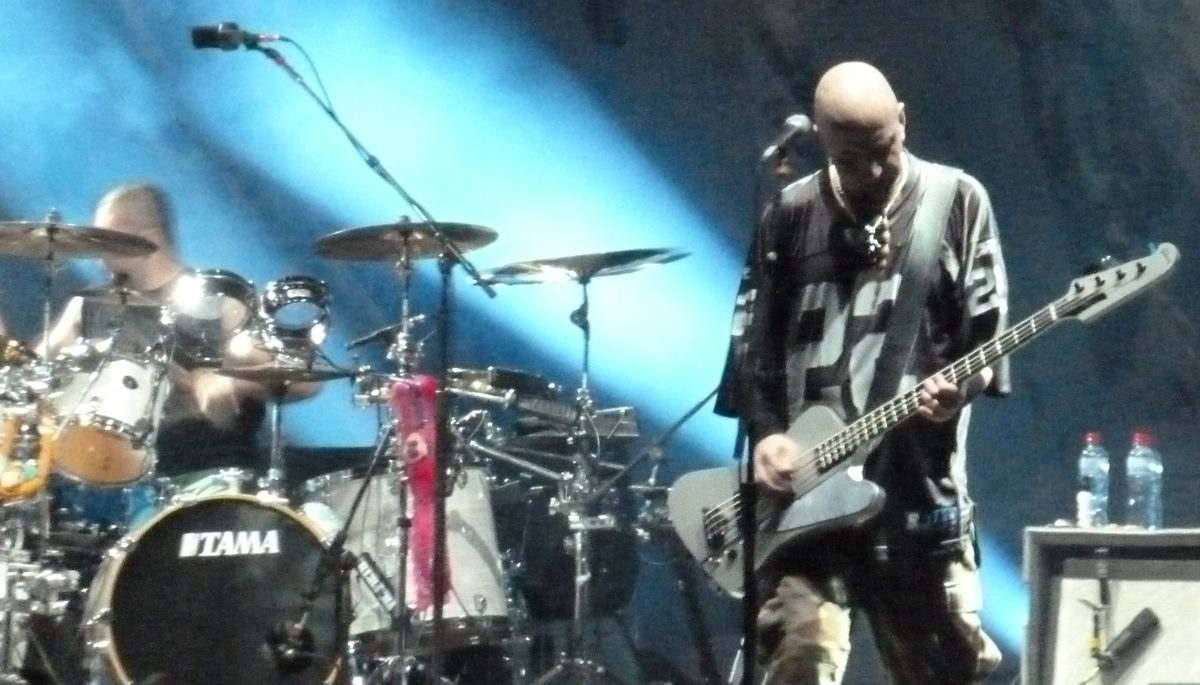
Shavo Odadjian on bass and John Dolmayan on drums at Estadio Bicentenario La Florida in Santiago, Chile, on 7 October 2011.
Evidence
How sure are these numbers?
Every tuning on the album pages carries a status label. The guitar entries now carry Measured by TuneLit, because their offsets come from our own analysis of the CDs. The tuning names still rest on the sources:
Official: the musician said it himself. Malakian's 2005 Guitar World interview names C G C F A D as the band's usual tuning and C♯ G♯ C♯ F♯ A♯ D♯ for the double album, so all five albums rest on his word.
Widely reported: trusted outlets agree, but the band did not say it directly, like Wikipedia's account of how he wrote in E♭ and moved songs to Drop C.
Community: from community transcriptions, mostly Songsterr tabs. Question! and Dreaming rest on tabs at this level, now backed by TuneLit's audio check.
Disputed: sources disagree. Nothing on this page is disputed any more.
Measured by TuneLit: our own pitch analysis of an original CD, giving the offset in cents. Only the result is published.
If a song still sounds a touch off, move Fine-tune by a few cents rather than changing the tuning; near 440 Hz, one hertz is about 4 cents.
The story
Practical tips
Tune the 6th string last. Lowering it takes tension off the neck, so check the other five strings again once it has settled.
Drop C is slack on a normal set of strings. Malakian used very heavy strings in the early years and a .048 to .050 low string on the double album; something in that range keeps the low C from flapping and holds the pitch better when you dig in.
If you switch between the albums, move the whole guitar a half step, not just the low string. Drop C♯ is Drop C a half step up on all six strings.
Before you trust a tab, check its tuning line. If it says E Standard or Drop D for a song on this page, it is a transposition.
For Question!, plan a retune in the middle of Mezmerize; for Dreaming, one at track 2 of Hypnotize.
Cheat sheet
Quick reference
System of a Down (1998): Drop C at +7 ¢ (A ≈ 441.8). Suggestions: Drop C at +19 ¢.
Toxicity (2001): Drop C at A 440. Needles at −12 ¢, Deer Dance at −21 ¢.
Steal This Album! (2002): Drop C at A 440.
Mezmerize (2005): Drop C♯ at A 440. Soldier Side – Intro at −6 ¢. Question!: Drop C at −8 ¢ (acoustic part in E Standard).
Hypnotize (2005): Drop C♯ at A 440. Dreaming: Drop C at +7 ¢. Stealing Society at +6 ¢.
Bass: C G C F on the Drop C albums, C♯ G♯ C♯ F♯ on the double album, C G C F again for Question! and Dreaming.
Live since the reunion: mostly Drop C, so the double-album songs usually sound a half step below the records.
Questions
What tuning does System of a Down use?
Mostly Drop C: 3 of 5 albums. Mezmerize and Hypnotize are in Drop C♯. Many albums also have songs in other tunings, and the album pages list them song by song.
How did TuneLit measure System of a Down's records?
We played original CDs and LPs through TuneLit's pitch analysis: the strongest notes of each song are compared with the A 440 grid, which gives the offset in cents. That cannot tell the semitone, so the tuning name comes from interviews, the press and tabs. The audio is never stored or published.
Colors and font
Font
Colors
Menu
Install the app
Android (Chrome): menu ⋮ → Install app or Add to Home screen.
Computer (Chrome, Edge): the install icon at the right end of the address bar.
iPhone: Safari → Share → Add to Home Screen.
It opens full screen and keeps tuning with no connection.