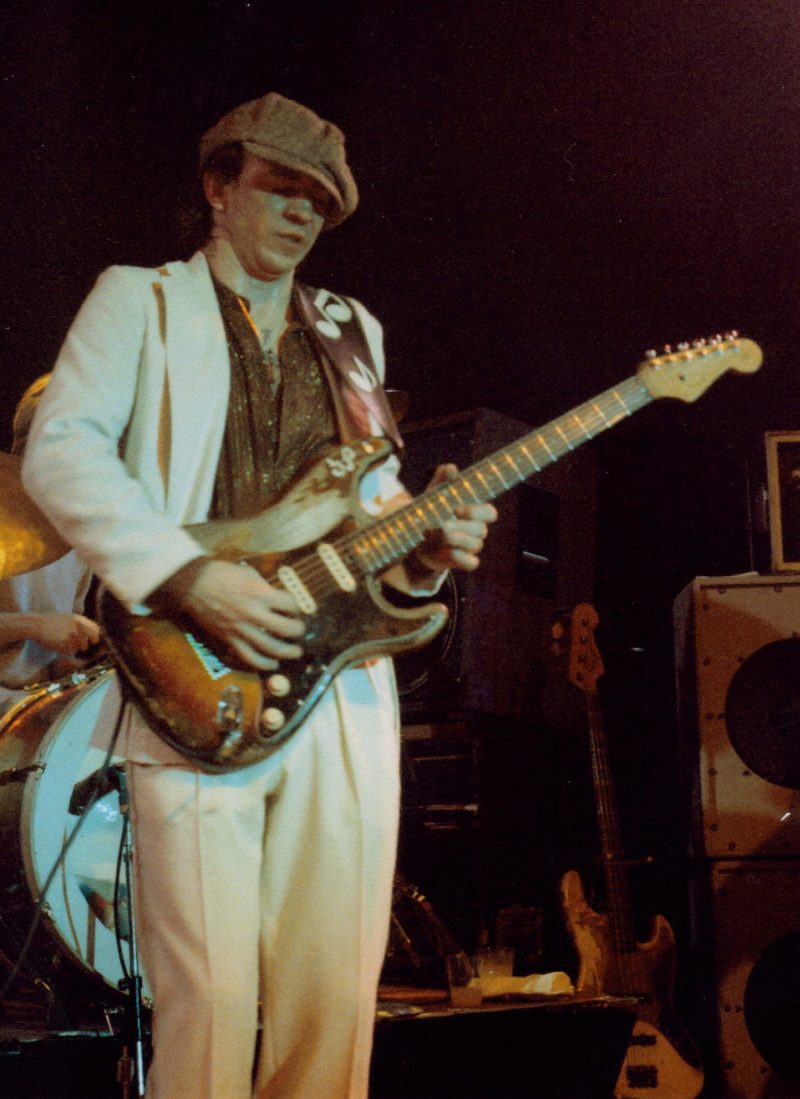
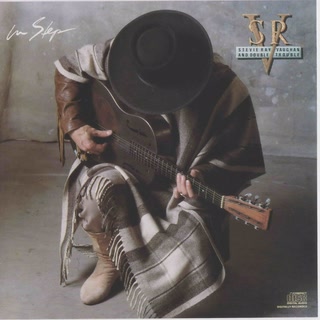
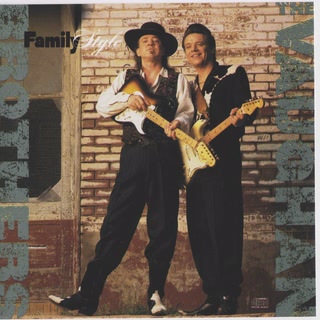
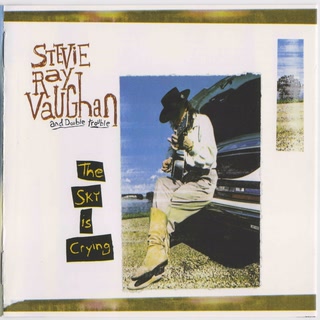
Stevie Ray Vaughan playing his Stratocaster, Number One, with Double Trouble at the Ritz Theater in Austin, Texas, in March 1983.
In short
How Stevie Ray Vaughan tunes
Stevie Ray Vaughan tuned his Stratocasters a half step down, E♭ A♭ D♭ G♭ B♭ E♭, on unusually heavy strings, and tabs write his songs in E shapes with that tuning. TuneLit measured original CDs of all four Double Trouble studio albums, of Family Style, made with his brother Jimmie, and of the posthumous outtakes collection The Sky Is Crying.
Read more
The Double Trouble albums sit within 2 cents of A 440, and TuneLit's audio check hears the low E♭ on every song where the open string sounds clearly. A few songs stand apart: Scuttle Buttin' about 13 cents sharp, Dirty Pool about 9 cents flat, and Voodoo Chile reading about 17 cents sharp, though too weakly for a setting of its own. Family Style runs about 8 cents sharp and mixes tunings: five songs in E♭, four in plain E Standard. Life by the Drop, on a twelve-string acoustic, is in E Standard too. Tabs in E Standard exist for several E♭ songs, among them Scratch-N-Sniff and Come On (Part III); they are a half step off the record. Tin Pan Alley is disputed: Vaughan's habit says E♭, its most-viewed tab says E, and both give the record's notes.
Stevie Ray Vaughan kept one tuning for his whole recording career: every string a half step down, E♭ A♭ D♭ G♭ B♭ E♭ from low to high, on strings far heavier than most players would touch. When he hits the open low string in Pride and Joy, the note you hear is E♭, not E. Tabs therefore write his songs in E shapes with the instruction "tune down ½ step", and a guitar left in standard tuning sounds a half step sharp against the record, however right the frets are.
This page covers the four studio albums of Stevie Ray Vaughan and Double Trouble, Family Style, the album he made with his brother Jimmie, and The Sky Is Crying, the collection of studio outtakes released after his death. For each record you get the tuning the tabs give, the pitch TuneLit measured on original CDs from our own library, the songs that stand apart, and how to set up. The album list above opens every album, where each song has a Tune button that opens the tuner in exactly that tuning, reference pitch included.
The short version: tune down a half step and leave the reference at A 440. Vaughan's own records sit within a couple of cents of concert pitch. The exceptions are a handful of single songs and the Family Style album, which runs a little sharp and is not all in E♭.
Popular songs
How to tune for Stevie Ray Vaughan's best-known songs
Each song has its own page: the exact tuning, the record's pitch, how to get there string by string, and how to move the record into your own tuning.
The records carry the name Stevie Ray Vaughan and Double Trouble. Double Trouble was his band, named after an Otis Rush song, and from early 1981 it was a trio: Vaughan on guitar and vocals, Tommy Shannon on bass and Chris "Whipper" Layton on drums. Keyboard player Reese Wynans joined during the Soul to Soul sessions in 1985 and stayed to the end. On 27 August 1990, after a show at Alpine Valley in Wisconsin, Vaughan died in a helicopter crash. Family Style, credited to the Vaughan Brothers, came out a month later, and The Sky Is Crying followed in 1991.
TuneLit lists the band under Vaughan's name because the tuning is his. Shannon's bass went down with the guitar, so on almost every track the whole band sits a half step below standard, and the bass tabs are in E♭ too.
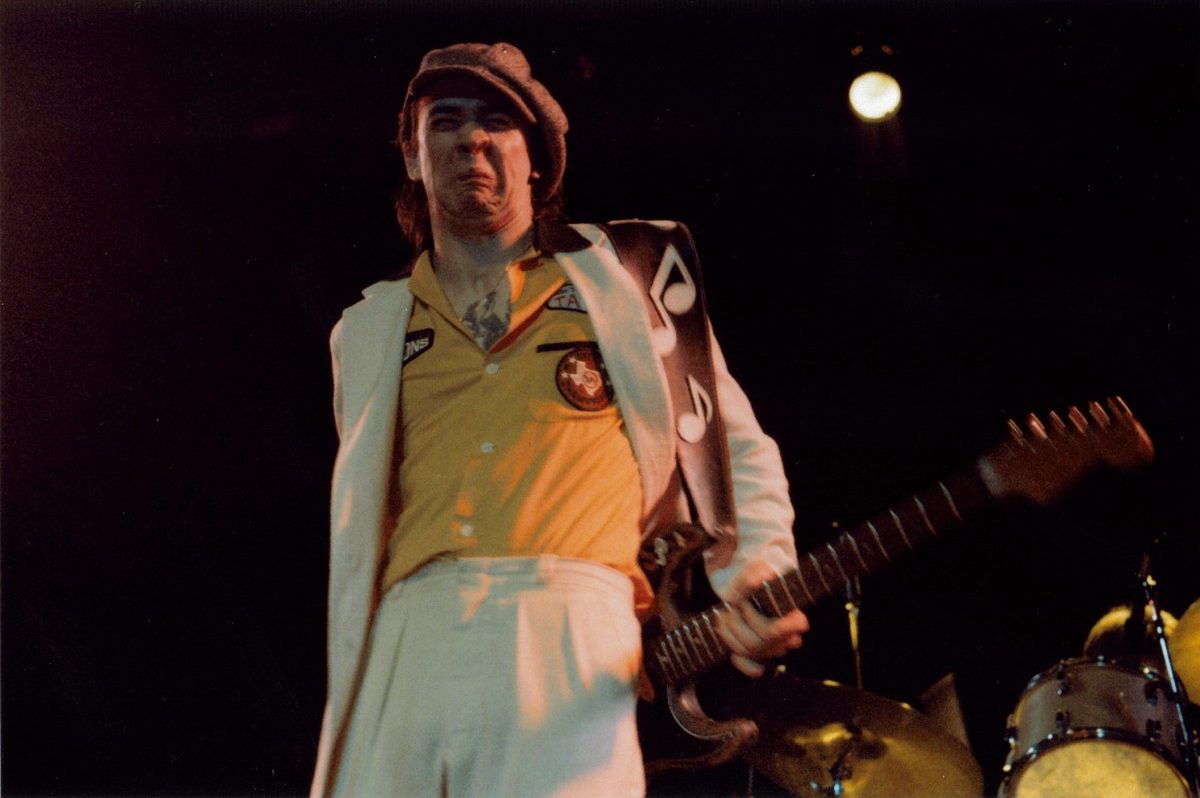
Stevie Ray Vaughan pulling a face mid-song at the Ritz Theater in Austin, Texas, in March 1983.
The story
Why a half step down, and why so heavy
According to Wikipedia's account of his gear and Guitar Player's reporting, Vaughan strung his Stratocasters with a set of about .013, .015, .019 (plain), .028, .038 and .058, and always tuned a half step down. Guitar World's lesson by Andy Aledort puts it the same way: E♭ A♭ D♭ G♭ B♭ E♭, a tuning Jimi Hendrix had made popular, with chords and riffs named as if the guitar were in standard. The slacker tuning takes some of the fight out of such thick strings, so he could bend them hard and still dig in with the right hand. Even so, the gauges cost him split fingertips, which his tech Rene Martinez famously patched with super glue, and Martinez later talked him into slightly lighter sets.
You do not need .013s to play along. The tuning is what matters: drop every string by one semitone and the record lines up. Heavier strings do help when you pick hard, and a light set tuned down can feel floppy, so try a gauge heavier than usual if your guitar allows it.
The story
How to tune along
Tap the album's or the song's Tune button. It opens E♭ Standard (or E Standard where a song needs it) with TuneLit's measured offset for that record.
Tune each string to the note on the screen: E♭, A♭, D♭, G♭, B♭, E♭. Many tuners call them D♯, G♯, C♯, F♯, A♯, D♯: the same notes.
Play the shapes the tab shows. A tab of Pride and Joy says E, your hands play E, and the record says E♭.
If a song still sounds a little off, look at its row on the album page: TuneLit gives a song its own setting only when it clearly differs from its album, and the song notes say when a reading was close but too weak to use.
TuneLit lab
What TuneLit measured
TuneLit measured every song of the six records from CDs in the owner's library: the Dutch CBS-era CD of Texas Flood (Epic EPC 460951 2), Austrian Epic pressings of Couldn't Stand the Weather, Soul to Soul and The Sky Is Crying, and the first US CDs of In Step (Epic EK 45024) and Family Style (Epic Associated ZK 46225). All of them predate the 1999 reissues with bonus tracks. The estimator reads 90 seconds of each song, from 0:45, and compares the strongest notes with the equal-tempered grid. That gives the record's offset from A 440, known only within one semitone. A song gets its own value when it differs from its album by 8 cents or more with good confidence; anything within ±4 cents counts as concert pitch.
Album
Tabs say
TuneLit measured
Equivalent A
Texas Flood (1983)
E♭ Standard
+1 ¢, shown as concert pitch
A 440
Couldn't Stand the Weather (1984)
E♭ Standard
+2 ¢, shown as concert pitch
A 440
Soul to Soul (1985)
E♭ Standard
+2 ¢, shown as concert pitch
A 440
In Step (1989)
E♭ Standard
+2 ¢, shown as concert pitch
A 440
Family Style (1990)
E♭ and E Standard, split
+8 ¢
A ≈ 442
The Sky Is Crying (1991)
E♭ Standard
−3 ¢, shown as concert pitch
A 440
The library also holds later remasters of four albums: two of Texas Flood (Japan 2009 and the 2013 anniversary edition), the 2010 Legacy Edition of Couldn't Stand the Weather and the 2005 Japanese reissues of Soul to Soul and In Step. We measured them as a cross-check. Each runs at the same speed as the old CD within 3 cents: the Texas Flood remasters about 1 cent higher, Couldn't Stand the Weather's Legacy Edition about 2 cents lower, Soul to Soul the same, and In Step's 2005 CD about 3 cents higher. Nobody hears that, so whichever CD you own, the Tune buttons fit.
The semitone is a separate question. A measurement only knows the offset within one semitone, so whether the strings sit on E♭ or on E comes from the tabs and sources, plus a second check: TuneLit listens for the lowest open string, which the bass and guitar play often, while the note just below it never sounds. On the four Double Trouble albums and The Sky Is Crying it sided with E♭ on 38 of the 47 songs listed in E♭ and contradicted none; on the other nine it could not decide, because the song sits in a key where the open low string hardly sounds. It also confirmed E Standard where we list it: Life by the Drop and four Family Style songs.
Main tuning: E♭ Standard at concert pitch (measured +1 ¢), from the CD.
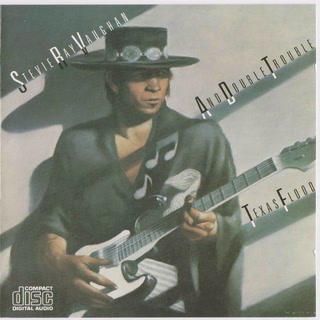
Double Trouble cut the album in late 1982 at Jackson Browne's studio in Los Angeles, playing live in a circle with no overdubs, and it sounds that way: every song shares one tuning and one pitch. All ten main tabs are in E♭ Standard. Pride and Joy, Rude Mood, Mary Had a Little Lamb, Testify and I'm Cryin' sit on the open low E♭, and TuneLit's audio check hears it on every song of the album. The title track, Larry Davis's slow blues, is played with G-shape fingering, so it sounds in G♭; Lenny, written for Vaughan's wife Lenora and played on the guitar he named after her, uses E shapes and sounds in E♭.
Two songs read lower than the rest. Dirty Pool sits about 9 cents flat (A ≈ 437.6) all the way through, so it has its own setting. Lenny reads about 7 cents flat, steady from start to finish but just short of the 8 cents that would give it its own value; the two remasters show the same gap. If Lenny sounds a hair sharp against you, lower the reference to about A 438.
With TuneLit: E♭ Standard at A 440 for the album; Dirty Pool E♭ Standard −9 ¢.
Main tuning: E♭ Standard at concert pitch (measured +2 ¢), from the CD.
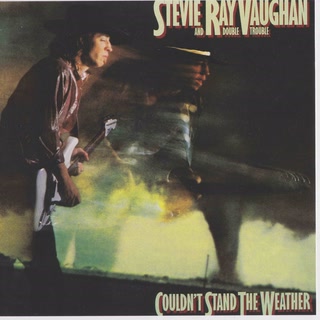
Recorded at the Power Station in New York in January 1984, with John Hammond as executive producer. Jimmie Vaughan plays rhythm guitar on the title track and on The Things (That) I Used to Do. Stang's Swang, a jazz instrumental, was played on a Gibson Johnny Smith archtop with Fran Christina on drums and Stan Harrison on saxophone, and its tab stays in E♭. The swirl on Cold Shot comes from a Fender Vibratone, a rotating-speaker cabinet, not from a different tuning.
Scuttle Buttin', the opening instrumental, runs about 13 cents sharp (A ≈ 443.4), well above the rest of the album; the 2010 remaster agrees. Voodoo Chile (Slight Return), the Hendrix cover, reads 15 to 19 cents sharp in every half minute of its eight minutes, but the wah and the fuzz keep the readings weak, so its button keeps the album's value. If your guitar sounds flat against it, raise the reference to about A 444.
The Things (That) I Used to Do shows how tabs drift. The main tab plays G shapes in E♭ Standard, which sounds in F♯, and that is what the record holds. Tabs that put the same shapes in E Standard come out a half step too high.
Tin Pan Alley is the one real dispute on the album. Layton remembered it as the take that went down while the engineers were still setting levels. Vaughan always tuned down, but the most-viewed tab is in E Standard with B-minor shapes. The record sounds in B minor and the low E♭ never sounds, so the audio check cannot decide between E♭ and E. Both setups give the record's notes: C-minor shapes on a guitar in E♭, or the tab's B-minor shapes on a guitar in E. TuneLit lists it in E♭ Standard, Vaughan's documented habit, and marks it disputed.
With TuneLit: E♭ Standard at A 440; Scuttle Buttin' E♭ Standard +13 ¢.
Main tuning: E♭ Standard at concert pitch (measured +2 ¢), from the CD.
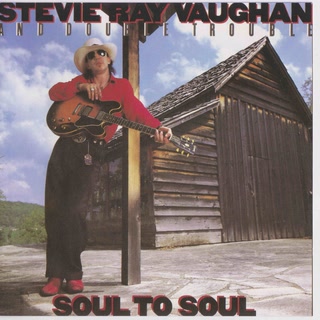
Recorded at the Dallas Sound Lab between March and May 1985, the album where Reese Wynans joined on keyboards. Every song reads within 6 cents of A 440, and the 2005 Japanese reissue agrees within a cent. Vaughan played the drums himself on Empty Arms. Say What! is the wah-wah showcase, recorded with two pedals at once.
The tabs need care here. Come On (Part III) has a most-viewed tab in E Standard, a half step above the record; a second tab and TuneLit's audio check both put it in E♭. The most-viewed Say What! tab is in E Standard too, but its notes do not line up with the record, while a machine-made tab in E♭ fits it better; the audio check is not sure on that one, since the open low string hardly sounds. Everything else, from Lookin' Out the Window to Life Without You, is plain E♭ Standard, confirmed by the audio check.
With TuneLit: E♭ Standard at A 440 for every song.
Main tuning: E♭ Standard at concert pitch (measured +2 ¢), from the CD.
Vaughan's first studio album after rehab, produced by Jim Gaines, started at Kiva Studios in Memphis and finished in Los Angeles in early 1989; it won a Grammy. It is also the steadiest record measured on this page: every song sits within 3 cents of the album value. The 2005 Japanese reissue reads about 3 cents higher across the board, a transfer difference you will not hear.
The main tabs agree on E♭ Standard: The House Is Rockin', Crossfire, Tightrope, Wall of Denial, Love Me Darlin' and Riviera Paradise, the slow instrumental that closes the album and was played on the Lenny guitar. Scratch-N-Sniff's only tab is in E Standard, but its shuffle sits on the open low string, and the audio check hears that string as E♭ beyond doubt, so play the tab's shapes tuned down. Love Me Darlin' is one of the first recordings with Vaughan's Fuzz Face.
Three songs sit in keys that keep the open low string quiet, so the audio check could not confirm them: The House Is Rockin', Let Me Love You Baby (it sounds in E, played from the first fret of the low E♭ string in its tab) and Leave My Girl Alone (it sounds in A). Their tabs are in E♭, and they stay there.
With TuneLit: E♭ Standard at A 440 for every song.
Main tuning: E♭ Standard +8 ¢ (A ≈ 442), from the CD, with four songs in E Standard.
Credited to the Vaughan Brothers and produced by Nile Rodgers, this is the one album where Stevie shares the guitar chair: Jimmie plays guitar and lap steel and sings. TuneLit lists it as a studio album. No interview or book we found says how the brothers tuned for it, and the tabs, several of them machine-made, split between E♭ and E. The audio settles most songs. TuneLit hears a low E♭ on Hard to Be (despite its E Standard tab), Hillbillies from Outerspace, Long Way from Home, Telephone Song and Baboom/Mama Said. It hears a low E, and almost no E♭, on White Boots, Good Texan, Tick Tock and Brothers, which their tabs put in E Standard. D/FW stays open: its tabs disagree and the audio check is not sure, so it keeps the album's E♭.
The pitch moves more than on Vaughan's own records. The album as a whole runs about 8 cents sharp; Good Texan and Telephone Song sit about 20 cents sharp (A ≈ 445), steady through each track, while Tick Tock and Baboom/Mama Said come back to concert pitch.
With TuneLit: E♭ Standard +8 ¢ by default; E Standard +8 ¢ for White Boots and Brothers, E Standard +21 ¢ for Good Texan, E Standard at A 440 for Tick Tock; E♭ Standard +20 ¢ for Telephone Song and at A 440 for Baboom/Mama Said.
Main tuning: E♭ Standard at concert pitch (measured −3 ¢), from the CD.
Jimmie Vaughan compiled these ten unreleased studio recordings after his brother's death; TuneLit lists the album as a compilation. They come from four sessions: the Power Station in 1984 (Empty Arms, Little Wing, Wham, Close to You), the Dallas Sound Lab in 1985 (The Sky Is Crying, May I Have a Talk with You, Chitlins con Carne, So Excited), Memphis in 1989 (Boot Hill) and Los Angeles in 1989 (Life by the Drop). Little Wing, Vaughan's instrumental take on the Hendrix ballad, won a Grammy.
The pitch varies a little by session. Two of the 1984 songs read a little flat (Empty Arms about 9 cents, Close to You about 7), the 1985 songs sit close to the album value, except Chitlins con Carne, Kenny Burrell's jazz instrumental, at about 12 cents flat (A ≈ 436.9). Boot Hill, Vaughan on slide in E♭ Standard, sits about 6 cents sharp (A ≈ 441.6). The 2010 Legacy Edition of Couldn't Stand the Weather carries what look like the same four 1984 takes as bonus tracks (their lengths match within three seconds), and they read within about 2 cents of this CD. This Empty Arms is a different recording from the one on Soul to Soul, which sits right at concert pitch.
One song breaks the tuning. Life by the Drop is Vaughan alone on a twelve-string acoustic, and it is in E Standard: the tabs say so, and the audio check hears the open low E. So Excited, whose studio tab is in E Standard, is the opposite case: the audio check hears the low E♭, like the tabs of its live versions.
With TuneLit: E♭ Standard at A 440; Boot Hill +6 ¢, Chitlins con Carne −12 ¢; Life by the Drop on a 12-string in E Standard.
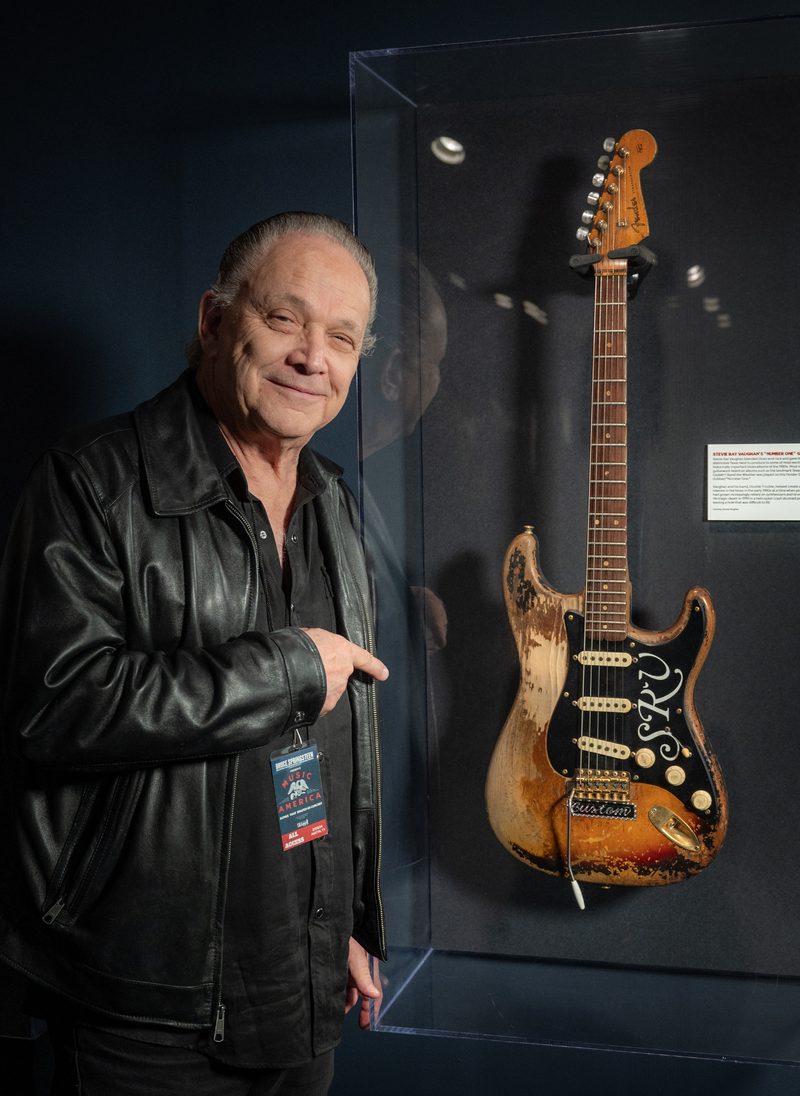
Jimmie Vaughan beside his brother's Stratocaster, Number One, in the Music America exhibit at the LBJ Library in Austin, Texas, on 15 February 2024.
The story
Playing along: practical advice
Tune down first, then worry about cents. On the Double Trouble albums the reference stays at A 440; the half step is what matters.
Read the tab's tuning line. Most SRV tabs say "tune down ½ step". A tab in E Standard for an E♭ song is a half step off the record unless it also moves every note down a fret.
Mind the songs in other keys. Texas Flood (G shapes, sounding G♭), Tin Pan Alley (sounding B minor) and Leave My Girl Alone (sounding A) do not lean on the open low string, so a wrong tuning there is easy to miss: check against a sustained chord, not the first note.
Family Style is the exception. Look at each song's row: some are in E, some in E♭, and most sit a few cents sharp.
Heavier strings help. A half step down on light strings feels loose; a set one gauge heavier than usual brings back some of the tension Vaughan's sound depended on.
Evidence
How sure are these numbers?
Every tuning on the album pages carries a status label. All six records now carry Measured by TuneLit: the offset comes from our own analysis of the CDs in the owner's library, and only the numbers are published, never the audio. The tuning name (E♭ Standard or E Standard) rests on other evidence, since a measurement knows the offset only within one semitone:
Widely reported: Vaughan's half-step-down tuning and heavy strings are described the same way by Wikipedia, Guitar World and Guitar Player, and the tabs agree. That covers his four Double Trouble albums and The Sky Is Crying.
Community: Family Style and Life by the Drop rest on tabs, checked against the audio.
Disputed: Tin Pan Alley, where Vaughan's habit says E♭ and the most-viewed tab says E.
Ten songs are left where the audio check could not confirm the semitone, all listed in E♭: Tin Pan Alley, Stang's Swang, Say What!, The House Is Rockin', Let Me Love You Baby, Leave My Girl Alone, D/FW, Empty Arms (the 1984 take), May I Have a Talk with You and Chitlins con Carne. None of them points the other way with confidence.
Cheat sheet
Quick reference
Texas Flood (1983): E♭ Standard, A 440. Dirty Pool −9 ¢; Lenny reads about −7 ¢.
Couldn't Stand the Weather (1984): E♭ Standard, A 440. Scuttle Buttin' +13 ¢; Voodoo Chile reads about +17 ¢ (weak). Tin Pan Alley disputed (E♭, or E with B-minor shapes).
Soul to Soul (1985): E♭ Standard, A 440, every song.
In Step (1989): E♭ Standard, A 440, every song.
Family Style (1990): E♭ Standard +8 ¢ (A ≈ 442); Telephone Song +20 ¢, Baboom/Mama Said at A 440. E Standard: White Boots and Brothers +8 ¢, Good Texan +21 ¢, Tick Tock at A 440.
The Sky Is Crying (1991): E♭ Standard, A 440. Boot Hill +6 ¢, Chitlins con Carne −12 ¢. Life by the Drop: 12-string in E Standard.
Golden rule: tune every string down a half step and keep A 440, then check the song's row for the few that move.
Questions
What tuning does Stevie Ray Vaughan use?
Mostly E♭ Standard: 6 of 6 albums. Many albums also have songs in other tunings, and the album pages list them song by song.
How did TuneLit measure Stevie Ray Vaughan's records?
We played original CDs and LPs through TuneLit's pitch analysis: the strongest notes of each song are compared with the A 440 grid, which gives the offset in cents. That cannot tell the semitone, so the tuning name comes from interviews, the press and tabs. The audio is never stored or published.
Colors and font
Font
Colors
Menu
Install the app
Android (Chrome): menu ⋮ → Install app or Add to Home screen.
Computer (Chrome, Edge): the install icon at the right end of the address bar.
iPhone: Safari → Share → Add to Home Screen.
It opens full screen and keeps tuning with no connection.