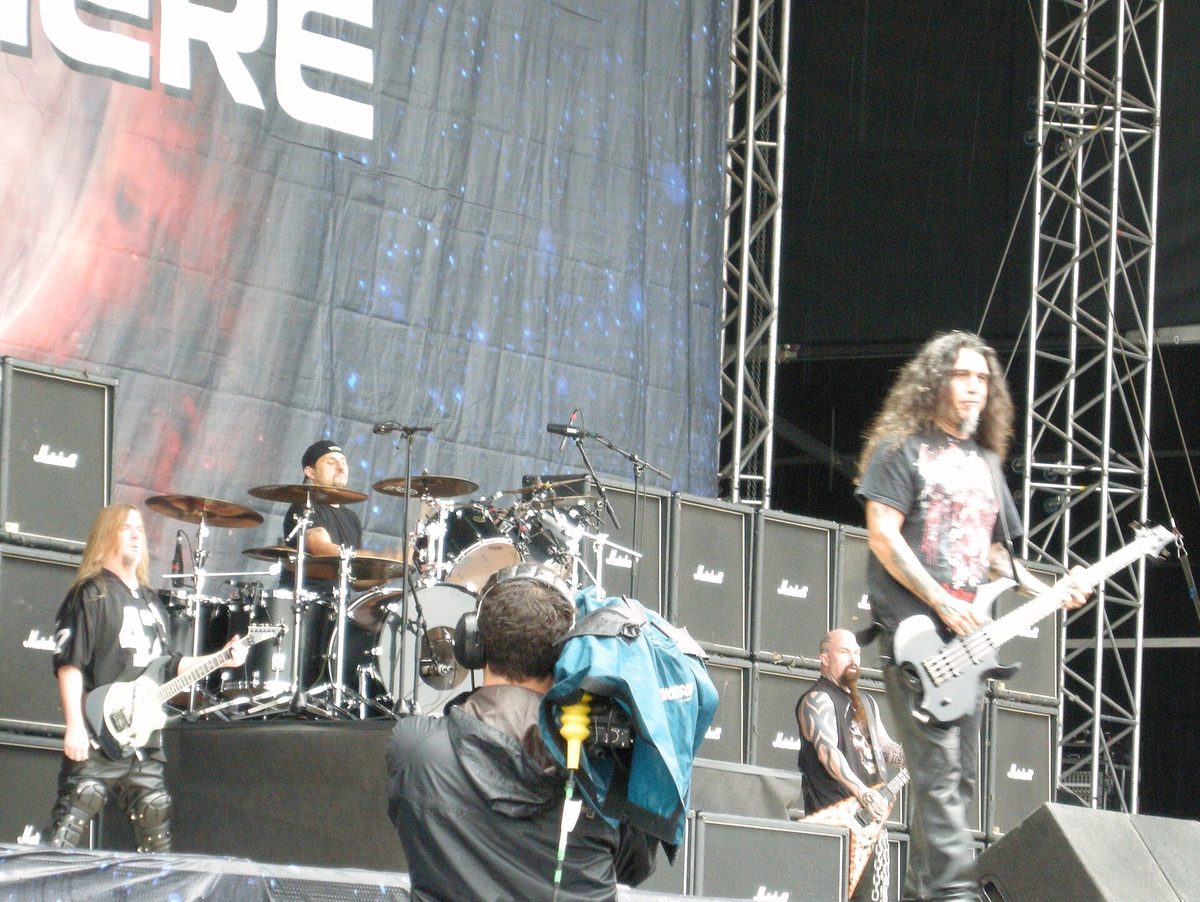
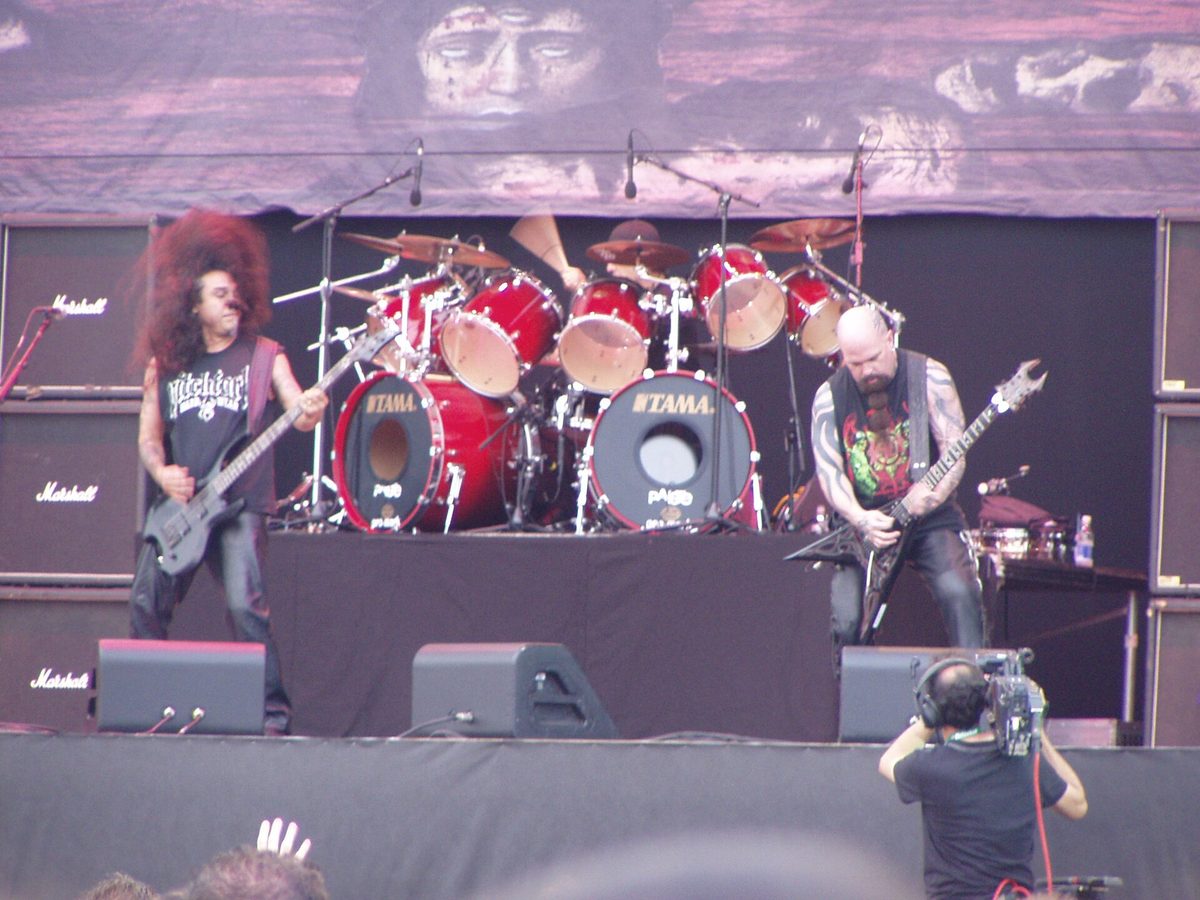
Slayer's classic line-up at the Sonisphere festival, Stockholm, 7 August 2010: Jeff Hanneman (left), Dave Lombardo on drums, Kerry King and Tom Araya on bass (right).
In short
How Slayer tunes
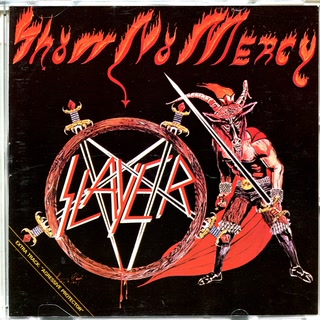
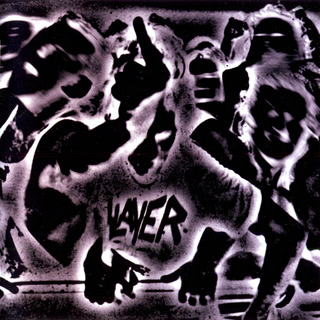
Slayer recorded their 1983 debut, Show No Mercy, in E Standard. From the Haunting the Chapel EP (1984) through Divine Intervention (1994) and the punk covers album Undisputed Attitude (1996) the band played half a step down in E♭, the tuning Kerry King calls D♯.
Read more
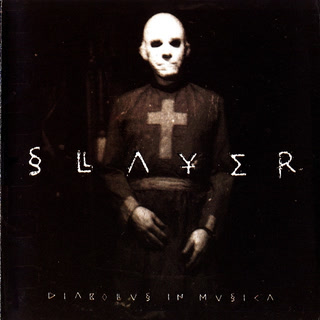
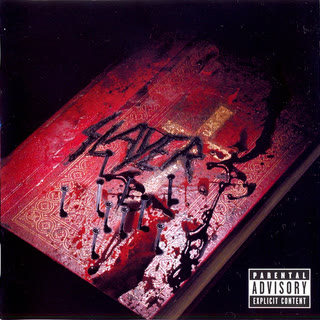
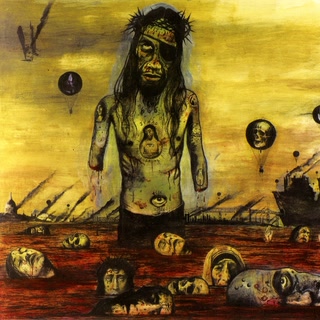
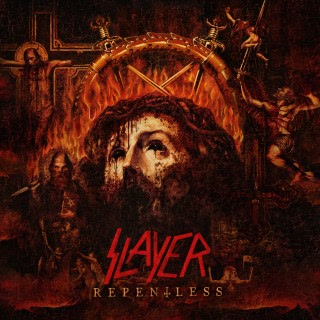
Diabolus in Musica (1998) and God Hates Us All (2001) moved most songs a step and a half down to C♯ Standard, the latter with four Drop B songs and a 7-string song. Christ Illusion (2006), World Painted Blood (2009) and Repentless (2015) returned to E♭ as the home tuning, but mixed in C♯ Standard, Drop B, B Standard and 7-string songs. TuneLit measured all twelve studio albums from the owner's CDs. Most sit within a few cents of A 440, but Show No Mercy is about 13 cents sharp, Reign in Blood about 12 cents flat, Diabolus in Musica about 14 cents sharp and Divine Intervention about 27 cents sharp (A ≈ 447). The audio check also corrected three God Hates Us All songs: Seven Faces and War Zone sit on a low B, not on the C and D of their Songsterr tabs, and Deviance is in Drop C♯.
Slayer spent most of their career half a step down. Tune every string a semitone low (E♭ A♭ D♭ G♭ B♭ E♭) and you can play along with nearly everything from the Haunting the Chapel EP in 1984 to Divine Intervention in 1994, and with most of the later albums too. Kerry King calls this tuning "D♯"; tab sites call it E♭ Standard or "half step down". It is the same thing.
The exceptions are where it gets interesting. The 1983 debut is in plain E Standard. Diabolus in Musica and God Hates Us All moved most songs a step and a half down to C♯. Christ Illusion, World Painted Blood and Repentless went back to E♭ as the home tuning, but mixed in C♯ Standard, Drop B, B Standard and 7-string songs, sometimes three tunings on one side of a record. And a few albums do not sit at concert pitch at all: TuneLit measured every studio album from the owner's CDs and found Show No Mercy about 13 cents sharp, Reign in Blood about 12 cents flat, Diabolus in Musica about 14 cents sharp and Divine Intervention about 27 cents sharp.
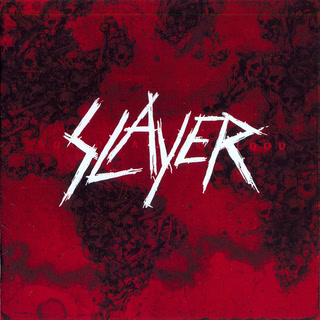
This page goes through all twelve studio albums and the Haunting the Chapel EP: the tuning the tabs and the band describe, what TuneLit measured, the songs that break the pattern and how to tune along. The album list above opens every album, where each song has a Tune button that opens the tuner in exactly that tuning, offset included.
The story
The short version
Years
Records
Home tuning
Songs in other tunings
1983
Show No Mercy
E Standard
none
1984–1996
Haunting the Chapel to Undisputed Attitude
E♭ Standard
Gemini (C♯ Standard)
1998
Diabolus in Musica
C♯ Standard
two in E♭, one in Drop C♯
2001
God Hates Us All
C♯ Standard
four in Drop B, one in Drop C♯, one 7-string song
2006
Christ Illusion
E♭ Standard
two in C♯ Standard, three in Drop B, one 7-string song
2009
World Painted Blood
E♭ Standard
B Standard, E Standard and 7-string songs, one each
2015
Repentless
E♭ Standard
six in Drop B
Tom Araya on bass and Kerry King with his V-shaped guitar at the Heineken Jammin' Festival, Italy, 14 June 2007.
The story
Kerry King's tunings
King tends to describe Slayer's tunings as a short list rather than song by song. In a 2010 interview he said the band had four tunings, that he took one guitar and one backup for each on tour, and that he left the 7-string tuning at home when no 7-string songs were in the set. He matches the strings to the tuning: .009–.042 for "D♯", .010–.046 for C♯, and a .056 low string instead of the .046 when that C♯ guitar drops its sixth string. A 2013 Premier Guitar rig rundown lists the same three sets, the last one as "B". Those three tunings plus a 7-string cover nearly every Slayer studio song.
Two naming habits are worth knowing before you read any Slayer tab:
"D♯" is E♭ Standard. Same notes, different spelling. Tabs titled "D♯ tuning" are simply half a step down.
Drop B here means C♯ Standard with the low string lowered a whole step: B F♯ B E G♯ C♯. It is not B Standard (B E A D F♯ B), where every string goes down. The low note is the same, so heavy low riffs sound alike in both, but chords and leads on the upper strings do not.
A third one is Drop C♯: the E♭ tuning with only the low string lowered a whole step, C♯ G♯ C♯ F♯ A♯ D♯. Its low string is the same C♯ as C♯ Standard, so tabs of the same song often disagree between the two. Where they do, the album pages list the tuning most tabs use and mention the other.
The story
Where the records actually sit
TuneLit measures how far a record sits from the A 440 grid, but only within one semitone: which note the strings are on comes from the tabs and sources. A separate check from the audio then asks whether the low string really sits where the tabs say, by listening for the open low string and for the note just below it (how we measure recordings). On Slayer it agreed with the database on 114 of the 128 songs it could test. Most of the rest are songs whose riffs rarely touch the open low string, where it simply could not tell. It also settled one song the tabs had a semitone wrong, and it backs up two more corrections described under God Hates Us All.
Most Slayer albums sit within about 5 cents of concert pitch, which a normal tuner set to A 440 handles fine. Four are clearly off:
Show No Mercy (1983): about 13 cents sharp (A ≈ 443). Every song lands between 6 and 19 cents high.
Reign in Blood (1986): about 12 cents flat (A ≈ 437). Most songs sit 12 to 18 cents low, Raining Blood the lowest, while Postmortem is at concert pitch.
Divine Intervention (1994): about 27 cents sharp (A ≈ 447), the biggest offset in the catalogue. Every song measures between 18 and 36 cents high.
Diabolus in Musica (1998): about 14 cents sharp (A ≈ 443), apart from Bitter Peace, at concert pitch, and Death's Head, 11 cents flat.
No source we found says anything about these offsets. A measurement cannot tell a guitar tuned sharp from a tape running fast; it only hears the result. What it does tell you is how to tune: a guitar at plain E♭ against Divine Intervention is more than a quarter of the way to the next semitone off, which is easy to hear on long chords.
Main tuning: E Standard +13 ¢ (A ≈ 443), measured by TuneLit on a 1984 Roadrunner CD.
The self-financed debut on Metal Blade is the only Slayer album in standard tuning. Every Songsterr transcription of its ten songs is in E Standard, and a write-up of Jeff Hanneman's gear says the album was recorded in standard tuning and that the band played these songs half a step down on stage from about 1984. Tab sites also carry "D♯ tuning" versions of songs like The Antichrist and Black Magic; those follow the later live versions, not this record. TuneLit's check from the audio hears E as the lowest open string on every song it could judge.
The surprise is the pitch. The CD sits about 13 cents sharp, with every song between 6 and 19 cents high, so a guitar tuned to a plain A 440 E Standard sounds a touch flat against it.
With TuneLit: every Tune button opens E Standard at +13 ¢.
Live: from about 1984 these songs were played in E♭, so live recordings sit roughly a semitone lower than the album. TuneLit has not measured any of them.
Haunting the Chapel (EP, 1984)
Main tuning: E♭ Standard, from the tabs. Not measured.
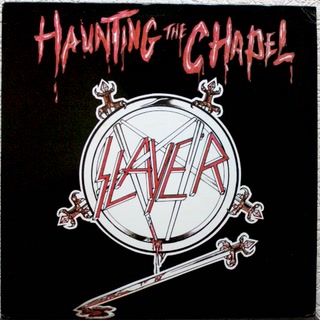
Three songs, Chemical Warfare, Captor of Sin and the title track, and the first Slayer record tuned half a step down. All three are tabbed in E♭ for guitars and bass, and the gear write-up names this EP as the start of the E♭ years. Later reissues add Aggressive Perfector. The EP is not in TuneLit's library, so its Tune buttons use A 440.
Main tuning: E♭ Standard −5 ¢ (A ≈ 439), measured on a 1985 Roadrunner CD.
The first full album half a step down, with longer and darker songs than the debut. Every song is tabbed in E♭, guitars and bass. The record sits about 5 cents flat, close enough to concert pitch that most players will not notice. One song is clearly lower: Kill Again measures about 23 cents flat (A ≈ 434), so it gets its own setting. Necrophiliac measures about 5 cents sharp.
With TuneLit: E♭ Standard −5 ¢ for most songs, −23 ¢ for Kill Again and +5 ¢ for Necrophiliac.
Main tuning: E♭ Standard −12 ¢ (A ≈ 437), measured on the original Def Jam CD.
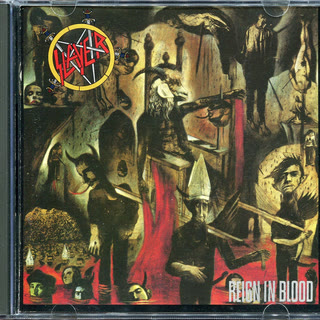
Rick Rubin's first album with the band: ten songs in under half an hour, all tabbed in E♭. Kerry King's "D♯" strings, .009–.042, belong to this tuning. The record is less tidy than the tabs. Angel of Death measures about 7 cents flat, Necrophobic, Altar of Sacrifice, Criminally Insane and Epidemic 12 to 15 cents flat, and Raining Blood about 18 cents flat. Piece by Piece, Jesus Saves and Postmortem sit at concert pitch. The album value is the middle of that spread, about 12 cents flat. Postmortem is measured clearly enough to get its own setting at concert pitch; Piece by Piece and Jesus Saves are not, so they keep the album's −12 ¢. If one of those two sounds flat against your guitar, nudge Fine-tune up.
The check from the audio agrees with E♭ on the songs it could judge, except Necrophobic, where it hears E: the open E♭ is almost never heard there, while E is the most common low note. That looks like the check's known blind spot, a riff that lives on the first fret, which makes it point a half step up. Every tab says E♭, so the song stays in E♭.
With TuneLit: E♭ Standard −12 ¢, and plain E♭ Standard for Postmortem. Raining Blood sits a few cents below the album value; if the long notes of its intro beat against your guitar, lower Fine-tune a little more.
Main tuning: E♭ Standard +6 ¢ (A ≈ 441.5), measured on the original Def Jam CD.
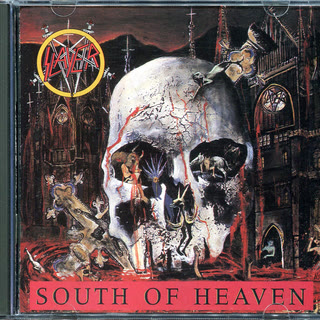
Slower and heavier than Reign in Blood, in the same tuning. The 12-string acoustic part that opens Spill the Blood is tabbed in E♭ like everything else, and Dissident Aggressor, a Judas Priest cover, is played in the album's E♭ too. The songs range from about 9 cents flat (the title track) to 14 cents sharp, none clearly enough to get its own setting, and the album as a whole is about 6 cents sharp: effectively concert pitch.
With TuneLit: every Tune button opens E♭ Standard +6 ¢.
Main tuning: E♭ Standard +5 ¢ (A ≈ 441), measured on the original Def American CD.
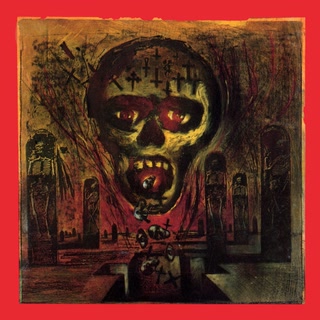
The last album with Dave Lombardo until Christ Illusion, half a step down from start to finish. It measures about 5 cents sharp, with the songs between about 1 cent flat (Dead Skin Mask) and 13 cents sharp (War Ensemble). Nothing stands out enough for its own setting.
Main tuning: E♭ Standard +27 ¢ (A ≈ 447), measured on the 1994 Japanese CD.
Paul Bostaph's first album on drums, and the last album of originals entirely in E♭. Every tab agrees on E♭, and the check from the audio hears E♭ as the lowest open string on every song it could judge. But the record is the sharpest in the catalogue: about 27 cents above concert pitch, with the songs between 18 and 36 cents high and most of them close to the album value. Only 213 is measured clearly enough apart to get its own setting, at about 18 cents sharp (A ≈ 444.6).
Why does this matter? An A 440 tuner reads the record's low string as E♭ +27, more than a quarter of the way to E. Tune a plain E♭ and every long chord will beat against the record. Do not reach for E Standard either: that would put you 73 cents sharp of it.
With TuneLit: the Tune buttons open E♭ Standard +27 ¢ (213: +18 ¢). By hand, choose E♭ Standard and set the reference A to 447 Hz.
Main tuning: E♭ Standard +9 ¢ (A ≈ 442), measured on the 1996 Japanese CD.
Punk and hardcore covers (Verbal Abuse, T.S.O.L., Minor Threat, D.I., D.R.I., Dr. Know, The Stooges), two songs from Jeff Hanneman's mid-1980s side project Pap Smear, and one new original. The covers are tabbed in Slayer's usual E♭, and the record sits about 9 cents sharp. The new song, Gemini, is a whole step lower in C♯ Standard: its tab was first entered in B Standard and corrected to C♯ in 2020, and the check from the audio agrees on C♯. It is the first C♯ song on a Slayer album, two years before Diabolus in Musica.
Several of the covers rarely touch the open low string, so the audio check could not judge Can't Stand You, DDAMM or Mr. Freeze; it found nothing against E♭ on the others. The Japanese CD adds two more covers (Sick Boy and Memories of Tomorrow) and a bonus live disc, which are not part of the album list.
With TuneLit: E♭ Standard +9 ¢ for the covers, C♯ Standard +9 ¢ for Gemini.
Main tuning: C♯ Standard +14 ¢ (A ≈ 443), measured on the 1998 Japanese CD.
Wikipedia calls it the band's first album played mostly in C♯ tuning, and the tabs agree: Bitter Peace, Stain of Mind, Overt Enemy, Desire, In the Name of God and Point are all in C♯ Standard (C♯ F♯ B E G♯ C♯). Two songs stay in the old tuning: Perversions of Pain and Scrum are tabbed in E♭, and the check from the audio hears E♭ as their lowest open string, a whole step above the rest. Screaming from the Sky is tabbed in Drop C♯, with only the low string lowered to C♯ and the other five in E♭. Death's Head and Love to Hate also have Drop C♯ versions next to C♯ Standard ones; the low string is C♯ in both, and the check confirms C♯ on every one of these songs.
The record sits about 14 cents sharp, but not evenly. Bitter Peace, the opener, measures at concert pitch, and Death's Head about 11 cents flat (A ≈ 437), so both get their own settings; the other songs sit between 9 and 19 cents sharp.
With TuneLit: C♯ Standard +14 ¢ for most songs, E♭ Standard +14 ¢ for Perversions of Pain and Scrum, Drop C♯ +14 ¢ for Screaming from the Sky, plain C♯ Standard for Bitter Peace and C♯ Standard −11 ¢ for Death's Head.
Main tuning: C♯ Standard, measured at concert pitch (+3 ¢) on the 2001 Japanese CD.
In a 2001 interview Kerry King summed up the album as two songs in 7-string tunings, four dropped to B and the rest in one tuning. The interview text calls that tuning "D sharp", but the low notes on the record say C♯: on Darkness of Christ, God Send Death, Threshold, Exile, Bloodline and the rest, C♯ is by far the most common low note, nothing is heard below it, and the check from the audio agrees with C♯ Standard on every one of these songs. So the album stays in C♯ Standard, as Wikipedia and the tabs have it. A popular Songsterr version of Bloodline titled "D♯" is in E♭ Standard; the record's lowest note is C♯, two semitones below that.
The four Drop B songs. King did not name them. Cast Down and Payback are tabbed in Drop B, and the check from the audio hears a low B on two more songs whose tabs say otherwise, Seven Faces and War Zone. With the 7-string songs counted separately, those are the four:
Cast Down is tabbed in Drop B, and one tab says King played it on a 7-string while Hanneman used a 6-string tuned down to B. The check hears B.
Seven Faces is tabbed on Songsterr in C Standard, a semitone higher. The check hears B as the lowest open string, ruling out C, so it is listed in Drop B.
War Zone is tabbed on Songsterr in Drop D at concert pitch, three semitones higher. An Ultimate Guitar tab gives a B tuning instead, and the check hears B. It is listed in Drop B.
Payback is tabbed in Drop B, with a 2026 edit arguing for B Standard. Its riffs rarely hit the open low string, so the check cannot decide; the low note is B either way.
Deviance is the one song the audio check moved. Both of its tabs drop only the low string, but Songsterr writes Drop D and Ultimate Guitar Drop C♯. The check hears C♯ as by far the most common low note, with nothing at the C below, so the song is listed in Drop C♯: the album's low C♯ with the upper strings in E♭.
Here Comes the Pain is the 7-string song on the standard album, written first for a wrestling compilation on a 7-string King borrowed from B.C. Rich. It is listed for a 7-string tuned half a step down (B♭ E♭ A♭ D♭ G♭ B♭ E♭), as an Ultimate Guitar tab has it; the current Songsterr tab arranges it for a 6-string in B♭ Standard (B♭ E♭ A♭ D♭ F B♭), which reaches the same low notes. The check hears B♭ as the lowest note. The other 7-string song, Scarstruck, is a bonus track of the Japanese and collector's editions and is not in the album list.
The record as a whole sits at concert pitch, but several songs sit lower: Exile about 10 cents flat, Cast Down about 8, Seven Faces about 11 and Payback about 5. Each gets its own setting.
With TuneLit: C♯ Standard for most songs; Drop B for Cast Down (−8 ¢), Seven Faces (−11 ¢), War Zone and Payback (−5 ¢); Drop C♯ for Deviance; the 7-string B♭ tuning for Here Comes the Pain; C♯ Standard −10 ¢ for Exile. Keep a heavier low string ready for the Drop B songs, as King does.
Main tuning: E♭ Standard, measured at concert pitch (+4 ¢) on the 2007 special edition CD.
Dave Lombardo's return, and the album with the most tunings: four songs in E♭ (Flesh Storm, Catalyst, Jihad, Consfearacy), two in C♯ Standard (Black Serenade and Cult), three in Drop B (Skeleton Christ, Catatonic and Supremist) and Eyes of the Insane with a low B. The Catatonic tab was moved from E♭ to Drop B in 2024 to match the record. Eyes of the Insane, Hanneman's Grammy-winning song, has the least settled tab: the main one is for a 7-string in standard tuning (B E A D G B E), others use a 6-string in B Standard or Drop B. All of them have B as the lowest note, and that is what the check hears. On a 6-string, B Standard gets you the low riffs.
The check from the audio agrees with every one of these tunings. Most songs sit within a few cents of concert pitch; Cult measures about 14 cents sharp and Skeleton Christ about 6 cents flat, and both get their own settings.
The owner's copy is the 2007 special edition, which adds Final Six (tabbed in Drop B, and a Grammy winner the following year) and replaces Black Serenade with an alternate version; the Black Serenade measurement comes from that version.
With TuneLit: E♭ Standard for the four E♭ songs, C♯ Standard for Black Serenade and C♯ Standard +14 ¢ for Cult, Drop B for Catatonic and Supremist and Drop B −6 ¢ for Skeleton Christ, and the 7-string B Standard for Eyes of the Insane.
Main tuning: E♭ Standard, measured at concert pitch (+3 ¢) on the 2009 Japanese CD.
Jeff Hanneman's last album with the band, and mostly back in the classic E♭: the title track, Unit 731, Snuff, Beauty Through Order, Hate Worldwide, Human Strain, Psychopathy Red and Playing with Dolls. Three Kerry King songs are tabbed differently:
Americon is in B Standard (B E A D F♯ B), the lowest tuning on the album. The check hears B.
Public Display of Dismemberment has two tabs, both in E Standard, half a step above the rest of the album. The check is not convinced: the open E is rarely heard, while E♭ shows up often among the low notes. It cannot decide between the two, so the song keeps its tabs' E Standard. If that sounds a half step high, try the album's E♭.
Not of This God has a single tab, written for a 7-string tuned half a step down (low B♭). The check points lower still, and the most common bass note is E. No interview confirms a 7-string on this song; it needs an ear check.
With TuneLit: E♭ Standard for most songs, B Standard for Americon, E Standard for Public Display of Dismemberment and the 7-string B♭ tuning for Not of This God, all at concert pitch.
Main tuning: E♭ Standard, measured at concert pitch (+3 ¢) on the 2015 limited edition CD.
The last Slayer album, and the only one without Jeff Hanneman, who died in 2013. Kerry King plays all the rhythm guitars, Gary Holt adds leads to four songs, and Piano Wire is a Hanneman song that King recorded during the World Painted Blood sessions. It is also the only album produced by Terry Date. Half the record is in E♭ (Delusions of Saviour, the title track, When the Stillness Comes, Piano Wire, Atrocity Vendor, You Against You) and half in Drop B (Take Control, Vices, Cast the First Stone, Chasing Death, Implode, Pride in Prejudice). Several of the Drop B tabs were corrected in 2025, from E♭ or B Standard; the check from the audio hears B as the lowest open string on all six. Implode came out as a free download in 2014, the first Slayer recording with Holt on guitar.
With TuneLit: E♭ Standard or Drop B, both at concert pitch. Every song's button says which.
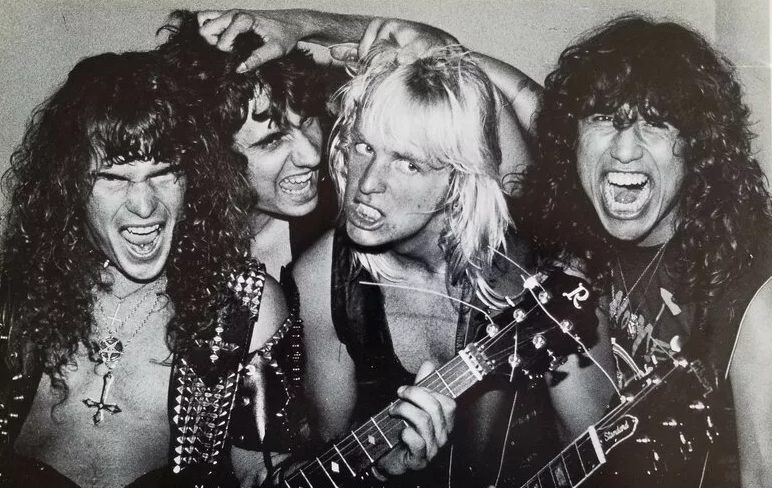
Slayer's original line-up of Tom Araya, Jeff Hanneman, Kerry King and Dave Lombardo in a 1983 Metal Blade Records press photo.
The story
Tabs that turned out wrong, and songs still in doubt
The tabs held up well: the audio check agreed with them on all but a handful of songs. Where it did not:
Seven Faces (God Hates Us All): Songsterr's C Standard is a semitone too high; the record sits on a low B (Drop B).
War Zone (God Hates Us All): Songsterr's Drop D at concert pitch is three semitones too high; the record sits on a low B.
Deviance (God Hates Us All): Songsterr's Drop D is a semitone too high; the record is in Drop C♯, as the Ultimate Guitar tab says.
"D♯ tuning" versions of Show No Mercy songs: the debut is in E Standard; the E♭ versions follow later live performances.
Songs worth checking by ear before you trust a Tune button:
Public Display of Dismemberment: E Standard as tabbed, or the album's E♭?
Not of This God: the 7-string B♭ tuning of its only tab, or something lower?
Payback: Drop B or B Standard? The low note is B either way.
Necrophobic: the audio check says E, almost certainly because the riff sits on the first fret; the tabs' E♭ stays.
Songs where the audio check could not decide, mostly because their riffs rarely use the open low string: Fight till Death, Reborn, Behind the Crooked Cross, Sex. Murder. Art., 213, Can't Stand You, DDAMM, Mr. Freeze, Unit 731 and the title track of Repentless.
The story
Practical advice
Start from E♭. Most of the catalogue is half a step down at, or within a few cents of, A 440. One guitar in E♭ covers Haunting the Chapel through Undisputed Attitude and most of the last three albums.
Keep the offsets in mind. For Divine Intervention set the reference A to about 447 Hz; for Show No Mercy and Diabolus in Musica about 443; for Reign in Blood about 437. The Tune buttons do this for you.
Use string gauges that fit the tuning. King's choice of .009–.042 for E♭ and .010–.046 for C♯ is a good starting point, and for Drop B he swaps the low string for a .056 so the B does not go slack.
You do not need a 7-string. Here Comes the Pain works on a 6-string in B♭ Standard, and Eyes of the Insane in B Standard; you lose only the upper strings' exact layout.
C♯ Standard and Drop C♯ share the low string. If a riff from Diabolus in Musica or God Hates Us All feels awkward in one, try the other: the low notes sound the same.
Live recordings are a different case. The band played the Show No Mercy songs in E♭ from about 1984, and TuneLit has not measured any live Slayer release, so start from the studio album's tuning and adjust by ear.
Questions
What tuning does Slayer use?
Mostly E♭ Standard: 10 of 13 albums. Diabolus in Musica and God Hates Us All are in C♯ Standard; Show No Mercy is in E Standard. Many albums also have songs in other tunings, and the album pages list them song by song.
Why does Slayer sound out of tune when I play along?
Some records are not at concert pitch. Divine Intervention sits about 27 cents sharp (A ≈ 447); Diabolus in Musica sits about 14 cents sharp (A ≈ 444); Show No Mercy sits about 13 cents sharp (A ≈ 443). A guitar tuned to A 440 clashes with them. Every Tune button on these pages sets the measured pitch for you.
How did TuneLit measure Slayer's records?
We played original CDs and LPs through TuneLit's pitch analysis: the strongest notes of each song are compared with the A 440 grid, which gives the offset in cents. That cannot tell the semitone, so the tuning name comes from interviews, the press and tabs, and for 1 song from TuneLit's semitone check from the audio, backed by a tab or source. The audio is never stored or published.
Colors and font
Font
Colors
Menu
Install the app
Android (Chrome): menu ⋮ → Install app or Add to Home screen.
Computer (Chrome, Edge): the install icon at the right end of the address bar.
iPhone: Safari → Share → Add to Home Screen.
It opens full screen and keeps tuning with no connection.