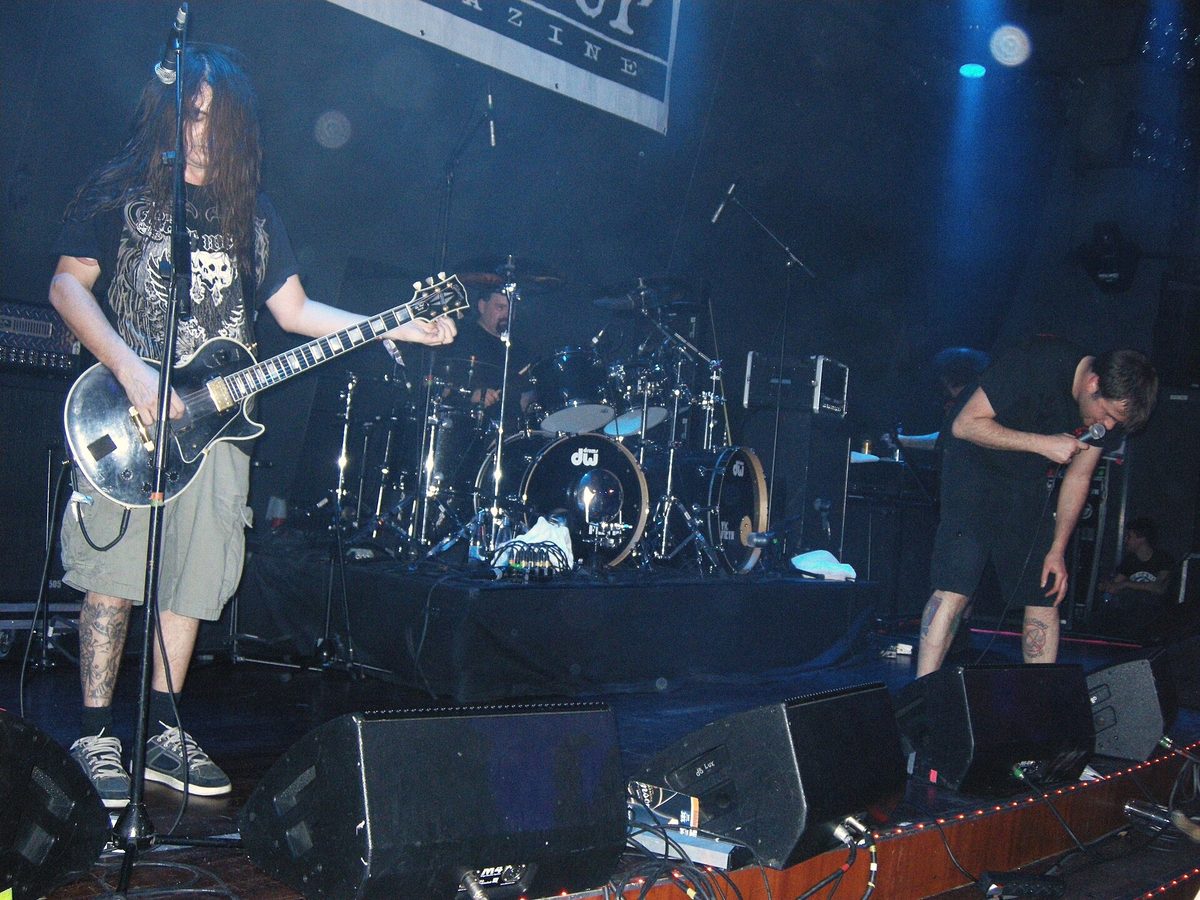
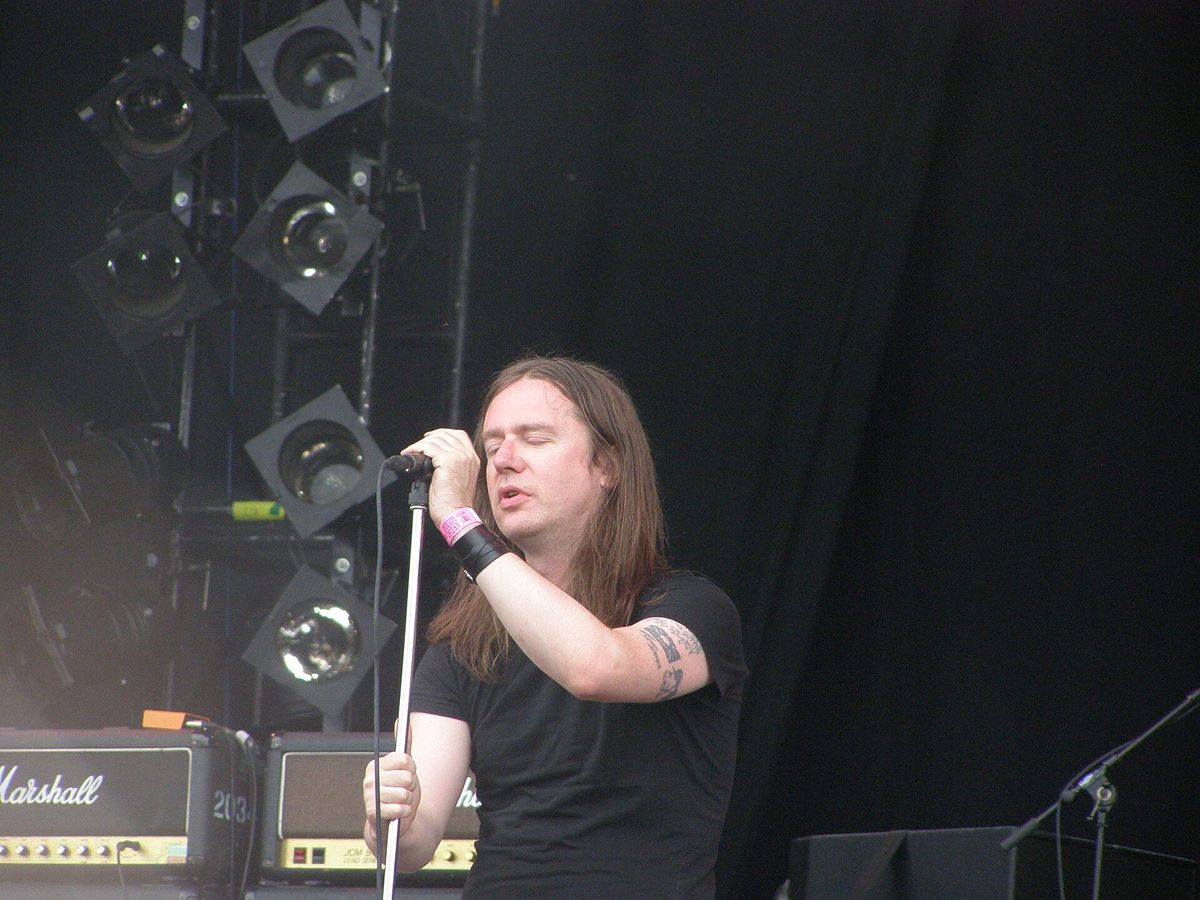
Napalm Death on stage aboard the Close-Up boat in Sweden, 10 February 2011.
In short
How Napalm Death tunes
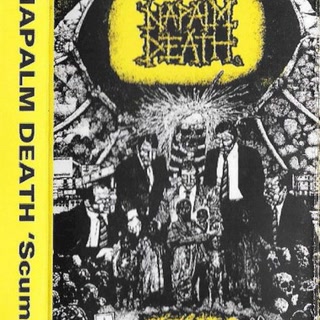
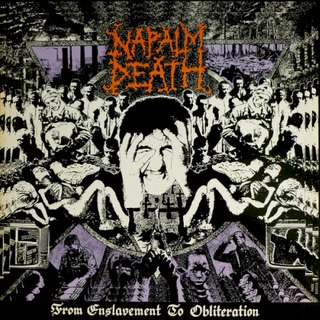
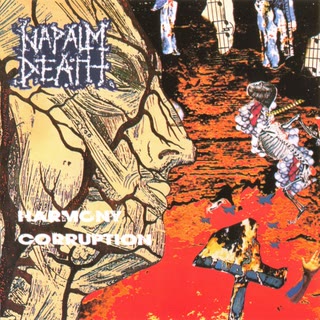
Napalm Death have always tuned down, and how far depends on the era. The 1987 debut Scum mixes E♭ Standard and D Standard, From Enslavement to Obliteration is tabbed in C♯, and Harmony Corruption (1990) is in D Standard, which Mitch Harris described as tuning up.
Read more
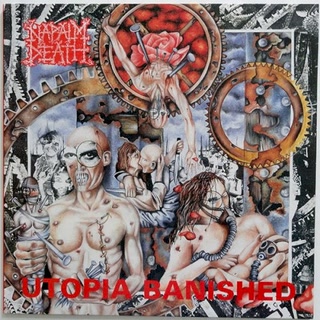
From Utopia Banished (1992) to Words from the Exit Wound (1998) the band played in C♯ Standard, with a few songs on Diatribes in D or B Standard. Since Enemy of the Music Business (2000) it has been D Standard, with the occasional Drop C song. TuneLit measured fifteen releases from Fear, Emptiness, Despair (1994) to the 2022 mini-album: all sit within 2 to 11 cents of concert pitch, so tune at A 440 and pick the right semitone. Grindcore mixes are dense, so the measurements carry lower confidence than usual, and TuneLit's semitone check from the audio agrees with the tabs on 124 of the 193 songs and is unsure on most of the rest.
On every Napalm Death album in this guide the guitars are tuned below E Standard. From the first sessions for Scum in 1986 to the 2022 mini-album Resentment Is Always Seismic, the question is only how far down, and that depends on the era: a half step or a whole step on the debut, a step and a half for most of the 1990s, a whole step from 2000 on. If a Napalm Death riff never quite sits right against the record, first check which era the song comes from.
What the band has not done is tune flat. Unlike Pantera, whose records sit up to a quarter step below concert pitch, every Napalm Death record TuneLit measured sits within a few cents of A 440. Tune to the right semitone at A 440 and you are there.
This page collects what is known about Napalm Death's tunings, album by album, from Scum (1987) to Throes of Joy in the Jaws of Defeatism (2020), plus two covers records and two EPs. The band has said little about tuning in print, so most of the picture comes from tabs, which for grindcore are not the most reliable. TuneLit therefore measured fifteen releases from original CDs: how far each sits from concert pitch and, with its semitone check from the audio, whether the low string sits where the tabs put it. Every album page has a Tune button for each song.
The story
The short version
Scum (1987): two sessions, two tunings. The best-known side-one songs are tabbed in E♭ Standard, the rest of the album around D Standard. Not measured.
From Enslavement to Obliteration (1988): C♯ Standard by most tabs. Not measured.
Harmony Corruption (1990): D Standard. Mitch Harris has said the band tuned up to D for this album. Not measured.
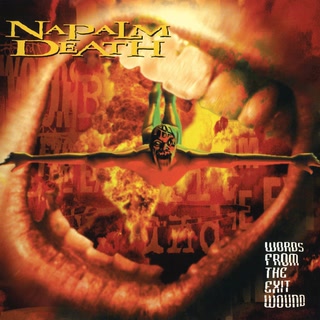
Utopia Banished (1992) to Words from the Exit Wound (1998): C♯ Standard, a step and a half down. On Diatribes, Greed Killing is in D Standard and two songs go down to B Standard.
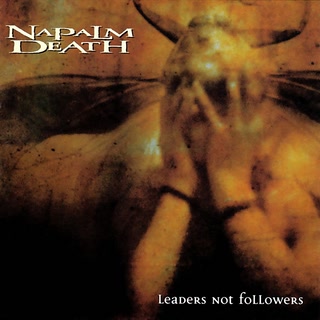
Leaders Not Followers (1999): unclear; listed in D Standard, with two songs that may be in C♯.
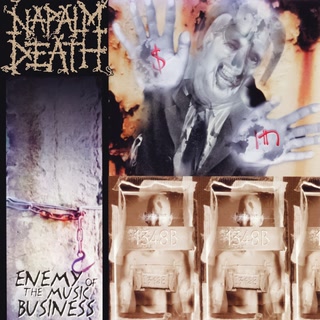
Enemy of the Music Business (2000) to now: D Standard, a whole step down, with the odd song in Drop C.
Reference pitch: A 440 for everything. The measured records sit between 2 and 11 cents sharp, too little to matter for most players.
Lee Dorrian, who sang on Napalm Death's Scum (1987), performing with Cathedral at Wacken Open Air, Germany, 2 August 2009.
The story
Why the tabs disagree
Napalm Death songs are fast, dense and loud: two guitars, a heavily distorted bass and blast beats in the same space, often for less than two minutes. That makes them hard to transcribe by ear. For several songs we found tabs a half step apart, and some files are written in E Standard or Drop D simply because that is how the transcriber plays; one tab of When All Is Said and Done says so openly. Treat a Napalm Death tab in E Standard with suspicion, and a Drop D tab of a D Standard album as a convenience, not a different tuning.
First-hand information is scarce: the one clear statement we found comes from Mitch Harris, about Harmony Corruption. For the rest TuneLit relies on independent tabs agreeing, on who played on what, and on the records themselves. Where nothing settles it, the album or song is marked Disputed and the notes name the other candidates.
The story
How Napalm Death's tuning changed
1986–1987: Scum, two line-ups on one record. Napalm Death formed in 1981 in Meriden, near Coventry, and recorded their first album in two halves. Side one was cut in August 1986 with Justin Broadrick on guitar and Nik Bullen on bass and vocals, side two in May 1987 with Bill Steer, Jim Whiteley and Lee Dorrian; Mick Harris drums on both. The side-one songs people play most, Scum, Instinct of Survival and Human Garbage, are tabbed in E♭ Standard, a half step down, while Siege of Power, Control and Born on Your Knees are tabbed in D. Wikipedia describes the side-two guitars as lower-tuned and notes that Mick Harris, who could not play guitar, wrote some of those riffs on a guitar stripped to its two lowest strings and tuned down. The side-two tabs sit around D Standard, a few lower still.
1988: down to C♯. From Enslavement to Obliteration was Bill Steer's second Napalm Death record and the first with Shane Embury on bass; Embury has held that job ever since. Most tabs of the album use C♯ Standard, a step and a half down. The title track is the exception: its tabs cannot agree (C Standard, Drop C, C♯ and D all appear).
1989–1990: up to D. The Mentally Murdered EP came out in 1989; Bill Steer left that summer, and Jesse Pintado and Mitch Harris joined later the same year. For Harmony Corruption, recorded at Morrisound in Tampa in 1990, the band changed tuning. In a 2011 interview Harris explained that the main difference between Mentally Murdered and Harmony Corruption was the tuning: the band moved up to standard D, and the fast chord riffs became much easier to hear. In another interview the same year he said the higher tuning changed the album's sound a lot. Every tab of Harmony Corruption agrees on D Standard. It is the only Napalm Death tuning in this guide named by a band member.
1991–1998: the C♯ years. After Harmony Corruption the band went back down a half step. Tabs of the Mass Appeal Madness EP (1991), Utopia Banished (1992), Fear, Emptiness, Despair (1994), Diatribes (1996), Inside the Torn Apart (1997) and Words from the Exit Wound (1998) use C♯ Standard; one transcriber of Words from the Exit Wound tells readers to tune down a step and a half "as usual". TuneLit's semitone check agrees with C♯ on 38 of the 47 songs it heard from these four measured albums and never prefers D. Diatribes is the odd one: Greed Killing is transcribed in D Standard and Glimpse into Genocide and Cursed to Crawl in B Standard, and the audio check agrees with each of those too.
1999–2000: the move to D. The six-song covers EP Leaders Not Followers (1999) sits right at the change, and neither the tabs nor the audio settle it (see below). Enemy of the Music Business (2000), the first album produced by Russ Russell and Simon Efemey, is in D Standard by the newer tabs. A set of text tabs posted when it came out still wrote its songs in C♯, the band's 1990s tuning, but TuneLit's audio check sides with D on every song it could decide.
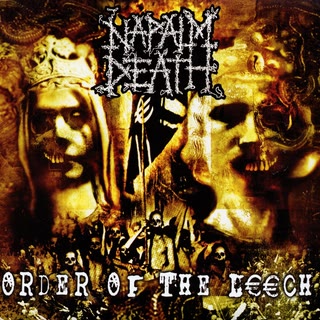
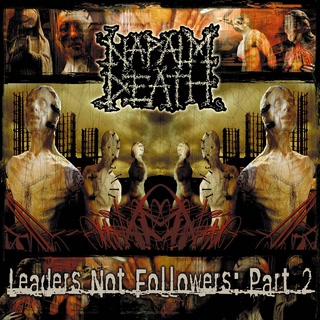
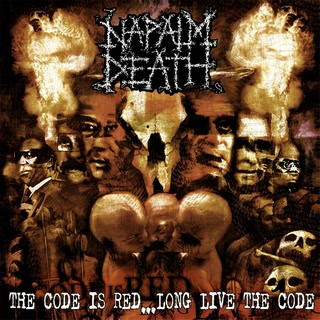
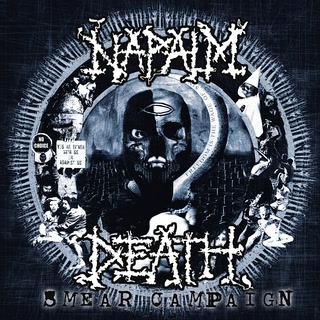
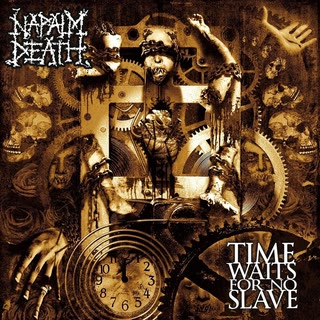
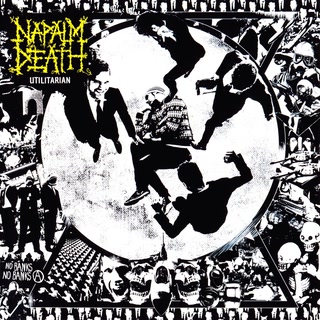
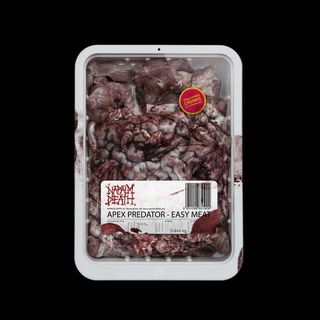
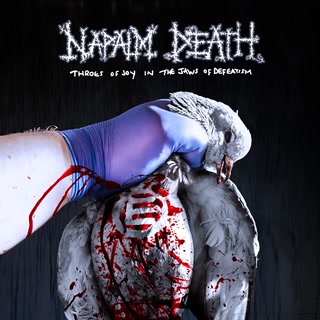
2000 to today: D Standard. Every album since uses D Standard, a whole step down, by the tabs (where there are any) and by the audio check: Order of the Leech, the Leaders Not Followers: Part 2 covers album, The Code Is Red...Long Live the Code, Smear Campaign, Time Waits for No Slave, Utilitarian, Apex Predator – Easy Meat and Throes of Joy in the Jaws of Defeatism. A few songs drop the low string another whole step to C: Persona Non Grata on Smear Campaign and Backlash Just Because on Throes. The line-up moved around the same tuning: Mitch Harris played all the guitars on Order of the Leech and Leaders Not Followers: Part 2 (Jesse Pintado is credited, and left in 2004), Harris went on hiatus in late 2014 after Apex Predator, John Cooke has played live since, and Shane Embury wrote most of Throes of Joy and played guitar on it.
The bass. Bass tabs follow the guitars an octave down: C♯ F♯ B E for Breed to Breathe, D G C F for Contagion and Time Waits for No Slave. Shane Embury's heavily distorted bass is part of why these records are hard to read, by ear and by machine.
TuneLit lab
What TuneLit measured
TuneLit played original CDs through the same analysis the tuner uses: the strongest notes of each song are compared with the A 440 grid, which gives the record's offset in cents. That offset is only known within one semitone, so the tuning's name comes from the tabs, and TuneLit's semitone check listens for the open low string to see whether the tabs' semitone holds. Only the numbers are kept, never the audio.
Release
Tuning
Measured
Equivalent A
Fear, Emptiness, Despair (1994)
C♯ Standard
+5 ¢
A ≈ 441
Diatribes (1996)
C♯ Standard
+3.0 ¢
A 440
Inside the Torn Apart (1997)
C♯ Standard
+7 ¢
A ≈ 442
Words from the Exit Wound (1998)
C♯ Standard
+11 ¢
A ≈ 443
Leaders Not Followers (1999)
D Standard (disputed)
+6 ¢
A ≈ 442
Enemy of the Music Business (2000)
D Standard
+6 ¢
A ≈ 441
Order of the Leech (2002)
D Standard
+4 ¢
A ≈ 441
Leaders Not Followers: Part 2 (2004)
D Standard
+1.8 ¢
A 440
The Code Is Red...Long Live the Code (2005)
D Standard
+3.6 ¢
A 440
Smear Campaign (2006)
D Standard
+9 ¢
A ≈ 442
Time Waits for No Slave (2009)
D Standard
+4 ¢
A ≈ 441
Utilitarian (2012)
D Standard
+5 ¢
A ≈ 441
Apex Predator – Easy Meat (2015)
D Standard
+7 ¢
A ≈ 442
Throes of Joy in the Jaws of Defeatism (2020)
D Standard
+2.5 ¢
A 440
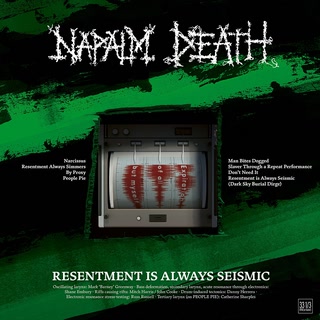
Resentment Is Always Seismic (2022)
D Standard
+3.6 ¢
A 440
Nothing is flat. Every measured record sits between 2 and 11 cents above concert pitch. The low tunings are real down-tunings at A 440. Words from the Exit Wound (+11 ¢) and Smear Campaign (+9 ¢) are the sharpest; offsets under 4 cents are listed as plain A 440, because nobody hears them.
Confidence is low, and that is honest. The measurement looks for clear notes on the equal-tempered grid. A wall of down-tuned, distorted guitars and bass under blast beats gives it much less to hold on to than a rock record. Fear, Emptiness, Despair (0.17 on a scale up to 1) and Enemy of the Music Business (0.27) have the lowest confidence of this set, and six of their songs gave no usable reading at all. Album values are confidence-weighted medians, and on most albums the middle half of the songs sit within about 6 cents of each other, so they are still a good guide; single-song values deserve less trust than on a rock record.
The semitone check mostly agrees with the tabs. Of the 193 measured songs it agrees with the listed semitone on 124, is unsure on 57 and disagrees on 12. It confirms the big picture: C♯ for the 1990s albums, D from 2000 on, and the exceptions the tabs name on Diatribes, Smear Campaign and Throes. It is unsure most often on short, blasting songs, and on 11 of the 16 songs of Utilitarian. A disagreement alone never moves a song: in TuneLit's tests such disagreements were right only about one time in four, typically on songs that never play the open low string. No Napalm Death song was moved; the doubtful ones are listed below.
Main tuning: D Standard (disputed), with the side-one favourites in E♭ Standard. Not measured by TuneLit.
Side one (tracks 1–12) and side two (13–28) were recorded nine months apart by different line-ups. The best-rated tabs of Scum, Instinct of Survival and Human Garbage use E♭ Standard, a half step down. Siege of Power, Control and Born on Your Knees are tabbed in D Standard, and so is most of side two, which Wikipedia calls lower-tuned; a few side-two tabs go down to C or Drop C. TuneLit lists the album in D Standard and gives the three E♭ songs their own button. The one-second You Suffer is tabbed in C♯, E♭ and E, which hardly matters for a single chord.
With TuneLit: start with the song's button and switch between D and E♭ Standard if the opening riff sounds a half step off. This is the album where a check by ear matters most.
Main tuning: C♯ Standard, by community tabs. Not measured by TuneLit.
Most tabs of the album, including Unchallenged Hate, Private Death, Display to Me… and Blind to the Truth, use C♯ Standard. The title track is the exception: Songsterr has it in C Standard, a rated Guitar Pro file in Drop C, others in C♯ or D. That C♯ fits Mitch Harris's remark that the band later tuned up to D for Harmony Corruption.
With TuneLit: C♯ Standard at A 440 for everything; try C or D on the title track if C♯ does not fit.
Main tuning: D Standard, from Mitch Harris. Not measured by TuneLit.
The first album with Harris and Jesse Pintado, recorded at Morrisound with Scott Burns. Harris has explained that the band tuned up to standard D for it, higher than on the Mentally Murdered EP, and that the riffs became clearer. Every tab we found, for all ten songs, agrees. Suffer the Children has the best-rated tab of the album, a Guitar Pro file rated by 37 players, in D Standard.
With TuneLit: D Standard at A 440 for the whole album.
Main tuning: C♯ Standard, by community tabs. Not measured by TuneLit.
Danny Herrera's first album on drums, and a step back down. Tabs of I Abstain, Dementia Access, The World Keeps Turning, Aryanisms, Judicial Slime, Upward and Uninterested and Exile use C♯ Standard. One Guitar Pro file of The World Keeps Turning is in D, but the most-viewed tab of it is in C♯.
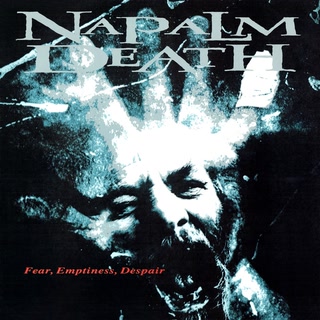
Main tuning: C♯ Standard +5 ¢ (A ≈ 441), measured by TuneLit on the CD.
The groovier, slower record of the mid-1990s. Tabs agree on C♯ Standard for Twist the Knife (Slowly), Hung, Plague Rages, More than Meets the Eye, Primed Time and Retching on the Dirt, and TuneLit's semitone check agrees on 9 of the 11 songs. The CD measures about 5 cents sharp, but this is the album with the lowest confidence of the whole set: two songs gave no usable reading at all. Remain Nameless reads about 11 cents flat and State of Mind about 18 cents sharp, so they get their own buttons. The check leans to a low C on Fasting on Deception, with no tab to back it.
With TuneLit: C♯ Standard +5 ¢; at A 440 you will hardly hear the difference.
Main tuning: C♯ Standard at A 440, measured by TuneLit on the CD.
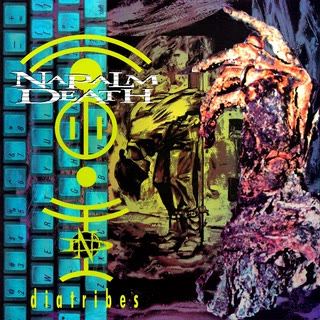
The album with the most tunings. Ripe for the Breaking and Corrosive Elements are tabbed in C♯ Standard like the albums either side. Greed Killing, also released as an EP, is transcribed in D Standard on Songsterr and in a full transcription on Ultimate Guitar. Glimpse into Genocide (music by Jesse Pintado) and Cursed to Crawl (music by Shane Embury) go down to B Standard in rated Guitar Pro files. TuneLit's semitone check confirms all three groups: D on Greed Killing, B on the two low songs, C♯ on the rest it could decide. A Guitar Pro file of Greed Killing with its low string dropped to B, and a Drop C text tab of Placate, Sedate, Eradicate, find no support elsewhere.
The CD sits at concert pitch (about +3 ¢). Greed Killing reads about 19 cents sharp and Cold Forgiveness about 16 cents flat. The title track is the strangest reading in the catalogue: 46 cents above the rest of the album, almost exactly between two notes. TuneLit lists it in the album's C♯ (tuned 46 cents sharp) and also offers C Standard at the same offset; this is one to check by ear.
With TuneLit: C♯ Standard for most of it, D Standard +19 ¢ for Greed Killing, B Standard for Glimpse into Genocide and Cursed to Crawl.
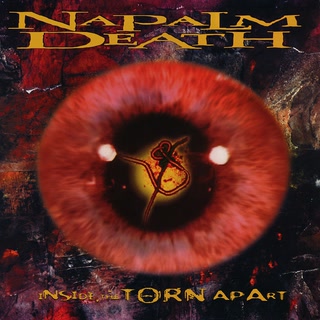
Main tuning: C♯ Standard +7 ¢ (A ≈ 442), measured by TuneLit on the CD.
C♯ Standard by every tab that names a tuning: Breed to Breathe (Songsterr, Guitar Pro and a bass tab), Birth in Regress, Reflect on Conflict, Down in the Zero, Purist Realist, Lowpoint and The Lifeless Alarm. A few files written in E Standard or with a dropped string read as transcribers' shortcuts. The CD gives the most confident reading of any Napalm Death album here, about 7 cents sharp, and the semitone check agrees on 10 of 12 songs. It hears a low C on The Lifeless Alarm, which no tab supports, so that song stays in C♯.
With TuneLit: C♯ Standard +7 ¢ for the whole album.
Main tuning: C♯ Standard +11 ¢ (A ≈ 443), measured by TuneLit on the CD.
The last album for Earache and the last of the C♯ years. Next of Kin to Chaos, The Infiltraitor, Ulterior Exterior and None the Wiser? are all tabbed in C♯ Standard. The CD measures about 11 cents sharp, the sharpest Napalm Death record we measured, and most songs sit within a few cents of that. The semitone check agrees with C♯ on 10 of the 12 songs.
With TuneLit: C♯ Standard +11 ¢; at A 440 the record sounds a touch sharp against you.
Main tuning: D Standard +6 ¢ (disputed), measured by TuneLit on the CD.
Six covers (Raw Power, Slaughter, Pentagram, Repulsion, Death, Dead Kennedys), recorded in July 1999 between the last C♯ album and the first D one. The tabs do not help: Songsterr has Politicians and Incinerator in D Standard, Guitar Pro files put Politicians and Back from the Dead in E Standard and Nazi Punks Fuck Off in C. The audio is split too. The semitone check hears D on Demoniac Possession but C♯ on Politicians and Back from the Dead, and is unsure on the other three. TuneLit lists the EP in D Standard, as Songsterr does, and flags the two songs.
With TuneLit: D Standard +6 ¢; if Politicians or Back from the Dead sounds a half step high, use C♯ Standard instead.
Main tuning: D Standard +6 ¢ (A ≈ 441), measured by TuneLit on the CD.
The start of the D Standard years. Taste the Poison and Constitutional Hell are in D on Songsterr and in Guitar Pro files, and a full transcription of Necessary Evil uses D Standard too. Necessary Evil also has a Drop C version on Songsterr, and a set of text tabs posted when the album came out wrote several songs in C♯. The semitone check settles it as far as it can: D on 8 songs, unsure on 6, never C♯. The measurement confidence is low on this album; four songs gave no usable reading.
Main tuning: D Standard +4 ¢ (A ≈ 441), measured by TuneLit on the CD.
Recorded as a four-piece, with Mitch Harris on all guitars. Continuing War on Stupidity is tabbed in D Standard; a rated Guitar Pro file of Narcoleptic says C♯, but the semitone check hears D on that song as on 9 others.
Main tuning: D Standard at A 440, measured by TuneLit on the CD.
Nineteen covers of hardcore punk and metal songs, from Discharge and Anti Cimex to Kreator and Sepultura. It is a full-length album of new recordings, 43 minutes long, so TuneLit lists it as an album rather than an EP. Lowlife is tabbed in D Standard on Songsterr and in a Guitar Pro file; another uploader writes it in Drop D, which shares the low D. The CD sits at concert pitch, and the semitone check agrees with D on 10 songs. It hears C♯ on the Master cover and E♭ on Conform, both unconfirmed.
With TuneLit: D Standard at A 440 for all nineteen songs.
Main tuning: D Standard at A 440, measured by TuneLit on the CD.
Silence Is Deafening, Climate Controllers and Pledge Yourself to You are tabbed in D Standard. One uploader writes All Hail the Grey Dawn, Vegetative State and Morale (where Shane Embury plays rhythm guitar) in Drop D; nothing else suggests a different tuning, and the low string is D either way. The semitone check agrees with D on 8 songs; many of the short ones give it too little to go on.
Main tuning: D Standard +9 ¢ (A ≈ 442), measured by TuneLit on the CD.
When All Is Said and Done, Weltschmerz, Sink Fast, Let Go and Identity Crisis are tabbed in D Standard. Persona Non Grata drops the low string to C (Drop C, C G C F A D). This is the clearest Napalm Death record for the semitone check: it agrees on 14 of 16 songs, Persona Non Grata included.
With TuneLit: D Standard +9 ¢, and Drop C +9 ¢ for Persona Non Grata.
Main tuning: D Standard +4 ¢ (A ≈ 441), measured by TuneLit on the CD.
Diktat, the title track, Strong-Arm, On the Brink of Extinction and Life and Limb are all tabbed in D Standard, and the semitone check agrees on 10 of 14 songs.
Main tuning: D Standard +5 ¢ (A ≈ 441), measured by TuneLit on the CD.
The Wolf I Feed, Errors in the Signals, Analysis Paralysis and Leper Colony are tabbed in D Standard. This is the album the semitone check finds hardest: it agrees with D on 5 songs and is unsure on 11, without ever preferring another note. Errors in the Signals measures about 19 cents sharp, 14 above the rest. The instrumental opener Circumspect leans to a low C in the audio, which would mean Drop C; no tab says so.
With TuneLit: D Standard +5 ¢; Errors in the Signals has its own +19 ¢ button.
Main tuning: D Standard +7 ¢ (A ≈ 442), measured by TuneLit on the CD.
Smash a Single Digit and How the Years Condemn are tabbed in D Standard. The semitone check agrees on 7 songs and hears C♯ on Stubborn Stains and Dear Slum Landlord..., which no tab supports.
Main tuning: D Standard at A 440, measured by TuneLit on the CD.
Contagion, Amoral and Fuck the Factoid are tabbed in D Standard; Backlash Just Because is in Drop C on Songsterr and in a Guitar Pro file, and the semitone check confirms the low C. The CD sits at concert pitch (about +2.5 ¢), but Invigorating Clutch and Zero Gravitas Chamber read 12 to 14 cents sharp and have their own buttons.
With TuneLit: D Standard at A 440, Drop C for Backlash Just Because.
Main tuning: D Standard at A 440, measured by TuneLit on the CD.
The last throw of the Throes material, as the title says: new songs plus covers of Slab! and Bad Brains. There are no tabs yet, so it is listed in the D Standard of Throes of Joy. The semitone check agrees with D on 4 of the 8 songs and doubts none.
With TuneLit: D Standard at A 440.
The story
Songs worth a second listen
Where TuneLit's own data and the tabs do not line up. None of these has been moved: an audio-check disagreement needs a second, independent hint first.
Politicians and Back from the Dead (Leaders Not Followers): the check hears C♯, a half step below the listed D; the albums either side are in C♯ and D, so both are plausible.
The Lifeless Alarm (Inside the Torn Apart) and Fasting on Deception (Fear, Emptiness, Despair): the check hears a low C under the tabs' C♯. A bass going below the guitars can cause this.
Master (Leaders Not Followers: Part 2), Pledge Yourself to You (The Code Is Red), Stubborn Stains and Dear Slum Landlord... (Apex Predator): the check hears C♯ under the listed D.
Conform, Procrastination on the Empty Vessel, Adversarial / Copulating Snakes, Invigorating Clutch: the check hears E♭ above the listed D. That is the check's best-known mistake (a riff that never touches the open low string), so these are probably fine as listed.
Diatribes (the title track): between two notes, C♯ or C, each tuned 46 cents sharp.
The story
Playing along: practical tips
Pick the era first. 1991–1998: C♯ Standard; 2000 on: D Standard; Harmony Corruption is D, Scum D or E♭. Most of the confusion around Napalm Death tabs is that half step between C♯ and D.
Stay at A 440. The records are at most 11 cents sharp. If a record sounds a hair sharp against you, use the album's Tune button, which includes the measured offset, or raise the reference a hertz or two (one hertz is about 4 cents). If the fingering looks right but every note rubs, you are probably a half step off: try the neighbouring tuning before you blame the tab.
Mind the tension. A step and a half down, and even more B Standard for the two low Diatribes songs, is slack on a normal-scale guitar; heavier strings, or a baritone or seven-string for the B songs, keep the riffs tight.
Cheat sheet
Quick reference
Scum (1987): D Standard (disputed); E♭ Standard for Scum, Instinct of Survival and Human Garbage.
From Enslavement to Obliteration (1988): C♯ Standard; title track disputed.
Harmony Corruption (1990): D Standard (Mitch Harris).
Utopia Banished (1992): C♯ Standard.
Fear, Emptiness, Despair (1994): C♯ Standard +5 ¢; Remain Nameless −11 ¢, State of Mind +18 ¢.
Diatribes (1996): C♯ Standard at A 440; Greed Killing D Standard +19 ¢; Glimpse into Genocide and Cursed to Crawl B Standard; Cold Forgiveness −16 ¢; Diatribes between C♯ and C at +46 ¢.
Inside the Torn Apart (1997): C♯ Standard +7 ¢.
Words from the Exit Wound (1998): C♯ Standard +11 ¢.
Leaders Not Followers (1999): D Standard +6 ¢ (disputed; C♯ is possible).
Enemy of the Music Business (2000) to Resentment Is Always Seismic (2022): D Standard at A 440 to +9 ¢. Drop C: Persona Non Grata, Backlash Just Because. Own values: Errors in the Signals +19 ¢, Invigorating Clutch +14 ¢, Zero Gravitas Chamber +12 ¢.
Golden rule: C♯ in the 1990s, D since 2000, always at A 440.
Questions
What tuning does Napalm Death use?
Mostly D Standard: 13 of 19 albums. From Enslavement to Obliteration, Utopia Banished, Fear, Emptiness, Despair, Diatribes, Inside the Torn Apart and Words from the Exit Wound are in C♯ Standard. Many albums also have songs in other tunings, and the album pages list them song by song.
Why does Napalm Death sound out of tune when I play along?
Some records are not at concert pitch. Words from the Exit Wound sits about 11 cents sharp (A ≈ 443). A guitar tuned to A 440 clashes with them. Every Tune button on these pages sets the measured pitch for you.
How did TuneLit measure Napalm Death's records?
We played original CDs and LPs through TuneLit's pitch analysis: the strongest notes of each song are compared with the A 440 grid, which gives the offset in cents. That cannot tell the semitone, so the tuning name comes from interviews, the press and tabs. The audio is never stored or published.
Colors and font
Font
Colors
Menu
Install the app
Android (Chrome): menu ⋮ → Install app or Add to Home screen.
Computer (Chrome, Edge): the install icon at the right end of the address bar.
iPhone: Safari → Share → Add to Home Screen.
It opens full screen and keeps tuning with no connection.