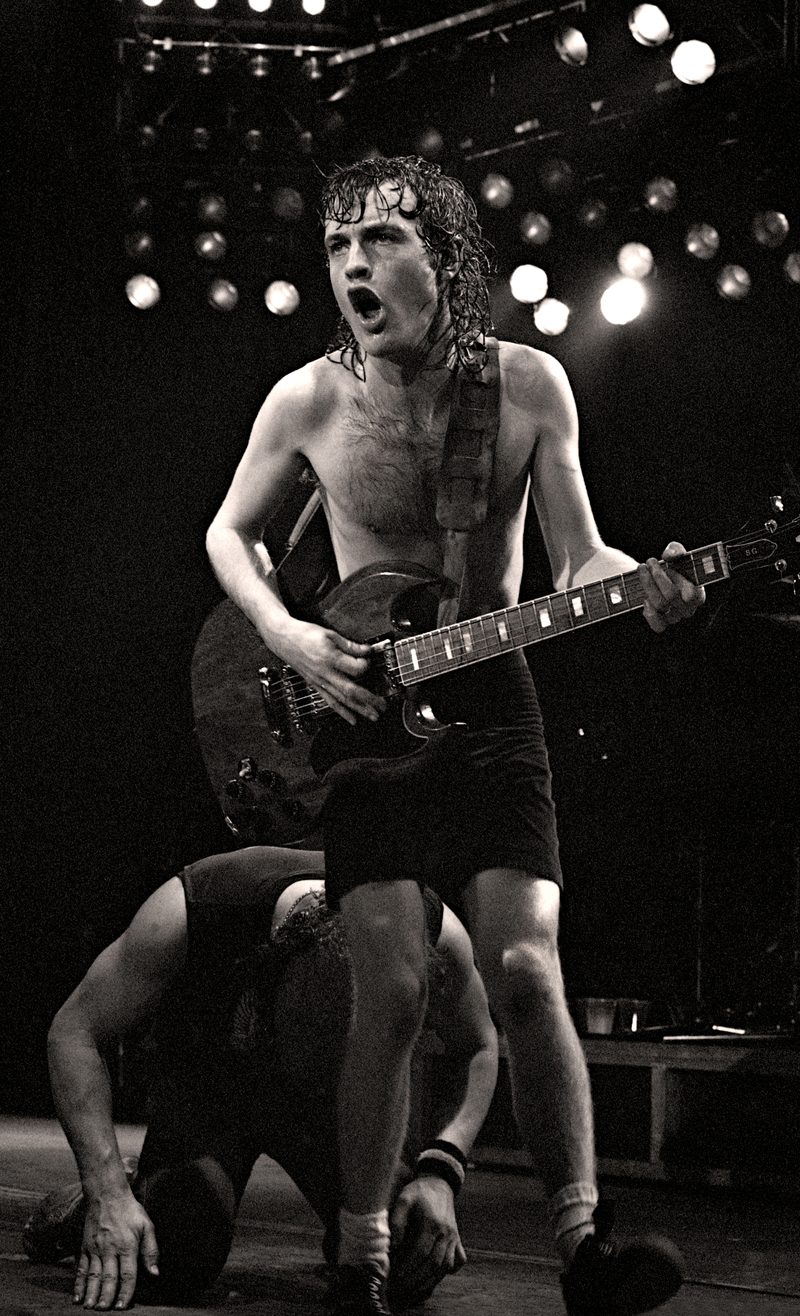
Angus Young with his Gibson SG on stage at the Manchester Apollo, England, 1982.
In short
How AC/DC tunes
AC/DC play almost everything in plain E Standard: open chords, power chords, no drop tunings. What changes is the pitch of the records.
Read more
Fans describe the Bon Scott-era albums as sitting somewhere around A 430 to 435 and Back in Black as the first one at A 440, and TuneLit's measurements of 18 songs agree. Dirty Deeds Done Dirt Cheap, Rock 'n' Roll Damnation, Touch Too Much and If You Want Blood sit about 34 cents flat, Jailbreak about 25. The Highway to Hell title track sits 63 cents flat (A ≈ 424), the quarter step low that fans have long described, which is why its most-viewed tab is in E♭. Can I Sit Next to You Girl goes further: E♭ Standard about 40 cents flat. It's a Long Way to the Top was recorded in B♭, a half step up. From Back in Black on the records sit at concert pitch within a few cents, with Moneytalks about 14 cents sharp, while a handful of later songs are tabbed a half step up or down. The measurements come from an unofficial compilation, so each song carries its own value and the album tunings follow the sources.
AC/DC must be the easiest band on this site to tune for. Angus and Malcolm Young built almost everything on plain E Standard, open chords and power chords, no drop tunings, no seven-strings, no tuning down for weight. And yet plenty of guitarists who tune to a perfect E and press play on Highway to Hell find that something is off. The reason is not the strings. Many AC/DC records, especially from the Bon Scott years, do not sit at A 440. Some run a little flat, some a lot, a few sit sharp, and the amount changes from song to song.
This page collects what is known about AC/DC's tunings on every international studio album from High Voltage (1976) to Power Up (2020), plus the '74 Jailbreak EP, the Who Made Who soundtrack and the Big Gun single. For each record you get the tuning the tabs agree on, the songs that differ, what TuneLit measured, and how to set it up. Every song on the album pages has a Tune button that opens the tuner in exactly that tuning, reference pitch included.
The story
E Standard, but which E?
A tuner judges every note against a reference A, normally 440 Hz. If a record runs a little slow, everything on it sounds lower: same chords, same fingerings, but the whole band sits below the A 440 grid. On a 1970s session that usually happened at the tape machine. Engineers could run the multitrack slightly faster or slower to change the feel of a take, and the pitch moved with it. A band tuning by ear to whatever was at hand could land off the grid too. A measurement hears only the result; it cannot tell a slow tape from a low-tuned guitar.
For playing along, the cause does not matter. You tune to E Standard as usual and move the reference A until your open strings match the record. TuneLit writes this in two ways. A small offset is shown in cents, such as "E Standard −34 ¢". A large one is shown as the reference pitch, such as "E Standard · A 424". One cent is a hundredth of a semitone, and near A 430 one hertz is about 4 cents.
This matters for AC/DC more than you might expect. On the ACDCfans.net forum, fans describe most Bon Scott-era songs as sitting around A 430, sometimes A 435, and call Back in Black the first album at A 440. TuneLit's measurements agree with both claims, with some surprises.
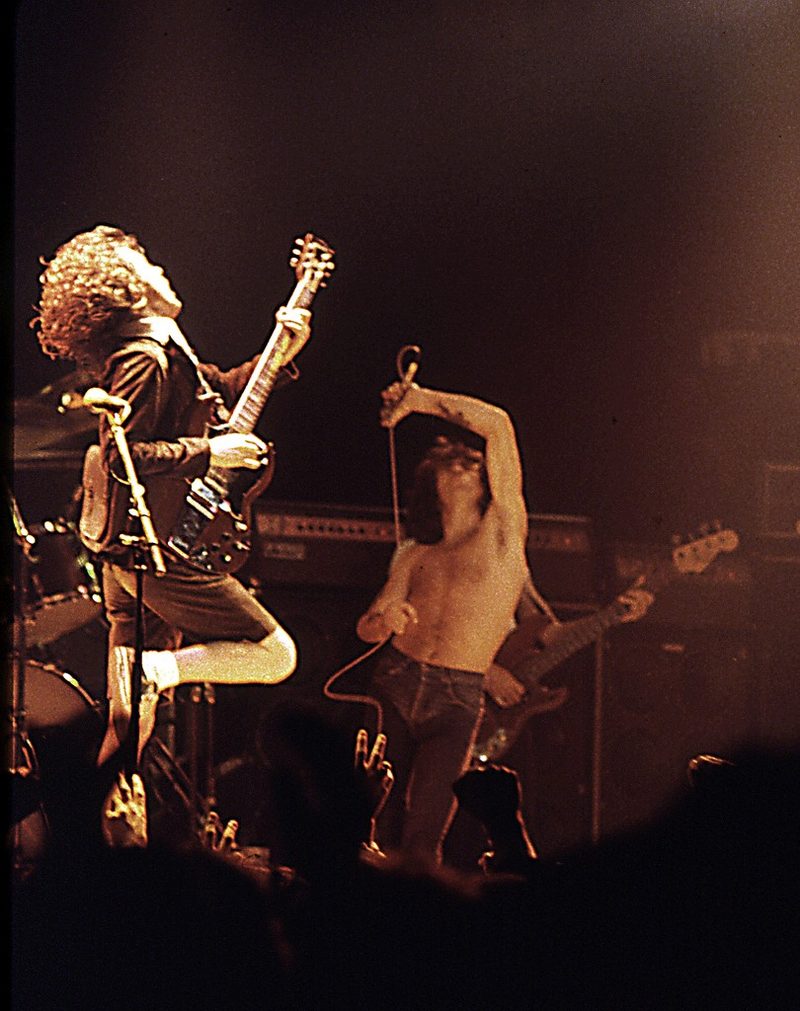
Angus Young (left) and Bon Scott on stage at the Ulster Hall, Belfast, in the late 1970s.
The story
Where TuneLit's numbers come from
TuneLit measures records from its owner's own collection. For AC/DC that collection holds a single folder: Greatest Hits '2000, an 18-song compilation on the Platinum Collection label (catalogue number ND-478, Russia). Discogs lists it, with its Ukrainian and later Russian variants, as an unofficial release. It even misspells the first song as "Stiff Upper Tip". So every measured value on this page comes from one song copied onto a bootleg, not from an official album CD.
That raises an obvious question: did the bootleggers change the speed? We checked in three ways.
Track lengths. On 12 of the 18 tracks the copy runs within about a second and a half of the official length, so none of those can be off by more than about 10 cents. The other six (Back in Black, If You Want Blood, Jailbreak, Rock and Roll Ain't Noise Pollution, Can I Sit Next to You Girl, Big Gun) are two to seven seconds short. The compilers faded them out early or cut them off, so their length alone cannot rule out a small speed change.
The modern songs. Four songs come from Stiff Upper Lip (2000), recorded in the digital era. They measure between 0 and +5 cents. A compilation sped up or slowed down as a whole would have moved them too.
What is known about the originals. The four Back in Black songs land within 7 cents of A 440, matching what fans say about that album, and the seven Bon Scott songs land 25 to 63 cents below their tabbed tunings, matching fans' descriptions of the 1970s records.
So the numbers describe the official recordings the compilers copied, and nothing points to a compilation-wide speed change. Two cautions remain. First, one song is not an album: the album tunings on the album pages stay as the sources describe them, and each measured song carries its own value. Second, Big Gun measures 34 cents sharp, which is odd for a 1993 recording, and its copy is four seconds short, so its number needs an ear check (more below).
The story
How AC/DC's pitch changed over the years
1975 to 1978: the Albert Studios years. The first four international albums were made in Sydney with Harry Vanda and George Young, Angus and Malcolm's older brother, producing. Community tabs play almost everything in E Standard, but nobody claims these records sit at A 440, and fans say the band only started using a strobe tuner around 1978. TuneLit's measurements fit that picture. Dirty Deeds Done Dirt Cheap and Rock 'n' Roll Damnation both sit about 34 cents flat (A ≈ 431), and Jailbreak, recorded during the Dirty Deeds sessions, about 25 cents flat (A ≈ 434). Two songs stray much further. It's a Long Way to the Top was recorded in B♭, a half step above the A it is played in. Can I Sit Next to You Girl measures E♭ Standard about 40 cents flat, more than a half step under concert E. Its most-viewed tab is in E♭, and so is the main tab of T.N.T., from the same 1975 sessions.
1979: Highway to Hell and the slowed tapes. With Mutt Lange producing, the band made its breakthrough album in London. Fans have long said it sounds about a quarter step flat, a 2005 Guitar Legends transcription noted the same thing, and many fans believe Lange slowed the tapes down. The title track measures 63 cents flat (A ≈ 424). An A 440 tuner reads that as E♭ plus 37 cents, which is why the most-viewed Songsterr tab of Highway to Hell is in E♭ Standard, while other tabs and the official sheet music use E Standard. They describe the same strings. Touch Too Much and If You Want Blood (You've Got It) measure only about 34 cents flat, so the album was not all slowed by the same amount.
1980 onward: A 440, mostly. Back in Black sits at concert pitch: Hells Bells, Back in Black, You Shook Me All Night Long and Rock and Roll Ain't Noise Pollution all measure within 7 cents of A 440. From here on, E Standard at A 440 is the right starting point. The measured later songs agree: Are You Ready at A 440, Moneytalks about 14 cents sharp, the four Stiff Upper Lip songs within 5 cents. The tabs still single out a handful of Brian Johnson-era songs: Heatseeker and Rock 'n' Roll Dream a half step up, Ruff Stuff and the Rock or Bust title track a half step down. Each rests on one or two community tabs, and TuneLit has not measured them.
On stage. Fans report that the band tuned down a half step on some tours, the Black Ice tour of 2008–2010 among them. This page covers the studio records only.
Main tuning: E Standard (community tabs). Measured: Can I Sit Next to You Girl, E♭ Standard −40 ¢ (A ≈ 430).
The first international album is a compilation of its own: seven songs from the Australian T.N.T. and two (Little Lover, She's Got Balls) from the Australian High Voltage, both from 1975. Most songs are tabbed in E Standard, but this is the least consistent record in the catalogue. It's a Long Way to the Top is the famous bagpipe song. Bassist Mark Evans recalled that the record is in B♭, while the band played it in A on stage, and a 2005 Guitar Legends transcription says the guitars were tuned up a half step. Fans still argue whether the band tuned up to the pipes or the tape was sped up. Either way, F Standard (or a capo on the first fret) with the usual A shapes matches the record.
T.N.T. is tabbed both ways: the most-viewed tab, with the bass, uses E♭ Standard, and another popular tab uses E. Can I Sit Next to You Girl is the one we could measure. It is the 1975 re-recording with Bon Scott, not the 1974 single with Dave Evans. Its main tab is in E♭ Standard, and the record sits about 40 cents below that, A ≈ 430. That is about 1.4 semitones under concert E. TuneLit's semitone check from the audio agrees with E♭, and the tab's notes line up with the record's low notes. This was the song with the lowest confidence in the set (0.63), so trust your ear if it sounds off. We list T.N.T. in E♭ as well, marked as disputed: if it sounds a half step low, switch to E.
With TuneLit: the album button opens plain E Standard. It's a Long Way to the Top opens F Standard, and Can I Sit Next to You Girl opens E♭ Standard −40 ¢.
Main tuning: E Standard (community tabs; the official sheet music of the title track is in E minor). Measured: the title track, −34 ¢ (A ≈ 431).
This is the international track list, released in Europe in 1976 and in the US only in 1981. It swaps Jailbreak and R.I.P. (Rock in Peace) of the Australian LP for Love at First Feel and Rocker. Every song is tabbed in E Standard. The title track measures about 34 cents flat. The copy's length matches the official track to the second, so that is the record, not a fast or slow copy. The rest of the album is not measured. If E Standard at A 440 sounds sharp against another song here, lower the reference A toward 431 and fine-tune by ear.
Main tuning: E Standard (community tabs). Not measured.
The international version swaps Crabsody in Blue for an edit of Problem Child from Dirty Deeds. Every song, Whole Lotta Rosie included, is tabbed in E Standard, and no source puts a number on the record's pitch. TuneLit's compilation has no song from it. Given the albums on either side, expect it to sit somewhat flat. Start at A 440, and if the record sounds lower, try A 432 and adjust by ear.
Main tuning: E Standard (community tabs). Measured: Rock 'n' Roll Damnation, −34 ¢ (A ≈ 431).
The first album with Cliff Williams on bass. The track list here is the one on every CD: Rock 'n' Roll Damnation opens the album, and Cold Hearted Man, on the first UK pressing, is gone. Rock 'n' Roll Damnation was the last song recorded, after the label asked for a radio single, and it measures about 34 cents flat. Fans point out that the pitch moves between songs on this album, so its value may not hold for Riff Raff or Sin City. Gimme a Bullet is the one song tabbed in E♭ Standard. With only one tab behind it, it may just be another E Standard song sitting well below A 440.
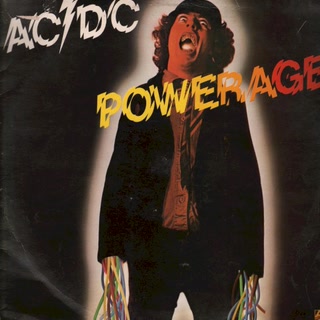
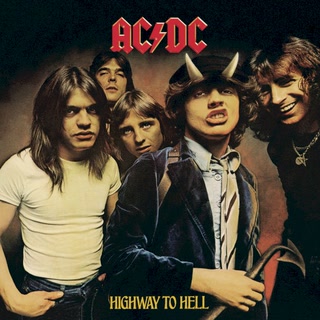
Main tuning: E Standard, about a quarter step flat (fans and a 2005 transcription). Measured: Highway to Hell −63 ¢ (A ≈ 424); Touch Too Much −34 ¢ (A ≈ 431.5); If You Want Blood (You've Got It) −34 ¢ (A ≈ 431).
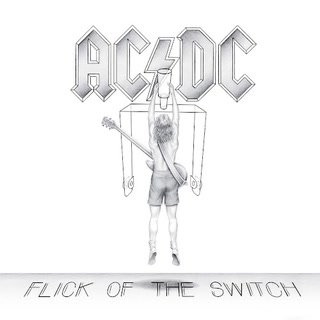
This is the album that sends guitarists to forums. The album button follows the sources: E Standard 50 cents flat, a quarter step. Our three measured songs show the real picture is less tidy.
The title track is played in A in standard tuning. The official sheet music is in A major, and the tabs use the same A, D and G shapes. On the record those chords sound 63 cents low, so the whole song sits at A ≈ 424. That is the same pitch as E♭ Standard tuned 37 cents sharp, which is how the most-viewed Songsterr tab ends up in E♭ while others use E. TuneLit lists it as E Standard at A 424. Our semitone check from the audio confirms that the open low string sounds there, and the E♭ tab's notes match the record's low notes exactly on that grid. The opposite reading, E Standard 37 cents sharp, would mean playing the song in G♯, which no transcription does.
Touch Too Much and If You Want Blood (You've Got It) sit much higher, about 34 cents flat, and both are tabbed in E. Fans disagree about If You Want Blood in particular: some hear it sped up, others slightly below A 440. Our reading is the second. Four more songs are tabbed in E♭ Standard: Beating Around the Bush, Get It Hot, Love Hungry Man and Night Prowler. We list them in E♭ as the tabs say, but think of the title track. If E♭ sounds a little flat against the record, raise the reference A rather than changing the tuning.
With TuneLit: Highway to Hell opens E Standard · A 424, Touch Too Much and If You Want Blood E Standard −34 ¢. The unmeasured E-tabbed songs (Girls Got Rhythm, Walk All Over You, Shot Down in Flames) use the album's E Standard −50 ¢. Somewhere between −34 and −63 is a safe bet; fine-tune by ear.
Main tuning: E Standard at A 440 (community tabs). Measured: Hells Bells +6 ¢, Back in Black −7 ¢, You Shook Me All Night Long at A 440, Rock and Roll Ain't Noise Pollution −6 ¢.
The first album with Brian Johnson, made in the Bahamas with Mutt Lange again. Fans call it the first AC/DC album at A 440, and the four songs we measured agree: all within 7 cents, which is as good as concert pitch to most ears. Every song is tabbed in E Standard. You Shook Me All Night Long sits in G (G, C and D chords), Hells Bells in A minor and Back in Black in E, all with open strings. If you tuned to a clean A 440 and the song still sounds wrong, check your intonation before the reference.
Main tuning: E Standard (community tabs). Measured: Jailbreak −25 ¢ (A ≈ 434).
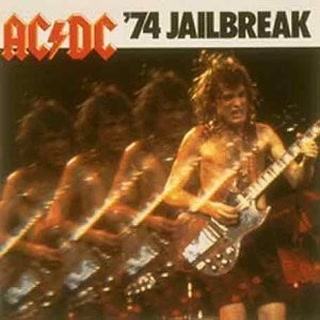
A five-song EP of Australian-only recordings from 1974 to 1976, released worldwide in 1984. Jailbreak itself was cut during the Dirty Deeds sessions, and it measures about 25 cents flat, a little higher than the Dirty Deeds title track. The other four songs (You Ain't Got a Hold on Me, Show Business, Soul Stripper and the cover of Baby, Please Don't Go) are tabbed in E Standard and not measured. Being older, they could sit anywhere from A 440 down to about A 430.
Main tuning: E Standard (community tabs). Not measured.
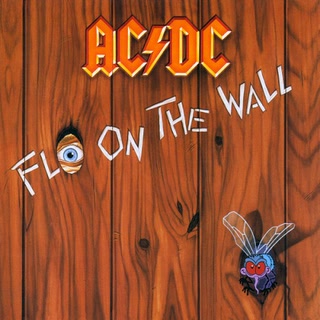
Produced by Angus and Malcolm in Switzerland. Everything is tabbed in E Standard except Stand Up. Its only tab, with the bass, drops the low string to D. Nothing else confirms it, so check the opening riff by ear.
Main tuning: E Standard (community tabs). Not measured.
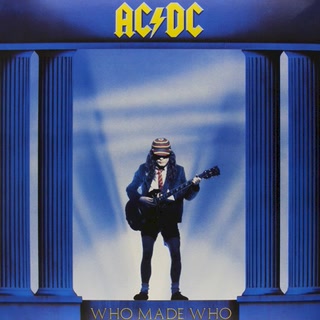
Who Made Who is the soundtrack to Stephen King's film Maximum Overdrive, not a studio album. We list it anyway, because three of its recordings appear nowhere else: the title song and the instrumentals D.T. and Chase the Ace, all tabbed in E Standard. The other six songs come from earlier albums. Ride On is from Dirty Deeds; Hells Bells and You Shook Me All Night Long from Back in Black, where TuneLit measured them; Sink the Pink and a shorter Shake Your Foundations from Fly on the Wall; and For Those About to Rock from the 1981 album. For those six, the original album's page is the place to look.
Main tuning: E Standard (community tabs). Not measured.
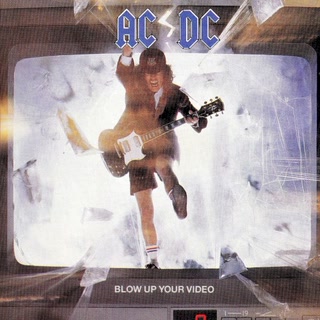
Back with Vanda and Young. Two songs stand out in the tabs, each backed by a fan on ACDCfans.net. Heatseeker is tabbed in F Standard, a half step up (a less-viewed tab says E♭, so it is marked disputed). Ruff Stuff is tabbed in E♭ Standard, a half step down. For Heatseeker, a capo on the first fret in E Standard gives the same pitch as tuning up.
Main tuning: E Standard (community tabs). Measured: Moneytalks +14 ¢ (A ≈ 443.5), Are You Ready at A 440.
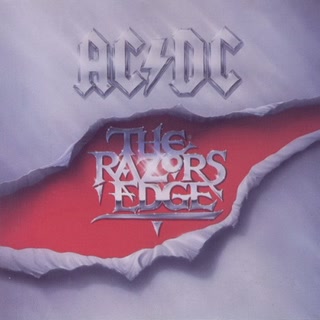
Produced by Bruce Fairbairn in Vancouver. Every song is tabbed in E Standard, Thunderstruck's open-B-string tapping included. Are You Ready measures right at A 440. Moneytalks sits about 14 cents sharp, enough to hear when you play along, and its copy runs exactly as long as the official track. Our semitone check from the audio says "a half step higher" for Are You Ready. That is a known blind spot: the song stays on D, C, F and G and never sounds the open low E, so the check gets fooled. It stays in E Standard.
Main tuning: E Standard (community tabs). Measured: +34 ¢ (A ≈ 449), with a caveat.
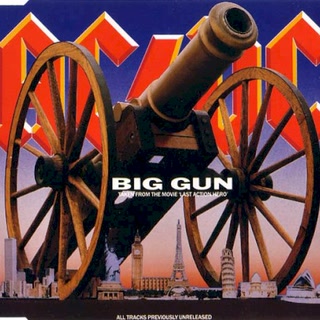
A one-off single for the Last Action Hero soundtrack, produced by Rick Rubin; it is on no studio album. The tab plays it in E Standard, and TuneLit's copy measures 34 cents sharp. The semitone reading is clear: the song's E and A sit right on that sharp grid. But a 1990s AC/DC recording that far above A 440 would be unusual. The compilation's copy also runs 4:20 against the official 4:24 and ends abruptly, so it may have been sped up to fit the disc, which alone would account for about 26 cents. The Tune button uses the measured value. If it sounds sharp against your own copy, use plain E Standard.
Main tuning: E Standard at A 440 (community tabs). Measured: Stiff Upper Lip +5 ¢; Safe in New York City, Satellite Blues and Give It Up at A 440.
Produced by George Young, back for one more album. The four songs on the compilation all land within 5 cents of concert pitch, which is also our best evidence that the compilation itself was not sped up or slowed down. Tune to A 440 and play.
Main tuning: E Standard (community tabs). Not measured.
The first of three albums with Brendan O'Brien. Everything is tabbed in E Standard. Angus plays slide on Stormy May Day at O'Brien's suggestion, and its tab keeps standard tuning. The one exception is Rock 'n' Roll Dream, tabbed in F Standard by its only Songsterr tab. With nothing else behind it, try E Standard first.
Main tuning: E Standard (community tabs). Not measured.
The first album without Malcolm Young. His nephew Stevie Young plays rhythm guitar. The title track's only tab is in E♭ Standard, and we list it that way. The one tab of Rock the Blues Away writes the lead part in D Standard but the rhythm guitar and the bass in E Standard, so the song stays in E.
Main tuning: E Standard (community tabs). Not measured.
Brian Johnson, Phil Rudd and Cliff Williams return, with Stevie Young on rhythm and O'Brien producing. Every song, including Shot in the Dark, Realize and Demon Fire, is tabbed in E Standard. Expect concert pitch, as on the other modern records.
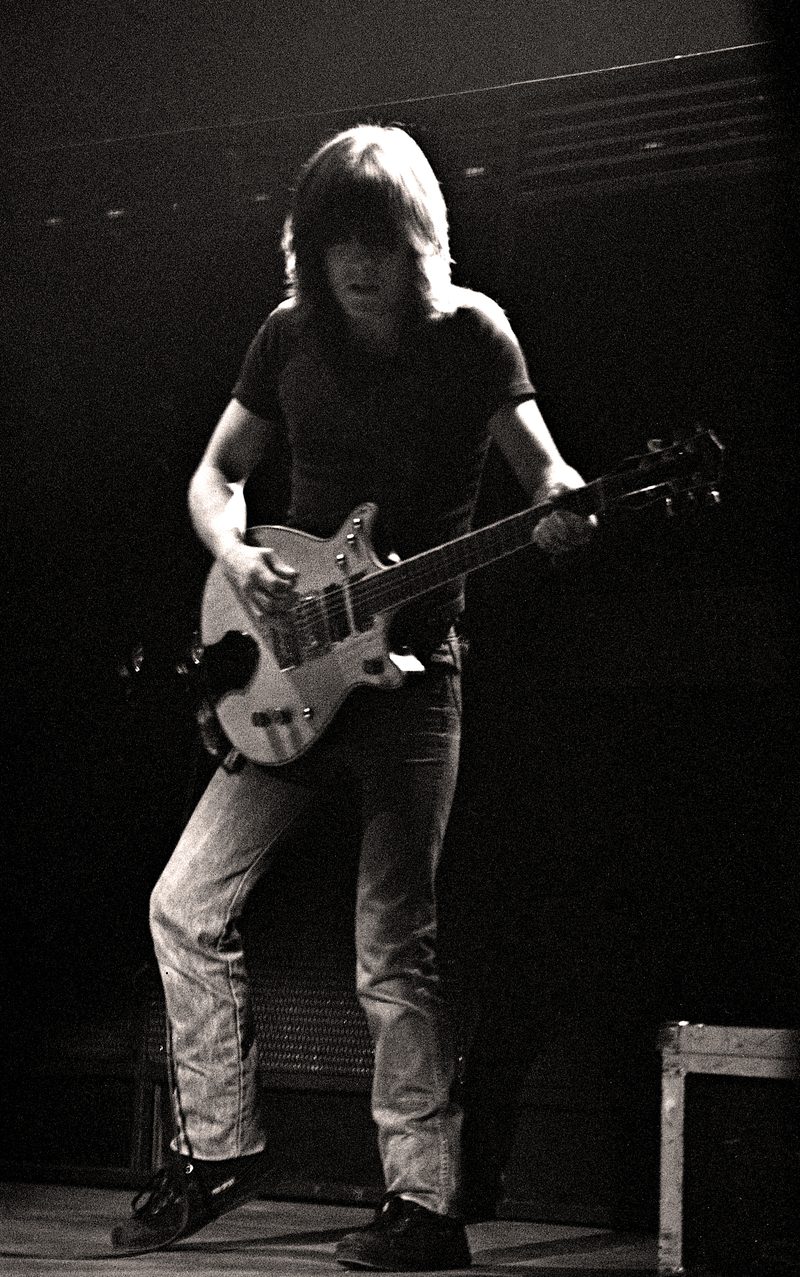
Malcolm Young playing rhythm guitar at the Manchester Apollo, England, 1982.
The story
Playing along: practical tips
Use the Tune buttons. Every measured song opens with its own reference built in, so you do not need to type any numbers.
A tab in E♭ is not always a half step down. On an AC/DC record, an E♭ tab often means the record sits a quarter step or more below E, so a tabber with an A 440 tuner heard E♭. Highway to Hell is the proof: tabbed in E♭, played in E, recorded at A 424. Before retuning a whole half step, try E Standard with the reference A lowered.
Bon Scott-era songs that are not measured: start with E Standard. If it sounds sharp against the record, lower the reference A to about 432 and adjust by ear. Our measured songs from 1975 to 1979 sit 25 to 63 cents below their tabbed tunings. Can I Sit Next to You Girl also needs E♭, and It's a Long Way to the Top a half step up.
From Back in Black on, A 440 is the starting point, with Moneytalks and possibly Big Gun a little sharp.
F Standard songs: It's a Long Way to the Top, Heatseeker and Rock 'n' Roll Dream are tabbed a half step up. A capo on the first fret in E Standard gives the same pitch without the extra string tension.
Fine-tuning: near A 430, one hertz moves you about 4 cents. If a song still sounds a touch off after the Tune button, nudge the reference by a hertz or two.
Evidence
How sure are these numbers?
Every tuning on the album pages carries a status label.
Widely reported: several independent sources agree. Here only It's a Long Way to the Top: Mark Evans's memoir, a Guitar Legends transcription and the main tab.
Community: community transcriptions, mostly Songsterr tabs, sometimes backed by fans on the ACDCfans.net forum. Most AC/DC album tunings sit here. E Standard itself is beyond doubt, but the reference pitch of the 1970s albums rests on fans' descriptions, and Highway to Hell's quarter step comes from them.
Disputed: the sources disagree, as with T.N.T. (E♭ or E) and Heatseeker (F or E♭). We show the most likely setting and name the other one.
Measured by TuneLit: our own pitch analysis of the recording; only the numbers are published, never the audio. For AC/DC these are 18 single songs from an unofficial compilation, with confidence between 0.63 (Can I Sit Next to You Girl) and 0.94 (You Shook Me All Night Long). Anything within ±4 cents counts as concert pitch.
A measurement knows the offset only within one semitone. The semitone comes from the tabs and was checked from the audio: on 17 of the 18 songs TuneLit's semitone check agrees with the tuning listed here. The exception is Are You Ready, explained above. The songs most worth an ear check are Big Gun (the copy may be fast), Can I Sit Next to You Girl (lowest confidence, and far below E) and the six tracks whose copies were cut short. If one of those copies runs fast, the original record would sit a few cents lower than measured.
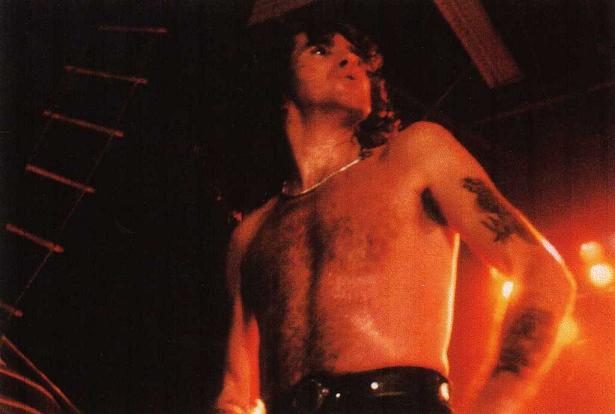
Bon Scott on stage with AC/DC in Grenoble, France, 10 December 1979, two months before his death.
Cheat sheet
Quick reference
High Voltage (1976): E Standard. It's a Long Way to the Top: F Standard (recorded in B♭). T.N.T.: E♭ Standard (disputed, or E). Can I Sit Next to You Girl: E♭ Standard −40 ¢ (A ≈ 430), measured.
Dirty Deeds Done Dirt Cheap (1976): E Standard; the title track measured −34 ¢ (A ≈ 431).
Let There Be Rock (1977): E Standard, not measured; probably somewhat flat.
Powerage (1978): E Standard; Rock 'n' Roll Damnation measured −34 ¢ (A ≈ 431). Gimme a Bullet tabbed in E♭.
Highway to Hell (1979): E Standard about a quarter step flat. Title track E Standard at A 424 (the same as E♭ +37 ¢), Touch Too Much and If You Want Blood −34 ¢. Tabbed in E♭: Beating Around the Bush, Get It Hot, Love Hungry Man, Night Prowler.
Back in Black (1980): E Standard at A 440, four songs measured within 7 ¢.
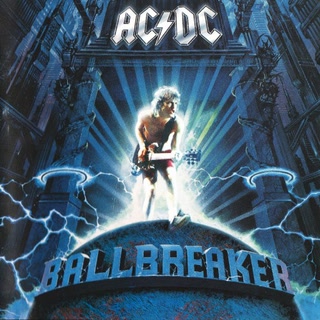
For Those About to Rock (1981), Flick of the Switch (1983), Ballbreaker (1995), Power Up (2020): E Standard throughout.
'74 Jailbreak (1984): E Standard; Jailbreak measured −25 ¢ (A ≈ 434).
Fly on the Wall (1985): E Standard; Stand Up tabbed in Drop D.
Who Made Who (1986): E Standard for the three new recordings; the rest follow their albums.
Blow Up Your Video (1988): E Standard; Heatseeker F Standard (disputed), Ruff Stuff E♭ Standard.
The Razors Edge (1990): E Standard; Moneytalks +14 ¢ (A ≈ 443.5), Are You Ready at A 440.
Big Gun (1993): E Standard, measured +34 ¢ (A ≈ 449) from a copy that may run fast.
Stiff Upper Lip (2000): E Standard at A 440.
Black Ice (2008): E Standard; Rock 'n' Roll Dream tabbed in F.
Rock or Bust (2014): E Standard; the title track tabbed in E♭.
Golden rule: keep E Standard and move the reference A before you reach for another tuning. The 1970s records are flat by different amounts, and Highway to Hell's title track most of all.
Questions
What tuning does AC/DC use?
Mostly E Standard: 19 of 19 albums. Many albums also have songs in other tunings, and the album pages list them song by song.
Why does AC/DC sound out of tune when I play along?
Some records are not at concert pitch. Highway to Hell sits about 50 cents flat (A ≈ 427). A guitar tuned to A 440 clashes with them. Every Tune button on these pages sets the measured pitch for you.
How did TuneLit measure AC/DC's records?
We played original CDs and LPs through TuneLit's pitch analysis: the strongest notes of each song are compared with the A 440 grid, which gives the offset in cents. That cannot tell the semitone, so the tuning name comes from interviews, the press and tabs. The audio is never stored or published.
Colors and font
Font
Colors
Menu
Install the app
Android (Chrome): menu ⋮ → Install app or Add to Home screen.
Computer (Chrome, Edge): the install icon at the right end of the address bar.
iPhone: Safari → Share → Add to Home Screen.
It opens full screen and keeps tuning with no connection.