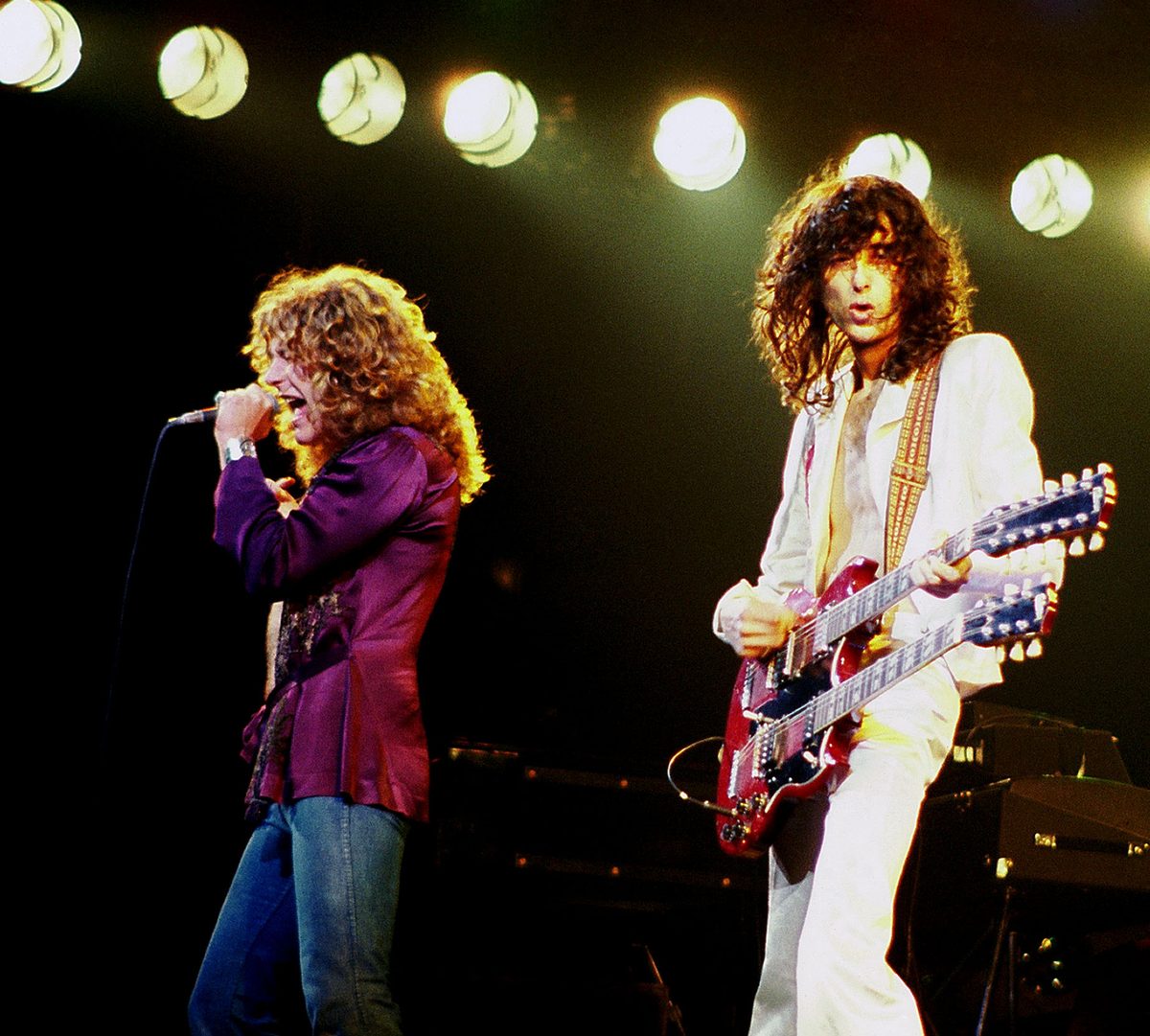
Robert Plant and Jimmy Page, with his double-neck Gibson, in concert in Chicago, 1977.
In short
How Led Zeppelin tunes
Most Led Zeppelin riffs are in plain E Standard, but Jimmy Page reached for another tuning whenever a song asked for one: D A D G A D for Black Mountain Side and Kashmir, his own C A C G C E for Friends, Bron-Yr-Aur and Poor Tom, D G C G C D for The Rain Song, open G, open A and open F for the acoustic and slide songs, Drop D for Moby Dick and Ten Years Gone. TuneLit measured all nine studio albums from CD.
Read more
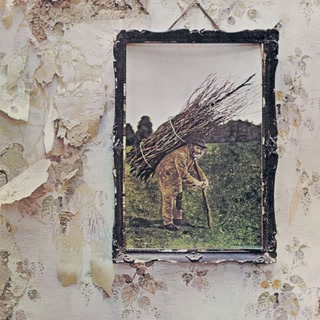
The debut, Led Zeppelin III, Physical Graffiti and In Through the Out Door sit at concert pitch, Presence a few cents sharp, Led Zeppelin IV about 11 cents flat. Single songs wander much further: Ramble On is 17 cents sharp, Misty Mountain Hop and The Crunge about 25 cents flat, Boogie with Stu and Tangerine about 40 cents flat, Poor Tom 39 cents sharp, and D'yer Mak'er sits half a semitone flat, right between two notes. No Quarter, which Page slowed down with vari-speed, lands back on the A 440 grid. Every Tune button carries the song's own measured offset.
Led Zeppelin are an unusual case for a tuner. Most of their riffs sit in ordinary E Standard, yet the catalog holds more alternate tunings than almost any rock band of the 1970s, and the records themselves rarely land exactly on A 440. Jimmy Page treated the tuning as part of the composition: a song written in D A D G A D or in his own C A C G C E only falls under the fingers in that tuning. On top of that, the band recorded in many places, from London studios to country houses with a mobile truck parked outside, and Page sometimes changed the speed of a finished track on purpose. So two songs on the same album can sit a quarter of a semitone apart.
This page collects what is known about every studio album from Led Zeppelin (1969) to Coda (1982): the tuning of each guitar part as the sources give it, the pitch TuneLit measured on the CDs, the songs that break the pattern, and how to set it all up in TuneLit. The album pages list every song with a Tune button that opens the tuner in exactly that tuning, measured offset included.
TuneLit lab
How we measured these records
TuneLit measured every song of the nine studio albums from CDs in the owner's library. Which CD matters, because Led Zeppelin's catalog exists in three masterings: the first Atlantic and Swan Song CDs of the 1980s, the remasters Jimmy Page made with engineer George Marino in 1990 and 1993 (released on The Complete Studio Recordings box in 1993 and as single albums in 1994), and Page's own remasters of 2014 and 2015. Here is what we measured:
The Complete Studio Recordings, Atlantic 7 82526-2 (1993): In Through the Out Door and Coda. Their CUE sheets carry the box's catalogue number, and the Coda disc has the box's four bonus tracks, which we left out.
Page and Marino remasters (1990s): Led Zeppelin and Presence. The Presence rip is dated 1994, the year of the single-album reissue.
Original 1980s masterings: Led Zeppelin II, Led Zeppelin III, Led Zeppelin IV, Houses of the Holy and Physical Graffiti (two CDs).
None of them is a 2014–2015 remaster: the discs were ripped between 2007 and March 2014, before those came out. The table of contents alone cannot separate a 1980s CD from a 1990s remaster, since MusicBrainz lists the same disc IDs under both. The sound level can. Led Zeppelin, Presence and the two box discs average about 16 dB below full scale, with peaks reaching full scale. The other five albums are 3 to 5 dB quieter and most of their tracks peak short of full scale, the way early CDs usually were, and the rip of Led Zeppelin III is labelled non-remastered. If you play along with a remaster of one of those five albums, its pitch could differ by a few cents; we have not measured the other masterings.
The method is the one behind every TuneLit band page. The estimator reads 90 seconds of each song, from 0:45, and compares the strongest notes with the equal-tempered grid. That gives the record's offset from A 440, known only within one semitone; which semitone the strings sit on comes from the tabs and sources. A song gets its own value when it differs from its album by 8 cents or more with good confidence; the rest share the album's value. Anything within ±4 cents is shown as concert pitch.
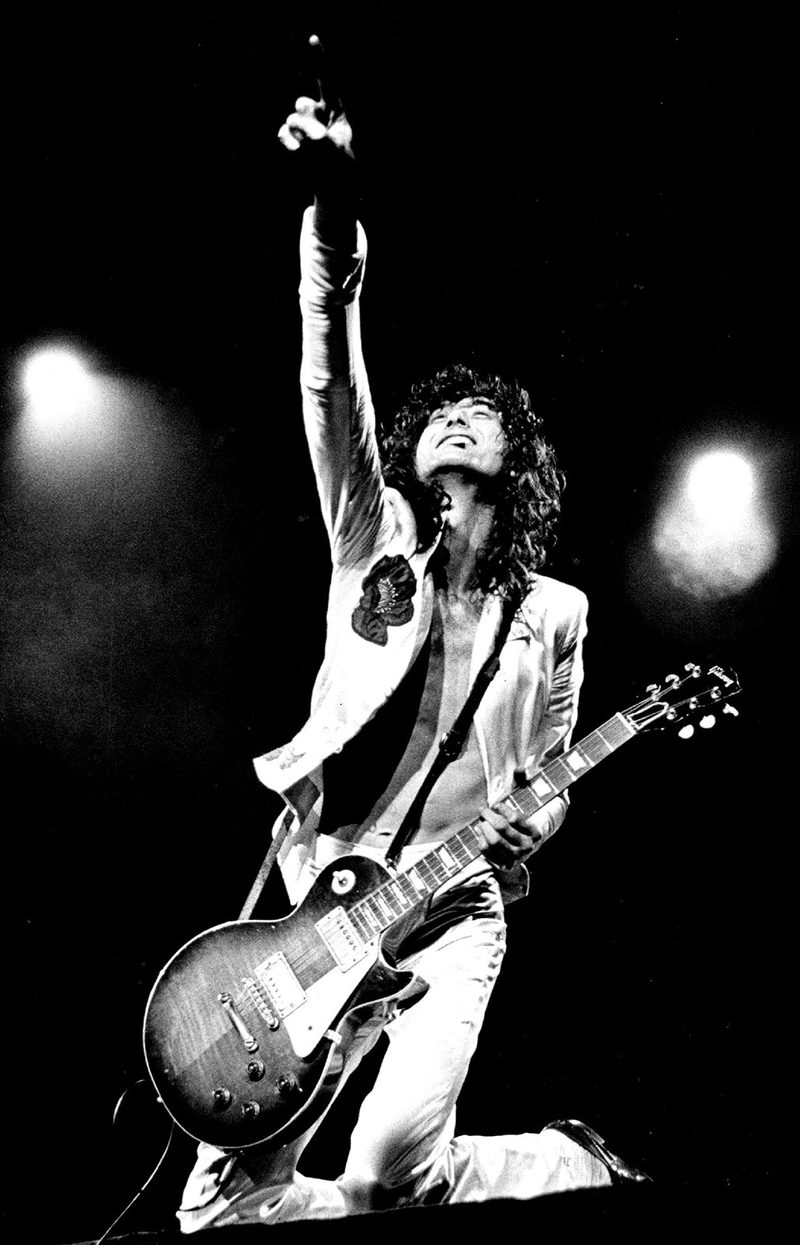
Jimmy Page with his Gibson Les Paul on stage in 1977.
The story
Jimmy Page's tunings in one place
Tuning
Strings, low to high
Songs
E Standard
E A D G B E
most of the catalog
Drop D
D A D G B E
Moby Dick, Ten Years Gone
Double drop D
D A D G B D
Going to California
DADGAD
D A D G A D
Black Mountain Side, Kashmir
Page's C6
C A C G C E
Friends, Bron-Yr-Aur, Poor Tom
The Rain Song
D G C G C D
The Rain Song
Open G
D G D G B D
That's the Way, Dancing Days, Black Country Woman
Open A
E A E A C# E
In My Time of Dying
Open C
C G C G C E
Hats Off to (Roy) Harper
Open F
C F C F A C
When the Levee Breaks
Open F, high F
C F C F A F
Bron-Y-Aur Stomp (disputed)
Eb Standard
Eb Ab Db Gb Bb Eb
Tangerine (tabs; see below)
DADGAD came with Page from the Yardbirds, where his solo piece White Summer used it. He recorded Black Mountain Side in it on the first album and built Kashmir on it six years later.
C A C G C E is Page's own. He described it as a C tuning, but not the usual one, and said he made it up. It is open C with the fifth string left at A, which gives a C6 chord across the open strings. He used it for Friends, for the instrumental Bron-Yr-Aur and for Poor Tom, all from the 1970 sessions.
D G C G C D is The Rain Song's tuning, a relative of DADGAD with a G suspension in it. Page played the song on stage with the six-string neck of his double-neck guitar.
Open G and open A carry the acoustic strummers and the slide songs. Open F on When the Levee Breaks is the open-G shape a whole step lower.
Many parts are not six-string guitars at all. Page plays 12-string on Thank You, The Song Remains the Same, Over the Hills and Far Away, Tangerine, Gallows Pole and Stairway to Heaven. Apart from Tangerine (see below), those 12-string parts are tabbed in standard tuning, so a six-string in the same tuning plays along fine. The Battle of Evermore is a mandolin song: Page wrote it on John Paul Jones's mandolin, tuned G D A E as usual, while Jones plays acoustic guitar. Jones also plays the mandolin on Going to California and Gallows Pole, and his keyboards lead No Quarter, Trampled Under Foot and much of In Through the Out Door. The album pages say so wherever it matters.
The story
Sped up, slowed down: what the records say
Led Zeppelin songs are often said to have been sped up or slowed down. A measurement cannot tell a fast tape from a sharp guitar, but it hears where the record ends up, and that is what you need to tune.
When the Levee Breaks. Parts of it were recorded at another speed and then slowed down in the mix. TuneLit reads most of the track 16 to 20 cents below A 440, and the last minute lower still. Its main reading fell just short of the confidence needed for a value of its own, so its button uses the album's −11 ¢; lower the reference toward A 435 if the slide sounds sharp.
No Quarter. Page applied vari-speed to the whole finished track. Accounts differ on how much: a semitone in one, a quarter tone in Page's words as one magazine quotes him. The record measures 4 cents sharp with high confidence, right on the grid. A quarter-tone drop from a band tuned to A 440 would have left it about 50 cents off, so the measurement fits a whole semitone.
The Song Remains the Same. Robert Plant's vocal was sped up slightly for the album. The band track measures about 8 cents flat, close to the rest of Houses of the Holy, so the speed change seems to have touched the voice, not the guitars.
D'yer Mak'er. The most extreme song in the catalog: it sits about 51 cents below A 440, half way between two notes. The tabbed C major chords line up with the notes TuneLit hears only if the whole band is about half a semitone flat, so its button gives E Standard at A 427.
Songs far off the grid. Tangerine sits about 43 cents flat, Boogie with Stu 38 cents flat, Poor Tom 39 cents sharp, Gallows Pole about 31 cents sharp, Hats Off to (Roy) Harper about 32 cents sharp (at low confidence), Ramble On 17 cents sharp. Several of these are acoustic songs from 1970 and 1971.
Main tuning: E Standard at concert pitch (+1 ¢), measured by TuneLit on a 1990s Page remaster CD.
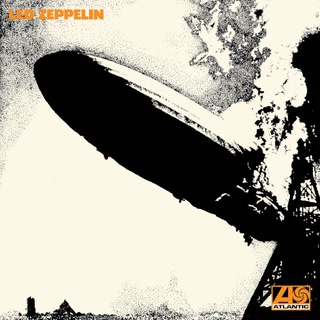
The debut is a guitar record in plain E Standard, from Good Times Bad Times to How Many More Times, including the bowed passages of Dazed and Confused. It is also the steadiest album in the catalog: every song sits within about 7 cents of A 440. Your Time Is Gonna Come, with Jones on organ and Page on steel guitar, is the lowest at about 7 cents flat (A ≈ 438), the only song with its own value.
The exception in tuning is Black Mountain Side. Page played it on a borrowed acoustic tuned D A D G A D, the White Summer tuning. The most-viewed community tab puts the whole tuning a half step lower, but the notes TuneLit hears on the record center on D at concert pitch, which fits Page's D A D G A D.
With TuneLit: E Standard for every song except Black Mountain Side (DADGAD).
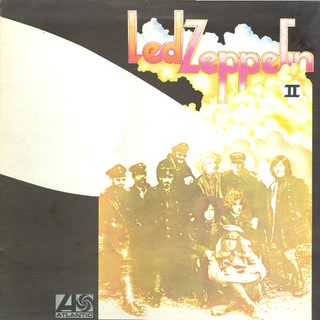
Main tuning: E Standard −6 ¢ (A ≈ 438.6), measured by TuneLit on an original 1980s CD.
Recorded in snatches between tour dates, in studios on both sides of the Atlantic, and it shows in the pitch. Most songs sit a few cents flat, but Ramble On measures 17 cents sharp (A ≈ 444) from start to finish, and Thank You, with Page's 12-string and Jones's Hammond organ, about 6 cents sharp. Whole Lotta Love's long middle section has no steady pitch to measure; its riff sections read close to the album value.
Moby Dick is the one tuning change: its riff is in Drop D, on guitar and bass. The measured stretch is mostly Bonham's drum solo, so it uses the album value; the riff at the start and the end reads within a few cents of it.
With TuneLit: E Standard −6 ¢; Ramble On +17 ¢, Thank You +6 ¢; Moby Dick in Drop D at the album's −6 ¢.
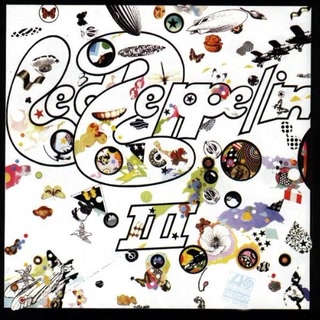
Main tuning: E Standard at concert pitch (+2 ¢), measured by TuneLit on an original 1980s CD (not remastered).
The electric songs, Immigrant Song, Celebration Day, Since I've Been Loving You and Out on the Tiles, are in E Standard; Out on the Tiles sits about 11 cents flat. The acoustic side is where Page's tunings arrive. Friends is in C A C G C E, by Page's own account, and measures about 9 cents sharp, close enough to the album that its button uses concert pitch. That's the Way is in open G, Hats Off to (Roy) Harper is slide guitar in open C, and Bron-Y-Aur Stomp is disputed: the main tab uses C F C F A F, another tab C G C F A D, and some tuning lists say open G. TuneLit's semitone check hears a low C in it, which fits the main tab.
The acoustic songs also carry their own pitch. Gallows Pole, in standard tuning with Page on 12-string and banjo and Jones on mandolin, measures about 31 cents sharp (A ≈ 448) in the stretch we measure; read in 30-second slices, the first minute sits about 33 cents sharp and the rest about 20. Hats Off to (Roy) Harper reads about 32 cents sharp, but at low confidence, so its button keeps concert pitch.
Two songs are in doubt, and both are worth a listen before you trust the button:
Tangerine. Both community tabs put it in Eb Standard, and the record sits about 43 cents below A 440, so the button gives Eb Standard −43 ¢. But the tabs' chord shapes (D, G, C and Am) only line up with the notes TuneLit hears if the guitar is a semitone higher: E Standard −43 ¢, about A 429. If the button sounds a half step low against the record, use that instead.
That's the Way. Tabbed in open G and measured 11 cents sharp. TuneLit's semitone check, though, hears the low string a half step lower, and the song's low notes center on F#, not G. If open G sounds a half step high against the record, tune every string down a half step (C# F# C# F# A# C#).
With TuneLit: E Standard for the electric songs and Gallows Pole (+31 ¢), C A C G C E for Friends, open G for That's the Way (+11 ¢), C F C F A F for Bron-Y-Aur Stomp, open C for Hats Off to (Roy) Harper, Eb Standard −43 ¢ for Tangerine.
Main tuning: E Standard −11 ¢ (A ≈ 437.2), measured by TuneLit on an original 1980s CD.
Black Dog and Four Sticks set the album value at about 11 cents flat. The other songs spread wider than on any other Led Zeppelin album. Stairway to Heaven, with its acoustic, 12-string and electric parts all in E Standard, measures about 8 cents sharp (A ≈ 442). Misty Mountain Hop sits about 25 cents flat (A ≈ 433.6) and The Battle of Evermore about 29 cents flat (A ≈ 432.6), both steady over the whole track. Between Stairway and Misty Mountain Hop that is a jump of 33 cents, enough to hear, so use each song's own button.
Three songs leave E Standard. Going to California is in double drop D (D A D G B D) with Jones on mandolin; it measures close to the album value. When the Levee Breaks is in open F (C F C F A C) for the slide and 12-string parts; see above for its pitch. The Battle of Evermore is Page on Jones's mandolin; tabs also arrange it for a guitar in E Standard.
Rock and Roll is the one song we could not measure: the estimator found no steady reading anywhere in it, so its button uses the album value. Its rough reading points about 40 cents flat, like Boogie with Stu, which came from the same Headley Grange session with Ian Stewart on piano. If the guitar sounds sharp against the record, try A ≈ 430.
With TuneLit: E Standard −11 ¢ for most songs; Stairway to Heaven +8 ¢, Misty Mountain Hop −25 ¢, The Battle of Evermore −29 ¢; double drop D and open F at −11 ¢.
Main tuning: E Standard −5 ¢ (A ≈ 438.8), measured by TuneLit on an original 1980s CD.
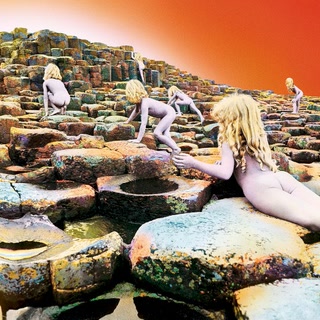
The album opens with its two most connected pieces, played live as a pair on Page's double-neck: The Song Remains the Same on 12-string electric in E Standard, and The Rain Song in D G C G C D. Both measure close to the album value. Over the Hills and Far Away starts on a 12-string acoustic in E Standard and measures right at concert pitch, near enough to share the album value; Dancing Days is in open G.
Then the album moves. The Crunge measures about 26 cents flat (A ≈ 433.4). D'yer Mak'er sits half way between B and C, so its button gives E Standard at A 427; TuneLit's semitone check would move it up a semitone, but only because the song never plays the open low E, a known limit of the check. No Quarter, slowed by Page, comes out on the grid at 4 cents sharp, and so does The Ocean.
With TuneLit: E Standard −5 ¢; D G C G C D for The Rain Song, open G for Dancing Days, E Standard at A 427 for D'yer Mak'er, −26 ¢ for The Crunge, +4 ¢ for No Quarter and The Ocean.
Main tuning: E Standard at concert pitch (0 ¢), measured by TuneLit on the original 1980s two-CD set.
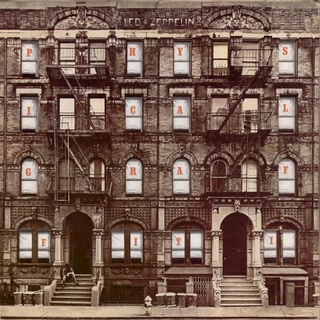
Eight songs come from the 1974 sessions at Headley Grange; the rest are leftovers going back to 1970. The pitch falls into two groups. At concert pitch: Custard Pie, In My Time of Dying, Kashmir, Bron-Yr-Aur, Down by the Seaside, Night Flight and Sick Again. Between 9 and 17 cents flat: The Rover and Houses of the Holy (both about 17 cents flat), Trampled Under Foot (15), Ten Years Gone (11), Black Country Woman (10) and The Wanton Song (9). Boogie with Stu, a 1971 jam with Ian Stewart, sits about 38 cents flat (A ≈ 430).
The tunings: In My Time of Dying is slide guitar in open A (E A E A C# E). Kashmir is DADGAD. Bron-Yr-Aur, the 1970 solo acoustic piece, uses Page's C A C G C E. Ten Years Gone is in Drop D in the main tabs, and Black Country Woman, recorded in the garden at Stargroves with an aeroplane flying over, is in open G. Everything else is E Standard. Down by the Seaside triggers a known limit of TuneLit's semitone check (it picks F because the open low E hardly sounds), so its tab stays.
On stage Page played In My Time of Dying and Kashmir on his Danelectro, and Jones covered the layered guitars of Ten Years Gone on a triple-neck instrument.
With TuneLit: E Standard at concert pitch for most songs, the flatter ones on their own buttons; open A, DADGAD, C A C G C E, Drop D and open G where listed.
Main tuning: E Standard +5 ¢ (A ≈ 441.2), measured by TuneLit on the 1994 remaster CD.
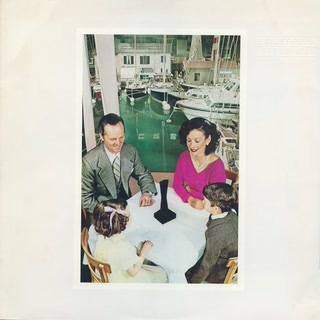
An all-electric album in E Standard. Page layered many guitars on Achilles Last Stand and said a six-string with effects worked better there than his double-neck. Five songs sit within about 3 cents of the album value; Nobody's Fault but Mine (about 7 cents flat) and Candy Store Rock (about 12 cents flat) get their own values. Tea for One, a slow blues, triggers the semitone check's known limit (it picks F); the tab's E Standard stays.
With TuneLit: E Standard +5 ¢; Nobody's Fault but Mine −7 ¢, Candy Store Rock −12 ¢.
Main tuning: E Standard at concert pitch (−4 ¢), measured by TuneLit on the disc from The Complete Studio Recordings.
Jones's keyboards lead much of the last studio album, and every guitar part is in E Standard. The slow middle section of Carouselambra is the only time Page used his double-neck guitar on a Led Zeppelin studio recording. In the Evening and South Bound Saurez read a little lower (9 and 11 cents flat) but stay close enough to share the album value; All My Love sits about 5 cents sharp.
With TuneLit: E Standard for every song; All My Love +5 ¢.
Main tuning: E Standard −9 ¢ (A ≈ 437.7), measured by TuneLit on the Coda disc of The Complete Studio Recordings.
Released after John Bonham's death, Coda collects recordings from 1970 to 1978. We're Gonna Groove and I Can't Quit You Baby come from the Royal Albert Hall concert of January 1970, the first with its live guitar replaced in the studio. Walter's Walk is left over from the 1972 Houses of the Holy sessions; Ozone Baby, Darlene and Wearing and Tearing come from the In Through the Out Door sessions in Stockholm; Bonzo's Montreux is Bonham's drums with electronic treatment, with no guitar to tune. Most of them sit 4 to 10 cents flat, and Darlene at concert pitch.
Poor Tom is the odd one. It was recorded in June 1970 at the Led Zeppelin III sessions in Page's C A C G C E, and the record sits about 39 cents sharp (A ≈ 450), close to the middle between two notes. The album page offers both readings; TuneLit's semitone check hears the low C, which backs the C A C G C E reading.
With TuneLit: E Standard −9 ¢; Darlene in plain E Standard; Poor Tom in C A C G C E +39 ¢.
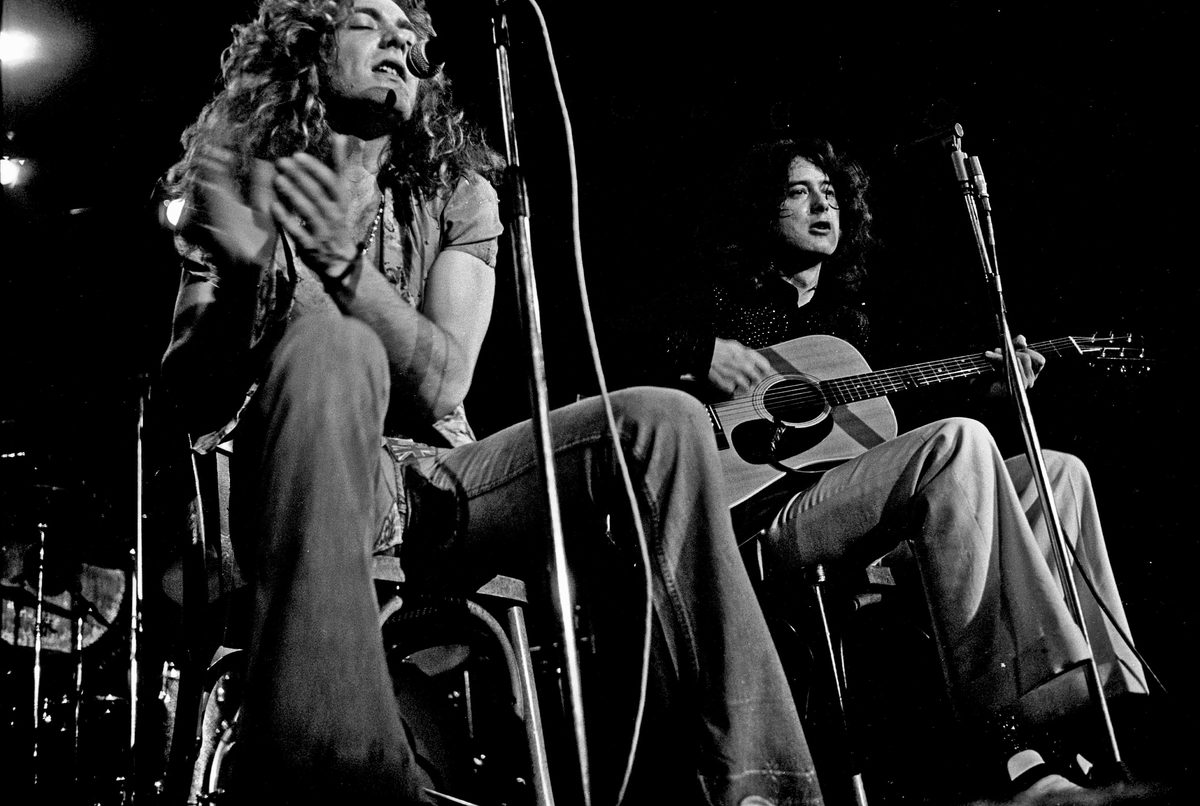
Robert Plant and Jimmy Page playing an acoustic set at the Musikhalle, Hamburg, Germany, 21 March 1973.
The story
Playing along: practical advice
Use the song's button, not just the album's. On most Led Zeppelin albums the songs do not share one pitch. On Led Zeppelin IV, going from Stairway to Heaven to Misty Mountain Hop means dropping the reference by 33 cents.
Trust the reference, not the note name. When a record sits 40 to 50 cents off A 440, a normal tuner names your string after the neighbouring note: on D'yer Mak'er an A 440 tuner reads your low E as Eb +48. TuneLit's button moves the reference instead, so the display shows the tuning by its real name.
Retuning for Page's open tunings. From E Standard, C A C G C E means lowering the sixth string by four semitones to C, the fourth string by a whole step to C, and raising the second string a half step from B to C; the A, G and high E strings stay. D G C G C D lowers the sixth string to D, the fifth to G, the fourth to C and the first to D, each by a whole step, and raises the second a half step to C. Open G lowers the first, fifth and sixth strings a whole step. Big drops like the low C need a moment to settle, so tune twice.
12-string and mandolin parts. The 12-string songs are all in standard tuning, so a six-string in the same tuning plays the same notes. For the mandolin parts of The Battle of Evermore, Going to California and Gallows Pole, tune the mandolin G D A E against the song's reference A.
Songs between two notes. Poor Tom is listed in both readings with a Tune button for each. Tangerine and That's the Way are not flagged by the measurement, but their notes above give the other reading to try.
Evidence
How sure are these numbers?
Every guitar entry on these pages carries Measured by TuneLit, because its offset comes from our own analysis of a CD. The tuning name (E Standard, DADGAD, C A C G C E) still rests on the other kinds of evidence:
Official: Page said it himself. For Friends he described the Harmony acoustic and its C A C G C E tuning.
Widely reported: reference works agree (here Wikipedia's song articles, which cite books on the band): DADGAD for Black Mountain Side and Kashmir, D G C G C D for The Rain Song, double drop D for Going to California, open A for In My Time of Dying, Drop D for Moby Dick, and C A C G C E for Bron-Yr-Aur and Poor Tom.
Community: from community tabs, mostly Songsterr. This covers the E Standard songs and several open tunings: That's the Way, Dancing Days, Black Country Woman, Hats Off to (Roy) Harper, When the Levee Breaks, Ten Years Gone and Tangerine's Eb.
Disputed: the sources disagree. For Led Zeppelin that is Bron-Y-Aur Stomp.
Keep a few limits in mind. Five albums were measured from 1980s CDs and the other four from the 1990s remasters; another edition can sit a few cents elsewhere. Rock and Roll, Whole Lotta Love's middle section, the drum solo of Moby Dick and Bonzo's Montreux give the estimator little to work with. Quiet acoustic songs with few low notes are harder for the semitone check. And a measurement hears the result, not the cause: it cannot say whether a song is off because of a tape machine, a vari-speed knob or a guitarist tuning by ear.
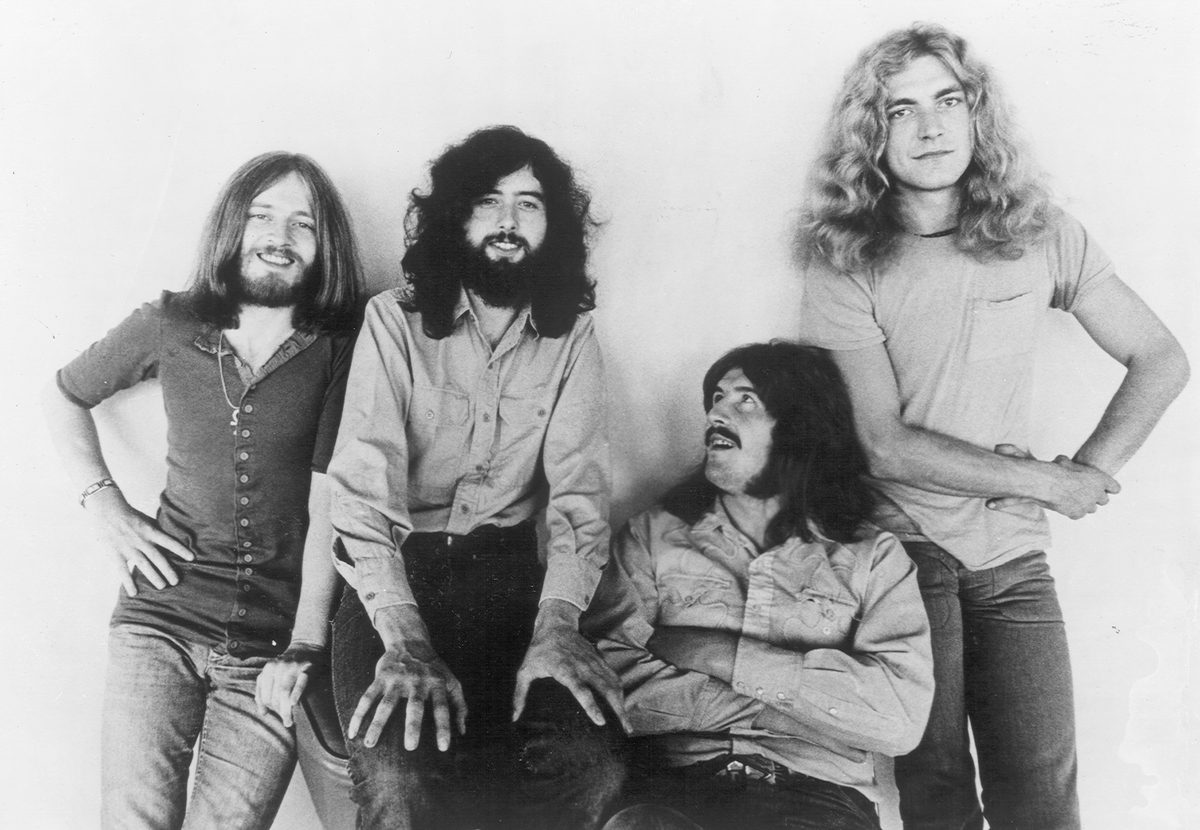
Led Zeppelin in a 1971 Atlantic Records promotional photo: John Paul Jones, Jimmy Page, John Bonham and Robert Plant (left to right).
Cheat sheet
Quick reference
Led Zeppelin (1969): E Standard at concert pitch; Your Time Is Gonna Come −7 ¢. DADGAD: Black Mountain Side.
Led Zeppelin II (1969): E Standard −6 ¢; Ramble On +17 ¢, Thank You +6 ¢. Drop D: Moby Dick.
Led Zeppelin III (1970): E Standard at concert pitch; Out on the Tiles −11 ¢, Gallows Pole +31 ¢. C A C G C E: Friends. Open G: That's the Way (+11 ¢, doubtful semitone). Open C: Hats Off to (Roy) Harper. C F C F A F: Bron-Y-Aur Stomp (disputed). Eb Standard −43 ¢: Tangerine (doubtful; try E Standard at A 429).
Led Zeppelin IV (1971): E Standard −11 ¢; Stairway to Heaven +8 ¢, Misty Mountain Hop −25 ¢, The Battle of Evermore −29 ¢ (mandolin G D A E). Double drop D: Going to California. Open F: When the Levee Breaks. Rock and Roll: unmeasured, maybe near A 430.
Houses of the Holy (1973): E Standard −5 ¢; The Crunge −26 ¢, No Quarter and The Ocean +4 ¢, D'yer Mak'er at A 427. D G C G C D: The Rain Song. Open G: Dancing Days.
Physical Graffiti (1975): E Standard at concert pitch; The Rover and Houses of the Holy −17 ¢, Trampled Under Foot −15 ¢, The Wanton Song −9 ¢, Boogie with Stu −38 ¢. Open A: In My Time of Dying. DADGAD: Kashmir. C A C G C E: Bron-Yr-Aur. Drop D: Ten Years Gone (−11 ¢). Open G: Black Country Woman (−10 ¢).
Presence (1976): E Standard +5 ¢; Nobody's Fault but Mine −7 ¢, Candy Store Rock −12 ¢.
In Through the Out Door (1979): E Standard at concert pitch; All My Love +5 ¢.
Coda (1982): E Standard −9 ¢; Darlene at concert pitch. C A C G C E: Poor Tom, +39 ¢, between two notes.
Golden rule: Page's tuning comes first, then the song's own reference. Tap the song's button, not the album's.
Questions
What tuning does Led Zeppelin use?
Mostly E Standard: 9 of 9 albums. Many albums also have songs in other tunings, and the album pages list them song by song.
Why does Led Zeppelin sound out of tune when I play along?
Some records are not at concert pitch. Led Zeppelin IV sits about 11 cents flat (A ≈ 437). A guitar tuned to A 440 clashes with them. Every Tune button on these pages sets the measured pitch for you.
How did TuneLit measure Led Zeppelin's records?
We played original CDs and LPs through TuneLit's pitch analysis: the strongest notes of each song are compared with the A 440 grid, which gives the offset in cents. That cannot tell the semitone, so the tuning name comes from interviews, the press and tabs. The audio is never stored or published.
Colors and font
Font
Colors
Menu
Install the app
Android (Chrome): menu ⋮ → Install app or Add to Home screen.
Computer (Chrome, Edge): the install icon at the right end of the address bar.
iPhone: Safari → Share → Add to Home Screen.
It opens full screen and keeps tuning with no connection.