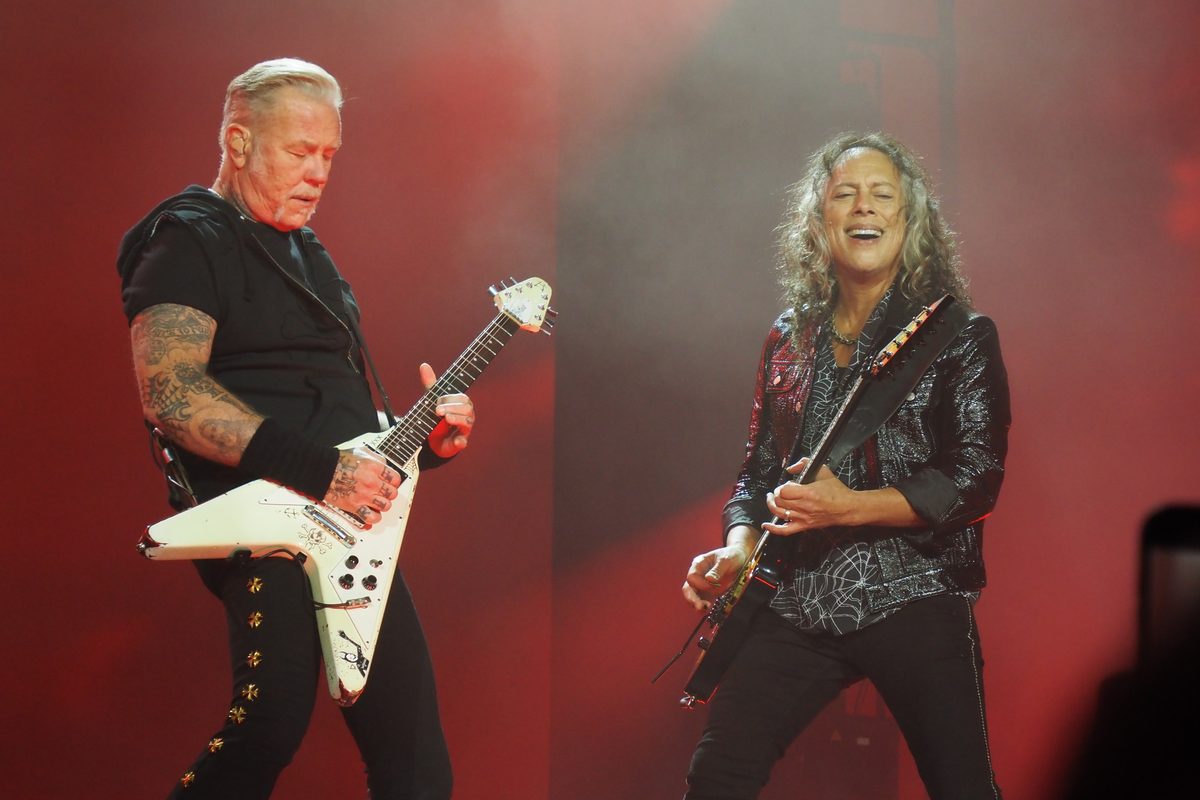
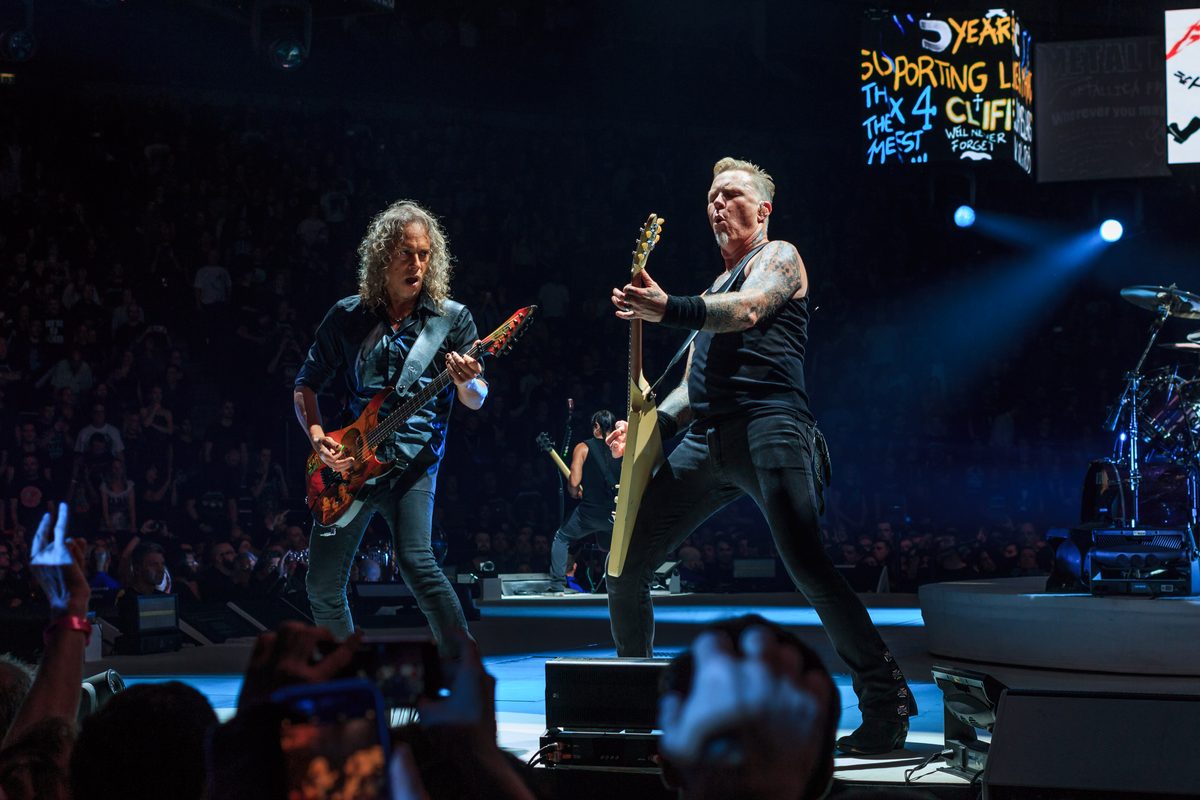
James Hetfield and Kirk Hammett on guitars at Marvel Stadium, Melbourne, 8 November 2025 (M72 World Tour).Photo: 4TheWynne · CC BY-SA 4.0 · credits
In short
How Metallica tunes
Metallica recorded their first four albums in E Standard, with a single D Standard song (The Thing That Should Not Be). Players have long said the original Kill 'Em All and Ride the Lightning recordings play 15 to 20 cents sharp.
Read more
TuneLit's measurements put Kill 'Em All at +16 cents and most of Ride the Lightning at about +8, with Fade to Black and Creeping Death at +22 and For Whom the Bell Tolls at +46, close to a quarter step high. On ...And Justice for All only One is clearly sharp, at +19 cents. The 1991 Black Album, about 5 cents sharp, was the first to use three tunings, with Sad but True in D Standard and The God That Failed in E♭, before Load and ReLoad moved almost everything down to E♭ and St. Anger sank to Drop C. Death Magnetic, Hardwired... to Self-Destruct and 72 Seasons returned to E Standard with only a couple of lower songs. On stage the band has played its E Standard material half a step down in E♭ since the mid-1990s, so live recordings need a different setting than the albums.
What tuning does Metallica use? The short answer is E Standard. The longer answer matters if you want your guitar to sound like the record. Over forty years the band has moved from E Standard on the early thrash albums to E♭ in the Load years, down to Drop C on St. Anger and back to E again. On top of that, some early recordings sit sharp of concert pitch, one song by almost a quarter step, so even a perfectly tuned guitar can sound a little off next to them.
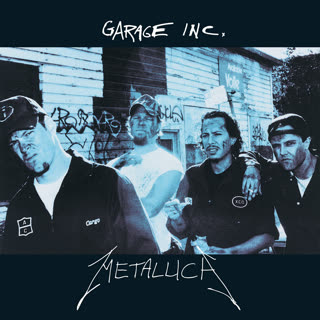
This page lists every Metallica studio album, plus The $5.98 E.P. and the Garage Inc. covers collection, with the tuning of each song. The album list above opens every album, and each song there has its own Tune button. One tap opens the TuneLit tuner already set to that tuning, including any cents offset the recording needs, measured by TuneLit wherever we could. Below you will find why the tunings changed, a section for each album with tuning tips and live notes, what our own measurements found, and an honest look at how sure each number is.
The story
The story: four decades of Metallica tunings
1983–1988: E Standard, but not always at 440. The first four albums are built on E Standard (E A D G B E), but the early records are not all at concert pitch. Players who jam along with Kill 'Em All and Ride the Lightning have long called them 15 to 20 cents sharp, close to A = 444–445 Hz instead of 440. TuneLit measured both, on CD and on the original LP. Kill 'Em All sits at +16 ¢ (A ≈ 444). Ride the Lightning changes from song to song: about +8 ¢ for the album as a whole, +22 ¢ for Fade to Black and Creeping Death, and +46 ¢ for For Whom the Bell Tolls, almost a quarter step sharp. No statement from the band or its producers explains why. For Ride the Lightning, one guide blames a mastering mistake, and fans repeat a story that producer Flemming Rasmussen sped the tape up during the mix, but nobody has traced it to an original interview.
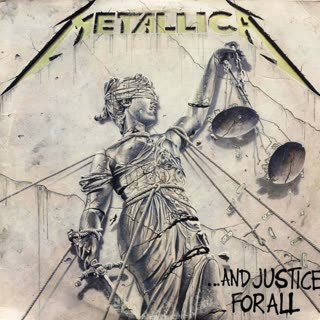
On the Master of Puppets title track, Rasmussen used tape speed on purpose (details below), and the album as a whole measures right at A440. The only real detuning in these years is The Thing That Should Not Be in D Standard, plus two covers on the 1987 $5.98 E.P. ...And Justice for All then stayed in E Standard for every song, close to concert pitch except One, which measures +19 ¢.
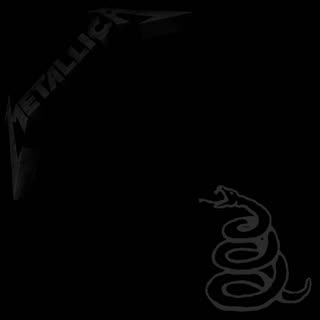
1991: Bob Rock opens the door. On the Black Album, producer Bob Rock noticed that the band played everything in E. For Sad but True he suggested taking the whole guitar down a full step to D, as Mötley Crüe had done on Dr. Feelgood, and Rock credits that lower tuning with giving the riff its force. The album ended up with three tunings: E Standard for ten songs, D Standard for Sad but True and E♭ for The God That Failed. It measures about 5 ¢ sharp, close enough to concert pitch that most players hear it as in tune.
1996–1998: the E♭ years. Load is the first Metallica album tuned completely half a step down, to E♭. ReLoad came from the same sessions and stays mostly in E♭, and so do most of the 1998 covers on Garage Inc. In the same years the band started playing its older E Standard songs half a step down on stage. Live transcriptions from Woodstock '94 are still in E, while those from Cunning Stunts (1997) and S&M (1999) are in E♭, so the switch happened during the Load era. It is usually explained as easier on Hetfield's voice, and it has stayed that way ever since.
2003: St. Anger goes low. St. Anger is mostly in Drop C (C G C F A D), the lowest main tuning the band has used. Three songs break the pattern, and Invisible Kid goes all the way down to Drop G♯. Bob Rock, the producer, also played bass on the album.
2008–2023: back to E. After more than ten years of E♭ and Drop C, Death Magnetic returned to E Standard, and Hardwired... to Self-Destruct and 72 Seasons stayed there. Across those three albums there are only two exceptions: All Nightmare Long in Drop D and Dream No More in D Standard.
A note on strings. Our sources do not say which string gauges James Hetfield and Kirk Hammett used on each album, so we will not guess. In practice, half a step down makes your strings a little looser, while Drop C and lower make them much looser. For the St. Anger tunings, the string tension calculator helps you pick gauges that keep the feel you like.
Kirk Hammett and James Hetfield live at The O2 Arena, London, 24 October 2017.Photo: Kreepin Deth · CC BY-SA 4.0 · credits
Tuning: E Standard, with the recording about 16 ¢ sharp (measured by TuneLit).
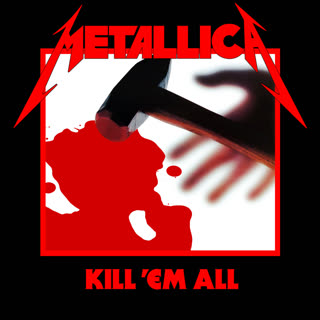
Every guitar part on the debut is in plain E Standard. What trips people up is pitch. Players who jam along report the record roughly 20 cents above A440, or about A = 445. TuneLit measured +16 ¢ on the CD and +17 ¢ on the original Megaforce LP, so the record really is sharp, just a little less than the usual figure: about A = 444. No band or studio statement explains it. You can take a break during (Anesthesia) – Pulling Teeth, which is Cliff Burton's bass solo with drums and has no guitar part.
How to tune with TuneLit: tap Tune next to any song on the Kill 'Em All page. The tuner opens in E Standard with Fine-tune at +16 ¢. If you prefer hertz, set Fine-tune back to 0, open the A 440 chip and set A to 444 instead. Use one method, not both, or you will end up twice as sharp.
Live: since the Load era these songs are played in E♭, so for modern live recordings choose E♭ Standard at A440.
Tuning: E Standard, about +8 ¢; Fade to Black and Creeping Death +22 ¢; For Whom the Bell Tolls +46 ¢ (all measured by TuneLit).
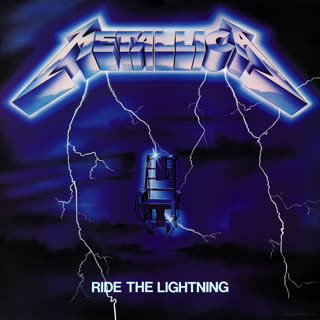
Again the guitars are in E Standard and the record plays sharp of A440. Players quote A = 444 to A = 445, roughly +15 to +20 ¢, and say the amount changes from song to song. Our measurements confirm that it changes, but not the size. Trapped Under Ice, Escape and The Call of Ktulu sit at about +7 to +10 ¢, and the album as a whole at about +8 ¢ (A ≈ 442). Fade to Black and Creeping Death sit higher, at +22 ¢ (A ≈ 445.7). The CD and the original LP show the same pattern, so it is in the masters, not in one transfer.
For Whom the Bell Tolls is the big exception. We measured it at +46 ¢ on the CD and +40 ¢ on the LP, almost a quarter step above E Standard and far sharper than the rest of the album, which is why tab sites offer separate versions retuned to A440. One theory is a sped-up tape. The other is that the band pitched their guitars to the bell sound that opens the track, which Lars Ulrich created by hitting an anvil, combined with a bell from a sound-effects recording.
How to tune with TuneLit: the album's Tune button sets E Standard at +8 ¢ (about A = 442). Fade to Black and Creeping Death have their own buttons at +22 ¢. The button for For Whom the Bell Tolls sets +46 ¢, about A = 451.7, nearly halfway between E and F.
Live: E♭ Standard at A440, including For Whom the Bell Tolls.
Tuning: E Standard at A440; The Thing That Should Not Be in D Standard.
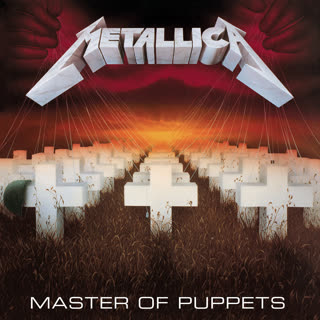
The pitch puzzle mostly disappears here: TuneLit measured the album at A440 (+2 ¢ on the CD, +4 ¢ on the LP). The title track has the best studio story of the era. Flemming Rasmussen recorded it below the final tempo, with the instruments tuned a little low, then ran the tape faster. Tempo and pitch rose together, so the fast riffs sound tighter, and the sources say the guitars landed on A440. Our measurement reads the title track about 17 ¢ flat instead, on both the CD and the LP, so its button sets E Standard −17 ¢. Leper Messiah and Orion read a few cents flat on both copies as well and get −4 ¢. Lars Ulrich has since said he finds the album version too tight.
The Thing That Should Not Be is the one song tuned down, a full step to D Standard (D G C F A D), which gives the slow riff its weight. One Rolling Stone feature speaks of a step and a half, but tabs and play-along transcriptions agree on D Standard.
How to tune with TuneLit: E Standard at A440 for most songs, the title track at −17 ¢, and The Thing That Should Not Be in D Standard. Each song's Tune button has its own setting.
This five-song covers EP holds some of the earliest Metallica recordings below E. Helpless, The Wait and Last Caress / Green Hell are in E Standard. The Small Hours, a Holocaust song, and Crash Course in Brain Surgery, by Budgie, are a full step down in D Standard. All five songs were later reissued on Garage Inc. TuneLit has not measured the EP itself, but it measured the same recordings on Garage Inc. disc 2. The Small Hours sits about 22 ¢ sharp and Helpless about 7 ¢ sharp; the other three are within about 5 ¢ of A440.
How to tune with TuneLit: E Standard for three songs, and the D Standard buttons for the other two. The EP’s Tune buttons already carry the measured offsets: about +5 ¢ for most songs and +22 ¢ for The Small Hours.
Tuning: E Standard; One +19 ¢ (measured by TuneLit).
Every song on Justice is in E Standard, and it remained the band's last all-E album for 35 years, until 72 Seasons. The song players flag most often is One. Tabs show it in plain E Standard, but players report the studio recording about 20 cents sharp. TuneLit's measurement of the original LP confirms it: One sits at +19 ¢ (A ≈ 444.9), and a fan remix gives the same reading. The rest of the album is at concert pitch, about +4 ¢ as a whole. There is no official explanation.
How to tune with TuneLit: E Standard at A440 for the album. The Tune button next to One adds +19 ¢, or you can set A to about 445.
Live: One and the rest of the album are played in E♭.
Tuning: E Standard, about +5 ¢; Sad but True in D Standard; The God That Failed in E♭.
Ten of the twelve songs, including Enter Sandman, The Unforgiven, Wherever I May Roam and Nothing Else Matters, are in E Standard. Even so, this is the first Metallica album with three tunings, thanks to Bob Rock. Sad but True was written and demoed in E, and dropping it a whole step made the riff much heavier. Note that it is full D Standard, not Drop D: all six strings go down. The God That Failed sits half a step down in E♭, five years before Load made that tuning the default. TuneLit measured the CD at +5 ¢ and the LP at +6 ¢ (A ≈ 441.3). That is a hair sharp, within what most players hear as in tune, and the Tune buttons include it. Sad but True sits higher, about 13 ¢ sharp on the CD and 8 ¢ on the LP, and The Struggle Within about 12 ¢; Nothing Else Matters sits right at A440.
How to tune with TuneLit: E Standard +5 ¢ for most of the album; the album page has separate Tune buttons for Sad but True (D Standard +13 ¢) and The God That Failed (E♭ Standard +5 ¢).
Live: the E songs are played in E♭. Sad but True stays in D Standard, including recent shows. The God That Failed was played in E♭ from 1994 to 2011 and has been in D Standard since 2012.
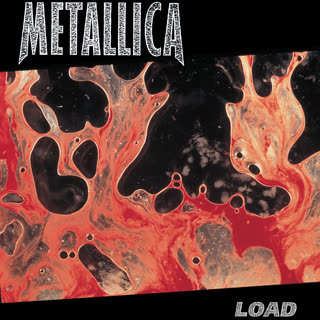
Load is the easiest album to tune for: all 14 songs are half a step down (E♭ A♭ D♭ G♭ B♭ E♭), and TuneLit measured the album right at concert pitch. Kirk Hammett said he was going for the feel of Jimi Hendrix, Stevie Ray Vaughan and Thin Lizzy, and James Hetfield welcomed the lower pitch because it was easier on his voice.
How to tune with TuneLit: one setting covers the whole album: E♭ Standard at A440. You can also go straight to the E♭ Standard tuner.
Tuning: E♭ Standard, about +5 ¢; Devil's Dance in D Standard; Bad Seed lower (disputed).
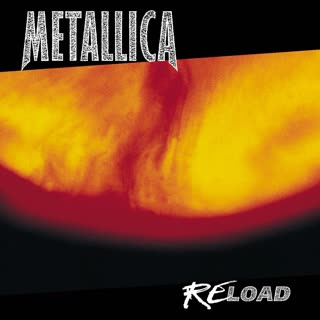
ReLoad came out of the same sessions as Load, and 11 of its 13 songs, including Fuel, The Memory Remains and The Unforgiven II, are in E♭. The slow, grinding Devil's Dance drops a further half step to D Standard. Bad Seed goes lower still, but sources disagree on how. The main transcription uses C♯ Standard (C♯ F♯ B E G♯ C♯), while a tuning guide lists Drop C♯ (C♯ G♯ C♯ F♯ A♯ D♯). We show C♯ Standard and mark the song as disputed. TuneLit measured the album about 5 ¢ sharp (A ≈ 441.2) on both CD and LP, and Devil's Dance about 8 ¢ flat.
How to tune with TuneLit: E♭ Standard +5 ¢ for most songs, and D Standard −8 ¢ for Devil's Dance. For Bad Seed, start with the C♯ Standard button, and if the riffs do not sit well under your fingers, try Drop C♯.
Tuning: disc 1 mostly E♭; disc 2 in the original tunings.
The 1998 recordings on disc 1 are mostly in E♭, including It's Electric, Turn the Page, Die, Die My Darling, the Mercyful Fate medley, Astronomy and Tuesday's Gone. Sabbra Cadabra and Whiskey in the Jar are a full step down in D Standard. The two Discharge covers, Free Speech for the Dumb and The More I See, are transcribed in C♯ Standard. Together with Bad Seed, they are the lowest tunings the band used before St. Anger. Loverman is transcribed in E Standard.
Disc 2 collects older covers in the tunings they were first released in. The $5.98 E.P. songs keep their mix of E and D. Am I Evil?, Blitzkrieg, Breadfan, The Prince, Stone Cold Crazy and So What are in E Standard. The 1991 B-side Killing Time is in E♭, and so are the four Motörhead covers from the 1996 Hero of the Day single.
TuneLit measured the set close to concert pitch (−2 ¢ on the CD). A few songs stand out and have their own offset: Whiskey in the Jar at +11 ¢, Stone Dead Forever at −9 ¢, Killing Time at +8 ¢, Helpless at +7 ¢ and The Small Hours, from the 1987 Garage Days session, at +22 ¢. Several others sit 5 or 6 ¢ sharp on both the CD and the LP, and their buttons include it.
How to tune with TuneLit: check the album page song by song. Across the two discs you need four settings: E Standard, E♭ Standard, D Standard and C♯ Standard, plus the offsets on the songs above.
Live: So What, recorded in E, has been played in E♭ since the Load era.
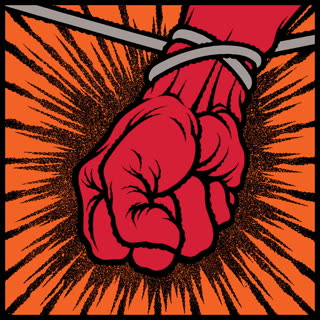
Eight of the eleven songs, including Frantic, the title track, Some Kind of Monster and Sweet Amber, are in Drop C (C G C F A D): D Standard with the low string dropped another whole step. Dirty Window is half a step higher, in Drop C♯ (C♯ G♯ C♯ F♯ A♯ D♯). The Unnamed Feeling goes down to Drop B♭ (B♭ F B♭ E♭ G C), two semitones below Drop C. Invisible Kid sinks to Drop G♯ (G♯ D♯ G♯ C♯ F A♯), six semitones below Drop D and the lowest tuning on any Metallica studio album. The album has no guitar solos, so it is all about riffs. TuneLit measured the CD close to concert pitch (−3 ¢), with low confidence because heavily distorted mixes are harder to read. Some Kind of Monster stands out at about 14 ¢ flat on both CD and LP.
How to tune with TuneLit: the album's Tune button gives Drop C, and the Some Kind of Monster button adds −14 ¢. The Invisible Kid button reads Drop A♭: that is the same tuning as Drop G♯, spelled with flats.
Live: Dirty Window has been transcribed in Drop C on stage, not Drop C♯.
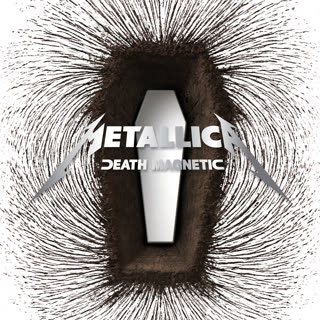
Death Magnetic brought back E Standard for nine of its ten songs, including That Was Just Your Life, The Day That Never Comes, Cyanide and The Unforgiven III. All Nightmare Long is in Drop D, with only the low E string down a whole step. Just a Bullet Away, an outtake from the same sessions that came out on Beyond Magnetic in 2011, is also in Drop D.
How to tune with TuneLit: E Standard at A440 (measured at −1 ¢), and the Drop D button for All Nightmare Long.
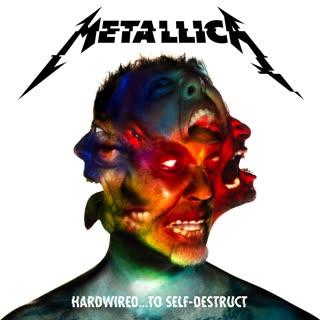
The double album stays in E Standard almost all the way, from the opener Hardwired through Moth Into Flame and Halo on Fire to the closer Spit Out the Bone. Dream No More is the exception: a slow, doom-heavy song a whole step down in D Standard, in the same spirit as Sad but True. Some tabs offer it in Drop D, but the main transcriptions use full D Standard.
How to tune with TuneLit: E Standard at A440 (measured at +2 ¢) for 11 of the 12 songs, and the D Standard button for Dream No More.
Every song, from the title track and Lux Æterna to the eleven-minute Inamorata, is transcribed in E Standard. That makes it the first Metallica album entirely in E since ...And Justice for All. The label here is community, because the evidence comes from transcriptions rather than from the band. TuneLit has not measured this album yet.
How to tune with TuneLit: E Standard at A440 for the whole album.
Live: played in E♭, like the rest of the set.
TuneLit lab
What TuneLit measured
TuneLit's Match-a-recording estimator takes a stretch of each song, finds the strongest notes and compares them with the equal-tempered grid around A440. That pins the offset down to a few cents, but only within one semitone, so the tuning name (E Standard, E♭, Drop C) still comes from the tabs and sources above.
We measured CD editions and needle drops of original LPs from our own library. The audio itself is never uploaded or published; only the numbers appear on this page.
Album
Sources said
TuneLit measured
Equivalent A
Kill 'Em All (1983)
about +20 ¢
+16 ¢ (LP +17)
A ≈ 444
Ride the Lightning (1984)
about +20 ¢
+8 ¢ (LP +3)
A ≈ 442
· Fade to Black, Creeping Death
–
+22 ¢
A ≈ 445.7
· For Whom the Bell Tolls
about +50 ¢
+46 ¢ (LP +40)
A ≈ 451.7
Master of Puppets (1986)
concert
+2 ¢ (LP +4)
A ≈ 440.5
...And Justice for All (1988)
concert
+4 ¢ (LP)
A ≈ 441
· One
about +20 ¢
+19 ¢ (LP)
A ≈ 444.9
The Black Album (1991)
concert
+5 ¢ (LP +6)
A ≈ 441.3
· Sad but True
concert
+13 ¢ (LP +8)
A ≈ 443.2
Load (1996)
concert
−1 ¢ (LP +2)
A 440
ReLoad (1997)
concert
+5 ¢
A ≈ 441.2
Garage Inc. (1998)
concert
−2 ¢
A 440
St. Anger (2003)
concert
−3 ¢ (low confidence)
A 440
Death Magnetic (2008)
concert
−1 ¢
A 440
Hardwired... (2016)
concert
+2 ¢
A 440
Kill 'Em All really is sharp, but by about 16 cents, not the 20 players usually quote. The CD and the original Megaforce LP agree.
Ride the Lightning is not one offset. Trapped Under Ice, Escape and The Call of Ktulu sit at +7 to +10 ¢, Fade to Black and Creeping Death at +22 ¢, and For Whom the Bell Tolls at +46 ¢, almost halfway to F. The LP shows the same gaps between songs, so they are in the masters, not in one transfer.
One confirms the old player reports: at +19 ¢ it is the only clearly sharp song on Justice. The Black Album is about 5 cents sharp, which most players hear as in tune; Sad but True sits higher, at about +13 ¢. From Load on, almost everything sits within a few cents of A440. The exceptions are Devil's Dance at −8 ¢, Whiskey in the Jar at +11 ¢, Stone Dead Forever at −9 ¢, The Small Hours from the 1987 Garage Days session at +22 ¢ and Some Kind of Monster at −14 ¢.
Keep a few limits in mind. A turntable that runs 0.3 % fast or slow moves a needle drop by about 5 cents, so LP values can sit a few cents away from the CD; Ride the Lightning, for example, reads +3 ¢ on vinyl and +8 ¢ on CD. Heavily distorted, dense mixes such as St. Anger are harder to read, so we mark them as low confidence. Single songs also scatter a little, which is why most songs use their album's value and only clear outliers get their own: 8 ¢ or more from the album, or 6 ¢ when the CD and the LP show the same difference. Anything within ±4 ¢ counts as concert pitch.
You do not need to type any of these numbers. Every song's Tune button already uses the measured value, including the songs with their own offset.
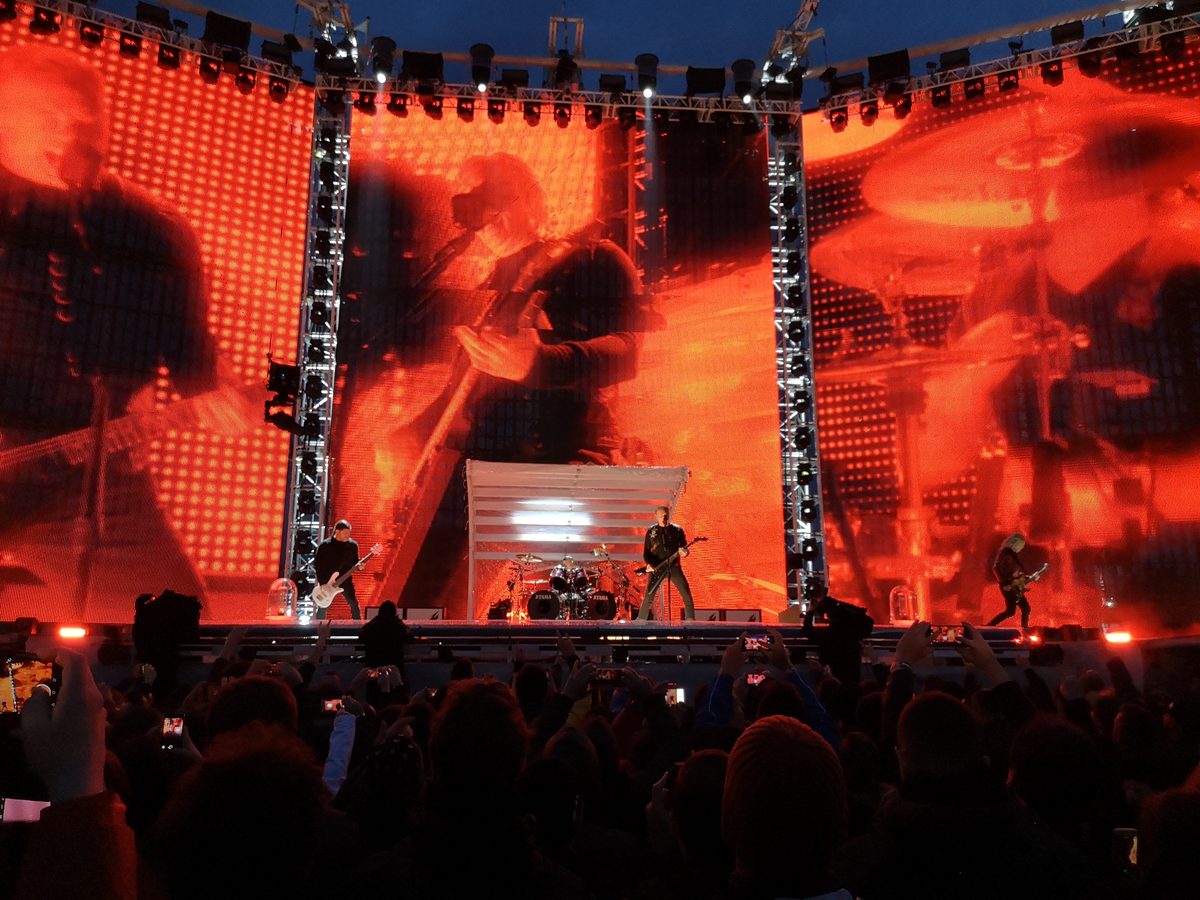
Metallica on stage at Ippodromo San Siro, Milan, 8 May 2019 (WorldWired Tour).Photo: Dennis Radaelli · CC BY-SA 4.0 · credits
Evidence
How sure are these numbers?
Every tuning on the album pages carries a status label, so you know how far to trust it.
Official: the band or its producer has described the tuning, directly or in a reliable report. Bob Rock's account of Sad but True is an example.
Widely reported: several independent sources agree, such as tab transcriptions, tuning guides and the music press. The $5.98 E.P. is at this level.
Community: the figure comes from players who tuned along with the record, or from transcriptions only. 72 Seasons is at this level. So were the old play-along offsets for Kill 'Em All, Ride the Lightning and One, until our measurements replaced them.
Disputed: sources disagree. We show the reading with the most support and name the alternative, as with Bad Seed.
Measured by TuneLit: our own pitch analysis of an original recording. We never store or publish the audio, only the result.
Every studio album from Kill 'Em All to Hardwired... to Self-Destruct, plus Garage Inc., now carries the measured label. The tuning names still come from the sources, because a measurement only fixes the offset within one semitone. If a record still sounds a hair off after you tap Tune, move Fine-tune a few cents and let your ears decide.
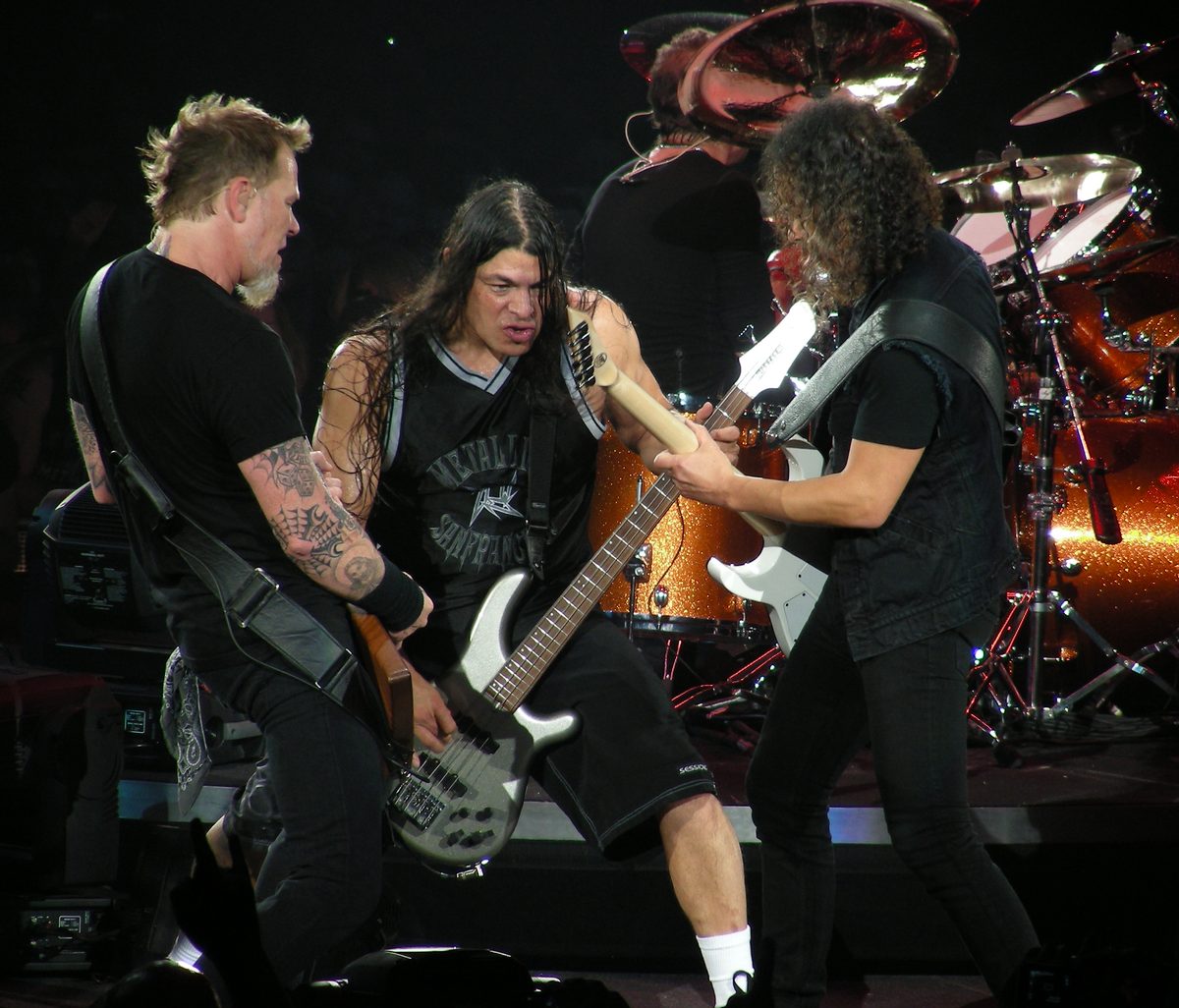
James Hetfield, Robert Trujillo and Kirk Hammett (left to right) at Ahoy Rotterdam, 30 March 2009, on the tour for Death Magnetic.Photo: Merijn Bos · CC BY-SA 3.0 · credits
Cheat sheet
Quick reference
Kill 'Em All (1983): E Standard +16 ¢ (A ≈ 444).
Ride the Lightning (1984): E Standard +8 ¢; Fade to Black and Creeping Death +22 ¢; For Whom the Bell Tolls +46 ¢.
Master of Puppets (1986): E Standard at A440; The Thing That Should Not Be in D Standard.
The $5.98 E.P. (1987): E Standard; The Small Hours and Crash Course in Brain Surgery in D Standard (The Small Hours measured +22 ¢ on Garage Inc.).
...And Justice for All (1988): E Standard; One +19 ¢.
The Black Album (1991): E Standard +5 ¢; Sad but True in D Standard +13 ¢ and The God That Failed in E♭ +5 ¢.
Load (1996): E♭ Standard throughout.
ReLoad (1997): E♭ Standard +5 ¢; Devil's Dance in D Standard −8 ¢; Bad Seed in C♯ Standard (disputed, possibly Drop C♯).
Garage Inc. (1998): disc 1 mostly E♭, with D Standard, C♯ Standard and one E Standard song; disc 2 as first released. Measured offsets: Whiskey in the Jar +11 ¢, Killing Time +8 ¢, Helpless +7 ¢, The Small Hours +22 ¢.
St. Anger (2003): Drop C; Some Kind of Monster −14 ¢; Dirty Window in Drop C♯; The Unnamed Feeling in Drop B♭; Invisible Kid in Drop G♯.
Death Magnetic (2008): E Standard; All Nightmare Long in Drop D.
Hardwired... to Self-Destruct (2016): E Standard; Dream No More in D Standard.
72 Seasons (2023): E Standard throughout.
Live since the Load era: E Standard songs in E♭; Sad but True stays in D Standard; The God That Failed in D Standard since 2012.
Questions
What tuning does Metallica use?
Mostly E Standard: 9 of 13 albums. Load, ReLoad and Garage Inc. are in E♭ Standard; St. Anger is in Drop C. Many albums also have songs in other tunings, and the album pages list them song by song.
Why does Metallica sound out of tune when I play along?
Some records are not at concert pitch. Kill 'Em All sits about 16 cents sharp (A ≈ 444). A guitar tuned to A 440 clashes with them. Every Tune button on these pages sets the measured pitch for you.
How did TuneLit measure Metallica's records?
We played original CDs and LPs through TuneLit's pitch analysis: the strongest notes of each song are compared with the A 440 grid, which gives the offset in cents. That cannot tell the semitone, so the tuning name comes from interviews, the press and tabs. The audio is never stored or published.
Background
Menu
Install the app
Android (Chrome): menu ⋮ → Install app or Add to Home screen.
Computer (Chrome, Edge): the install icon at the right end of the address bar.
iPhone: Safari → Share → Add to Home Screen.
It opens full screen and keeps tuning with no connection.