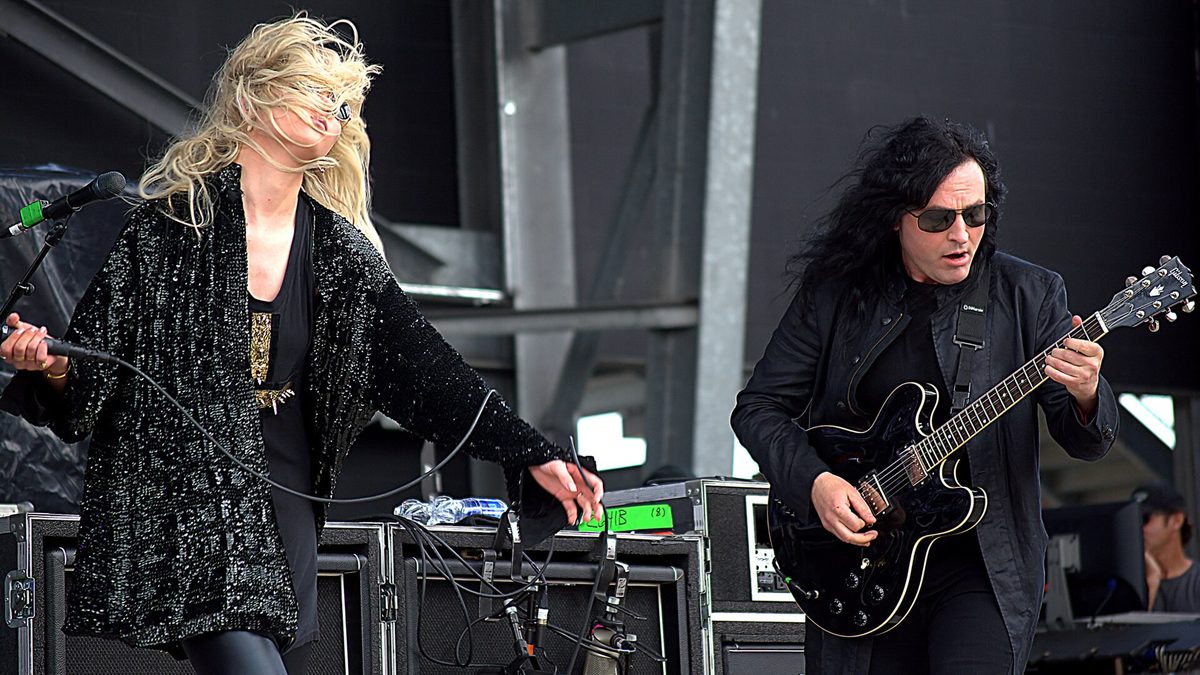
Taylor Momsen singing with The Pretty Reckless at Rock im Park, Nuremberg, Germany, 8 June 2014.
In short
How The Pretty Reckless tunes
The Pretty Reckless move between two families of tunings. Tabs put most of Light Me Up (2010) and the Hit Me Like a Man EP in E♭ Standard, half a step down, with Make Me Wanna Die in Drop D.
Read more
Going to Hell (2014) splits between E♭ Standard, the heavier Drop C♯ of the title track and Absolution, and plain E Standard for Heaven Knows and House on a Hill. Who You Selling For (2016) is mostly E Standard, and Death by Rock and Roll (2021) mixes E Standard with Drop C♯ (And So It Went, My Bones), E♭ Standard and Drop D (25). TuneLit measured the four albums in its library at concert pitch, within about a cent of A 440, so the reference never changes; only Only Love Can Save Me Now and Mad Love sit 10 to 13 cents flat. TuneLit's audio check agreed with the listed tuning on 35 of 46 songs, and it showed that the E Standard tabs of My Medicine, Light Me Up, Got So High and 25 do not match the records. Dear God (2026) is not measured and rests on early, partly machine-made tabs.
The Pretty Reckless are an easy band to tune for in one way and a tricky one in another. The easy part: every album TuneLit measured sits right at concert pitch, within about a cent of A 440, so you never have to touch the reference A. The tricky part: the band moves between two families of tunings, and the tabs do not always agree on which family a song belongs to. Light Me Up is mostly half a step down, Going to Hell is split down the middle, Who You Selling For is mostly plain E Standard, and Death by Rock and Roll goes back and forth from song to song. A tab in the wrong family puts you a half step away from the record, and that sounds wrong straight away.
This page goes through every studio album and the Hit Me Like a Man EP, song by song: what the tabs say, what TuneLit measured on the CDs in our own library, which songs leave their album's tuning, and where the sources disagree. Each song on the album pages has a Tune button that opens the tuner in exactly that tuning.
The story
The short version
Pitch: concert pitch everywhere we measured. Light Me Up, Going to Hell, Who You Selling For and Death by Rock and Roll all land within about 1 cent of A 440. Two songs sit a little lower: Only Love Can Save Me Now (about 13 cents flat) and Mad Love (about 10 cents flat).
E♭ Standard (E♭ A♭ D♭ G♭ B♭ E♭, every string half a step down) is the band's other home. It covers most of Light Me Up, the Hit Me Like a Man EP, and a handful of later songs.
E Standard takes over from Going to Hell on: Heaven Knows, Take Me Down, Death by Rock and Roll and most of the last two albums.
Drop C♯ (C♯ A♭ D♭ G♭ B♭ E♭) is the heavy option: Going to Hell, Absolution, And So It Went and My Bones.
Drop D shows up in the tabs of Make Me Wanna Die and 25, and D Standard for the title track of Who You Selling For.
No tab or interview we found puts a Pretty Reckless song in an open tuning, and none uses a baritone or a 7-string.
Taylor Momsen and guitarist Ben Phillips with his Gibson at Rock on the Range, Columbus, Ohio, May 2015.
The story
Who plays what
Taylor Momsen sings and plays rhythm guitar, and she writes a lot of the material on acoustic guitar first; Ben Phillips has played lead guitar since 2010 and co-writes almost everything with her. Mark Damon plays bass and Jamie Perkins drums. On the first three albums there was a fifth musician in the studio: producer Kato Khandwala, who is credited with guitar on every track of Light Me Up. Phillips later described the two of them sharing the guitar parts like the two Young brothers in AC/DC, one on rhythm and one on lead. Khandwala died in 2018 after a motorcycle accident, and Death by Rock and Roll (2021) was made with producer Jonathan Wyman.
None of the band's interviews we found talks about tunings. Phillips names Gibson ES-335s and Les Pauls as his main guitars, and Momsen her Telecasters, but neither says how they tune them. The one press source that names a tuning is a Total Guitar riff lesson on And So It Went. Everything else on this page rests on tabs, mostly Songsterr's, plus TuneLit's own measurements. That is thinner ground than for bands with official tab books, so the notes say when a song rests on one tab or on a machine-made transcription.
Discography
How the tuning changed, album by album
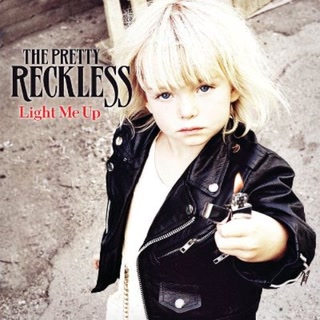
2010–2012: half a step down. Most of Light Me Up and all three new songs on the Hit Me Like a Man EP are tabbed in E♭ Standard. The records themselves sit at A 440, so the half step comes from the strings, not from a slow tape or a flat reference. The Drop D in the Make Me Wanna Die tabs is the exception, and even that one never uses its open low string.
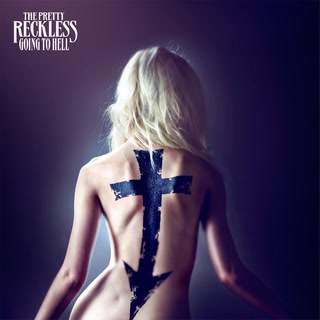
2014: two families on one album. Going to Hell is where the heavy Drop C♯ arrives (the title track and Absolution), next to E♭ Standard songs such as Follow Me Down and Fucked Up World, and plain E Standard songs such as Heaven Knows, House on a Hill and Sweet Things.
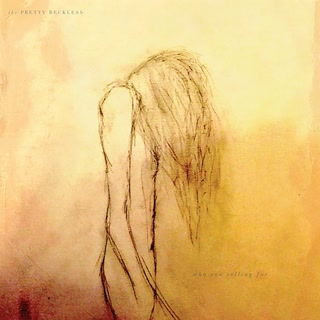
2016: mostly E Standard. Who You Selling For is the most E-heavy record. Only the opener, Oh My God and the title track leave plain E.
2021: a mix again. Death by Rock and Roll returns to E Standard for most songs but drops to Drop C♯ for And So It Went and My Bones, to E♭ for Only Love Can Save Me Now and Got So High, and to Drop D for 25.
2026: E Standard so far. The new album, Dear God, is mostly tabbed in E Standard, with a few songs in E♭, but most of its tabs are still machine-made.
Main tuning: E♭ Standard, at concert pitch (measured −0.7 ¢, A ≈ 439.8, stored as 0).
The debut is the band's most consistent half-step-down record. My Medicine, Since You're Gone, Just Tonight, Goin' Down and You are tabbed in E♭ Standard, and so are the bass tabs. Several songs also circulate in other tunings, and the record helps sort them out. TuneLit's audio check, which listens for the lowest open string, agrees with E♭ on all of those songs. An E Standard tab of My Medicine has a bass line on E, G and A, but the record never sounds a low E; its bass sits on E♭, F♯, A♭ and B♭ instead, as in the E♭ tab. The title track has the same split: one tab in E, another marked album version in E♭, and the record matches the E♭ one.
Make Me Wanna Die, the band's best-known song, is tabbed in Drop D on Songsterr and Ultimate Guitar, with the riff on F at the 3rd fret. That tab never plays the open low D, though, and the record hardly ever sounds one: the riff's lowest note is the E♭ a fret above. So the E♭ Standard versions some players use give exactly the same notes. TuneLit lists the Drop D of the tabs, and the audio check cannot decide the low string, because it is never played open.
Miss Nothing is the album's disputed song. The most-viewed tab uses Drop D, a well-rated Ultimate Guitar tab is half a step down. Like Make Me Wanna Die, the Drop D tab never plays its open string and goes no lower than E♭. The record never sounds a low D either, and TuneLit's audio check agrees with E♭ as the low string, so the song stays with the album in E♭ Standard. A tab of Just Tonight labelled Official on Songsterr also uses Drop D without the open string; the main tab and the best-rated chord sheet are in E♭, and the record leans on a low E♭.
Two songs are in plain E Standard: Factory Girl, whose riff hammers the open low E, and Nothing Left to Lose, which rests on a single machine-made transcription. The audio check agrees with E on both.
With TuneLit: most buttons open E♭ Standard at A 440. Make Me Wanna Die opens Drop D, Factory Girl and Nothing Left to Lose open E Standard.
Main tuning: E♭ Standard, from the tabs. Not measured: the EP is not in TuneLit's library.
Three new studio songs, Hit Me Like a Man, Under the Water and Cold Blooded, plus live versions of Make Me Wanna Die and Since You're Gone recorded at the Hammersmith Apollo in London. The new songs are all tabbed half a step down, like the album before them. A couple of lightly used transcriptions of Hit Me Like a Man are in E Standard. Cold Blooded also has a tab marked standard tuning, written for players who stay in E; it plays the part a half step higher than the E♭ tab, so try both against the record. The two live tracks are listed in their studio tunings.
With TuneLit: E♭ Standard for everything except the live Make Me Wanna Die (Drop D).
Main tuning: E♭ Standard, at concert pitch (measured −0.8 ¢, A ≈ 439.8, stored as 0).
The heaviest Pretty Reckless album is also the most mixed. The opener, Follow Me Down, is in E♭ Standard with its open low E♭ driving the riff. The title track drops further: its main tab, one of the band's most viewed, is in Drop C♯, which is E♭ Standard with the 6th string taken down another whole step to C♯. Absolution uses the same tuning. TuneLit's audio check hears the low C♯ on both and agrees. Fucked Up World (the single was called Messed Up World) and the two short acoustic pieces, Dear Sister and Burn, are also tabbed in E♭.
The other half of the album is tabbed in plain E Standard. Sweet Things has the open low E as its root, and the audio check agrees. Heaven Knows, House on a Hill and Blame Me never play the open low E at all, so the check cannot confirm their low string. The notes in their tabs match the record, which is what matters for playing along. Blame Me is the one to try by ear: it sits on F♯, G♯ and B♭, and the check would be just as happy with E♭ Standard. Dear Sister is the reverse case: its one tab is in E♭, but the check leans to E.
Two songs are uncertain. Why'd You Bring a Shotgun to the Party has only a machine-made transcription in Drop D and a chord sheet with a capo, and it is also the hardest song on the album to measure. Waiting for a Friend has no tab with a stated tuning, so it follows the album. TuneLit's check hears a low D and never a low E♭ in it, so it points a half step lower, but no tab backs that up yet. Check it by ear.
With TuneLit: E♭ Standard by default. Going to Hell and Absolution open Drop C♯, Heaven Knows, House on a Hill, Sweet Things and Blame Me open E Standard, and Why'd You Bring a Shotgun to the Party opens Drop D.
Main tuning: E Standard, at concert pitch (measured +1.2 ¢, A ≈ 440.3, stored as 0).
The bluesiest record, and the one that settles into plain E Standard: Take Me Down, Prisoner, Wild City, Back to the River (with Warren Haynes on lead), Living in the Storm and The Devil's Back are all tabbed in E, and the audio check agrees with every one of them.
Three songs leave it. The opener, The Walls Are Closing In / Hangman, has only one little-used tab, in E♭ Standard, but the audio check backs it strongly: it hears a low E♭ all through the song and rules out E. Oh My God is tabbed in E♭ as well, with the open E♭ as its root. The title track, Who You Selling For, is tabbed a whole step down in D Standard (D G C F A D), and a low D is by far the most common bass note on the record; this also rests on a single tab.
Mad Love is the one song on this album with its own pitch: it measures about 10 cents flat (A ≈ 437.5). It sits on F, the 1st fret, and the open E is never heard, which makes the audio check point a half step up; that is a known blind spot of the method, so the tab's E Standard stands. Already Dead has no tab with a stated tuning, so it follows the album, but the check is not sure about E and hears a strong low E♭, so try E♭ Standard if E sounds off. Bedroom Window has no tab either, and the check agrees with E.
With TuneLit: E Standard by default, E♭ Standard for The Walls Are Closing In / Hangman and Oh My God, D Standard for the title track, and E Standard −10 ¢ for Mad Love.
Main tuning: E Standard, at concert pitch (measured −1.1 ¢, A ≈ 439.7, stored as 0).
The first album after Khandwala's death, recorded with producer Jonathan Wyman and co-produced by Momsen and Phillips. The title track, Witches Burn, Rock and Roll Heaven, Standing at the Wall and the short Broomsticks follow the album's E Standard, and the audio check agrees on all five.
And So It Went, with Tom Morello on the solo, is the one song on this page with a tuning from the press: Total Guitar's riff lesson gives it as Drop C♯, C♯ G♯ C♯ F♯ A♯ D♯, and the tabs agree. My Bones is tabbed in Drop C♯ too, with the open C♯ as its root. A variant tab puts the guitar in Drop D and the bass on a 5-string, but a Drop D guitar cannot reach the low C♯ that the record keeps returning to. The audio check hears the low C♯ on both songs.
Only Love Can Save Me Now, with Kim Thayil and Matt Cameron of Soundgarden, is tabbed in E♭ Standard, and it is also the one song on the album with its own pitch: about 13 cents flat (A ≈ 436.6). Got So High has tabs in both E♭ and E; the record matches the E♭ one, whose bass line sits on F♯ and G♯, while the E tab's bass line sits on G and A, notes the record never plays.
25 is the clearest case of a tab that the record contradicts. Songsterr's most-viewed tab is in E Standard, while a newer machine transcription and a Cifra Club tab use Drop D. On the CD, a low D is by far the most common bass note, more than half of all the low notes TuneLit heard, and E Standard cannot reach it. 25 is listed in Drop D.
Two songs are worth checking by ear. Harley Darling has only a machine transcription in E Standard, and its guitar part is in G while the record's bass (and the tab's own bass line) sits on G♯; the check leans to E♭ Standard, where G shapes sound as A♭. Turning Gold rests on a chord sheet in E Standard and sits on A, so the check cannot confirm its low string.
With TuneLit: E Standard by default. Drop C♯ for And So It Went and My Bones, E♭ Standard for Got So High, E♭ Standard −13 ¢ for Only Love Can Save Me Now, and Drop D for 25.
Main tuning: E Standard, from the tabs. Not measured: the album is not in TuneLit's library.
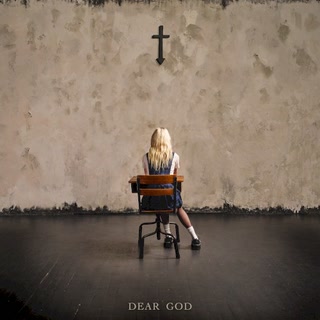
The fifth album came out in June 2026, and its tabs are still thin. Hand-made Songsterr tabs put When I Wake Up, Love Me, Dear God and Rollercoaster of Life in E Standard, and Dragonfire in E♭ Standard. Eye of the Storm and Devil in Disguise (Michelle's Song) are in E♭ only in machine-made transcriptions, and the three parts of Life Evermore, About You, Spell On You and Dark Days have nothing else either.
For I Am Death splits the tabs. The most-viewed one is in F Standard, every string a half step up, so that the riff's low F is an open string. A tab marked corrected plays the same notes in E Standard, with the F at the 1st fret, and another tab is in E as well. The lowest note is F either way. TuneLit lists E Standard; if you want the open-string feel of the F tab, put a capo at the 1st fret.
With TuneLit: E Standard by default, E♭ Standard for Dragonfire, Eye of the Storm and Devil in Disguise. Treat this album as a first draft until better tabs appear or we can measure it.
TuneLit lab
What TuneLit measured
TuneLit's Match-a-recording estimator takes a stretch of each song, finds the strongest notes and compares them with the equal-tempered grid. That gives the offset from A 440 to within a few cents, but only within a semitone, so the tuning name still comes from the tabs. A second check listens to the audio for the lowest open string and says whether the tab's low string fits.
We measured the original CD editions in our own library. The audio is never uploaded or published, only the numbers.
Album
Tabs say
Measured
Equivalent A
Light Me Up (2010)
E♭ Standard
−0.7 ¢
A ≈ 439.8
Hit Me Like a Man EP (2012)
E♭ Standard
not in the library
–
Going to Hell (2014)
E♭ Standard and E Standard
−0.8 ¢
A ≈ 439.8
Who You Selling For (2016)
E Standard
+1.2 ¢
A ≈ 440.3
· Mad Love
E Standard
−9.8 ¢
A ≈ 437.5
Death by Rock and Roll (2021)
E Standard
−1.1 ¢
A ≈ 439.7
· Only Love Can Save Me Now
E♭ Standard
−13.5 ¢
A ≈ 436.6
Dear God (2026)
E Standard
not in the library
–
Offsets within ±4 cents count as concert pitch, so every album is stored at A 440. The other CD editions in the library, the Japanese Light Me Up and the limited and Japanese deluxe Going to Hell, give the same values within about a cent (apart from Why'd You Bring a Shotgun to the Party, which is hard to measure on any copy), so they come from the same masters.
The audio check agrees with the listed tuning on 35 of the 46 measured songs. Where it does not, the song either never plays its open low string (Make Me Wanna Die, Heaven Knows, Mad Love, House on a Hill, Turning Gold), or it is a song the notes above already flag for an ear check (Blame Me, Waiting for a Friend, Already Dead, Harley Darling, Why'd You Bring a Shotgun to the Party, Dear Sister). It also caught several tabs that the record contradicts: the E Standard tabs of My Medicine, Light Me Up and Got So High, and the E Standard tab of 25. Those songs are listed in the tuning of the tab that matches the record.
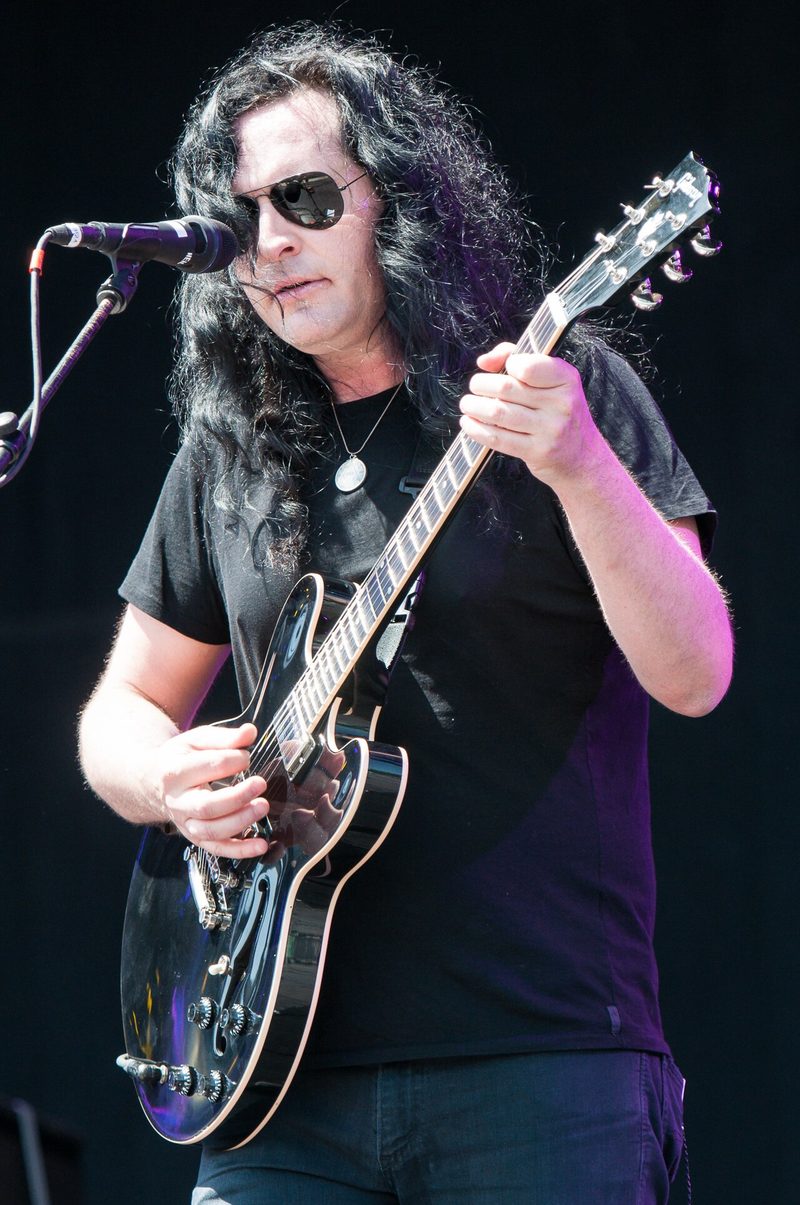
Ben Phillips playing a semi-hollow Gibson with The Pretty Reckless at Rock im Park, Nuremberg, Germany, 8 June 2014.
Evidence
How sure are these numbers?
Every tuning on the album pages carries a status label:
Measured by TuneLit: our own pitch analysis of the CD. For this band it always says the same thing, concert pitch, so the label mostly tells you that you do not need to change the reference A.
Widely reported: a trusted outlet names the tuning. Here that is only And So It Went, from Total Guitar.
Community: from tabs, mostly Songsterr's, sometimes Ultimate Guitar's. Where only one tab exists, or only a machine-made transcription, the song's note says so.
Disputed: the tabs disagree; the note explains both readings. For this band: Miss Nothing, Got So High, 25 and For I Am Death.
The weak spot is not the pitch but the family: E or E♭, plain or dropped. If a song sounds a half step off, try the other family before anything else.
The story
Releases not covered
The Pretty Reckless EP (2010) repeats songs from Light Me Up. Other Worlds (2022) collects acoustic versions, remixes and covers rather than new studio songs. The Christmas EP of 2025 and later digital releases are not covered either, and neither are bonus tracks such as Zombie, Kill Me and the acoustic versions on the deluxe editions.
Cheat sheet
Quick reference
Light Me Up (2010): E♭ Standard. Drop D: Make Me Wanna Die. E Standard: Nothing Left to Lose, Factory Girl.
Hit Me Like a Man EP (2012): E♭ Standard. Drop D: Make Me Wanna Die (live).
Going to Hell (2014): E♭ Standard. Drop C♯: Going to Hell, Absolution. E Standard: Heaven Knows, House on a Hill, Sweet Things, Blame Me. Drop D: Why'd You Bring a Shotgun to the Party.
Who You Selling For (2016): E Standard. E♭ Standard: The Walls Are Closing In / Hangman, Oh My God. D Standard: Who You Selling For. Mad Love at −10 ¢.
Death by Rock and Roll (2021): E Standard. Drop C♯: And So It Went, My Bones. E♭ Standard: Only Love Can Save Me Now (−13 ¢), Got So High. Drop D: 25.
Dear God (2026): E Standard. E♭ Standard: Dragonfire, Eye of the Storm, Devil in Disguise (Michelle's Song). For I Am Death: E Standard, or F Standard in one tab.
Golden rule: the reference stays at A 440. If something sounds off, the question is E or E♭, not the reference.
Questions
What tuning does The Pretty Reckless use?
Mostly E♭ Standard: 3 of 6 albums. Who You Selling For, Death by Rock and Roll and Dear God are in E Standard. Many albums also have songs in other tunings, and the album pages list them song by song.
How did TuneLit measure The Pretty Reckless's records?
We played original CDs and LPs through TuneLit's pitch analysis: the strongest notes of each song are compared with the A 440 grid, which gives the offset in cents. That cannot tell the semitone, so the tuning name comes from interviews, the press and tabs. The audio is never stored or published.
Colors and font
Font
Colors
Menu
Install the app
Android (Chrome): menu ⋮ → Install app or Add to Home screen.
Computer (Chrome, Edge): the install icon at the right end of the address bar.
iPhone: Safari → Share → Add to Home Screen.
It opens full screen and keeps tuning with no connection.