E Standard on the debut, Drop C♯ and Drop C on the classic records, then Stephen Carpenter's seven- and eight-string guitars, all close to concert pitch.
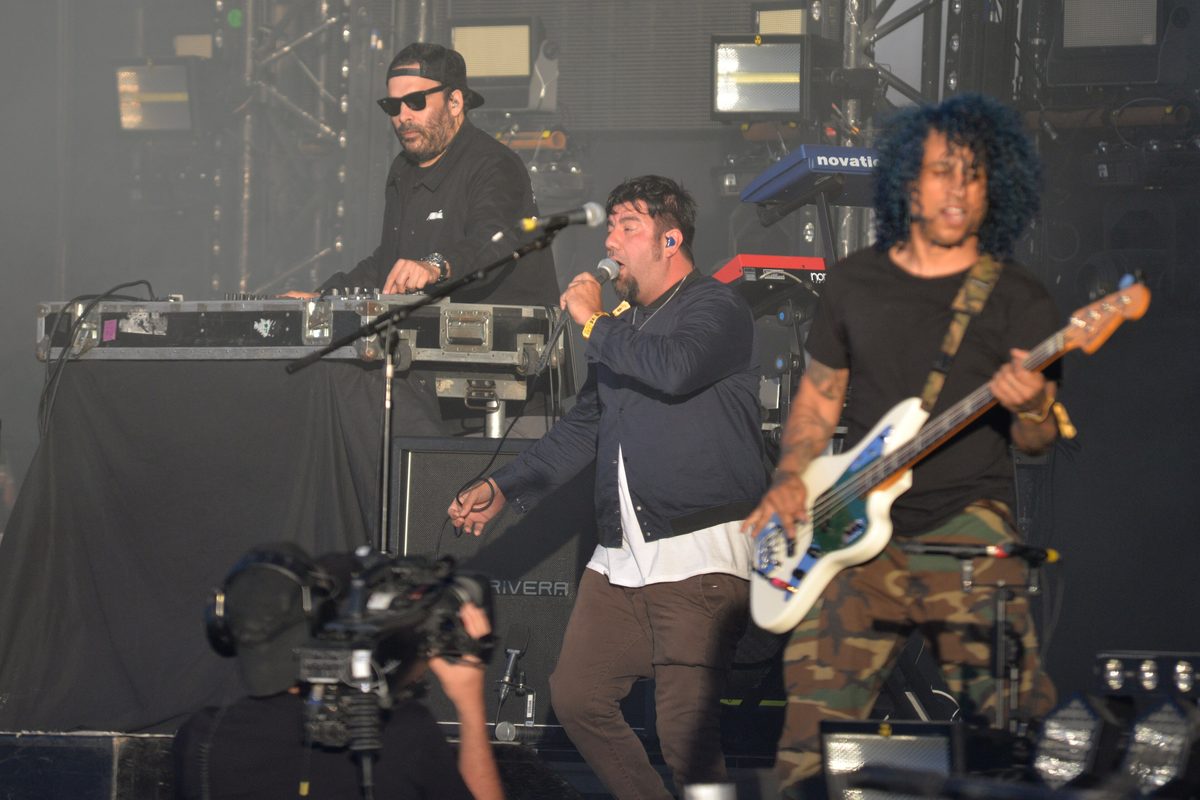
Chino Moreno singing with Deftones at Rock am Ring, Germany, 4 June 2016.
In short
How Deftones tunes
Deftones started in E Standard on Adrenaline (1995), went down to Drop C♯ for Around the Fur (1997) and to Drop C for White Pony (2000), all on six-string tunings. Then Stephen Carpenter changed instruments: a seven-string tuned G♯ C♯ F♯ B E G♯ C♯ on the self-titled album (2003), the same guitar with its low string dropped to F♯ on Saturday Night Wrist (2006), an eight-string in F♯ B E A D G B E on Diamond Eyes (2010), Gore and Ohms, and that eight-string with a low E on Koi No Yokan (2012) and Private Music (2025), plus a nine-string on three Ohms songs.
Read more
From White Pony on, Chino Moreno plays a second guitar in his own six-string tuning. TuneLit measured every album from the owner's CDs. The first two run a few cents sharp, with single songs up to 26 cents sharp, and White Pony and the self-titled album have songs 13 to 23 cents sharp; from Saturday Night Wrist on, every album sits within a few cents of A 440, Private Music about 4 cents flat. TuneLit's check from the audio confirms Drop C♯ on every Around the Fur song and moved Bored to Drop D. Every Tune button uses the measured pitch.
Deftones' tuning story is really the story of Stephen Carpenter's guitars. The first three albums are six-string records, and each one goes a little lower: E Standard on Adrenaline, Drop C♯ on Around the Fur, Drop C on White Pony. After that Carpenter's extended-range guitars took over: a low-tuned seven-string on the self-titled album and Saturday Night Wrist, an eight-string from Diamond Eyes on, and a nine-string on parts of Ohms. Since White Pony, Chino Moreno has played a second guitar in a six-string tuning of his own, so many later songs have two tunings at once.
TuneLit measured every studio album from the owner's own CDs, several editions of most of them. The later records turn out to be right at pitch: everything from Saturday Night Wrist on sits within a few cents of A 440. The early records are looser. Around the Fur has songs anywhere from 8 cents flat to 26 cents sharp, and a handful of White Pony and self-titled songs sit 13 to 23 cents sharp. Each album page lists every song with a Tune button that opens the tuner in that tuning, measured pitch included.
Popular songs
How to tune for Deftones's best-known songs
Each song has its own page: the exact tuning, the record's pitch, how to get there string by string, and how to move the record into your own tuning.
A tuner compares every note with a reference A, normally 440 Hz. When a record sits a little above or below that grid, the album pages add the offset to the tuning's name, such as "Drop C♯ +26 ¢" for Lhabia. A cent is a hundredth of a semitone, so 26 cents is about a quarter of the way to the next note. You can read the same offset as a different reference: +26 ¢ is A ≈ 446.6 Hz. Anything within 4 cents of concert pitch is shown as plain A 440, because a player cannot hear the difference and the measurement is not more precise than that.
The Tune buttons do this for you. To tune by hand, pick the tuning, tap the A 440 chip and type the reference, for example 444 Hz for Change (In the House of Flies).
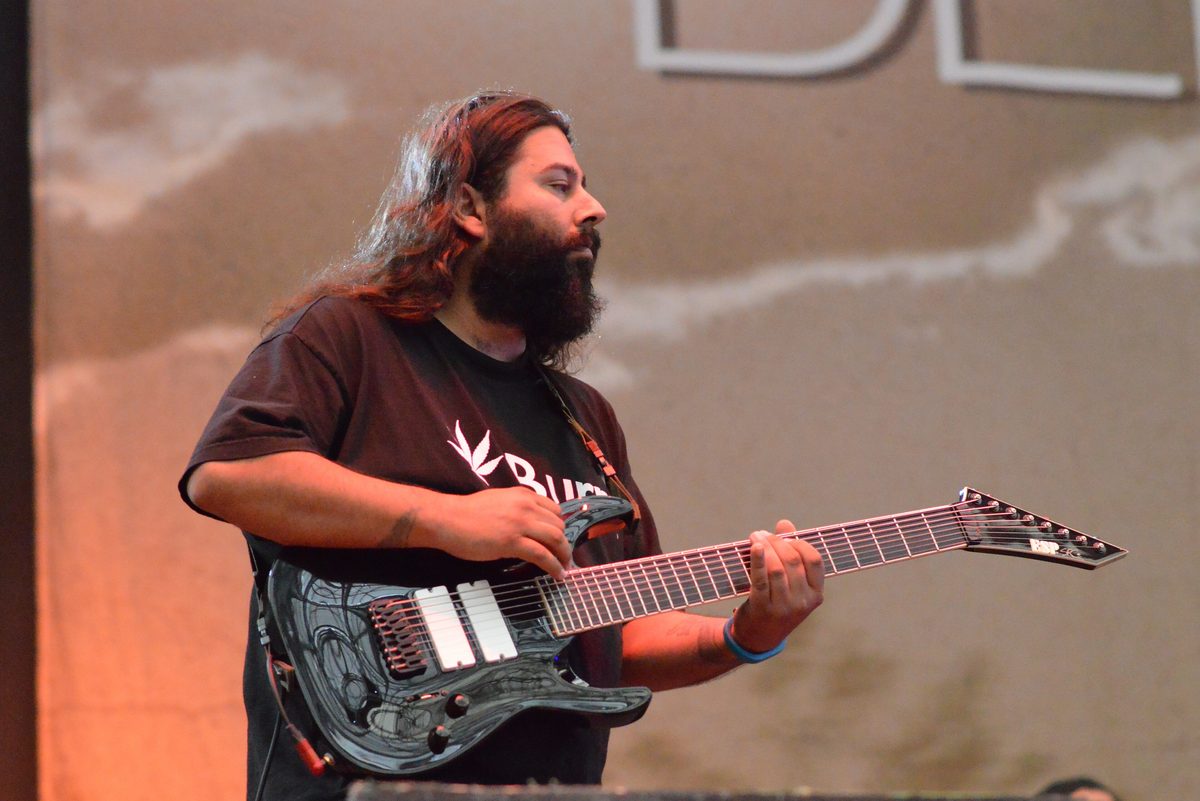
Stephen Carpenter playing an eight-string ESP signature guitar with Deftones at the Rock im Pott festival, Germany, 18 August 2013.
The story
Two guitarists, one listing
From White Pony on, most Deftones songs have two guitar parts, and the tabs often give them different tunings. On Diamond Eyes, for example, Carpenter's eight-string is in F♯ B E A D G B E while Chino Moreno's guitar on Sextape is tabbed in Drop C. A database row can only hold one tuning, so TuneLit lists Carpenter's tuning for every song: it carries the low riffs and the band's sound, and it is the one he has described himself. Where the tabs put Chino's part in another tuning, the song's notes say so.
Two facts make the extended-range tunings friendlier than they look. Carpenter's eight-string, in either of its tunings, has plain E Standard on its top six strings, and his seven-string tunings of 2003 and 2006 have C♯ Standard on theirs. More on that in the section on six-string guitars below.
The story
How the tuning changed, era by era
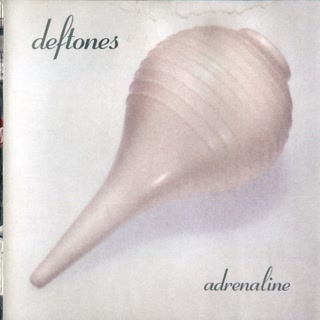
1995: six strings in E. On Adrenaline Carpenter played a six-string guitar, and the main tabs put every song in E Standard. TuneLit's check from the audio agrees on most of them, with one clear exception: the opener, Bored, has its low notes on D and E♭ and never on E, which only works in Drop D. Some tabs had it that way all along.
1997: Drop C♯. Around the Fur is tabbed in Drop C♯ (C♯ G♯ C♯ F♯ A♯ D♯), which is Drop D taken down a half step, with the low string of Mascara and Dai the Flu a whole step higher, in E♭ Standard. The audio check agrees on every one of the ten songs, the strongest confirmation of any Deftones album.
2000: Drop C and a second guitar. White Pony is tabbed in Drop C (C G C F A D) throughout. In a 2016 interview with Premier Guitar Carpenter said he used a standard-scale seven-string throughout White Pony, set up like his six-strings, with the extra string as a high drone on top; an interview at the time described it as mostly a six-string album, and Carpenter said Chino plays guitar on Digital Bath, Pink Maggit, Teenager and Change. The same interview has him naming Fear Factory and Meshuggah as the seven-string bands he liked and promising more seven-string playing next time.
2003: the seven-string in G♯. For the self-titled album Carpenter tuned his seven-string, in his words, to A♭ or G♯: G♯ C♯ F♯ B E G♯ C♯. That is a seven-string a minor third below its standard B, and Wikipedia notes that most of the album uses it. Chino's six-string parts on Minerva and Battle-Axe are tabbed in Drop C♯, and Chi Cheng's five-string bass in G♯ on most songs.
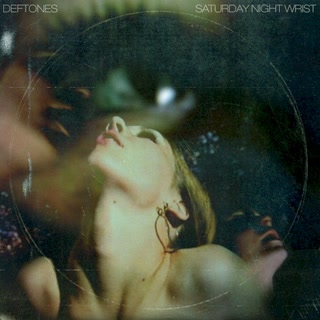
2006: one string lower. On Saturday Night Wrist Carpenter kept that guitar and simply dropped its low string to F♯: F♯ C♯ F♯ B E G♯ C♯. Chino's second guitar is tabbed in Drop D or Drop C on several songs.
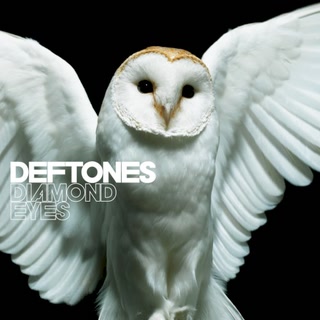
2010 and 2012: the eight-string. Diamond Eyes was Carpenter's first record on an eight-string, which he kept in the tuning it came with, F♯ B E A D G B E. For Koi No Yokan he dropped the low string to E, a tuning he said Tosin Abasi of Animals as Leaders had told him about. Sergio Vega replaced Chi Cheng on bass from Diamond Eyes on; Cheng died in 2013, five years after the car accident that also shelved the unfinished album Eros.
2016 to 2025: eight and nine strings. The tabs put Gore and most of Ohms back in F♯ Standard on eight strings, with Gore's title track in Drop E. For Ohms ESP built Carpenter a one-off nine-string, first heard on the title track; tabs tune it C♯ F♯ B E A D G B E, an eight-string with a low C♯ added. On Private Music Carpenter's health problems meant Chino wrote and played more of the guitar parts, and the tabs put Carpenter's eight-string back in Drop E.
What the CDs say. The five albums from Saturday Night Wrist to Ohms all measure within 2.5 cents of A 440, and Private Music about 4 cents flat. The first two albums run 5 to 7 cents sharp overall, with single songs much further out, and White Pony and the self-titled album each have a few songs 13 to 23 cents sharp. Nothing in our sources explains those songs; a measurement cannot tell a guitar tuned by ear from a tape machine running a little fast. Every other edition in the library, including the 2020 remaster of White Pony, reads the same as the first pressing within 2.5 cents song by song.
Main tuning: E Standard +7 ¢ (A ≈ 441.7), measured on the US CD.
The debut, produced by Terry Date, was cut quickly with songs the band had been playing for years. The main tabs put every song in E Standard, and TuneLit's check from the audio agrees on seven of them. Bored is different: on the CD its low notes sit on D and E♭, in two octaves, and a low E never sounds. In E Standard neither the guitar nor the bass can reach that low D, so Bored is listed in Drop D, the tuning of a Songsterr version and of the best-rated Guitar Pro tab on Ultimate Guitar. The opposite happens with Engine No. 9: a popular tab puts it in Drop D, but the record's low notes never reach D, so it stays in E Standard. Fireal is the song the audio leaves most open: some E♭ and D sound under its riff, while every tab says E Standard.
The US CD sits about 7 cents sharp and the European pressing reads the same within a cent. Minus Blindfold is the exception at concert pitch, about 10 cents lower than the rest.
With TuneLit: E Standard +7 ¢ for most songs, Drop D +7 ¢ for Bored, plain E Standard for Minus Blindfold. The hidden track Fist, which follows Fireal on the CD, is not listed.
Main tuning: Drop C♯ +5 ¢ (A ≈ 441.3), measured on the US CD.
Recorded with Terry Date in Seattle, the album that made the band's name; it went platinum in the US. Every song is tabbed in Drop C♯ except Mascara and Dai the Flu, which raise the low string a whole step to E♭ Standard, and TuneLit's audio check agrees with all ten. Max Cavalera adds vocals and guitar on Headup, and his part is tabbed in the same Drop C♯.
The pitch is the loosest of any Deftones album. The CD's median is about 5 cents sharp, but My Own Summer (Shove It) reads about 8 cents flat, Lhabia about 26 cents sharp, Mascara about 13 and Be Quiet and Drive (Far Away) about 14 cents sharp. Those four get their own values. Lotion reads about 23 cents sharp too, but with very low confidence, so it keeps the album value. The Japanese CD and the limited festival edition read the same within a cent, so the spread is on the master.
With TuneLit: Drop C♯ for most songs, with each song's own reference where it differs, and E♭ Standard for Mascara (+13 ¢) and Dai the Flu (+5 ¢). Drop D tabs of Be Quiet and Drive are common, but the record is in Drop C♯.
Main tuning: Drop C at concert pitch (measured about 3 ¢ flat), on the grey-cover CD, the first standard edition.
The first album with Chino Moreno on guitar, and the one where the band's sound opened up. Every song is tabbed in Drop C, guitars and bass alike. Carpenter played a standard-scale seven-string, set up like his six-strings with an extra high string as a drone, and an interview at the time called it mostly a six-string record. Scott Weiland sings on Rx Queen and Maynard James Keenan on Passenger.
Most songs sit within about 8 cents of A 440, but three read 15 to 16 cents sharp: Feiticeira, Passenger and Change (In the House of Flies). The red-cover limited edition, the Japanese CD, the white-cover reissue and the 2020 remaster all show the same pattern within 2.5 cents, so it is in the master. Back to School (Mini Maggit), the song added at the front of the white-cover reissue, reads about 14 cents flat; it is not part of the original track list and not listed here.
The audio check agrees with Drop C on seven songs. On Feiticeira it hears much more B than C in the low notes; a bass tab in Drop C plays B through the verse, which may explain it, so the song stays in Drop C as tabbed but is worth a check by ear.
With TuneLit: Drop C at A 440 for most songs; Drop C +15 ¢ for Feiticeira and +16 ¢ for Passenger and Change.
Main tuning: G♯ Standard on a seven-string (G♯ C♯ F♯ B E G♯ C♯) at concert pitch, measured on the US CD.
Carpenter's own description of his tuning for this album: A♭ or G♯, whichever you prefer. Chino Moreno's parts on Minerva and Battle-Axe are tabbed on a six-string in Drop C♯, and Chi Cheng is tabbed on a five-string bass in G♯ for most songs. Lucky You is a trip-hop piece with DJ Crook and Rey Osburn.
The CD sits at concert pitch overall, under 1 cent sharp, with two songs that stand out: Hexagram about 13 cents sharp and When Girls Telephone Boys about 23 cents sharp. On the latter the audio check hears more G than G♯ in the low notes, against every tab; it is listed in G♯ but deserves a check by ear. The Japanese CD agrees within 2 cents.
With TuneLit: G♯ Standard on the seven-string for every song, with +13 ¢ for Hexagram and +23 ¢ for When Girls Telephone Boys. On a six-string, see below.
Main tuning: Drop F♯ on a seven-string (F♯ C♯ F♯ B E G♯ C♯) at concert pitch, measured on the US CD.
Carpenter's change for this record was a single string: the low G♯ of his seven-string went down to F♯. Beware is tabbed with that string left at G♯, so it has its own tuning. Chino Moreno's second guitar is tabbed in Drop D on Hole in the Earth, Cherry Waves and Xerces and in Drop C on Beware and Rivière, and his part on Combat in E Standard. Serj Tankian sings on Mein and Annie Hardy appears on Pink Cellphone.
The CD sits about 2 cents sharp, and every song lands within 8 cents of it; the clean European edition and the Japanese CD agree within a cent. The audio check agrees with the low F♯ on six songs and with the G♯ of Beware. On Pink Cellphone the low F♯ never sounds at all, and no tab exists, so its listing is simply the album's.
With TuneLit: Drop F♯ on the seven-string, G♯ Standard for Beware, all at A 440.
Main tuning: F♯ Standard on an eight-string (F♯ B E A D G B E) at concert pitch, measured on the CD.
Carpenter's first eight-string record, with the guitar in its factory tuning. Its top six strings are plain E Standard, and the low B and F♯ carry the heaviest riffs, such as You've Seen the Butcher and Rocket Skates. The tabs put Chino Moreno's guitar in Drop C on Royal, Sextape and 976-EVIL and in Drop D on Beauty School, and Sergio Vega's bass mostly in Drop C.
The CD sits about 1 cent sharp and no song strays more than 4 cents, so every button is plain A 440. TuneLit's check from the audio has little to say here: it assumes the bass never plays below the guitar's lowest string, and a Drop C bass under an F♯ eight-string breaks that rule. Carpenter's own account of the tuning is the evidence.
With TuneLit: F♯ Standard on the eight-string for every song. For Chino's parts, see each song's notes.
Main tuning: Drop E on an eight-string (E B E A D G B E) at concert pitch, measured on the CD.
For this album Carpenter dropped the eight-string's low F♯ to E, a full octave below a six-string's low E. Chino Moreno's guitar is tabbed in Drop D or lower on several songs. The most-viewed tab of Entombed writes Carpenter's part in F♯ Standard; the clean song may simply never touch the low string, so it follows the album.
The CD is the tightest of all the Deftones records: under 1 cent sharp, with no song more than 5 cents away.
With TuneLit: Drop E on the eight-string for every song, at A 440.
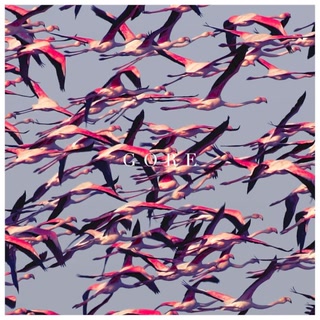
Main tuning: F♯ Standard on an eight-string at concert pitch, measured on the Japanese CD.
Premier Guitar described Gore as built on low-tuned eight-strings, with Chino Moreno on guitar on nearly every song and Sergio Vega on a six-string Bass VI for much of the record. The tabs put Carpenter back in F♯ Standard, with the title track in Drop E, and Chino's parts in Drop C or lower. Jerry Cantrell of Alice in Chains plays the solo on Phantom Bride, tabbed in Drop C.
The CD sits about 1 cent sharp. The audio check is no more useful than on Diamond Eyes, for the same reason.
With TuneLit: F♯ Standard on the eight-string, Drop E for Gore, all at A 440.
Main tuning: F♯ Standard on an eight-string at concert pitch, measured on the Japanese CD.
Terry Date's first released Deftones production since the self-titled album, and Sergio Vega's last record with the band. ESP built Carpenter a one-off nine-string, first heard on the title track. The tabs tune it C♯ F♯ B E A D G B E and use it on Ohms, Radiant City and The Spell of Mathematics; one tab of Ohms notes that its riff stays on the top six strings, the notes of E Standard, and Guitar World heard an octave pedal doing much of the low end. The other songs are tabbed in F♯ Standard on eight strings, with Chino Moreno's guitar in its own lower tunings.
The CD sits about 2 cents sharp and every song lands within 4 cents of it.
With TuneLit: F♯ Standard on the eight-string; the three nine-string songs open the tuner as a custom nine-string.
Main tuning: Drop E on an eight-string, 4 ¢ flat (A ≈ 438.9), measured on the European CD.
Produced by Nick Raskulinecz, with touring bassist Fred Sablan on his first Deftones album. Guitar World reported that Carpenter's health problems during the sessions meant Chino Moreno took on more of the guitar parts. The tabs put Carpenter's eight-string in Drop E and Chino's guitar mostly in Drop C or Drop D; I Think About You All the Time has Chino's low string at C under otherwise standard strings. The closer, Departing the Body, is tabbed in Drop D for both guitars, and the audio check agrees with its low D.
The CD sits about 4 cents flat, the only Deftones album measurably below concert pitch; Ecdysis reads about 5 cents sharp and has its own value.
With TuneLit: Drop E on the eight-string at A 438.9 for most songs, Ecdysis +5 ¢, Departing the Body in Drop D −4 ¢.
The story
Playing Deftones on a six-string guitar
Most players do not own a seven- or eight-string, and you do not need one for most of these songs:
Adrenaline, Around the Fur, White Pony: these are six-string tunings already. Tune exactly as listed.
Self-titled and Saturday Night Wrist: the top six strings of Carpenter's seven-string are C♯ Standard in both tunings (C♯ F♯ B E G♯ C♯). Tune every string of a six-string down three half steps and you have everything but the lowest string; riffs on that string can go an octave up or move to a baritone. A normal set gets floppy that low, so a heavier set helps.
Diamond Eyes to Private Music: the top six strings of the eight-string are plain E Standard in both F♯ Standard and Drop E. A guitar in E Standard plays every part above the two low strings at the same pitch; the riffs on the low B and F♯ (or E) sound an octave higher on a six-string.
Chino Moreno's parts are six-string tunings, Drop C or Drop D mostly; each song's notes name the one the tabs give.
Whichever way you go, set the reference first: on the early albums a perfect A 440 is a few cents flat against the record, and on Lhabia or When Girls Telephone Boys a lot more.
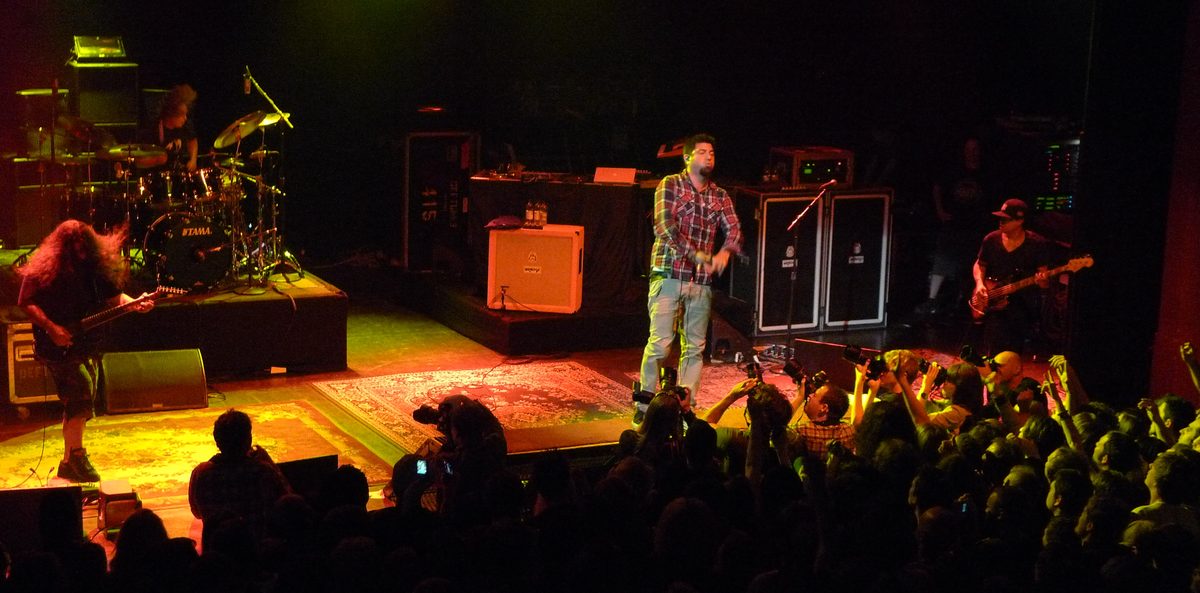
Deftones on stage at the Shepherd's Bush Empire, London, 24 August 2011: Stephen Carpenter (left), Abe Cunningham on drums, Chino Moreno and Sergio Vega on bass.
TuneLit lab
What TuneLit measured
Album
Sources said
TuneLit measured
Equivalent A
Adrenaline (1995)
E Standard
+7 ¢; Bored in Drop D; Minus Blindfold 0
A ≈ 441.7
Around the Fur (1997)
Drop C♯
+5 ¢; songs from −8 to +26 ¢
A ≈ 441.3
White Pony (2000)
Drop C
−3 ¢; three songs +15 to +16 ¢
A 440
Deftones (2003)
G♯ Standard, seven-string
+1 ¢; Hexagram +13 ¢, When Girls Telephone Boys +23 ¢
A 440
Saturday Night Wrist (2006)
Drop F♯, seven-string
+2 ¢
A 440
Diamond Eyes (2010)
F♯ Standard, eight-string
+1 ¢
A 440
Koi No Yokan (2012)
Drop E, eight-string
+1 ¢
A 440
Gore (2016)
F♯ Standard, eight-string
+1 ¢
A 440
Ohms (2020)
F♯ Standard, eight and nine strings
+2 ¢
A 440
Private Music (2025)
Drop E, eight-string
−4 ¢
A ≈ 438.9
None of our sources gives the pitch of a Deftones record, so every offset here is new. Three things stand out. Around the Fur is the least consistent album, with songs a third of a semitone apart, the same on every pressing. White Pony and the self-titled album are at concert pitch overall but each hides a few songs 13 to 23 cents sharp. And from Saturday Night Wrist on, every album sits within a few cents of A 440 and almost every song within 5 cents of its album.
The check from the audio agrees with 52 of the 108 songs as they are now listed, including all of Around the Fur. One song moved: Bored, to the Drop D that a tab already named, after its low notes turned out to be D and E♭. It disagrees on a few songs where nothing else backs it up, Feiticeira, When Girls Telephone Boys and Pink Cellphone among them; those are named in the notes as songs to check by ear. On the eight-string albums it mostly cannot answer, because the bass plays below the guitar's lowest string.
Keep a few limits in mind. Dense, low mixes are hard to read, so most songs use their album's value and only clear outliers get their own. Anything within ±4 ¢ counts as concert pitch. All numbers come from CDs in the owner's library; the audio is never uploaded or published, only the numbers.
Evidence
How sure are these numbers?
Every tuning on the album pages carries a status label. The offset in cents comes from our own measurement, so every album shows Measured by TuneLit. The tuning's name rests on the other kinds of evidence:
Official: Stephen Carpenter's own account in a 2016 Premier Guitar interview, which covers the self-titled album, Saturday Night Wrist, Diamond Eyes and Koi No Yokan.
Community: community transcriptions, mostly Songsterr and Ultimate Guitar. This covers the first three albums, Gore, Ohms, Private Music and most song-level details.
Disputed: the sources disagree, as on Bored. We list the most likely tuning and say what the others are.
Measured by TuneLit: our own pitch analysis of the CD, giving the offset in cents.
If a song still sounds a touch off, move the reference a hertz or two; near 440 Hz, one hertz is about 4 cents.
Frank Delgado, Chino Moreno and bassist Sergio Vega with Deftones at Hellfest, Clisson, France, 23 June 2018.
Cheat sheet
Quick reference
Adrenaline (1995): E Standard +7 ¢; Drop D +7 ¢ for Bored; E Standard at A 440 for Minus Blindfold.
Around the Fur (1997): Drop C♯ +5 ¢; My Own Summer −8 ¢, Lhabia +26 ¢, Be Quiet and Drive +14 ¢; E♭ Standard for Mascara (+13 ¢) and Dai the Flu (+5 ¢).
White Pony (2000): Drop C; Feiticeira +15 ¢, Passenger and Change +16 ¢.
Deftones (2003): G♯ Standard on seven strings; Hexagram +13 ¢, When Girls Telephone Boys +23 ¢.
Saturday Night Wrist (2006): Drop F♯ on seven strings; G♯ Standard for Beware.
Diamond Eyes (2010): F♯ Standard on eight strings.
Koi No Yokan (2012): Drop E on eight strings.
Gore (2016): F♯ Standard on eight strings; Drop E for Gore.
Ohms (2020): F♯ Standard on eight strings; nine strings (C♯ F♯ B E A D G B E) for The Spell of Mathematics, Radiant City and Ohms.
Private Music (2025): Drop E on eight strings −4 ¢; Ecdysis +5 ¢; Drop D for Departing the Body.
On a six-string: C♯ Standard covers the seven-string albums, E Standard the eight-string ones, apart from the lowest strings.
Questions
What tuning does Deftones use?
Mostly F♯ Standard: 3 of 10 albums. Koi No Yokan and Private Music are in Drop E; Adrenaline is in E Standard; Around the Fur is in Drop C♯; White Pony is in Drop C; Deftones is in G♯ Standard; Saturday Night Wrist is in Drop F♯. Many albums also have songs in other tunings, and the album pages list them song by song.
How did TuneLit measure Deftones's records?
We played original CDs and LPs through TuneLit's pitch analysis: the strongest notes of each song are compared with the A 440 grid, which gives the offset in cents. That cannot tell the semitone, so the tuning name comes from interviews, the press and tabs. The audio is never stored or published.
Colors and font
Font
Colors
Menu
Install the app
Android (Chrome): menu ⋮ → Install app or Add to Home screen.
Computer (Chrome, Edge): the install icon at the right end of the address bar.
iPhone: Safari → Share → Add to Home Screen.
It opens full screen and keeps tuning with no connection.