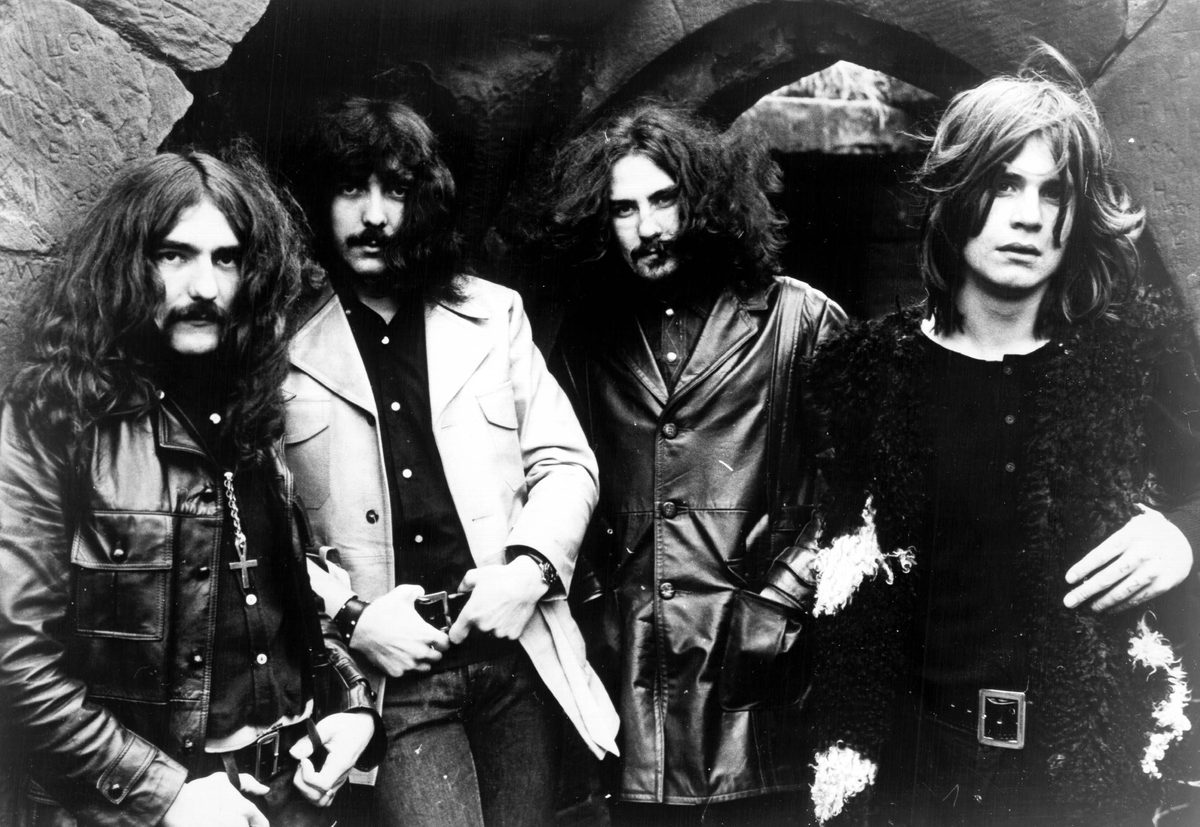
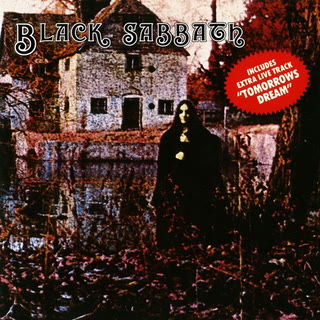
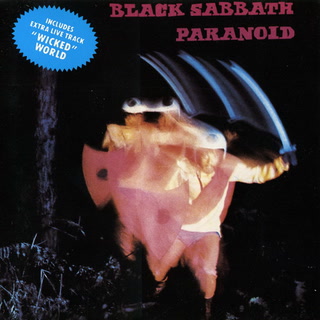
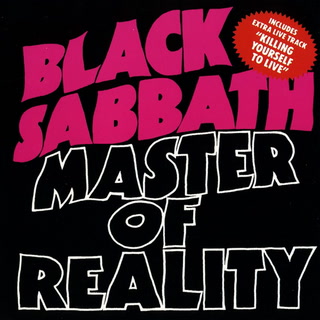
The original line-up in a 1970 promotional photo: Geezer Butler, Tony Iommi, Bill Ward and Ozzy Osbourne (left to right).
In short
How Black Sabbath tunes
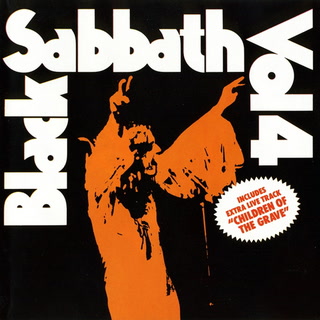
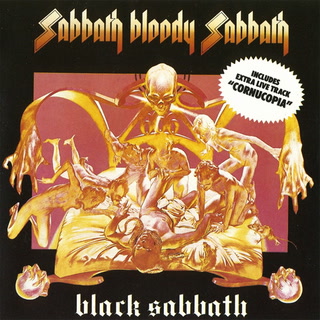
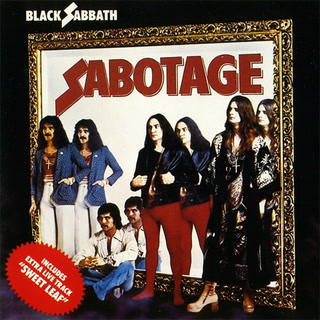
Black Sabbath made their first two albums in E Standard. On Master of Reality (1971) Tony Iommi tuned three semitones down, to C♯ Standard, to ease the strain on his injured fingertips and to sound heavier, and C♯ carried Vol. 4, Sabbath Bloody Sabbath and the heavy songs of Sabotage.
Read more
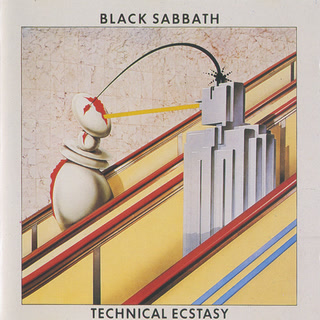
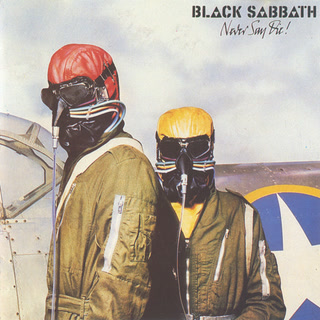
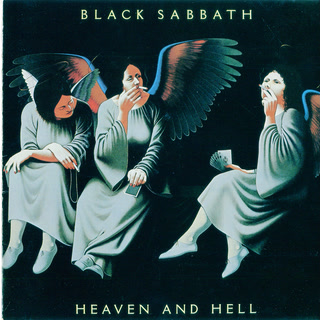
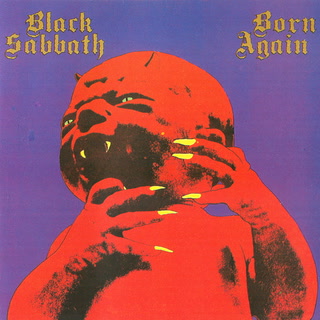
Technical Ecstasy and Never Say Die! went back to E Standard; from Heaven and Hell (1980) on, E♭ Standard was the rule, with Born Again in D. TuneLit measured all 19 studio albums from the earliest CD pressing in the owner's library and compared 4 to 11 editions of each. The records wander more than the tunings: the debut sits 25 cents flat (A ≈ 433.6), Paranoid 25 cents sharp (A ≈ 446), and Seventh Star about 42 cents flat, halfway between D and E♭, where TuneLit's check from the audio hears E♭. The Dio, Martin and 13 albums sit within 11 cents of A 440. Single songs stray further: Evil Woman, recorded a week before the rest of the debut, is 13 cents above it; Fairies Wear Boots is at concert pitch, 21 cents under the rest of Paranoid; Tomorrow's Dream and St. Vitus Dance are D Standard 32 cents flat; When Death Calls sits 55 cents under the rest of Headless Cross.
Black Sabbath are where heavy metal guitar learned to tune down. Tony Iommi lost the tips of two fingers of his fretting hand in a factory accident before the band began, and much of what made Sabbath sound like Sabbath grew out of working around that: very light strings, and then slackened ones. Over 19 studio albums the band used four main tunings, from plain E Standard down to C♯ Standard, and the records themselves sit anywhere from 25 cents sharp to more than 40 cents flat of A 440.
This page goes through every studio album from Black Sabbath (1970) to 13 (2013): the tuning the sources give for each song, the pitch TuneLit measured on the CDs, the songs that break the pattern, and how to set it all up. The album pages list every song with a Tune button that opens the tuner in exactly that tuning, measured offset included.
Popular songs
How to tune for Black Sabbath's best-known songs
Each song has its own page: the exact tuning, the record's pitch, how to get there string by string, and how to move the record into your own tuning.
Black Sabbath, Paranoid, Technical Ecstasy, Never Say Die!; acoustic pieces of the 1970s
C♯ Standard
C♯ F♯ B E G♯ C♯
Master of Reality, Vol. 4, Sabbath Bloody Sabbath, the heavy songs of Sabotage
D Standard
D G C F A D
Born Again; After Forever, Tomorrow's Dream, St. Vitus Dance
E♭ Standard
E♭ A♭ D♭ G♭ B♭ E♭
Heaven and Hell (1980) to 13 (2013), except Born Again; Seventh Star most likely
Drop D
D A D G B E
Disturbing the Priest (one tab)
C Standard
C F B♭ E♭ G C
Forbidden, the title track (one tab)
Why so low. After the accident Iommi played with home-made thimbles over the injured fingertips, which made bending ordinary strings hard. Light gauges were not on sale in the late 1960s, so he strung his guitar with banjo strings until light guitar sets appeared around 1970–71. On Master of Reality he tuned three semitones down for Children of the Grave, Lord of This World and Into the Void. He has said the main aim was a bigger, heavier sound; slacker strings are also easier to press and bend. Geezer Butler tuned his bass down to match him, so on these records bass and guitar share the tuning.
On stage and on record. The first two albums are in standard tuning, but the band was already tuning lower on stage. The music historian Andy Cope (Home of Metal) writes that they played every show before Master of Reality in E♭; Guitar Player says Iommi went a whole step down live. Live recordings and live tabs of the early songs therefore sit lower than the studio versions. Everything on this page is about the studio records.
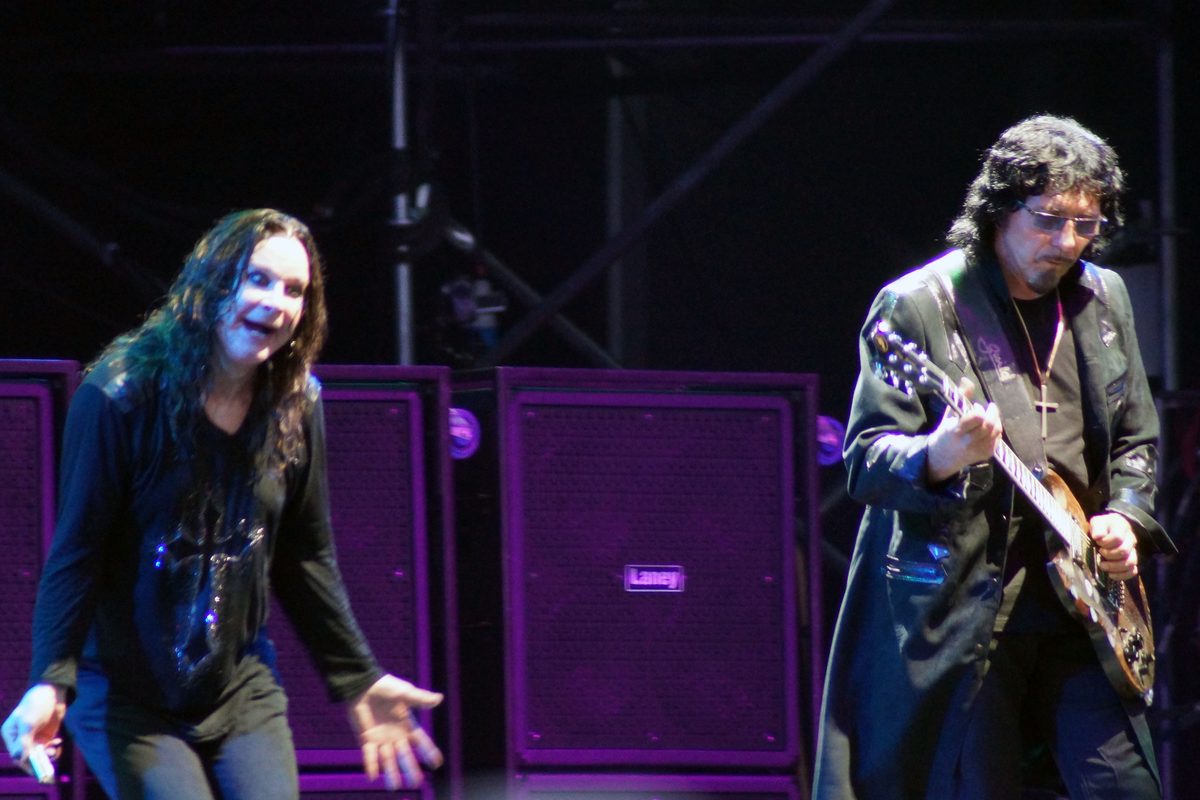
Ozzy Osbourne and Tony Iommi on stage at Lollapalooza in Chicago, August 2012, the year before the reunion album 13.
TuneLit lab
How we measured these records
The owner's library holds every studio album in several CD editions, 4 to 11 each: 1,165 tracks measured in all, from the first Castle Communications CDs of 1986 to the Sanctuary deluxe editions of 2009–2011. For each album TuneLit takes the earliest CD pressing as the primary source:
Castle Communications NELCD series (1986): the six albums from Black Sabbath to Sabotage. Each of these discs adds one live bonus track, which we left out.
Vertigo (1986–1987): Technical Ecstasy, Never Say Die!, Mob Rules, Born Again, Seventh Star and The Eternal Idol from the German pressings, Heaven and Hell from the Japanese 32PD-129 of 1986.
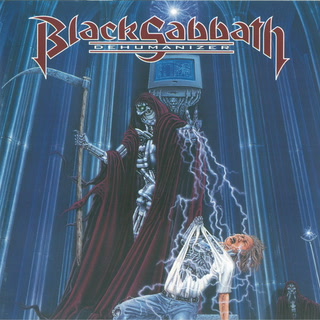
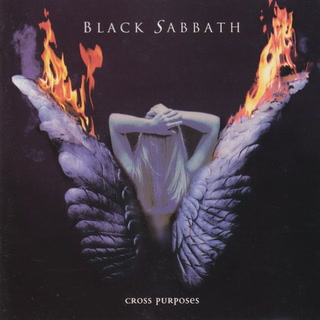
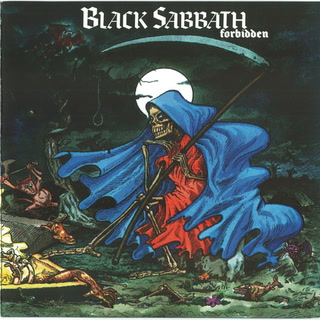
I.R.S. (1989–1995): Headless Cross from the UK CD, Tyr, Dehumanizer, Cross Purposes and Forbidden from the Dutch pressings.
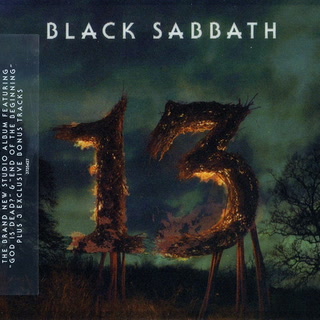
Vertigo/Universal (2013): the first disc of the 13 deluxe edition, which is the standard album; the bonus disc was left out.
The other editions served as a cross-check. The estimator reads 90 seconds of each song, from 0:45, and compares the strongest notes with the equal-tempered grid. That gives the record's offset from A 440, known only within one semitone; which semitone the strings sit on comes from the tabs and sources, checked against TuneLit's semitone check from the audio, which listens for the open low string in the bass. A song gets its own value when it differs from its album by 8 cents or more with good confidence; anything within ±4 cents counts as concert pitch.
The story
When the CD matters
For the I.R.S. albums and 13, every edition in the library measures within a cent or two of every other. The 1970s albums are another story: their CDs were made over 25 years, and they do not all play at the same speed:
Paranoid: a 1987 German Vertigo CD plays 5 cents sharper than the rest; the other nine editions agree with the Castle CD within 2.5 cents.
Sabbath Bloody Sabbath: a 1989 Japanese CD, a 1996 Japanese CD and the 1996 Castle reissue play A National Acrobat, Fluff and Sabbra Cadabra 13 to 17 cents sharper, and the 1996 ones play the title track 11 cents flatter.
Vol. 4: the US Warner CD and the Japanese CDs of 1989 and 1991 run about 4 cents flatter, with Snowblind and Under the Sun 11 to 13 cents lower.
Sabotage: the US Warner CD runs about 7 cents flat of the Castle CD, the 1996 reissues about 4.5 cents.
Technical Ecstasy: the US Warner CD and a 1989 Japanese CD play the first side up to 6 cents sharper and the second side 8 to 12 cents flatter than the German Vertigo CD; the 1996 and 2009 reissues run about 4 to 5 cents sharp.
Never Say Die!: the Warner, Japanese and 1996 CDs run about 4 cents flatter than Vertigo.
None of these differences moves a song to another semitone, but they explain why two careful players with two different CDs can disagree by a few cents. If yours is a later reissue, the album pages still get you within a few cents on most songs; nudge the reference by ear if a song sounds off.
Main tuning: E Standard about 25 cents flat (A ≈ 433.6), measured on the Castle CD of 1986.
The debut is a standard-tuning record, as Andy Cope and Guitar Player both state, and every song is tabbed in E Standard. What surprises is the pitch: the whole album sits a quarter of a semitone under A 440, and all nine CD editions in the library agree within about 3 cents. The band recorded the album in a single 12-hour session at Regent Sound in London on 17 November 1969, playing their live set. Evil Woman is the exception, and the measurement shows it: the single was cut a week earlier at Trident Studios, and it sits about 12 cents flat, 13 cents above the rest.
With TuneLit: E Standard at A ≈ 433.6 for the album, A ≈ 436.9 for Evil Woman.
Main tuning: E Standard about 25 cents sharp (A ≈ 446.3), measured on the Castle CD of 1986.
Recorded over three days in June 1970, still in standard tuning; Invisible Oranges once called it the heaviest album ever made in E Standard. Where the debut is flat, Paranoid is sharp: War Pigs, Paranoid, Planet Caravan, Iron Man, Electric Funeral and Rat Salad all sit 23 to 31 cents above A 440. Fairies Wear Boots is the exception, at concert pitch (+3 cents), and TuneLit's weaker reading of Hand of Doom points the same way. The end of War Pigs was sped up in the studio, so its last minute climbs higher than the riff we measured.
With TuneLit: E Standard at A ≈ 446.3 for most of the album, plain A 440 for Fairies Wear Boots. If Paranoid or Iron Man sounds a hair flat against the record, raise the reference to about A 448.
Main tuning: C♯ Standard at concert pitch (−3.6 cents), measured on the Castle CD of 1986.
The album where it changed. Iommi tuned three semitones down, to C♯ F♯ B E G♯ C♯, on Children of the Grave, Lord of This World and Into the Void; Sweet Leaf, Embryo and the acoustic Orchid are tabbed in the same tuning. The album is not uniform, though. After Forever is a semitone higher, in D Standard (Andy Cope), and the ballad Solitude is tabbed in E Standard; TuneLit's semitone check agrees with D for After Forever. The record sits close to A 440 overall, with Lord of This World 12 cents flat and Orchid 20 cents flat.
Popular tabs of Children of the Grave in C or E♭ Standard, and of Into the Void or Sweet Leaf in E Standard, are rearrangements: they move the notes into a tuning the player already has.
With TuneLit: C♯ Standard for most of the album, D Standard for After Forever, E Standard for Solitude.
Main tuning: C♯ Standard about 19 cents sharp (A ≈ 444.8), measured on the Castle CD of 1986.
Recorded at the Record Plant in Los Angeles, and the most scattered album in the catalogue. The heavy songs stay in C♯ Standard: Wheels of Confusion, Supernaut, Snowblind, Cornucopia and Under the Sun. Their pitch is not one value, though. Snowblind, Supernaut and Under the Sun sit 16 to 24 cents sharp, Cornucopia reads about 41 cents sharp at low confidence, and Wheels of Confusion reads about 8 cents flat.
Two songs sit on another semitone. St. Vitus Dance is tabbed in D Standard, and TuneLit's check from the audio agrees: D Standard about 32 cents flat (A ≈ 432). Tomorrow's Dream has exactly the same pitch and the same low notes. Its most-viewed tab says C♯ Standard, but an Ultimate Guitar tab says D, and the audio check rules out C♯, so TuneLit lists it in D Standard at A ≈ 432 as well. The piano ballad Changes has no guitar at all, and the acoustic Laguna Sunrise is in E Standard, 7 cents flat.
With TuneLit: C♯ Standard at A ≈ 444.8 for the heavy songs, D Standard at A ≈ 432 for Tomorrow's Dream and St. Vitus Dance, E Standard for Laguna Sunrise and Changes.
Main tuning: C♯ Standard at concert pitch (−2 cents), measured on the Castle CD of 1986.
Recorded at Morgan Studios in London, and the steadiest of the C♯ albums: A National Acrobat, Sabbra Cadabra, Killing Yourself to Live, Looking for Today and Spiral Architect all sit within 6 cents of A 440, and the audio check agrees with C♯ on each of them. The title track is the exception, about 24 cents sharp (A ≈ 446). Fluff, Iommi's acoustic instrumental, is in E Standard at concert pitch. Who Are You?, which Ozzy Osbourne wrote on a synthesizer, sits 23 cents flat.
With TuneLit: C♯ Standard at A 440, with the title track at A ≈ 446; E Standard for Fluff.
Main tuning: C♯ Standard about 6 cents flat (A ≈ 438.6), measured on the Castle CD of 1986.
The heavy songs are in C♯ Standard again, and the record splits into two groups: Hole in the Sky and Symptom of the Universe sit 19 to 20 cents flat (A ≈ 435), Megalomania and The Writ about 2 to 6 cents flat. The lighter pieces are tabbed in E Standard: the acoustic showpiece Don't Start (Too Late), 34 cents flat; The Thrill of It All, at concert pitch; the choir piece Supertzar; and the single Am I Going Insane (Radio), 11 cents sharp. Don't Start (Too Late) runs straight into Symptom of the Universe, so playing the two as one piece takes two guitars or a quick retune from E to C♯.
With TuneLit: C♯ Standard at A ≈ 435 for Hole in the Sky and Symptom of the Universe, at A ≈ 438.6 for the rest; E Standard for the four lighter songs.
Main tuning: E Standard at concert pitch, measured on the German Vertigo CD.
Recorded at Criteria in Miami, and back in standard tuning: every song is tabbed in E Standard. No interview or tab book confirms it, but TuneLit's check from the audio agrees on five of the eight songs and finds nothing against it on the others. The record sits on A 440 with a few strays: You Won't Change Me and Gypsy are 12 to 14 cents flat, Rock 'n' Roll Doctor 11 cents sharp. It's Alright, the ballad Bill Ward sings, is at concert pitch.
This is also the album where the CD editions disagree most: see "When the CD matters" above.
With TuneLit: E Standard at A 440, with the three strays on their own buttons.
Main tuning: E Standard about 10 cents flat (A ≈ 437.5), measured on the German Vertigo CD.
The last studio album with Ozzy Osbourne for 35 years, recorded in Toronto, and in E Standard throughout. Junior's Eyes and the jazzy instrumental Air Dance sit at concert pitch, Swinging the Chain, sung by Bill Ward, 8 cents sharp. The horn instrumental Breakout gave no steady reading.
With TuneLit: E Standard at A ≈ 437.5, A 440 for Junior's Eyes and Air Dance.
Main tuning: E♭ Standard about 5 cents sharp (A ≈ 441.3), measured on the Japanese Vertigo CD of 1986.
With Ronnie James Dio on vocals, Iommi went back to tuning down only a half step, as Guitar Player puts it, and E♭ Standard became the band's tuning for the rest of their career. Every song is tabbed there, and the audio check agrees on seven of the eight. The record is close to concert pitch; Lady Evil sits 19 cents sharp (A ≈ 444.8) and Heaven and Hell 11 cents sharp. All eight CD editions in the library agree within 2.5 cents.
With TuneLit: E♭ Standard at A ≈ 441.3; Lady Evil on its own button.
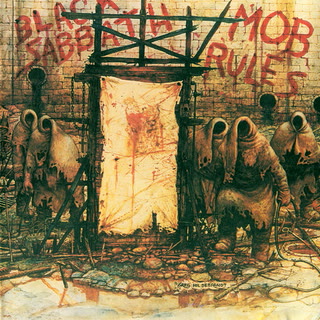
Main tuning: E♭ Standard at concert pitch (+3.7 cents), measured on the German Vertigo CD.
The second Dio album, with Vinny Appice on drums, stays in E♭ Standard. Country Girl sits 14 cents sharp (A ≈ 443.5); everything else is within 9 cents of A 440, apart from the short instrumental E5150.
With TuneLit: E♭ Standard at A 440, Country Girl at A ≈ 443.5.
Main tuning: D Standard about 4 cents sharp (A ≈ 441), measured on the German Vertigo CD.
The one album with Ian Gillan is tabbed a whole step down, lower than the Dio records, and the audio check agrees with D on Trashed, Digital Bitch, Born Again, Hot Line and Keep It Warm. Two songs differ in the tabs. Zero the Hero is tabbed in E♭ Standard in two separate tabs, and the audio check agrees with E♭. Disturbing the Priest has one tab, in Drop D at E Standard pitch; the check hears a low D but cannot tell Drop D from D Standard. Hot Line and Keep It Warm sit 14 cents sharp. The album's muffled sound is famous, but its pitch is steady: five CD editions agree within about 3 cents.
With TuneLit: D Standard at A ≈ 441, E♭ Standard for Zero the Hero, Drop D for Disturbing the Priest.
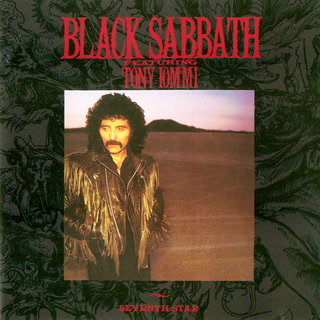
Main tuning: E♭ Standard about 42 cents flat (A ≈ 429.4), between two notes, measured on the German Vertigo CD.
Planned as an Iommi solo album and released as "Black Sabbath featuring Tony Iommi", with Glenn Hughes singing. This is the hardest album of the catalogue to tune for. The whole record sits about 42 cents under the A 440 grid, almost exactly halfway between D and E♭, on all five CD editions in the library. The tabs split along the same line: In for the Kill, No Stranger to Love, Turn to Stone, Danger Zone and Angry Heart are tabbed in D Standard, the title track and Heart Like a Wheel in E♭, In Memory... in E.
TuneLit's check from the audio rules out D on every one of the D-tabbed songs and agrees with E♭ on all eight songs with guitar. E♭ also makes the bass's most frequent notes open strings, while in D they would sit on the first fret. So the album is listed as E♭ Standard at A ≈ 429. The pages still offer D Standard at the same reference as the other reading, because the measurement alone cannot settle it. In for the Kill sits another 12 cents lower (A ≈ 426).
With TuneLit: E♭ Standard at A ≈ 429, or D Standard at the same reference if your ear prefers it. Both buttons are on the album page.
Main tuning: E♭ Standard about 8 cents sharp (A ≈ 441.9), measured on the German Vertigo CD.
The first album with Tony Martin, begun with Ray Gillen in Montserrat and finished in London. E♭ Standard throughout, and the audio check agrees. Scarlet Pimpernel, a short acoustic piece, is the exception: its tabs disagree (C♯ Standard on Songsterr, E Standard on Ultimate Guitar), and the audio check agrees with C♯. It sits 8 cents flat, 16 cents under the album.
With TuneLit: E♭ Standard at A ≈ 441.9, C♯ Standard for Scarlet Pimpernel.
Main tuning: E♭ Standard about 11 cents sharp (A ≈ 442.7), measured on the UK I.R.S. CD.
E♭ Standard again, with Cozy Powell on drums, and the album holds the strangest song of the catalogue. When Death Calls, with a guest solo by Brian May, sits about 44 cents flat (A ≈ 429), 55 cents under the rest of the album. All six CD editions read it the same, and the audio check hears the low E♭ at that flat pitch, not a semitone higher. Call of the Wild sits at concert pitch.
With TuneLit: E♭ Standard at A ≈ 442.7, at A ≈ 429 for When Death Calls.
Main tuning: E♭ Standard about 6 cents sharp (A ≈ 441.5), measured on the Dutch I.R.S. CD.
The Norse-themed album is in E♭ Standard, every song within 8 cents of A 441.5. The ballad Feels Good to Me is the one song tabbed in E Standard; the audio check leans towards E♭, but the bass reaches below the guitars there, which breaks the check's assumption, so the tab stands.
With TuneLit: E♭ Standard at A ≈ 441.5; E Standard for Feels Good to Me, or E♭ if the chords sound a semitone off.
Main tuning: E♭ Standard at concert pitch (+1.6 cents), measured on the Dutch I.R.S. CD.
Ronnie James Dio's return, recorded at Rockfield in Wales, is the most even album in the catalogue: every song sits within 6 cents of A 440. Too Late's main tab is in E Standard, but a second tab is in E♭, and the audio check hears E♭, like the rest of the album.
With TuneLit: E♭ Standard at A 440 for every song.
Main tuning: E♭ Standard about 6 cents sharp (A ≈ 441.6), measured on the Dutch I.R.S. CD.
E♭ Standard with Tony Martin back on vocals. Evil Eye has a single tab, in E Standard; the audio check leans towards E♭ but no source names it, so the tab stands. Try both.
Main tuning: E♭ Standard at concert pitch (+3.5 cents), measured on the Dutch I.R.S. CD.
Most songs are tabbed in E♭ Standard. The title track's one tab is in C Standard, two whole steps down, and the audio check agrees with C. The Illusion of Power and Shaking Off the Chains sit 7 to 8 cents flat.
With TuneLit: E♭ Standard at A 440, C Standard for Forbidden.
Main tuning: E♭ Standard about 6 cents sharp (A ≈ 441.4), measured on the first disc of the 2013 deluxe CD.
The reunion with Ozzy Osbourne and Geezer Butler, produced by Rick Rubin, went back to E♭ Standard, not the C♯ of the early 1970s: the German site Bonedo's workshop says God Is Dead? needs a guitar a half step down, and every song is tabbed there. God Is Dead? itself sits at concert pitch. Zeitgeist, the acoustic song with hand drums that reviewers compared to Planet Caravan, is 24 cents sharp (A ≈ 446.2), a quarter of a semitone above the rest. The US and Japanese editions measure exactly the same.
With TuneLit: E♭ Standard at A ≈ 441.4, Zeitgeist at A ≈ 446.2.
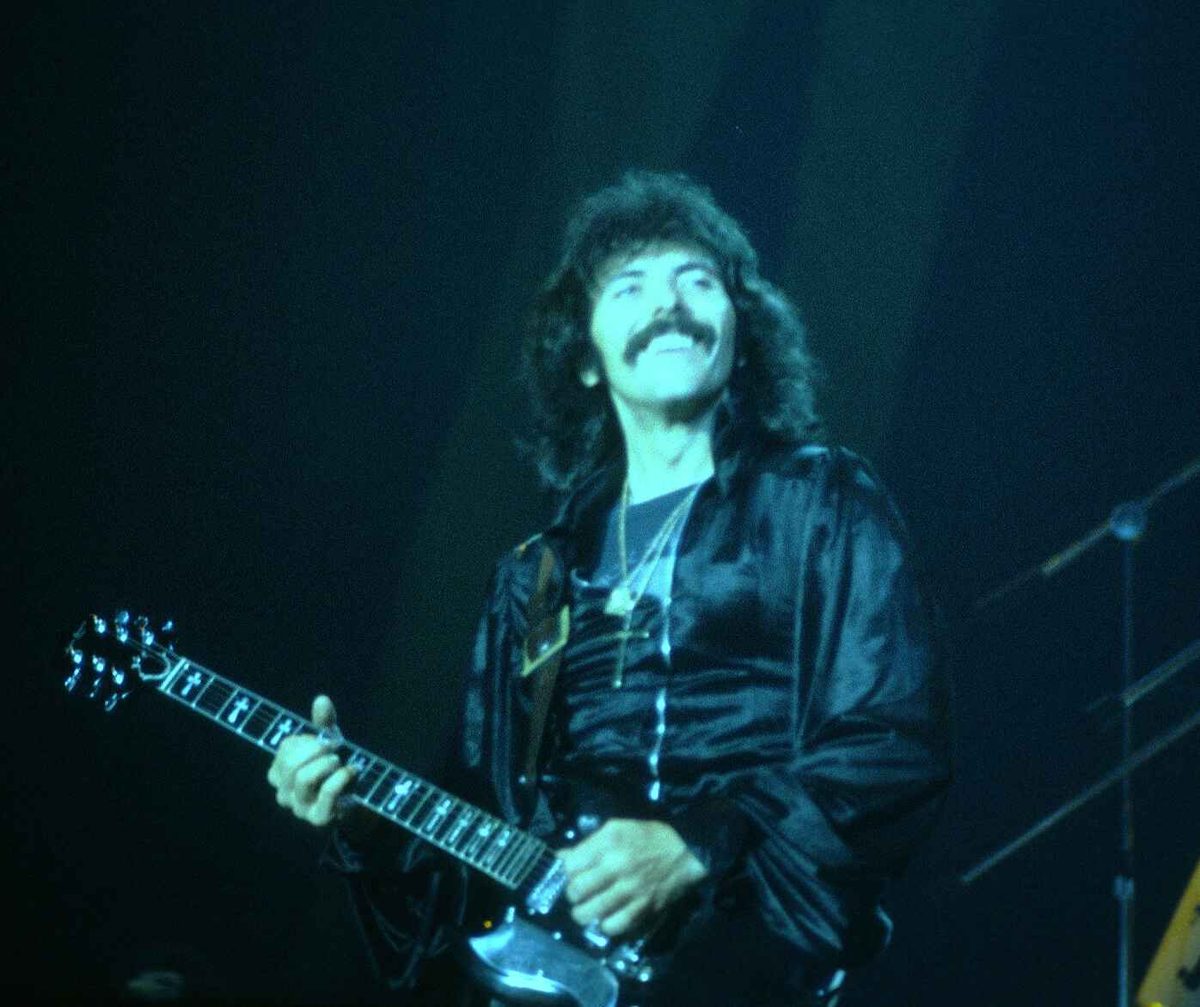
Tony Iommi with his Gibson SG on stage at the New Haven Coliseum, Connecticut, in September 1978.
The story
Songs worth a second listen
The measurement is reliable within a few cents, but some songs leave a question that only a guitar against the record can answer:
Seventh Star, the whole album: E♭ or D at A ≈ 429. The audio check prefers E♭.
Hand of Doom (Paranoid): its weak reading points near concert pitch, not the album's +25 cents.
Wheels of Confusion and Cornucopia (Vol. 4): low-confidence readings 27 cents under and 22 cents over the album value.
Feels Good to Me (Tyr) and Evil Eye (Cross Purposes): tabbed in E Standard, but the audio check leans towards E♭.
Disturbing the Priest (Born Again): Drop D or D Standard.
The story
Playing along
Tune the whole band. Butler tuned his bass down with Iommi. A bass in standard tuning cannot reach the low notes of a C♯ record, so tune the bass down by the same amount.
Mind the string tension. Three semitones down is a big drop. Iommi used very light strings because of his injury, but most players want a heavier set for C♯ Standard, so the low strings do not flap. Check the intonation after a change.
Use the reference A for the odd albums. For the debut (A ≈ 433.6), Paranoid (A ≈ 446.3) and Seventh Star (A ≈ 429.4), the Tune buttons set the reference for you. A quarter of a semitone is easily enough to make power chords sound sour against the record.
Watch the acoustic pieces. Orchid, Laguna Sunrise, Fluff, Don't Start (Too Late) and Scarlet Pimpernel often use a different tuning from the electric songs around them. Check each album page before you start.
Live versions are lower. Live recordings and live tabs of the early songs usually sit a half step or a whole step under the studio records. TuneLit's buttons follow the studio CDs.
Questions
What tuning does Black Sabbath use?
Mostly E♭ Standard: 10 of 19 albums. Black Sabbath, Paranoid, Technical Ecstasy and Never Say Die! are in E Standard; Master of Reality, Vol. 4, Sabbath Bloody Sabbath and Sabotage are in C♯ Standard; Born Again is in D Standard. Many albums also have songs in other tunings, and the album pages list them song by song.
Why does Black Sabbath sound out of tune when I play along?
Some records are not at concert pitch. Seventh Star sits about 42 cents flat (A ≈ 429); Black Sabbath sits about 25 cents flat (A ≈ 434); Paranoid sits about 25 cents sharp (A ≈ 446). A guitar tuned to A 440 clashes with them. Every Tune button on these pages sets the measured pitch for you.
How did TuneLit measure Black Sabbath's records?
We played original CDs and LPs through TuneLit's pitch analysis: the strongest notes of each song are compared with the A 440 grid, which gives the offset in cents. That cannot tell the semitone, so the tuning name comes from interviews, the press and tabs, and for 5 songs from TuneLit's semitone check from the audio, backed by a tab or source. The audio is never stored or published.
Colors and font
Font
Colors
Menu
Install the app
Android (Chrome): menu ⋮ → Install app or Add to Home screen.
Computer (Chrome, Edge): the install icon at the right end of the address bar.
iPhone: Safari → Share → Add to Home Screen.
It opens full screen and keeps tuning with no connection.