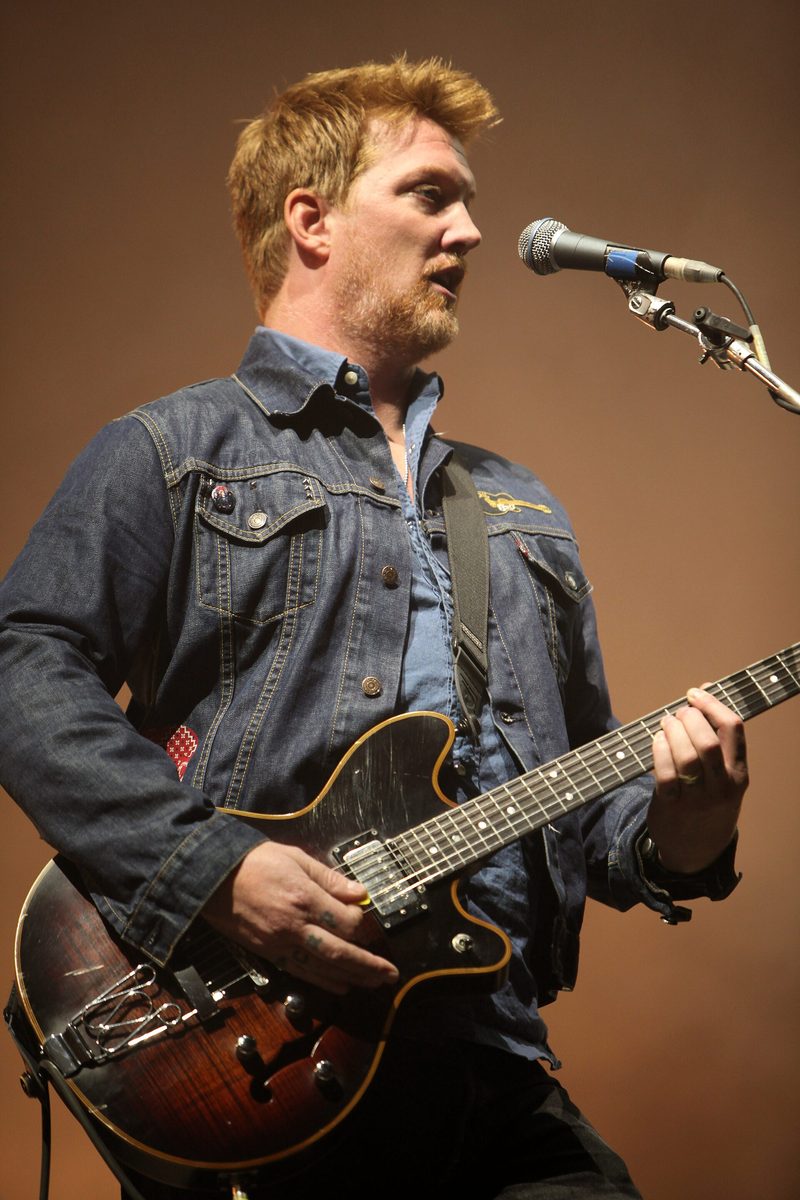
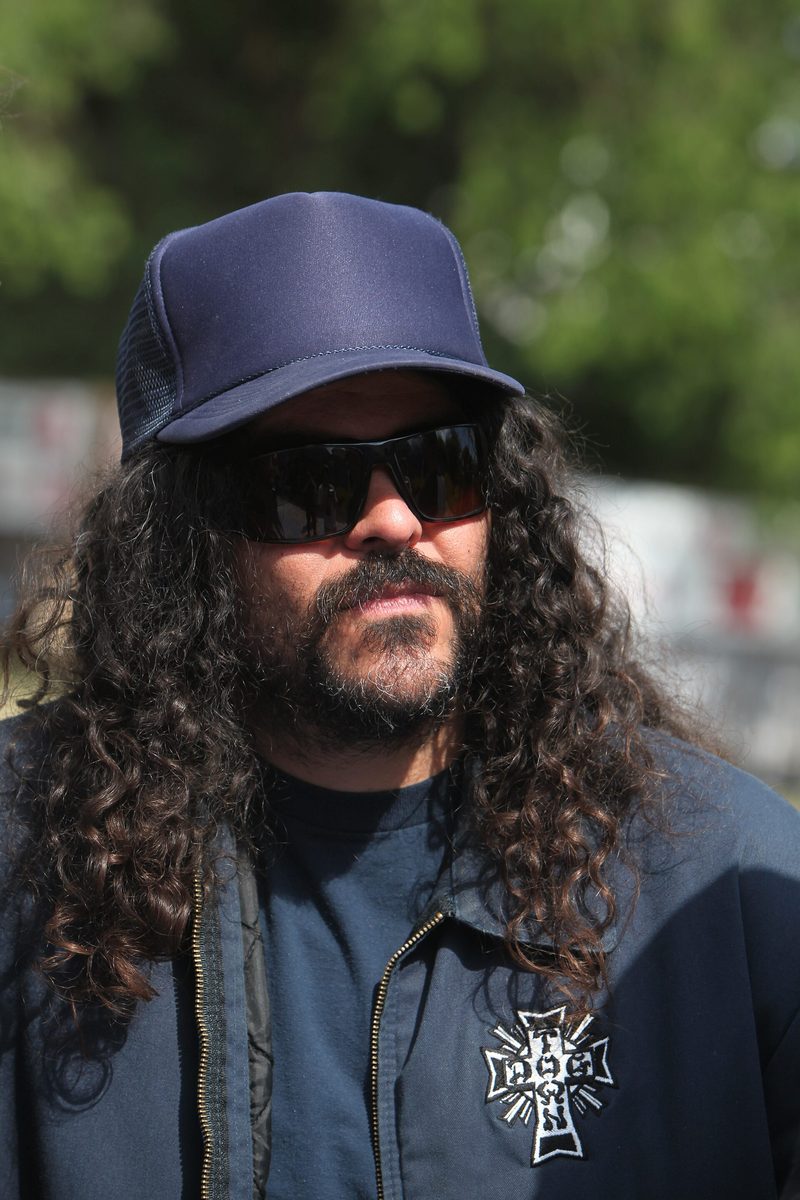
Josh Homme, Kyuss's guitarist, playing with Queens of the Stone Age at the Eurockéennes festival in Belfort, France, on 2 July 2011.
In short
How Kyuss tunes
Kyuss tuned low before almost anyone else. Josh Homme put his guitar two whole steps down, to C Standard (C F B♭ E♭ G C), and played it through bass cabinets, and the bass went down with him.
Read more
Every tab of Blues for the Red Sun, Welcome to Sky Valley and ...And the Circus Leaves Town agrees on C Standard; the exceptions are the acoustic Capsized (E♭ Standard) and Space Cadet (C♯ Standard). The early records are another story: Scott Reeder, who joined in 1992, said the band had no tuner before him. TuneLit measured the owner's copies, and the 1990 Sons of Kyuss EP sits in C♯ Standard about 40 cents flat (A ≈ 430), while Wretch mixes songs in C, C♯ and B around the same pitch. Blues for the Red Sun is about 19 cents flat (A ≈ 435), with songs scattered from −35 to +7 cents. Welcome to Sky Valley and ...And the Circus Leaves Town sit steady, about 8 cents sharp (A ≈ 442).
Play Green Machine or Gardenia on a guitar in normal tuning and the riffs come out thin and a long way too high. Kyuss tuned low years before it was common. Josh Homme dropped every string two whole steps, to C Standard, and played through bass cabinets instead of guitar speakers, and the bass went down with him. That is the sound that people later called stoner rock or desert rock, and it starts with the tuning.
There is a second, less obvious part to the story. In the band's first years there was no tuner. Bassist Scott Reeder, who joined in 1992, told The Virginian-Pilot in 1994 that before his time the band had no guitar tuners, and that its tuning kept drifting lower and lower until it became part of the sound. TuneLit measured the owner's copies of all five records, from the 1990 Sons of Kyuss EP to ...And the Circus Leaves Town, and the numbers show exactly that: the early records sit far off concert pitch and not even on one note, while the last two sit steady in C, a few cents sharp.
This page explains the tuning, goes through every record and the songs that do something different, and shows what the measurements found. The album list above opens each record, where every song has a Tune button that sets the tuner exactly as listed, offset included.
Popular songs
How to tune for Kyuss's best-known songs
Each song has its own page: the exact tuning, the record's pitch, how to get there string by string, and how to move the record into your own tuning.
C Standard keeps the shape of normal tuning and lowers every string by two whole steps (a major third). From low to high: C F B♭ E♭ G C, written C F A♯ D♯ G C in many tabs. Every chord shape and fingering stays the same; everything simply sounds four semitones lower. An open E5 power chord becomes C5, and a riff that would sit on the open low E in a normal tab sits on the open low C here.
To get there from normal tuning, lower each string by four semitones: String 6 from E to C, String 5 from A to F, String 4 from D to B♭, String 3 from G to E♭, String 2 from B to G and String 1 from E to C. The bass does the same, C F B♭ E♭ from low to high, and that is how the Songsterr tabs of Blues for the Red Sun, Welcome to Sky Valley and ...And the Circus Leaves Town write Nick Oliveri's and Scott Reeder's bass.
Homme has said he wanted a sound of his own, and that when he started there was nobody to copy: he knew of no one tuning down to B or C (a 2024 interview with Tom Power, reported by Guitar.com). Gear histories of his Kyuss years tell the rest. His main guitar was a 1984 Ovation Ultra GP, an unusual electric whose bright pickups still cut through at that pitch. On Blues for the Red Sun it went into a Marshall JCM900, later into a Tube Works MosValve head, and in both cases into an Ampeg 8×10 bass cabinet, which handled the low tuning better than a guitar cabinet. According to Mixdown's history of his gear, the drive came from the amp rather than a fuzz pedal.
In TuneLit, pick C Standard, or press a Tune button on an album page: the buttons carry the offset each record needs, such as "C Standard +8 ¢" for Welcome to Sky Valley.
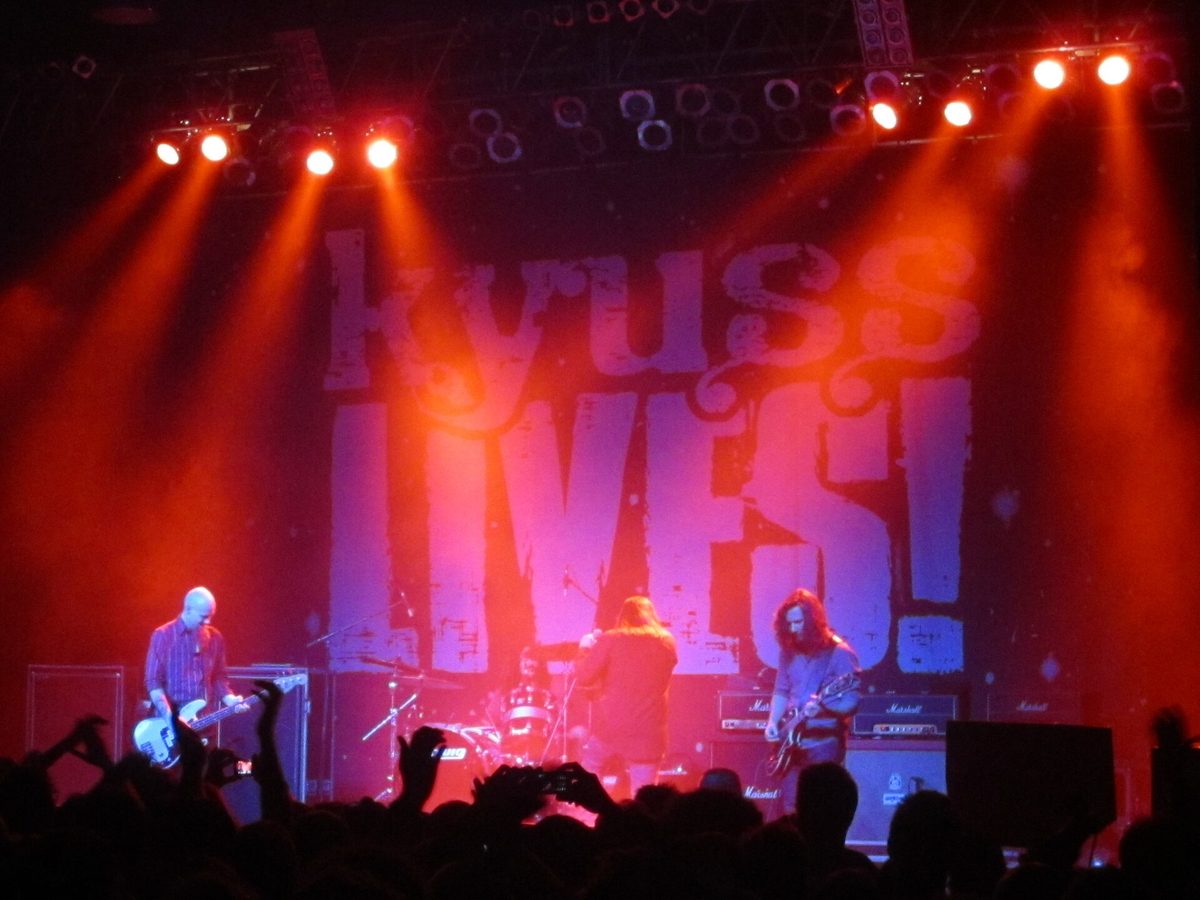
Kyuss Lives!, the 2011 reunion of John Garcia, Brant Bjork and Nick Oliveri with guitarist Bruno Fevery, on stage in Budapest on 20 March 2011.
The story
No tuner: the early records
Reeder's remark is easy to read as a joke, but the records bear it out. With no tuner, a band tunes to itself: the guitar, the bass and the singer agree with each other, and where that lands against A 440 is chance. TuneLit's measurements of the 1990 and 1991 records show it clearly.
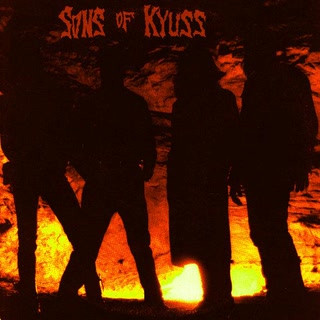
The Sons of Kyuss EP sits in C♯ Standard, about 40 cents flat (A ≈ 430): halfway between C and C♯. A guitar in C Standard sounds 60 cents too low against it, and one in C♯ Standard 40 cents too high. Two tabs of the EP call it C♯, one says C and one E♭; TuneLit's semitone check from the audio hears the open low string on C♯ on six of the eight songs.
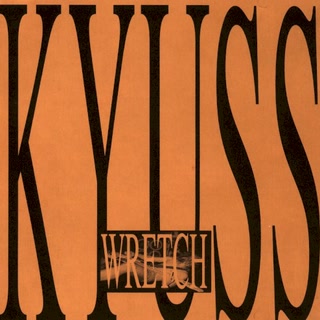
Wretch, a year later, is a patchwork. Most tabs say C Standard, and the album's main pitch is again about 40 cents flat (A ≈ 430). But Deadly Kiss and Black Widow are the EP's recordings, still in C♯, Isolation was recorded again in C♯, Big Bikes sits on a low C♯ as well, and Katzenjammer has gone down to B. Three more songs read about a third of a semitone lower still.
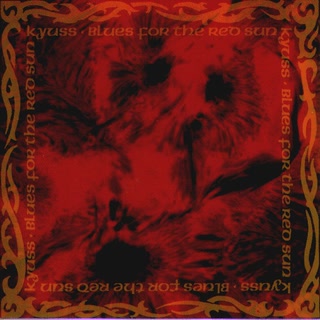
Blues for the Red Sun (1992) is in C Standard, apart from one short acoustic piece, but about 19 cents flat overall (A ≈ 435), with single songs scattered from about 35 cents flat (Thong Song) to about 7 cents sharp (50 Million Year Trip).
From Welcome to Sky Valley on, with Reeder in the band, the pitch steadies: both Elektra albums sit about 8 cents sharp (A ≈ 442), and nearly every song agrees within a few cents.
What it means for you: on the early records a guitar tuned to plain C Standard will sound clearly out against the record, often by more than a quarter of a semitone. The Tune buttons carry the measured offset, so press the button for the song rather than the album when a song has its own setting.
The debut EP, recorded in 1989 at Headway Studios in Westminster, California, and released in April 1990 under the name Sons of Kyuss: eight songs, pressed on vinyl in 500 copies. John Garcia sings, Homme plays guitar, Chris Cockrell plays bass and Brant Bjork drums. The owner's copy is a later CD issue of the EP.
The tabs do not agree. Songsterr's tabs of Deadly Kiss and Isolation Desolation are in C♯ Standard, with Cockrell's bass in C♯ too; the one tab of Happy Birthday is in C Standard, and the one of Katzenjammer in E♭ Standard. TuneLit's semitone check from the audio settles most of it: on Deadly Kiss, King, Isolation Desolation, Love Has Passed Me By, Happy Birthday and Katzenjammer it hears the open low string on C♯ and rules out the C below it. On Isolation Desolation C♯ makes up almost half of the low notes the analysis hears, and the C under it almost none.
TuneLit measured the CD about 40 ¢ flat (A ≈ 430), and every song but two sits within about 7 cents of that. Isolation Desolation reads about 28 ¢ flat (A ≈ 432.8) and has its own Tune button. Black Widow is hard to read, but its low notes point to an open string about 70 cents under C♯, a third of a semitone below the rest; it keeps the album's setting, so check it by ear. On Window of Souls the open low string almost never sounds, so the check cannot tell; it stays with the album.
To play along: tune to C♯ Standard (C♯ F♯ B E G♯ C♯) and lower everything a further 40 cents, or simply press the album's Tune button, which sets C♯ Standard −40 ¢.
The first album as Kyuss, on Dali, recorded at Headway and at Master Control in Burbank with Nick Oliveri on bass, except two songs carried over from the EP. It is the hardest Kyuss record to tune to, because it was not made in one tuning.
What the tabs say: C Standard for Hwy 74, Love Has Passed Me By, Isolation, I'm Not and Stage III (Songsterr and Ultimate Guitar), with Son of a Bitch split between C (Ultimate Guitar) and B (Songsterr), and The Law tabbed three different ways.
What TuneLit measured: the album's main pitch is about 40 ¢ flat (A ≈ 430), the same as the EP. Love Has Passed Me By, Son of a Bitch and Isolation all read there. The songs then split up:
Deadly Kiss and Black Widow are the EP's recordings with Chris Cockrell (the Wretch liner notes say so), so they keep the EP's C♯ Standard. Deadly Kiss reads about 45 ¢ flat on this CD and 42 ¢ flat on the EP's, the same recording in two masterings.
Isolation, recorded again for Wretch, is tabbed in C with the riff on the open low string. On the record that string sounds on C♯, about 39 ¢ flat, and the C under it hardly ever: the same tuning as the EP version. It is listed in C♯ Standard.
Big Bikes, Brant Bjork's song, is tabbed in Drop C by one transcriber and C♯ Standard by Songsterr's machine-made tab. Both build the riff on the open low string, and the record has that note on C♯, about 27 ¢ flat. It is listed in Drop C♯.
Katzenjammer was recorded again for Wretch, and this time the open low string sounds on B. The only tab of this version, machine-made, says B Standard too. Its pitch reading is weak, so it takes the album's −40 ¢.
Hwy 74, The Law and I'm Not read about 75 cents under C, a third of a semitone below the album's setting and the same as B Standard about 25 cents sharp. On The Law the check hears B as the lowest note, almost half of all the low notes, and on Hwy 74 the riff note the tabs put on the open String 5 (F in C Standard) sounds about three quarters of a semitone under F, much nearer to E. None of the three readings is confident enough for a value of its own, so they keep the album's C Standard −40 ¢; if they sound out, try B Standard +25 ¢.
Stage III reads near concert pitch. Its riff sits on the first fret, C♯, which the check mistakes for an open string; the tab's C Standard stands.
To play along: start with the album's Tune button (C Standard −40 ¢), then switch to a song's own button where it has one. For The Law and Hwy 74, compare C Standard −40 ¢ with B Standard +25 ¢ by ear.
Chris Goss produced the second album at Sound City in Van Nuys, with Joe Barresi engineering: Oliveri's last record with the band. Everything is in C Standard, on every tab: Thumb, Green Machine, Molten Universe, 50 Million Year Trip (Downside Up), Thong Song, Apothecaries' Weight, Writhe, Allen's Wrench, Mondo Generator and the rest. Brant Bjork wrote Green Machine and 50 Million Year Trip, Oliveri wrote and sings Mondo Generator, and Homme sings Writhe.
The one exception is Capsized, a 55-second acoustic piece. Both Songsterr tabs put its acoustic guitars in E♭ Standard, a major third above the rest of the album. TuneLit measured it about 12 ¢ sharp (A ≈ 443), a long way from the album's −19 ¢, and it has its own Tune button.
TuneLit measured the album about 19 ¢ flat (A ≈ 435.2), but this is a median of songs that do not agree. Thong Song reads about 35 ¢ flat; Caterpillar March, 800 and Mondo Generator 23 to 27 ¢ flat; Thumb, Green Machine and Freedom Run within about 3 ¢ of concert pitch; and 50 Million Year Trip about 7 ¢ sharp (A ≈ 441.8), the one song with a reading clear enough for a Tune button of its own. The others are not confident enough to leave the album's value, so if Thumb or Green Machine sound a little flat with the album's setting, try plain C Standard at A 440. The check from the audio confirms C as the lowest string wherever the songs play it, Green Machine and Apothecaries' Weight most clearly.
The closing Yeah is four seconds of speech and has no guitar to tune to.
Recorded at Sound City in early 1993 with Goss, Reeder's first album on bass and Bjork's last on drums; released by Elektra in June 1994. The first CD held the ten songs in three long tracks; TuneLit measured a copy with the songs split into ten tracks.
C Standard on every tab, for Gardenia, Asteroid, Supa Scoopa and Mighty Scoop, 100°, Demon Cleaner, Odyssey, Conan Troutman, N.O. and Whitewater, with the bass in C as well. The exception is Space Cadet, the long acoustic piece with Reeder on acoustic bass: both Songsterr tabs put the guitars in C♯ Standard, a half step above the rest, and Ultimate Guitar's tab says to tune down one and a half steps. The check from the audio agrees with C♯.
TuneLit measured the album about 8 ¢ sharp (A ≈ 442.1), and most songs sit within a few cents of it: Gardenia about 13 ¢ sharp, Demon Cleaner, Odyssey and N.O. at 8. Whitewater, the closer, sits at concert pitch (about 1 ¢ flat) and has its own Tune button. Space Cadet reads about 16 ¢ sharp, just under the 8-cent difference that would earn it a value of its own, so it shares the album's +8 ¢.
The check agrees with the listed tuning on nine of the ten songs. On Supa Scoopa and Mighty Scoop it points a half step up, but the tabs never play the open low string there (the riff's root is the open String 5, F), which is exactly when the check is known to go wrong.
The last album, recorded at Sound City in March 1995 with Goss and with Alfredo Hernández on drums. Scott Reeder wrote Thee Ol' Boozeroony, and Catamaran is a song by Yawning Man, Hernández's earlier band. The last track, Spaceship Landing, runs on into two hidden pieces, M'Deea and Day One, which are not listed here.
C Standard on every tab, guitar and bass, and nothing that differs. TuneLit measured the CD about 8 ¢ sharp (A ≈ 442), the most consistent record of the five: Size Queen, Catamaran, Spaceship Landing, Jumbo Blimp Jumbo and Phototropic all read between 5 and 12 ¢ sharp. Hurricane, the fast opener, sits at concert pitch (about 2 ¢ flat) and has its own Tune button.
On Tangy Zizzle the check points to C♯, but the tab explains why: the riff sits on the first and fourth frets of the low string, C♯ and E, and those are exactly the notes the record leans on, while the open C rarely sounds. It stays in C Standard. Hurricane's riff likewise sits around A, with the bass on a low A, and El Rodeo and Phototropic are among the songs where the check hears the open C most clearly.
The story
The other releases
The library also holds the 1997 split EP with Queens of the Stone Age, the One Inch Man EP, the Demon Cleaner and Gardenia singles and a live recording from 1995. They are not measured and not listed here. The Songsterr tabs of their songs, Into the Void, Fatso Forgotso, Un Sandpiper, Mudfly and Shine among them, use C Standard too.
The story
What the semitone check found
TuneLit's check from the audio asks, song by song, whether the open low string really sits on the note the tabs name, by counting how often each low note sounds and whether the note just under it ever does. On Kyuss it agrees with the listed tuning on 41 of the 53 measured songs.
It moved two songs, each with a second hint pointing the same way: Isolation and Big Bikes on Wretch, from the tabs' C to C♯. Their tabs build the riffs on the open low string, and on the record that string sounds on C♯; for Isolation the EP version's tabs say C♯ as well, for Big Bikes Songsterr's machine-made tab. The check also confirms the EP's C♯, which Deadly Kiss and Black Widow keep on Wretch, and the B Standard of Katzenjammer's only tab.
It disagreed, or could not tell, on a dozen songs where the method's premise fails: songs whose riffs never use the open low string (Supa Scoopa and Mighty Scoop, Tangy Zizzle, Stage III, Window of Souls, Capsized) and songs with few low notes (Son of a Bitch, Caterpillar March, Allen's Wrench, Mondo Generator, Gloria Lewis, Hurricane, 50 Million Year Trip). None of them moved. The songs to check by ear are listed in the album notes: The Law, Hwy 74 and I'm Not on Wretch, and Black Widow on the EP.
John Garcia, the singer on every Kyuss record, at the Eurockéennes festival in Belfort, France, where he played with Kyuss Lives! on 2 July 2011.
Evidence
How sure are these numbers?
Every tuning on the album pages carries a status label. Most read Measured by TuneLit, because the offset comes from our own analysis of the record. The tuning name still rests on other kinds of evidence:
Widely reported: C Standard for the three Goss-produced albums: Wikipedia, gear histories of Homme's Kyuss years and every tab agree.
Community: tabs only, mostly Songsterr, cross-checked with Ultimate Guitar and other tab sites where they answer. Capsized, Space Cadet, Wretch and the songs on it that differ rest here. Several Wretch tabs are machine-made, which the notes say.
Disputed: the sources disagree, as on the Sons of Kyuss EP, where the tabs name C, C♯ and E♭ and the check from the audio settles on C♯.
Measured by TuneLit: our analysis of a recording gives the offset in cents. Only numbers are published; the audio is never stored or shared.
The library holds MP3 copies of the CDs. The early masters were not made at a fixed pitch, so a different pressing or a remaster may read a few cents apart; the semitone and the large offsets will not change.
The story
Tips for playing along
Strings first. C Standard on a normal 25.5-inch guitar with 10–46 strings is floppy: the low C buzzes and bends sharp. Most players go up to 12–56 or 13–56, or a heavy-bottom set, and many set up a guitar just for C. On a shorter Gibson-scale guitar go one step heavier still.
The bass. A four-string bass in C needs heavier strings too; a common trick is to use the low B string of a five-string set for the C. On Space Cadet the tab writes Reeder's acoustic bass in E♭ Standard.
Tune String 6 first and check it against the record's opening riff: on Green Machine, Gardenia and Odyssey the open low C is the note the songs keep coming back to.
Keep the offset on the early records. Forty cents is close to half a semitone: on the EP and Wretch a guitar at A 440 is not slightly off, it is between two notes. Use the Tune buttons.
Tabs in E Standard. Some versions of Demon Cleaner and Freedom Run are written in E Standard. Keep the frets and tune down two whole steps, and the tab and the record line up.
Not your tuning? TuneLit's Play along can move a recording into the tuning your guitar is already in, so you can play Kyuss in E Standard without retuning.
If a song still sounds a touch off, move the reference by a hertz or so; around 440 Hz, one hertz is about 4 cents.
Brant Bjork, Kyuss's drummer on its first three albums and the writer of Green Machine and Gardenia, at the Eurockéennes festival in Belfort, France, on 2 July 2011.
Cheat sheet
Quick reference
Default, 1992–1995: C Standard (C F B♭ E♭ G C), bass C F B♭ E♭.
Sons of Kyuss (1990): C♯ Standard −40 ¢ (A ≈ 430); Isolation Desolation −28 ¢.
Wretch (1991): C Standard −40 ¢ (A ≈ 430); Deadly Kiss, Black Widow and Isolation in C♯ Standard −40 ¢; Big Bikes in Drop C♯ −40 ¢; Katzenjammer in B Standard −40 ¢; The Law, Hwy 74 and I'm Not possibly B Standard +25 ¢ (check by ear).
Blues for the Red Sun (1992): C Standard −19 ¢ (A ≈ 435); 50 Million Year Trip +7 ¢; Capsized in E♭ Standard +12 ¢.
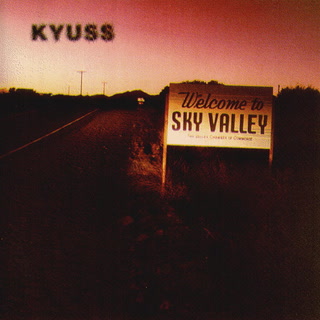
Welcome to Sky Valley (1994): C Standard +8 ¢ (A ≈ 442); Space Cadet in C♯ Standard +8 ¢; Whitewater at A 440.
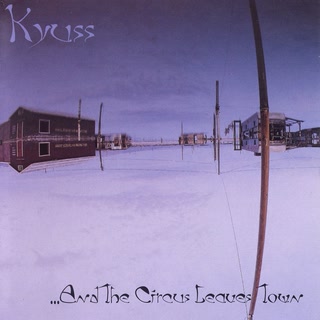
...And the Circus Leaves Town (1995): C Standard +8 ¢ (A ≈ 442); Hurricane at A 440.
Questions
What tuning does Kyuss use?
Mostly C Standard: 4 of 5 albums. Sons of Kyuss is in C♯ Standard. Many albums also have songs in other tunings, and the album pages list them song by song.
Why does Kyuss sound out of tune when I play along?
Some records are not at concert pitch. Wretch sits about 40 cents flat (A ≈ 430); Sons of Kyuss sits about 40 cents flat (A ≈ 430); Blues for the Red Sun sits about 19 cents flat (A ≈ 435). A guitar tuned to A 440 clashes with them. Every Tune button on these pages sets the measured pitch for you.
How did TuneLit measure Kyuss's records?
We played original CDs and LPs through TuneLit's pitch analysis: the strongest notes of each song are compared with the A 440 grid, which gives the offset in cents. That cannot tell the semitone, so the tuning name comes from interviews, the press and tabs, and for 2 songs from TuneLit's semitone check from the audio, backed by a tab or source. The audio is never stored or published.
Colors and font
Font
Colors
Menu
Install the app
Android (Chrome): menu ⋮ → Install app or Add to Home screen.
Computer (Chrome, Edge): the install icon at the right end of the address bar.
iPhone: Safari → Share → Add to Home Screen.
It opens full screen and keeps tuning with no connection.