Brian "Head" Welch with an Ibanez 7-string at Rock im Park, Nuremberg, Germany, on 9 June 2013, the year he rejoined Korn.
In short
How Korn tunes
Korn have recorded every studio album on two 7-string guitars tuned a whole step down, A D G C F A D, with Fieldy's 5-string bass tuned to A D G C F; Ibanez shipped Head and Munky's K7 signature guitar in that tuning. A few songs leave it: Alone I Break and, by its Songsterr tab, Counting on Me sit half a step lower in G♯, Let's Do This Now half a step higher in B♭, Lullaby for a Sadist a whole step higher in 7-string standard tuning, and Bleeding Out drops the low string to G.
Read more
TuneLit measured all fourteen studio albums from the owner's CDs. The 1994 debut is about 17 cents sharp (A ≈ 444), most albums up to Untitled (2007) sit 4 to 14 cents sharp, and from Korn III (2010) on every record is at concert pitch. TuneLit's check from the audio confirms the G♯ of Alone I Break and the low B of Lullaby for a Sadist.
Korn have used one tuning for more than thirty years. Both guitars are 7-strings tuned a whole step down, A D G C F A D from the lowest string, and Fieldy's 5-string bass is tuned down with them to A D G C F. Tune that way and you can play along with almost every song from the 1994 debut to Requiem (2022).
So the tuning name is the easy part. The interesting part is the pitch of the records themselves. TuneLit measured all fourteen studio albums from the owner's CDs, and Korn's records are not all at A 440: the debut sits about 17 cents sharp, and most albums up to Untitled (2007) sit between 4 and 14 cents sharp, Issues being the exception. From Korn III (2010) on, every record sits at concert pitch. A handful of songs also leave the home tuning: one half a step lower, one half a step higher, one a whole step higher, and one with the low string dropped.
This page goes through the tuning string by string, then every studio album: what the tabs say, what TuneLit measured, the songs that break the pattern, and how to tune along. Each album page lists every song with a Tune button that opens the tuner in exactly that tuning, offset included.
Popular songs
How to tune for Korn's best-known songs
Each song has its own page: the exact tuning, the record's pitch, how to get there string by string, and how to move the record into your own tuning.
Alone I Break (G♯), Counting on Me (G♯), Let's Do This Now (B♭)
2005–2007
See You on the Other Side, Untitled
A Standard
about 14 and 6 ¢ sharp
none
2010–2022
Korn III to Requiem
A Standard
at concert pitch
Bleeding Out (Drop G), Lullaby for a Sadist (B Standard)
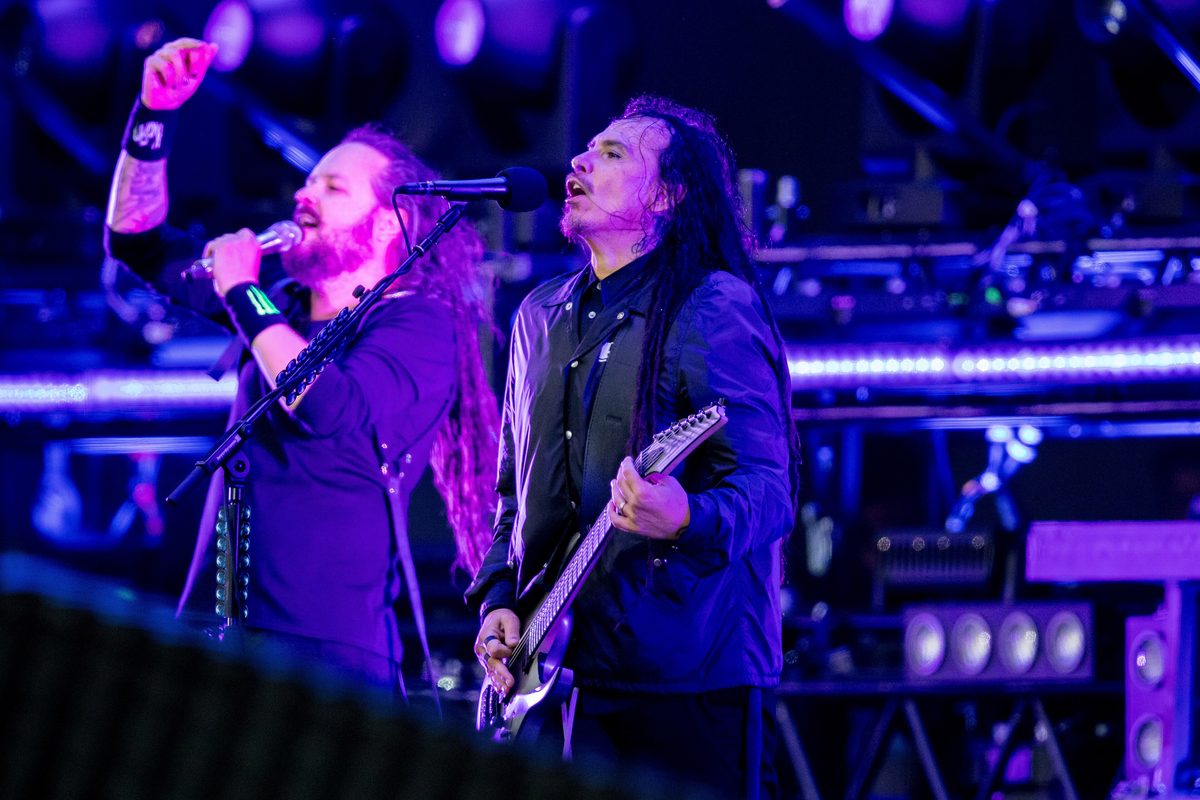
Jonathan Davis and James "Munky" Shaffer, playing his 7-string guitar, on stage at Rock am Ring, Nürburgring, Germany, on 5 June 2022.
The story
The Korn tuning, string by string
A 7-string guitar in standard tuning is B E A D G B E: a normal six-string with one more string, a low B, under the E. Korn take that and tune every string down a whole step:
String
7 (lowest)
6
5
4
3
2
1 (highest)
7-string standard
B
E
A
D
G
B
E
Korn (A Standard)
A
D
G
C
F
A
D
Tab sites call this "7-string A Standard", "7-string one step down" or simply "Korn tuning". All three are the same notes. The top six strings are a six-string guitar in D Standard (D G C F A D); the seventh string adds a low A a fourth below that, the same note as the open A string of a bass guitar. When Ibanez built Head and Munky's K7 signature model in 2001, it left the factory in exactly this tuning.
Fieldy's bass follows the guitars. He plays a 5-string, normally B E A D G, tuned down a whole step to A D G C F, so its low A sits an octave under the guitars' low A. His signature Ibanez K5 is described with the same tuning.
That is the whole system, and it is remarkably stable: the tabs of almost every song on all fourteen studio albums use it.
The story
Why seven strings, and why so low
Korn did not invent the 7-string guitar, but they made it a staple of heavy music. Head has told the story in interviews: Munky was the Steve Vai fan, picked up a 7-string because of Vai's Ibanez Universe, and invited Head to jam on one. Both have played Ibanez 7-strings ever since, from the Universe of the early years to the K7 of 2001 and later signature models, Munky's Apex and Head's Komrad.
The low string is the point. Most Korn riffs live on the bottom two or three strings: the open low A, the D above it, notes a fret or two up, dissonant intervals and lots of muted, percussive picking, with the high strings saved for eerie clean lines, harmonics and effects. Tuning a whole step down makes the strings slacker, which adds to the loose, growling attack, and puts the open A at 55 Hz, deep in bass territory. In a 2016 interview about The Serenity of Suffering, Head said the band first wrote on 8-string guitars, then moved the songs they kept back to 7-strings in "the regular tuning", because Jonathan Davis felt the 8-string ideas did not sound like Korn.
The story
Where the records actually sit
TuneLit measures how far a record sits from the A 440 grid, but only within one semitone: which note the strings are on comes from the tabs and sources (how we measure recordings). A separate check from the audio then asks whether the low string really sits where the tabs say, by listening for the open low string and for the note just below it. On Korn it agreed with the database on 104 of 175 songs and could not decide on most of the rest: dense, distorted, heavily processed mixes are hard on it.
Album
Tabs say
TuneLit measured (CD)
Equivalent A
Korn (1994)
A Standard
+17 ¢
A ≈ 444.3
Life Is Peachy (1996)
A Standard
+8 ¢
A ≈ 441.9
Follow the Leader (1998)
A Standard
+4 ¢
A ≈ 441.1
Issues (1999)
A Standard
+3 ¢ (concert pitch)
A 440
Untouchables (2002)
A Standard
+9 ¢, several songs about −8 ¢
A ≈ 442.2
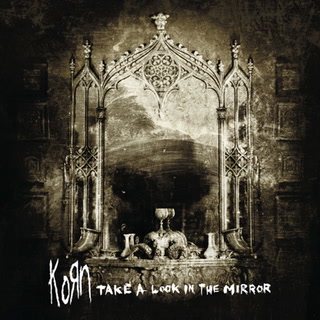
Take a Look in the Mirror (2003)
A Standard
+11 ¢
A ≈ 442.8
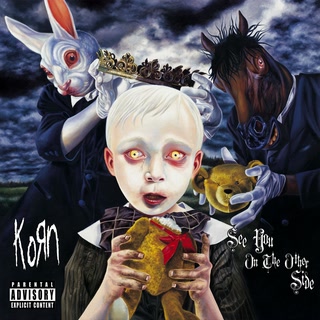
See You on the Other Side (2005)
A Standard
+14 ¢
A ≈ 443.5
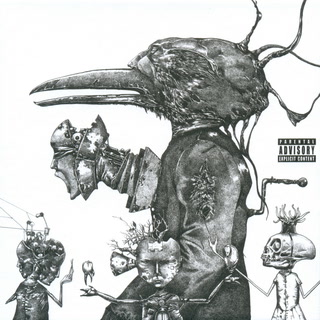
Untitled (2007)
A Standard
+6 ¢
A ≈ 441.6
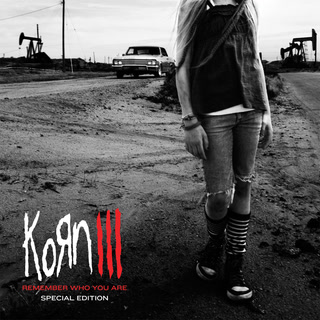
Korn III: Remember Who You Are (2010)
A Standard
−2 ¢ (concert pitch)
A 440
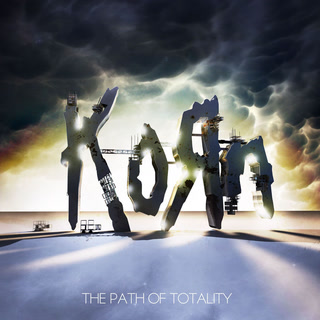
The Path of Totality (2011)
A Standard
−4 ¢ (concert pitch)
A 440
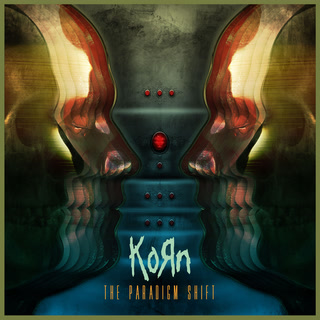
The Paradigm Shift (2013)
A Standard
+1 ¢
A 440
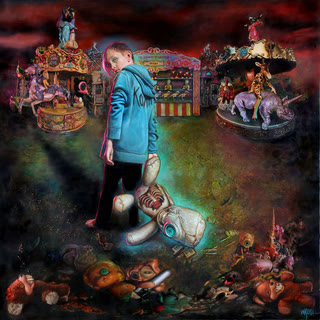
The Serenity of Suffering (2016)
A Standard
+1 ¢
A 440
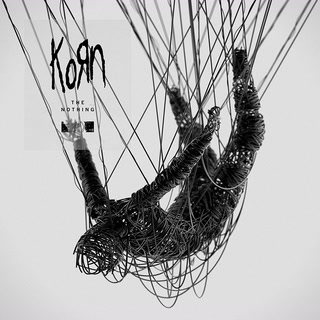
The Nothing (2019)
A Standard
+1 ¢
A 440
Requiem (2022)
A Standard
+3 ¢
A 440
Two things stand out. First, the early records are sharp, and none of the sources we found says so. The debut is about 17 cents sharp, enough that a guitar tuned to a plain A 440 sounds a touch flat against it on long notes, Life Is Peachy and Follow the Leader sit 8 and 4 cents high, and the four albums from Untouchables to Untitled 6 to 14 cents high. Second, from Korn III on, every album lands within 4 cents of A 440, which any tuner treats as concert pitch; so does Issues.
Single songs scatter on Korn records, often by 8 to 15 cents either side of their album. Some of that is real (a song recorded on another day, or tuned a little differently), and some is the measurement struggling with a wall of low, distorted guitars and synths. TuneLit gives a song its own value only when it clearly differs from its album; the rest use the album's value. A measurement hears the result, not the cause: it cannot tell a guitar tuned sharp from a tape running fast.
Main tuning: A Standard (7-string) +17 ¢ (A ≈ 444), measured on a 1994 European CD.
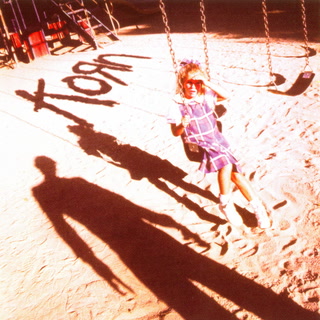
The debut was produced by Ross Robinson at Indigo Ranch in Malibu, and it set the template: two 7-strings a whole step down, the 5-string bass tuned with them, and riffs built on the open low A. Every Songsterr transcription of its twelve songs uses A D G C F A D for the guitars and A D G C F for the bass, from Blind and Clown to F***t and Daddy.
The surprise is the pitch. The CD sits about 17 cents sharp, the most of any Korn album, with Need To, Clown, Lies and Daddy among the highest readings. TuneLit's check from the audio hears the low A as the lowest open string on most songs it could judge. The exception is Shoots and Ladders, which opens with Jonathan Davis on bagpipes and measures at concert pitch, about 15 cents below the rest; the pipes may pull that reading, so if it sounds sharp against your guitar, try the album's value.
With TuneLit: every Tune button opens A Standard (7-string) at +17 ¢, Shoots and Ladders at A 440.
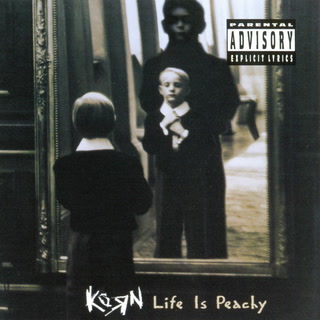
Main tuning: A Standard +8 ¢ (A ≈ 442), measured on a 1996 European CD.
Ross Robinson and Indigo Ranch again, and the same tuning on every tabbed song, from Twist and Good God to A.D.I.D.A.S. and No Place to Hide. The record sits about 8 cents sharp, but this is the hardest Korn album to read: the mix is dense and distorted, and several songs gave no usable reading at all. Treat the offset as a guide.
The odd one out is Lowrider, a one-minute cover of War's Low Rider sung by Head, with a bagpipe part. Its Songsterr tab puts guitars and bass half a step lower than the rest of the album, in B♭; an Ultimate Guitar tab keeps the album's A. TuneLit's check from the audio hears almost no low A, but it hears G♯ as well as B♭ below the riff, so it fits neither tab cleanly. The Tune button keeps the album's setting; check it by ear.
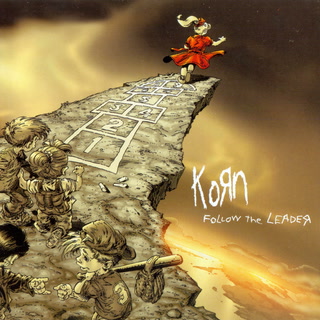
Main tuning: A Standard +4 ¢ (A ≈ 441), measured on disc 1 of the 1999 European special edition.
The original CD opens with twelve short silent tracks, so the album proper starts at track 13 (It's On!) and ends at track 25 (My Gift to You, followed by a hidden cover of Cheech & Chong's Earache My Eye). The album pages keep those track numbers. Steve Thompson and Toby Wright produced it, and Freak on a Leash, Got the Life, It's On! and the rest are all tabbed in A D G C F A D.
The CD sits about 4 cents sharp, close enough to concert pitch that a normal tuner will do. Children of the Korn, with Ice Cube, measures right at A 440. The one tab that disagrees is a little-viewed Songsterr version of Cameltosis in 7-string standard (B E A D G B E); TuneLit's audio check could not settle it, so the song keeps the album's tuning.
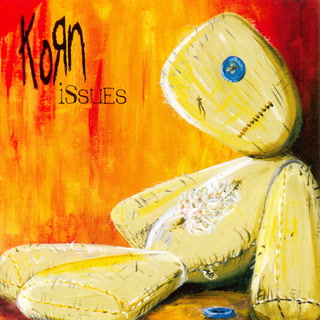
Main tuning: A Standard at concert pitch, measured on a 1999 European CD.
Brendan O'Brien produced Issues, and the tabs keep the band's tuning on every song: Falling Away from Me, Make Me Bad, Somebody Someone, Trash, Beg for Me. Five short tracks of a minute or so (Dead, 4U, It's Gonna Go Away, Am I Going Crazy, Wish You Could Be Me) sit between the full songs. The album as a whole measures about 3 cents sharp, which counts as concert pitch.
Two songs stand apart: It's Gonna Go Away, one of the short pieces, about 16 cents flat (A ≈ 436), and Counting about 14 cents sharp (A ≈ 443.6). Their Tune buttons use their own values.
Main tuning: A Standard +9 ¢ (A ≈ 442), measured on a 2002 European CD.
Michael Beinhorn produced it, and it came out the year after Ibanez launched the K7. Most songs are tabbed in the usual A D G C F A D, and most of them sit about 9 cents sharp on the CD: Here to Stay, One More Time, Embrace, Make Believe. But this is the least uniform album in the catalogue. Hollow Life, Bottled Up Inside and Thoughtless sit about 8 cents flat (A ≈ 438), some 16 cents below their neighbours, and Wake Up Hate about 30 cents flat (A ≈ 432).
Alone I Break is the one song in a different tuning. Songsterr and three Ultimate Guitar tabs tune the 7-strings a step and a half down, G♯ C♯ F♯ B E G♯ C♯, half a step below the rest of the album, with the bass down to G♯ C♯ F♯ B E. TuneLit's check from the audio agrees: G♯ is by far the most common low note, and nothing is heard under it. On top of that, the song measures about 11 cents flat (A ≈ 437).
With TuneLit: most songs open A Standard +9 ¢; the flat songs and Alone I Break have their own Tune buttons.
Main tuning: A Standard +11 ¢ (A ≈ 443), measured on the CD of the 2003 European CD + DVD edition.
The band produced this one themselves, and it was Head's last album before he left in 2005. Right Now, Did My Time, Y'all Want a Single and most other songs are tabbed in A D G C F A D, and the CD sits about 11 cents sharp. Everything I've Known and Play Me (with Nas) measure at concert pitch. When Will This End hides a live cover of Metallica's One after it.
Two songs leave A Standard, and both rest on tabs that disagree:
Counting on Me: Songsterr tunes guitars and bass half a step lower, in G♯ (G♯ C♯ F♯ B E G♯ C♯), while the Ultimate Guitar tabs keep A. TuneLit's audio check hears almost no low A on the record, which rules out the album's tuning; G♯ fits what it hears, though it cannot rule out B♭. The song measures at concert pitch.
Let's Do This Now: both guitar tabs put the low string on B♭, half a step higher: Songsterr as a 7-string in B♭ Standard (B♭ E♭ A♭ D♭ G♭ B♭ E♭), Ultimate Guitar as a 6-string with a low B♭. The bass tabs stay in A D G C F, but the audio check hears B♭ as the lowest note, often, and never the A under it, so the page lists the bass with the guitars.
Main tuning: A Standard +14 ¢ (A ≈ 443.5), measured on disc 1 of the 2005 Japanese limited edition.
The first album without Head: Munky plays all the guitars, with The Matrix and Atticus Ross producing. Twisted Transistor, Coming Undone, Liar and the other tabbed songs all use A D G C F A D. The CD sits about 14 cents sharp, the second-highest reading in the catalogue, while Throw Me Away, Open Up and Tearjerker measure at concert pitch.
Main tuning: A Standard +6 ¢ (A ≈ 441.6), measured on a 2007 US limited-edition CD.
Munky alone on guitar again, Zac Baird on keyboards, and Terry Bozzio and Brooks Wackerman on drums after David Silveria's departure. Evolution, Hold On, Kiss and Killing are all tabbed in A D G C F A D. The CD sits about 6 cents sharp; Bitch We Got a Problem reads about 14 cents sharp and Do What They Say about 4 cents flat.
Main tuning: A Standard at concert pitch, measured on the CD of the 2010 German CD + DVD edition.
Ross Robinson returned to produce, and Ray Luzier made his studio debut on drums. Oildale (Leave Me Alone), Let the Guilt Go, Pop a Pill and the rest are tabbed in the band's tuning. Like Issues, it sits at concert pitch: the CD measures about 2 cents flat. Every album since has done the same.
One thing to listen for: the first three songs, Uber-Time, Oildale and Pop a Pill, read about 33 to 37 cents flat, while the rest sit at concert pitch, but too faintly to count, so they keep the album's setting. If they sound flat against your guitar, lower the reference by ear.
Main tuning: A Standard at concert pitch, measured on the CD of the 2011 European CD + DVD edition.
Korn's dubstep album, made with Skrillex, Noisia, Excision, Downlink, Feed Me, 12th Planet and Kill the Noise. Munky's 7-string riffs sit under heavy synth bass, so several songs have few open guitar notes, and most have no tab. Those that do, Get Up!, Narcissistic Cannibal, Kill Mercy Within and Chaos Lives in Everything, use A D G C F A D. The CD measures about 4 cents flat, which counts as concert pitch.
Bleeding Out, with Feed Me, is the one Korn studio song tabbed in a drop tuning: both of its tabs lower the 7-string's low A a whole step to G (G D G C F A D). TuneLit's audio check hears G as the most common low note.
Main tuning: A Standard at concert pitch, measured on a 2013 Japanese limited-edition CD.
Head's return, produced by Don Gilmore. Prey for Me, Love & Meth, Never Never and Victimized are tabbed in the usual tuning, and the CD sits within a few cents of A 440. It's All Wrong reads about 12 cents sharp.
Lullaby for a Sadist, with its acoustic guitar part, is tabbed a whole step higher, in 7-string standard tuning (B E A D G B E), both on Songsterr (guitars and bass) and on Ultimate Guitar, whose tabber worked from studio footage of Munky playing it. TuneLit's audio check backs it up: B is the most common low note by far and the A below it is almost never heard. The song also measures about 11 cents sharp. Two other tabs worth knowing about: Songsterr has What We Do in B Standard too, but its bass part stays in A and the audio check hears the low A, so the song keeps the album's tuning; and Spike in My Veins has only a 6-string E Standard arrangement on Songsterr, while Ultimate Guitar tabs it on a 7-string.
Main tuning: A Standard at concert pitch, measured on a 2016 Japanese CD.
Nick Raskulinecz produced, and Corey Taylor of Slipknot sings on A Different World. This is the album Head says began on 8-strings before the band went back to "the regular tuning", and every Songsterr tab, from Insane and Rotting in Vain to Black Is the Soul and Die Yet Another Night, uses A D G C F A D. The CD is at concert pitch overall, but four songs stand apart: Insane about 12 cents sharp, and Rotting in Vain, Black Is the Soul and Take Me 8 to 9 cents flat.
Main tuning: A Standard at concert pitch, measured on a 2019 Japanese CD.
Raskulinecz again, and Fieldy's last album with the band before his 2021 leave. Cold, You'll Never Find Me, Idiosyncrasy and H@rd3r are tabbed in the band's tuning, and the audio check hears the low A on most songs it could judge. The CD sits at concert pitch; The Darkness Is Revealing reads about 8 cents flat, H@rd3r and This Loss 10 to 12 cents sharp.
Main tuning: A Standard at concert pitch, measured on a 2022 Japanese CD.
Nine songs in about 33 minutes, produced by Chris Collier. Fieldy is credited on bass although he was on leave by the time it came out. Forgotten, Lost in the Grandeur and Worst Is on Its Way are tabbed in A D G C F A D, and the audio check agrees with that on every song. Seven of the nine songs sit within 5 cents of A 440. Lost in the Grandeur gives one reading about 29 cents sharp, not clearly enough to change its setting; if it sounds sharp against your guitar, raise the reference a little.
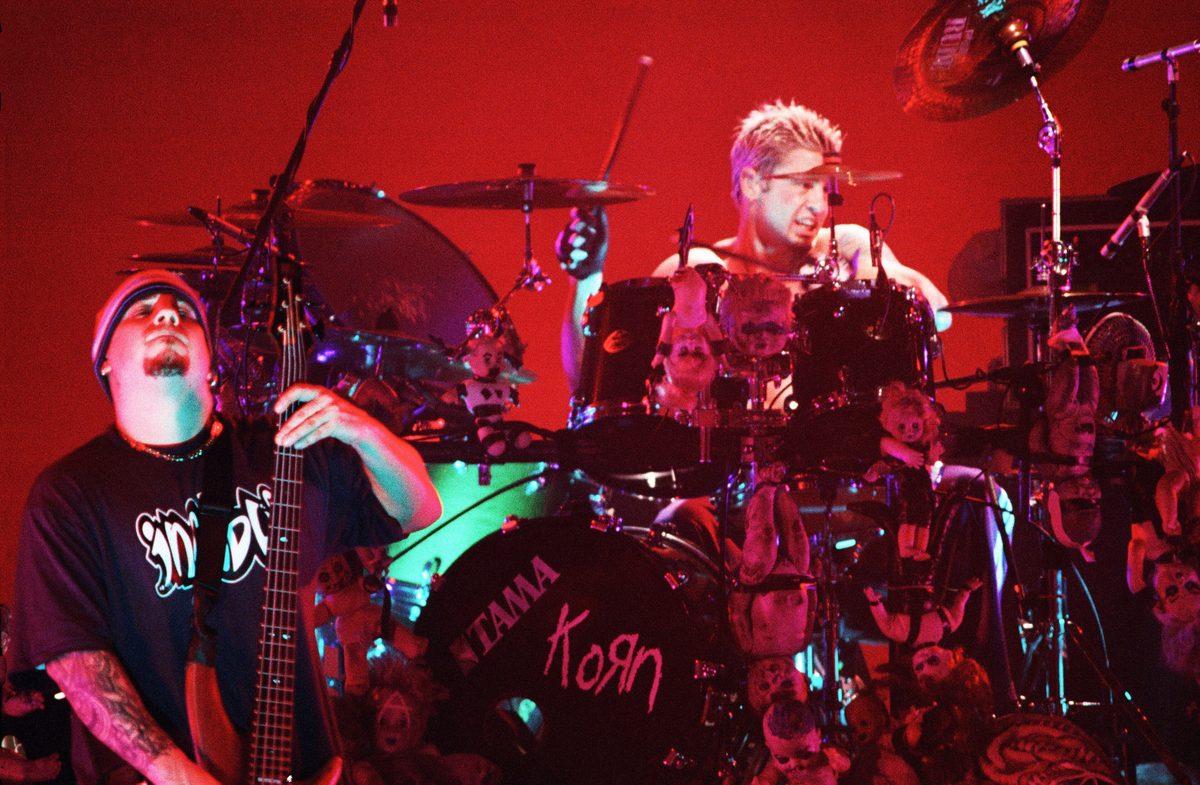
Reginald "Fieldy" Arvizu on his 5-string bass and David Silveria on drums at the Brixton Academy, London, on 24 February 1997.
The story
How to tune along
With a 7-string guitar: tune to A D G C F A D. Every Tune button on the album pages opens this tuning with the record's measured offset already applied. Heavier strings help: the band's 2016 gear list gives .010–.060 sets.
With a 6-string guitar: you have three choices.
Tune the six strings to the 7-string's lowest six: A D G C F A. The riffs then sit where they are on the record, but you lose the top D string, which the heavy riffs rarely need, and you need a heavy low string to keep the A from flopping.
Tune to D Standard (D G C F A D) and play the riffs that use the low A an octave higher. Everything above the low A is in the right place.
Use TuneLit's Play along to move the record to whatever tuning your guitar is in.
With a bass: a 5-string tuned A D G C F matches Fieldy. A 4-string can go to A D G C with very heavy strings, or stay in D Standard (D G C F) and move the low-A notes up an octave.
The offset: on the 1994–2007 albums it is worth using. A guitar at a plain A 440 against the debut or See You on the Other Side is 14 to 17 cents flat, which you hear on long, ringing chords. From Korn III on, a normal tuner is fine.
Evidence
How sure are these numbers?
Every tuning on the album pages carries a status label. Every album here carries Measured by TuneLit, because its offset comes from our own analysis of a CD. The tuning name itself still rests on the other kinds of evidence, since a measurement only knows the offset within one semitone:
Official: the band or its crew said it directly.
Widely reported: trusted outlets and reference works agree, usually backed by every tab. Korn's A D G C F A D sits here: it is the factory tuning of the band's own signature guitar and the tuning of every major transcription, but we found no interview where the band spells out the notes.
Community: from community transcriptions, mostly Songsterr and Ultimate Guitar tabs. Alone I Break, Bleeding Out and Lullaby for a Sadist rest on tabs at this level, each backed by the audio check.
Disputed: the tabs disagree. We show the most likely setting and explain the other: Lowrider, Counting on Me, Let's Do This Now.
Measured by TuneLit: our own pitch analysis of an original recording, giving the offset in cents. Only the result is published; the audio is never stored or shared.
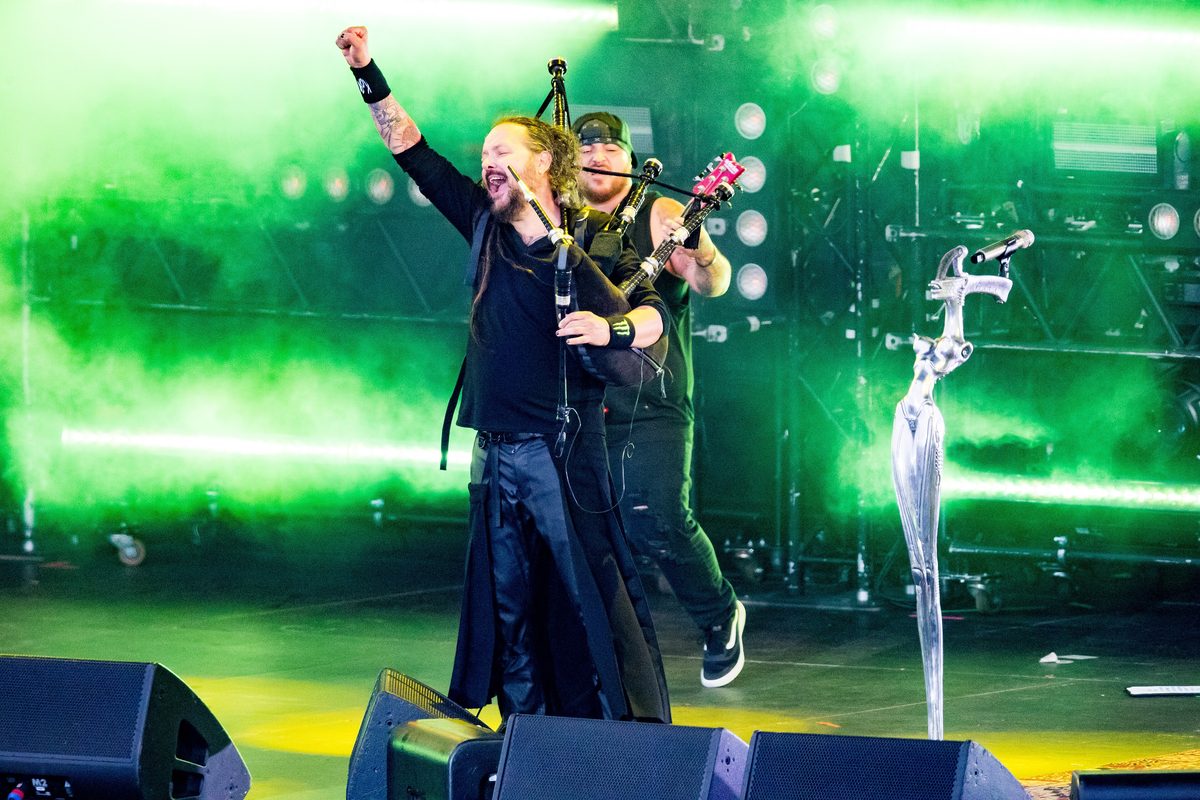
Jonathan Davis playing the bagpipes at Rock am Ring, Germany, on 5 June 2022, with touring bassist Ra Díaz behind him.
Cheat sheet
Quick reference
Home tuning, every album: 7-string A Standard, A D G C F A D; 5-string bass A D G C F.
Korn (1994): +17 ¢ (A ≈ 444). Shoots and Ladders at A 440.
Life Is Peachy (1996): +8 ¢ (A ≈ 442). Lowrider: disputed (A or B♭), check by ear.
Untouchables (2002): +9 ¢ (A ≈ 442). Hollow Life, Bottled Up Inside, Thoughtless about −8 ¢; Wake Up Hate −30 ¢. Alone I Break: G♯ Standard −11 ¢.
Take a Look in the Mirror (2003): +11 ¢ (A ≈ 443). Counting on Me: G♯ Standard at A 440. Let's Do This Now: B♭ Standard +11 ¢.
See You on the Other Side (2005): +14 ¢ (A ≈ 443.5). Throw Me Away, Open Up, Tearjerker at A 440.
Untitled (2007): +6 ¢ (A ≈ 441.6). Bitch We Got a Problem +14 ¢.
Korn III (2010) to Requiem (2022): concert pitch. Bleeding Out: Drop G (G D G C F A D). Lullaby for a Sadist: 7-string B Standard +11 ¢.
Golden rule: tune the 7-string to A D G C F A D first, then check the album's offset; on the pre-2010 records it matters.
Questions
What tuning does Korn use?
Mostly A Standard: 14 of 14 albums. Many albums also have songs in other tunings, and the album pages list them song by song.
Why does Korn sound out of tune when I play along?
Some records are not at concert pitch. Korn sits about 17 cents sharp (A ≈ 444); See You on the Other Side sits about 14 cents sharp (A ≈ 444); Take a Look in the Mirror sits about 11 cents sharp (A ≈ 443). A guitar tuned to A 440 clashes with them. Every Tune button on these pages sets the measured pitch for you.
How did TuneLit measure Korn's records?
We played original CDs and LPs through TuneLit's pitch analysis: the strongest notes of each song are compared with the A 440 grid, which gives the offset in cents. That cannot tell the semitone, so the tuning name comes from interviews, the press and tabs. The audio is never stored or published.
Colors and font
Font
Colors
Menu
Install the app
Android (Chrome): menu ⋮ → Install app or Add to Home screen.
Computer (Chrome, Edge): the install icon at the right end of the address bar.
iPhone: Safari → Share → Add to Home Screen.
It opens full screen and keeps tuning with no connection.