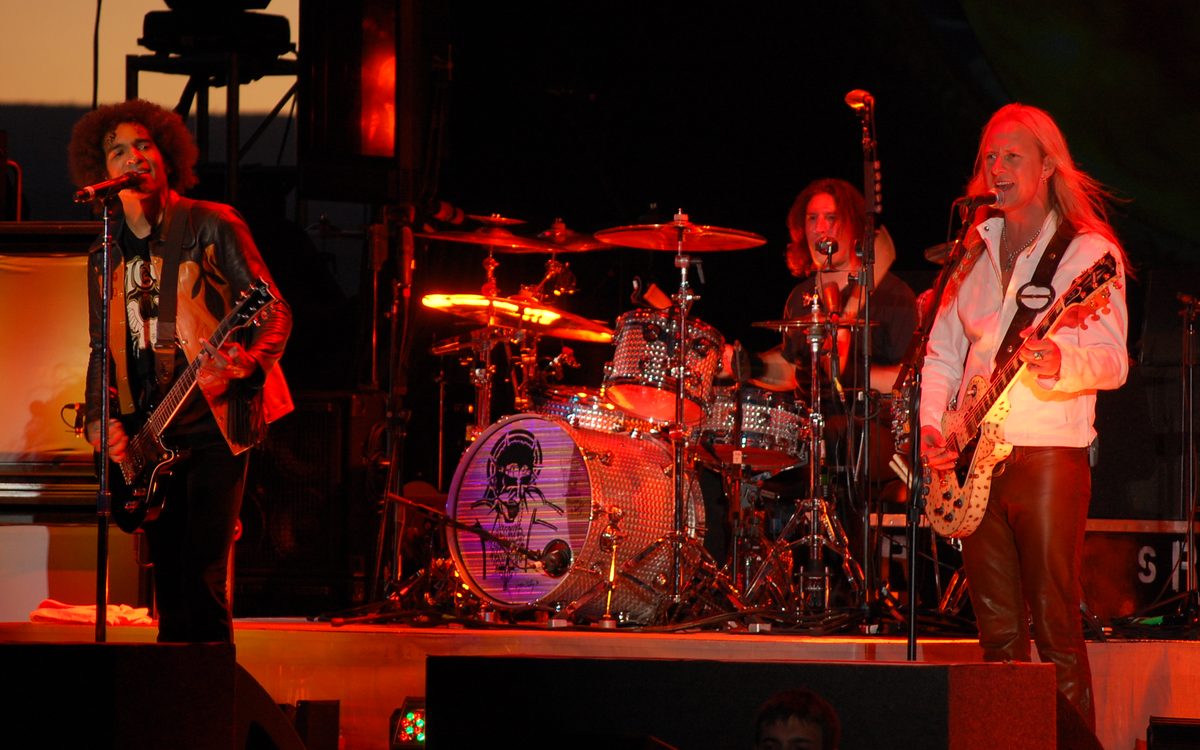
William DuVall (left) and Jerry Cantrell (right) singing at their guitars with Sean Kinney on drums between them, on tour with Alice in Chains on 8 September 2007.
In short
How Alice in Chains tunes
Alice in Chains have tuned a half step down from the start. Jerry Cantrell calls E♭ Standard "standard Alice in Chains tuning" and keeps a second guitar in Drop C♯ for the heaviest riffs: We Die Young, Them Bones, I Stay Away, Grind, A Looking in View, Hollow and Stone.
Read more
The 1995 album adds Open D♭ (open C♯ in the tabs) on Over Now and, by Cantrell's account, on Shame in You and Nothin' Song. TuneLit measured the owner's CDs, and the Layne Staley-era records all sit a little sharp: about 4 cents on Facelift, 10 on Dirt, 13 on Jar of Flies and 8 on the 1995 album, with Sap at concert pitch. The two William DuVall-era albums sit about 4 cents flat. None of that needs a new reference A, but on Dirt and Jar of Flies a guitar tuned at A 440 sounds slightly flat against the record, and the Tune buttons carry the offset. Many popular tabs are rewritten in E Standard; tune down a half step to play along.
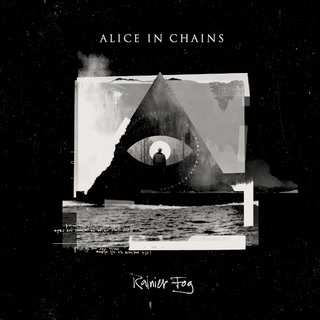
Put on Man in the Box or Would? with a guitar in normal tuning and the riff will sound wrong no matter how carefully you copy the frets. Alice in Chains never played in E Standard. From the first album on, Jerry Cantrell tuned every string down a half step, to E♭ Standard, and for the heaviest songs he dropped the low string a further whole step, to C♯ (D♭). Those two tunings carry almost the whole catalogue, from Facelift in 1990 to Rainier Fog in 2018, under Layne Staley and under William DuVall alike. The one real detour is the 1995 album, where Cantrell tried an open tuning for the first time.
TuneLit measured the owner's CDs of seven releases, from Facelift to The Devil Put Dinosaurs Here, to find where the records really sit. The short answer: close to concert pitch, but not on it. The 1990s records lean sharp, by about 4 cents on Facelift and as much as 13 cents on Jar of Flies, and the two DuVall-era albums sit about 4 cents flat. This page explains both tunings, goes through every album and the songs that do something different, and shows what the measurements found. The album list above opens each album, where every song has a Tune button that sets the tuner exactly as listed, offset included.
Popular songs
How to tune for Alice in Chains's best-known songs
Each song has its own page: the exact tuning, the record's pitch, how to get there string by string, and how to move the record into your own tuning.
Cantrell's own name for it says everything. In a 2009 Guitar World feature on his G&L Rampage, the guitar he has played on every Alice in Chains record, he calls the half-step-down tuning of his main Rampage "standard Alice in Chains tuning": E♭ A♭ D♭ G♭ B♭ E♭ from low to high. MusicRadar's lessons say the same thing in plain words: Jerry always tunes a half step down, for deeper riffs and a wider, more aggressive vibrato.
For a player this is the easy part. Every string goes down one semitone, the chord shapes and fingerings stay exactly the same, and everything sounds a half step lower. The open E5 power chord that opens so many Cantrell riffs becomes E♭5, and a G shape sounds as G♭. The bass does the same: E♭ A♭ D♭ G♭. Mike Starr played that way on Facelift and Dirt, and Mike Inez has since Jar of Flies.
In TuneLit, pick E♭ Standard, or simply press a Tune button on an album page. Because the records sit a few cents off A 440, the buttons carry a small offset, such as "E♭ Standard +10 ¢" for Dirt. More on that below.
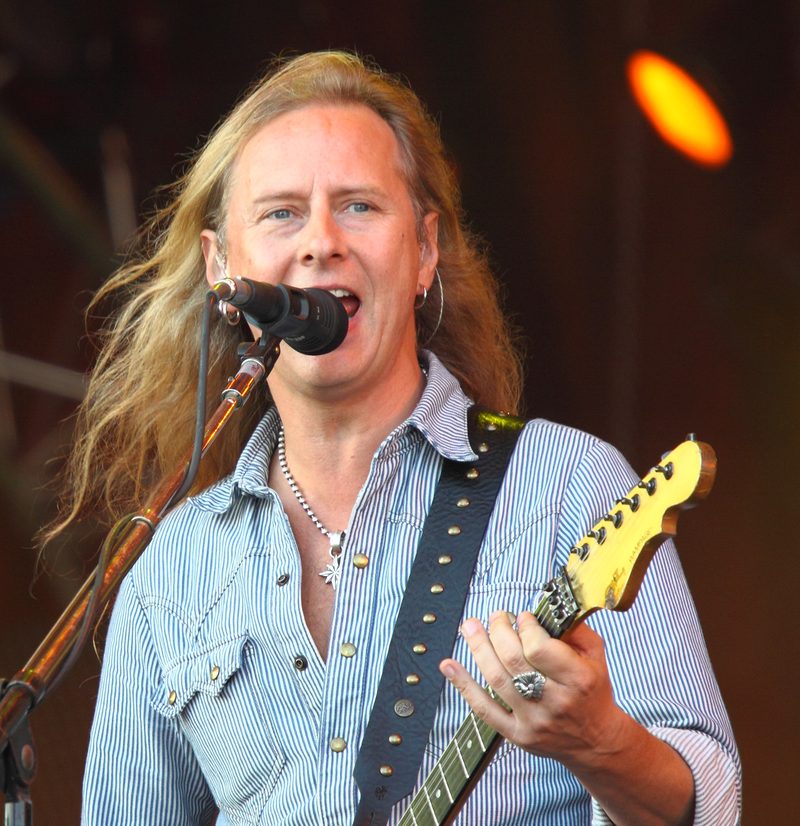
Jerry Cantrell singing and playing his G&L guitar at the Roskilde Festival, Denmark, 2 July 2010.
The story
Drop C♯ for the heaviest riffs
The same Guitar World piece describes a second Rampage, bought soon after the first, that lives in Drop D tuned down a half step. TuneLit calls it Drop C♯, C♯ G♯ C♯ F♯ A♯ D♯; Guitar World and MusicRadar spell the same notes D♭ A♭ D♭ G♭ B♭ E♭ and call it Drop D♭. It is E♭ Standard with String 6 taken down a further whole step, from E♭ to C♯.
You can get there two ways. From E♭ Standard, lower String 6 by a whole step until it matches String 4 an octave below. From normal tuning, tune to Drop D first and then lower all six strings a half step. Either way the bottom three strings form a power chord you can play with one finger, which is what riffs like Them Bones are built on.
Drop C♯ turns up on almost every album: We Die Young and Sunshine on Facelift, Them Bones, Dam That River and Rain When I Die on Dirt, I Stay Away on Jar of Flies, Grind and Sludge Factory on the 1995 album, All Secrets Known, Last of My Kind, A Looking in View and Acid Bubble on Black Gives Way to Blue, Hollow, Stone and Lab Monkey on The Devil Put Dinosaurs Here, and Red Giant on Rainier Fog. On these songs the bass drops its low string to C♯ as well.
A handful of songs keep the guitars in E♭ Standard but drop only the bass. The tabs show it on Down in a Hole, Check My Brain and The One You Know, and on Down in a Hole TuneLit's analysis indeed hears a low C♯ that an E♭ bass could not play. The album pages list a separate Tune bass setting for these.
The story
Open D♭ (open C♯): the 1995 detour
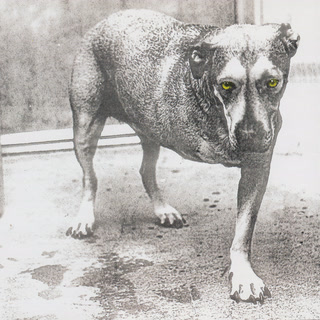
The self-titled 1995 album, the one with the three-legged dog on the cover, is the only record where the tunings get complicated. According to Cantrell's interviews from early 1996, as summarised on Wikipedia, three songs use an open tuning he had never used before: Shame in You, Nothin' Song and Over Now. The idea came from a guitar he had lent to a friend, which came back tuned that way.
Over Now is the clear case. Wikipedia and the tabs call its tuning open C♯: open D lowered a half step, which TuneLit's Tune buttons name Open D♭, D♭ A♭ D♭ F A♭ D♭ from low to high (C♯ G♯ C♯ F G♯ C♯ in the tabs). Strummed open, the strings ring a D♭ major chord. From E♭ Standard you lower String 6 to D♭ (a whole step), keep String 5 and String 4 where they are, lower String 3 a half step to F, and lower String 2 and String 1 a whole step to A♭ and D♭.
The other two are less settled. For Shame in You the tabs disagree with each other: the most-played one has the riffs in Drop C♯ and only the outro guitar in open C♯, while another puts most of the song in open C♯ minor (C♯ G♯ C♯ E G♯ C♯). The bottom three strings are the same in all three tunings, so the low riffs sound alike; the open chords on top are where they part. For Nothin' Song the only tab found has the guitars in E♭ Standard, but it has to tune its bass down to C♯ to reach the low notes, and on the CD a low C♯ makes up about two thirds of the low notes TuneLit hears, far below anything an E♭ guitar or bass can play. With Cantrell's own account pointing the same way, the pages list it in Open D♭ and mark it disputed.
The same Wikipedia summary says most of the other songs were recorded "in drop D". The tabs disagree: they put most of the album in plain E♭ Standard, with Grind and Sludge Factory in Drop C♯. TuneLit's check from the audio sides with the tabs. On Head Creeps, Frogs, Heaven Beside You, Again and God Am the lowest string it hears is E♭, and on Head Creeps and Frogs the E♭ is the most-played bass note while the C♯ below it hardly ever sounds. So the album is listed in E♭ Standard, with the tabs' Drop C♯ and open-tuning songs marked one by one.
The story
How the band's tuning changed, era by era
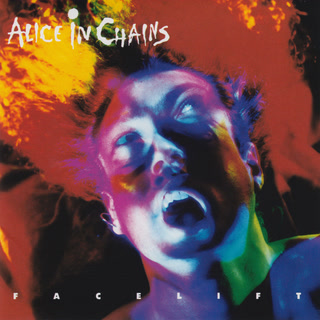
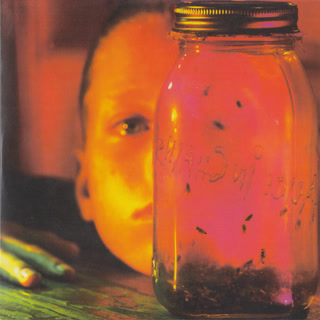
1990 to 1992: Facelift, Sap and Dirt. The band's sound was set from the first album. Producer Dave Jerden recorded Facelift in Seattle and Hollywood over the winter of 1989–90, with Cantrell's Rampage through a Marshall modified by Reinhold Bogner, the amp he says he used on Facelift and Dirt. Everything is in E♭ Standard except the Drop C♯ songs. The acoustic Sap EP and the darker, heavier Dirt kept exactly the same two tunings, and Layne Staley, who wrote Hate to Feel and Angry Chair and plays rhythm guitar on them, tuned his guitar down like Cantrell.
1993 to 1995: Jar of Flies and the self-titled album. Mike Inez replaced Mike Starr during the Dirt tour, and his first record with the band, the acoustic Jar of Flies, was written and recorded in about a week. Same tunings: E♭ Standard with I Stay Away in Drop C♯. The 1995 album, made with Toby Wright at Bad Animals in Seattle, added the Open D♭ songs. After it the band stopped touring; Staley died in 2002.
2009 to today: the William DuVall years. When Alice in Chains returned with Black Gives Way to Blue, DuVall took over rhythm guitar and shared the vocals with Cantrell. The tunings did not change. Both guitarists play in the same tuning on each song, E♭ Standard by default and Drop C♯ for the heaviest riffs, on The Devil Put Dinosaurs Here and Rainier Fog as well. If you play the old songs with a second guitarist, both of you tune the same way.
E♭ Standard on ten of twelve songs: Man in the Box, Sea of Sorrow, Bleed the Freak, Love, Hate, Love, It Ain't Like That and the rest, with the bass in E♭ too. We Die Young and Sunshine are in Drop C♯, and both tabs of each agree. The talking guitar on Man in the Box is a talk box, an idea of producer Dave Jerden's, not a tuning trick.
TuneLit measured the original 1990 Columbia CD (CK 46075) about 4 ¢ sharp (A ≈ 441.1), close enough to concert pitch that most ears will not notice. Two songs stand apart. Bleed the Freak sits about 15 ¢ sharp, and It Ain't Like That about 21 ¢ flat, a quarter of a semitone under the rest of the album. For It Ain't Like That the audio check still hears E♭ as the lowest string, so it is E♭ Standard tuned low, not D. Each of the two has its own Tune button.
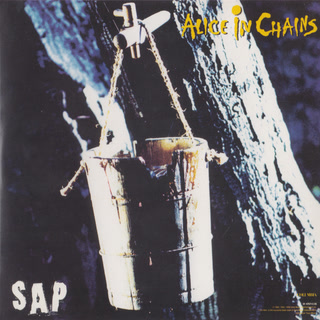
The mostly acoustic EP, recorded in a few days in November 1991, is in E♭ Standard throughout: Brother, Got Me Wrong, Right Turn and Am I Inside. Tune your acoustic down a half step as well. Brother was Cantrell's first lead vocal, Ann Wilson of Heart sings on Brother and Am I Inside, and Right Turn, credited to "Alice Mudgarden", brings in Chris Cornell and Mark Arm. The unlisted fifth track, Love Song, with the four members swapping instruments, is not listed here.
The library holds Sap only as part of a 2011 Original Album Classics box. TuneLit measured it at concert pitch (+1 ¢), except Right Turn, about 20 ¢ flat (A ≈ 435). The audio check confirms E♭ as Right Turn's lowest string, so here too it is the familiar tuning, just set lower.
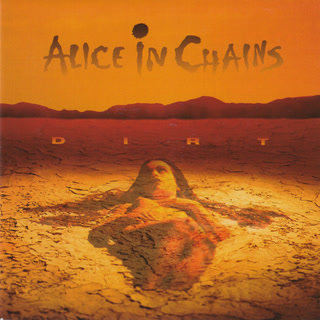
MusicRadar's track-by-track Dirt lesson sums it up: Jerry tunes a half step down, and Them Bones and Dam That River are in Drop C♯. The tabs agree, and they add Rain When I Die to the Drop C♯ songs. Rooster, Would?, Down in a Hole, Sickman, Junkhead, Dirt, God Smack, Hate to Feel and Angry Chair are in E♭ Standard. The swirl on Rooster's clean verses is a flanger, and the dark sound of Would? comes from the notes Cantrell chooses, not from a lower tuning. On Down in a Hole the guitars stay in E♭ while the bass drops to C♯.
The library holds an original 1992 European CD (Columbia 472330 2, Austria), with the original running order: Down in a Hole as track 12, before Would?, and the untitled 43-second Iron Gland, with Tom Araya of Slayer, as track 9. Later US pressings move Down in a Hole up to track 4. TuneLit measured the CD about 10 ¢ sharp (A ≈ 442.4). That is enough for a guitar at A 440 to sound slightly flat against Rooster or Would?, so every Tune button on Dirt carries +10 ¢. Only Iron Gland sits at concert pitch.
The second acoustic EP stays in E♭ Standard: Rotten Apple, Nutshell, No Excuses, Whale & Wasp, Don't Follow and Swing on This. The exception is I Stay Away, in Drop C♯, with its 12-string acoustic parts and bass dropped as well. Nutshell is often taught in E Standard because it is easier to read; the record is a half step lower.
This is the sharpest record of the catalogue. TuneLit measured the CD, again from the 2011 box, about 13 ¢ sharp (A ≈ 443.3), and every song agrees, from +9 ¢ on Swing on This to +17 ¢ on Whale & Wasp. Sap, measured from the same box, sits at concert pitch, so the box as a whole does not run fast; whether the original 1994 CD reads the same, only a measurement of it can tell. A guitar at A 440 sounds noticeably flat against Nutshell; the Tune buttons set +13 ¢.
The tunings are covered in the Open D♭ section above. In short: E♭ Standard on Brush Away, Heaven Beside You, Head Creeps, Again, God Am, So Close and Frogs; Drop C♯ on Grind and Sludge Factory; Open D♭ (the tabs' open C♯) on Over Now, and on Shame in You and Nothin' Song with the doubts explained in their notes. Cantrell sings lead on Grind, Heaven Beside You and Over Now. The solo on Grind is his first take from a home demo, which Toby Wright insisted on keeping.
TuneLit measured the original 1995 Columbia CD (CK 67248) about 8 ¢ sharp (A ≈ 442.1). So Close reads higher, about 19 ¢ sharp, and has its own Tune button.
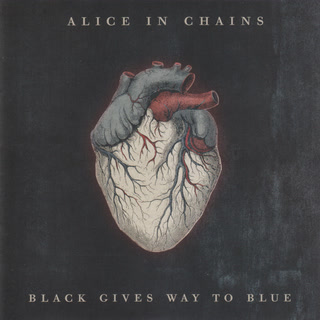
The first album with William DuVall, produced by Nick Raskulinecz, keeps both tunings. Your Decision, Private Hell, Take Her Out, Lesson Learned, Check My Brain and the title track, with Elton John on piano, are in E♭ Standard; Last of My Kind, A Looking in View and Acid Bubble are in Drop C♯. Check My Brain's seasick sound comes from bends that stop short of the note, by Cantrell's own description, while the most-played tabs drop only the bass to C♯.
Two songs needed a closer look. The tabs of All Secrets Known disagree, Drop C♯ or B Standard with a 5-string bass, but on the CD its lowest notes sit on C♯ and D with almost no B, so it is listed in Drop C♯. The only tab of When the Sun Rose Again is written in E Standard, but it is unattributed and the audio check hears E♭ as the lowest string, so the album's E♭ Standard stands.
TuneLit measured the 2009 Virgin CD about 4 ¢ flat (A ≈ 438.9), and every song sits within a few cents of that. At this size most players will not hear the difference; the Tune buttons carry −4 ¢ for completeness.
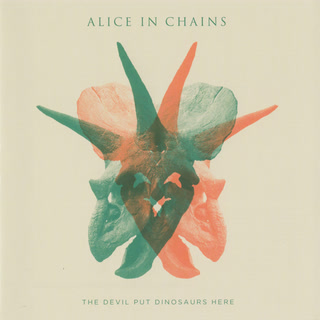
Same recipe: E♭ Standard on Pretty Done, Voices, the title track, Low Ceiling, Breath on a Window, Scalpel, Phantom Limb, Hung on a Hook and Choke; Drop C♯ on Hollow, Stone and Lab Monkey. Hollow's riff came to Cantrell while warming up before the last show of the band's 2010 tour, and it became the album's first single.
TuneLit measured the 2013 Capitol CD about 4 ¢ flat (A ≈ 438.9), exactly like Black Gives Way to Blue.
Not in the owner's library, so not measured: the settings come from the tabs, at concert pitch. They put the album in E♭ Standard, with Red Giant in Drop C♯ and the bass dropped to C♯ under the guitars on The One You Know. Maybe has only an automatically generated tab, which says Drop C♯; until a better source turns up it stays at the album's E♭ Standard. The album was recorded partly at Studio X in Seattle, the same room as the 1995 album.
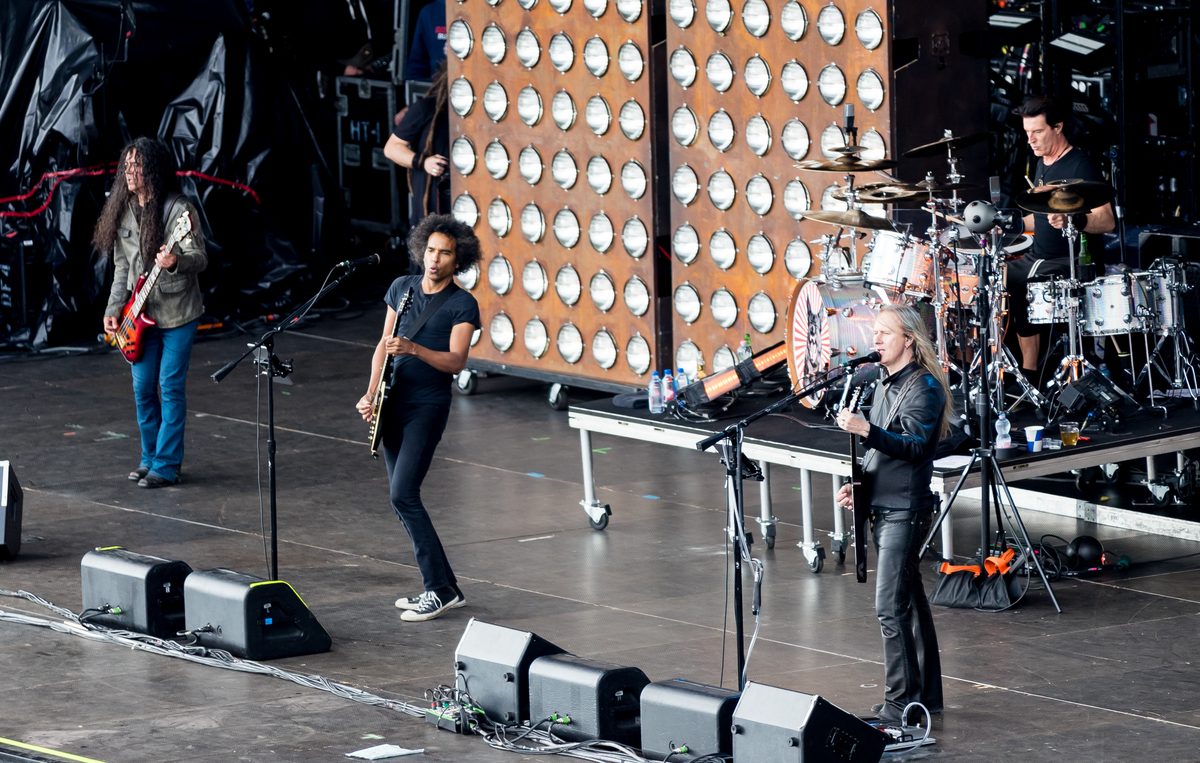
Mike Inez, William DuVall, Jerry Cantrell and Sean Kinney on stage at Rock am Ring, Nürburgring, Germany, 7 June 2019.
TuneLit lab
What TuneLit measured
TuneLit's recording analysis reads 90 seconds of each song and works out how far the music sits from the A 440 grid. It knows that offset only within one semitone, so the semitone itself (E♭ rather than D or E) comes from the tabs and sources. A second check, from the audio, then asks whether the lowest open string really sits where the tabs say.
Release
Edition measured
Measured
Listed as
Facelift (1990)
Columbia CK 46075, USA 1990
+4 ¢
E♭ Standard +4 ¢
Sap (1992)
Original Album Classics box, 2011
+1 ¢
E♭ Standard
Dirt (1992)
Columbia 472330 2, Austria 1992
+10 ¢
E♭ Standard +10 ¢
Jar of Flies (1994)
Original Album Classics box, 2011
+13 ¢
E♭ Standard +13 ¢
Alice in Chains (1995)
Columbia CK 67248, USA 1995
+8 ¢
E♭ Standard +8 ¢
Black Gives Way to Blue (2009)
Virgin 509993 08264 2 7, EU 2009
−4 ¢
E♭ Standard −4 ¢
The Devil Put Dinosaurs Here (2013)
Capitol 509999 47800 2 4, EU 2013
−4 ¢
E♭ Standard −4 ¢
Songs with their own value: Bleed the Freak (+15 ¢), It Ain't Like That (−21 ¢), Right Turn (−20 ¢), Iron Gland (at concert pitch) and So Close (+19 ¢). The Drop C♯ and Open D♭ songs share their album's offset.
The pattern is easy to read. The four Staley-era albums and Jar of Flies all lean sharp, between 4 and 13 cents, while the two DuVall-era albums lean flat by about 4. None of these needs a different reference A, as Pantera's records do, but 10 to 13 cents is enough to make a guitar at A 440 sound a little sour against Dirt or Jar of Flies, especially on sustained acoustic chords. No source explains these offsets. Small differences like these usually come from a tape machine running a touch fast or slow during recording or mastering, which moves a whole record together; It Ain't Like That and Right Turn, a quarter of a semitone under their neighbours, seem to have been tuned or recorded apart from the rest.
The semitone check from the audio agrees with the listed tuning on 66 of the 71 measured songs, Drop C♯ and Open D♭ songs included. It is unsure on Brother, Grind, So Close and Last of My Kind, and on Confusion it leans one semitone lower, to D, with no tab or source to back that up, so Confusion stays in E♭ Standard. Its low notes are also how Nothin' Song ended up in Open D♭ (above), and they raise one more question for bassists: on Rotten Apple, Don't Follow and Hung on a Hook TuneLit hears a fair amount of low C♯, below what an E♭ bass can play, although no tab drops the bass there. The guitar settings are not affected.
Evidence
How sure are these numbers?
Every tuning on the album pages carries a status label. For Alice in Chains most of them read Measured by TuneLit, because the offset comes from our own analysis of the CD. The tuning name still rests on the other kinds of evidence:
Official: a band member said it. Cantrell's name for E♭ Standard, "standard Alice in Chains tuning", and his second Rampage in Drop C♯ come from Guitar World's 2009 feature on his guitars.
Widely reported: trusted outlets agree. MusicRadar's Dirt lesson names Them Bones and Dam That River as the Drop C♯ songs; Wikipedia gives Over Now's open C♯.
Community: transcriptions, mostly Songsterr, cross-checked with e-chords where possible. Most song-level tunings rest here, including every Drop C♯ song on the later albums.
Disputed: the sources disagree, as with the 1995 album as a whole, Shame in You, Nothin' Song, All Secrets Known and Check My Brain. We list the best-supported option and explain the other in the notes.
Measured by TuneLit: our analysis of a CD gives the offset in cents. Only numbers are published; the audio is never stored or shared.
Rainier Fog is the one album without a measurement: its settings are the tabs' tunings at A 440.
The story
Tips for playing along
Start with String 6. Most riffs live on the low string, so tune it first and listen to it against the record's opening riff before you tune the rest.
Keep the offset. On Dirt and Jar of Flies, the +10 ¢ and +13 ¢ in the Tune buttons are worth keeping; tune at plain A 440 and long acoustic chords will beat against the record.
Switching between E♭ and Drop C♯. Only String 6 changes, by a whole step. If you play a set with both, a second guitar saves a lot of retuning, which is exactly why Cantrell keeps two Rampages.
Strings. A half step down on normal 10–46 strings feels a little slack, and Drop C♯ puts String 6 a step and a half below standard. Many players go up one gauge, or use a heavier string for String 6 only.
Tabs in E Standard. Many popular versions of Nutshell, Would?, Rooster and Man in the Box are rewritten for E Standard. Keep the frets and tune down a half step instead, and the tab and the record line up.
Not your tuning? TuneLit's Play along can move a recording into the tuning your guitar is already in.
If a song still sounds a touch off, move the reference by a hertz or so; around 440 Hz, one hertz is about 4 cents.
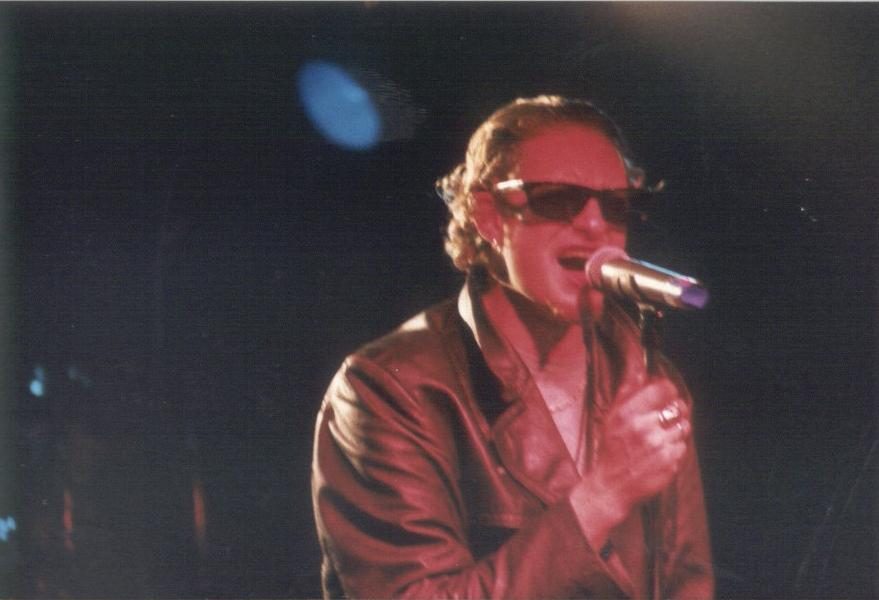
Layne Staley singing with Alice in Chains at The Channel in Boston, Massachusetts, 27 November 1992.
Cheat sheet
Quick reference
Default, every album: E♭ Standard (E♭ A♭ D♭ G♭ B♭ E♭), bass E♭ A♭ D♭ G♭.
Heavy songs: Drop C♯ (C♯ G♯ C♯ F♯ A♯ D♯), bass with its low string on C♯ as well.
Facelift (1990): E♭ Standard +4 ¢; We Die Young and Sunshine in Drop C♯; Bleed the Freak +15 ¢, It Ain't Like That −21 ¢.
Sap (1992): E♭ Standard at A 440; Right Turn −20 ¢.
Dirt (1992): E♭ Standard +10 ¢; Them Bones, Dam That River and Rain When I Die in Drop C♯; Down in a Hole with the bass in Drop C♯.
Jar of Flies (1994): E♭ Standard +13 ¢; I Stay Away in Drop C♯.
Alice in Chains (1995): E♭ Standard +8 ¢; Grind and Sludge Factory in Drop C♯; Over Now, Shame in You and Nothin' Song in Open D♭ (D♭ A♭ D♭ F A♭ D♭, the tabs' open C♯); So Close +19 ¢.
Black Gives Way to Blue (2009): E♭ Standard −4 ¢; All Secrets Known, Last of My Kind, A Looking in View and Acid Bubble in Drop C♯; Check My Brain with the bass in Drop C♯.
The Devil Put Dinosaurs Here (2013): E♭ Standard −4 ¢; Hollow, Stone and Lab Monkey in Drop C♯.
Rainier Fog (2018, from tabs): E♭ Standard; Red Giant in Drop C♯; The One You Know with the bass in Drop C♯.
Questions
What tuning does Alice in Chains use?
Mostly E♭ Standard: 8 of 8 albums. Many albums also have songs in other tunings, and the album pages list them song by song.
Why does Alice in Chains sound out of tune when I play along?
Some records are not at concert pitch. Jar of Flies sits about 13 cents sharp (A ≈ 443). A guitar tuned to A 440 clashes with them. Every Tune button on these pages sets the measured pitch for you.
How did TuneLit measure Alice in Chains's records?
We played original CDs and LPs through TuneLit's pitch analysis: the strongest notes of each song are compared with the A 440 grid, which gives the offset in cents. That cannot tell the semitone, so the tuning name comes from interviews, the press and tabs. The audio is never stored or published.
Colors and font
Font
Colors
Menu
Install the app
Android (Chrome): menu ⋮ → Install app or Add to Home screen.
Computer (Chrome, Edge): the install icon at the right end of the address bar.
iPhone: Safari → Share → Add to Home Screen.
It opens full screen and keeps tuning with no connection.