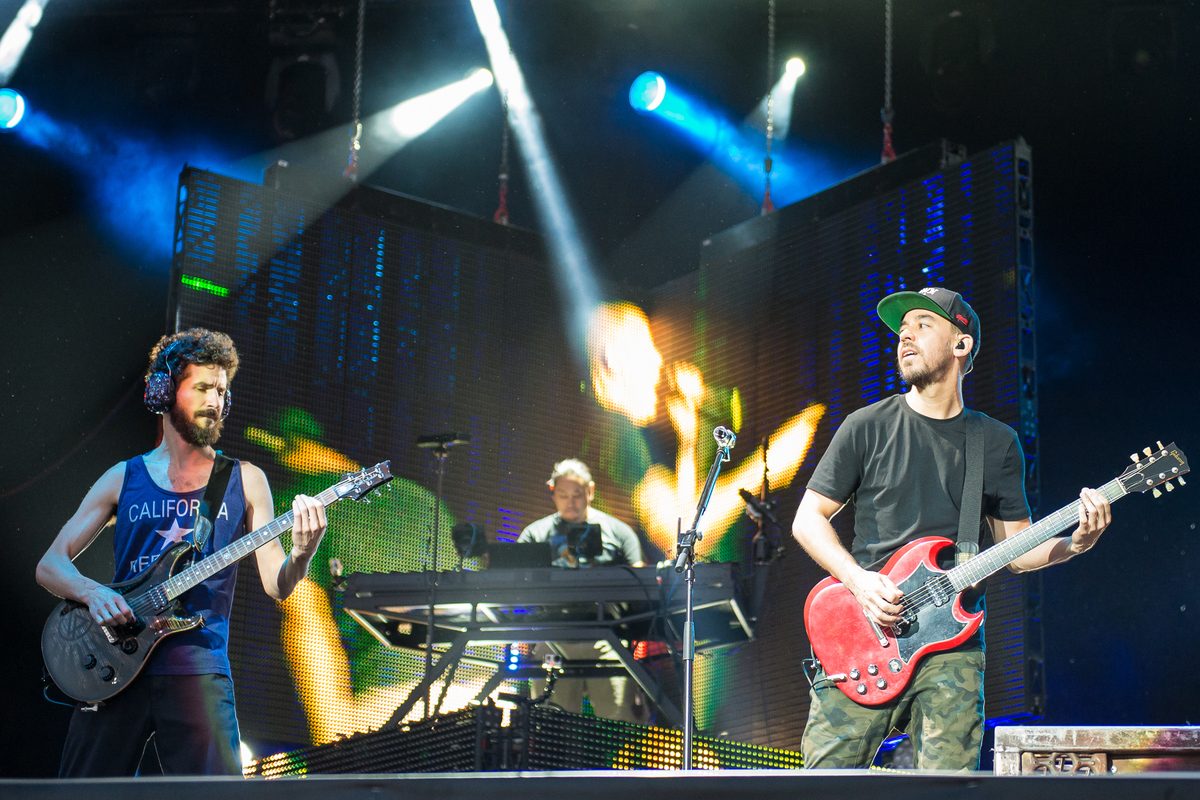
Chester Bennington and Mike Shinoda, on a red Gibson, on stage in Montreal on The Carnivores Tour, 23 August 2014.
In short
How Linkin Park tunes
Linkin Park built their first two albums, Hybrid Theory (2000) and Meteora (2003), on Drop C♯: Drop D tuned down a half step (C♯ G♯ C♯ F♯ A♯ D♯). With You and Runaway use a 7-string in B Standard, a few songs sit in E♭ Standard, and Don't Stay goes down to Drop B.
Read more
From Minutes to Midnight (2007) on, Brad Delson and Mike Shinoda mostly play in plain Drop D, with E Standard songs such as Waiting for the End and Castle of Glass and a handful still in Drop C♯; One More Light (2017) is in E Standard. TuneLit measured the seven albums from Hybrid Theory to One More Light and found every one within about 3 cents of A 440, with Papercut (+12 ¢) and Somewhere I Belong (+10 ¢) the only songs clearly sharp, and its check from the audio confirms the tabs' low string on 63 of 86 tracks. From Zero (2024) is listed from tabs: mostly Drop D.
Linkin Park are one of the easiest big rock bands to tune for, once you know one trick. On their first two albums the guitars sit in Drop C♯, which is nothing more exotic than Drop D lowered by a half step. From Minutes to Midnight (2007) on, the band mostly plays plain Drop D or plain E Standard. And unlike many heavy bands of their era, the records themselves sit at concert pitch: TuneLit measured seven studio albums from the owner's library, and every album lands within about 3 cents of A 440. Pick the right shape, leave your tuner at A 440, and you are ready.
This page goes through it album by album, from Hybrid Theory (2000) to From Zero (2024): the main tuning, the songs that break the pattern (a 7-string, two Drop B songs, a handful of E♭ Standard songs), what TuneLit measured on the records, and the few places where the tabs and the audio do not quite agree. Every song on the album pages has a Tune button that opens the tuner in exactly that tuning.
Popular songs
How to tune for Linkin Park's best-known songs
Each song has its own page: the exact tuning, the record's pitch, how to get there string by string, and how to move the record into your own tuning.
Hybrid Theory (2000) and Meteora (2003): Drop C♯ (C♯ G♯ C♯ F♯ A♯ D♯) for almost everything: Papercut, One Step Closer, Crawling, In the End, Faint, Numb.
The exceptions on those two albums: With You and Runaway on a 7-string in B Standard; A Place for My Head, Forgotten and Easier to Run in E♭ Standard; Don't Stay and Nobody's Listening in Drop B; Somewhere I Belong down to a low B♭.
Minutes to Midnight (2007) to The Hunting Party (2014): mostly Drop D (D A D G B E). E Standard for Waiting for the End, The Messenger, Castle of Glass, War and a few more; Drop C♯ for Shadow of the Day, No More Sorrow, In Between, In Pieces and Powerless; Drop C for Rebellion.
One More Light (2017): plain E Standard.
From Zero (2024): mostly Drop D, with Two Faced and Stained back in Drop C♯ (from tabs; not measured).
Pitch: concert pitch, A 440, on every album TuneLit measured. Only two songs stray far enough to matter a little: Papercut about 12 ¢ sharp and Somewhere I Belong about 10 ¢ sharp.
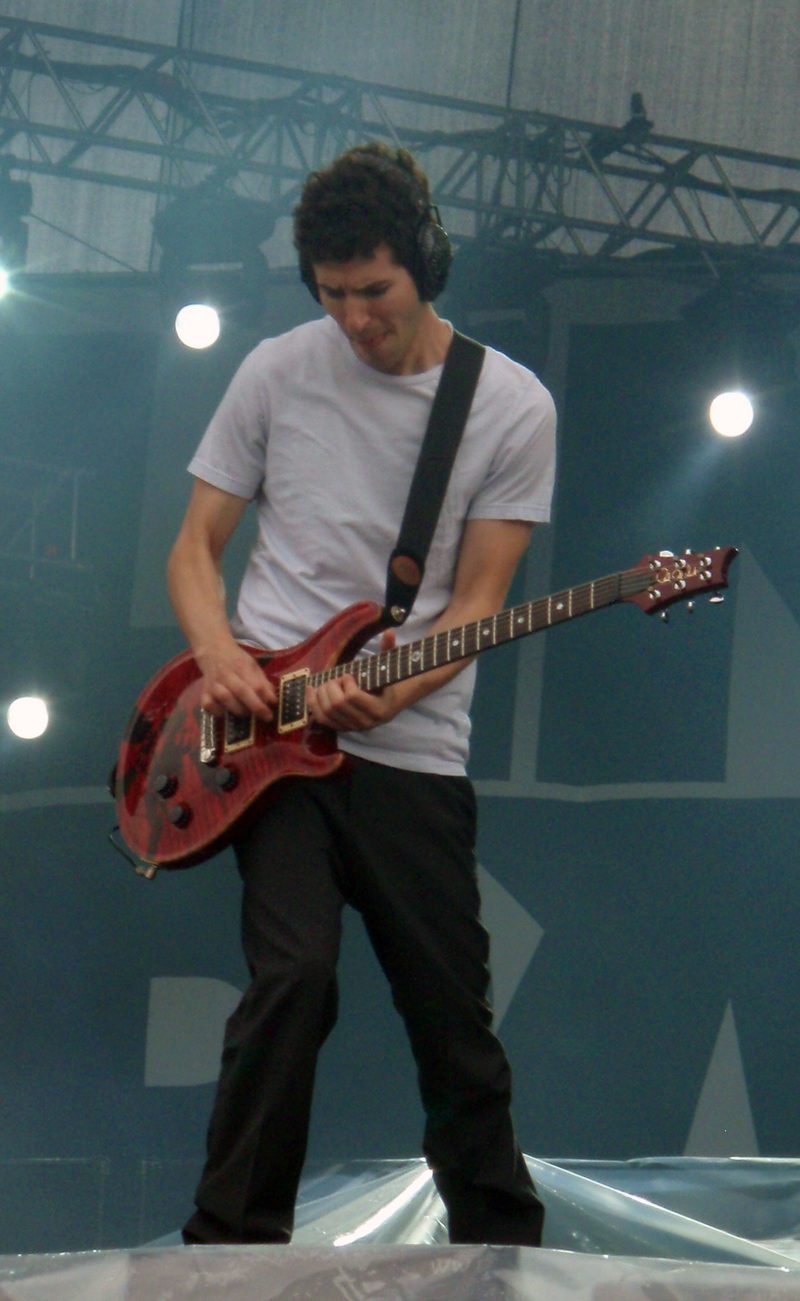
Brad Delson on a PRS and Mike Shinoda on a Gibson SG at Rock im Park, Nuremberg, Germany, 8 June 2014.
The story
How Linkin Park tune
Brad Delson is the lead guitarist; Mike Shinoda plays rhythm guitar next to his keyboards, samples and vocals, and Dave "Phoenix" Farrell plays bass. Their riffs are short, heavy and rhythmic, built around the open low string and power chords played with one finger across the bottom two or three strings. That is exactly what a dropped tuning is for: lower the 6th string a whole step and the lowest three strings make a power chord with one finger barred straight across.
Drop C♯ is Drop D, a half step down. Tune every string down one semitone (E♭ A♭ D♭ G♭ B♭ E♭), then lower the 6th string another whole step to C♯ (or D♭, the same note). Everything you know from Drop D works the same, it just sounds a half step lower and a little heavier. Delson himself talks about it in Drop D terms: looking back on One Step Closer in 2021, he said the guitar was "in Drop D" when he found the riff. The tabs, his gear list and TuneLit's audio check all put the record a half step below that, in Drop C♯, so when a Linkin Park guitarist says "Drop D" about the early songs, read "the Drop D shape".
The gear lists agree. Delson's favourite guitar, a custom red PRS with the Hybrid Theory soldier on the body, is listed in Drop C♯; a second PRS from the Minutes to Midnight era is listed in Drop D; an Ibanez 7-string in B covered With You and Runaway in the early years; and an extended-scale Ibanez in Drop B made Don't Stay possible. Those four tunings cover nearly the whole catalogue.
Phoenix and the bass. The bass follows the guitars an octave lower. Hybrid Theory is the one album Phoenix does not play on: Delson played bass on most of it, with session players Ian Hornbeck and Scott Koziol on a few songs. On a handful of songs the low end of the record goes below the guitars' lowest string, which matters for the audio check described below.
Concert pitch, all the way. Records from the tape era often sit some cents away from A 440: TuneLit measured Pantera's albums 20 to 60 cents flat and Metallica's debut about 16 cents sharp. Linkin Park's albums were recorded and edited in Pro Tools, as their credits note, and no measured album is more than about 3 cents from A 440, which no listener can hear. You never need to change the reference pitch for Linkin Park, only the shape.
TuneLit lab
What TuneLit measured
TuneLit measured the seven albums in the owner's library, Hybrid Theory to One More Light, from MP3 copies (320 kbps) of the albums. Bonus tracks of special editions were measured too but are not used for the albums. From Zero is not in the library.
Album
Main tuning
Measured
Equivalent A
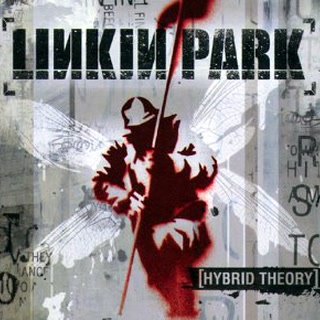
Hybrid Theory (2000)
Drop C♯
+3.1 ¢
A ≈ 440.8
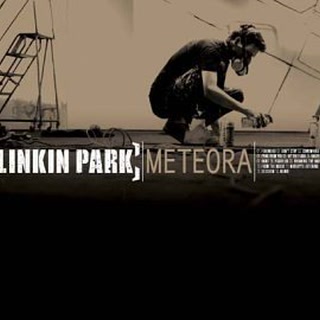
Meteora (2003)
Drop C♯
+0.5 ¢
A 440
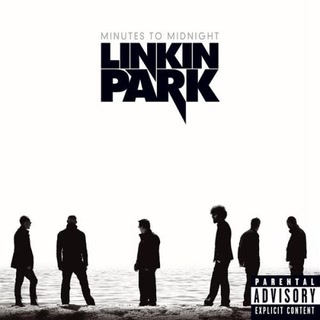
Minutes to Midnight (2007)
Drop D
−1.4 ¢
A 440
A Thousand Suns (2010)
Drop D
−1.6 ¢
A 440
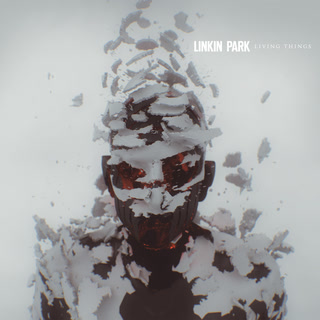
Living Things (2012)
Drop D
−0.8 ¢
A 440
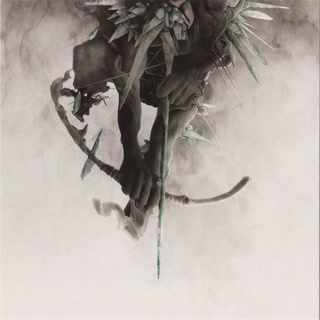
The Hunting Party (2014)
Drop D
−1.4 ¢
A 440
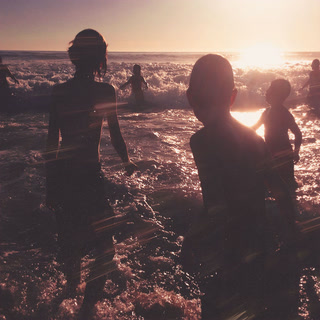
One More Light (2017)
E Standard
+0.4 ¢
A 440
Offsets of 4 cents or less are stored as plain A 440, so every Tune button for these albums opens a normal tuner. Three songs measured far enough from their albums to get their own value: Papercut (+12 ¢, A ≈ 443), Somewhere I Belong (+10 ¢, A ≈ 442.5) and Forgotten (−5 ¢, A ≈ 438.8), plus the vocoder interlude Fallout on A Thousand Suns (−10 ¢), which has no guitar. A few cents is the difference between a guitar that sounds right and one that sounds very slightly sour on long held chords; the Tune buttons include it, so you do not have to think about it.
The semitone check. A pitch measurement only knows the offset within one semitone, so the tuning's name comes from the tabs. TuneLit also listens for the lowest open string: the bass and guitars play it often, and the note just below it almost never. On the 86 album tracks it gives a firm "agrees" for 63, including most of the unusual tunings the tabs name: the 7-string B on With You and Runaway, the E♭ of A Place for My Head, Forgotten and Easier to Run, the B of Don't Stay, the B♭ of Somewhere I Belong and the C of Rebellion. The exceptions are Nobody's Listening, When They Come for Me and Nobody Can Save Me. It is unsure about 16 tracks, most of them interludes or songs where synths or the bass sit below the guitars. It disagrees on 7, and none of those moved, because no tab or source backs the other semitone (details on the album pages and below).
Main tuning: Drop C♯ (C♯ G♯ C♯ F♯ A♯ D♯), at concert pitch (measured +3.1 ¢).
The debut set the template. Papercut, One Step Closer, Points of Authority, Crawling, By Myself, In the End and Pushing Me Away are all tabbed in Drop C♯, and TuneLit's audio check agrees with the low C♯ on every one of them. One Step Closer is the classic example of the tuning at work: a riff that bounces between the open low string and harmonics, which Delson says is probably his favourite riff.
Four songs leave the shape:
With You and Runaway were played on a 7-string guitar in B Standard (B E A D G B E), Delson's Ibanez RG7620 of the time. The audio check hears the open low B at concert pitch. On a 6-string, most of the riffs work in Drop C♯ an octave shape higher, but the lowest notes need the seventh string.
A Place for My Head and Forgotten are tabbed in E♭ Standard (E♭ A♭ D♭ G♭ B♭ E♭), the low string a whole step above the album's C♯. The audio check agrees with E♭ on both.
Cure for the Itch is Joe Hahn's instrumental, with no guitar.
What TuneLit measured: the album sits at A 440 for practical purposes (+3.1 ¢, half the songs between 0 and +4.3 ¢). Papercut is the outlier at about +12 ¢ (A ≈ 443), enough to hear on a sustained chord; Forgotten sits about 5 ¢ flat.
How to tune along: from standard, tune all six strings down a half step, then drop the 6th string a further whole step to C♯. Check the low string against the open 4th string: they should be an octave apart. For Papercut, nudge the reference up to A 443, or just use its Tune button.
Main tuning: Drop C♯, at concert pitch (measured +0.5 ¢).
Meteora keeps the Hybrid Theory formula: Lying from You, Hit the Floor, Faint, Figure.09, From the Inside and Numb are all tabbed in Drop C♯, and the audio check confirms each one. Breaking the Habit is tabbed in Drop C♯ too, but the check cannot confirm it: the open C♯ never sounds on the record, while the C and B under it do, so either the bass and synths go below the guitars there or the tab's tuning is off.
The exceptions go lower than anything on the debut:
Don't Stay is the band's first song in Drop B (B F♯ B E G♯ C♯), written on an extended-scale Ibanez that Delson kept in that tuning. The audio check agrees with the low B.
Nobody's Listening is the second Drop B song according to Linkinpedia and the best-rated Ultimate Guitar tab; the Songsterr tab says Drop C. The record does not settle it: the riff lives on D and E♭, a low C sounds a little and a low B almost never. TuneLit lists Drop B and marks the song as disputed.
Somewhere I Belong is tabbed on Songsterr with all six strings tuned down to B♭ Standard (B♭ E♭ A♭ D♭ G♭ B♭), the low six strings of a 7-string in B Standard tuned down a half step, while the most-voted Ultimate Guitar tab uses Drop C♯. The record has low B♭ notes in both bass octaves and nothing under them, which fits the B♭ tab, and the audio check agrees with it, but the check would accept the Drop C♯ tab too. The song also measures about 10 ¢ sharp (A ≈ 442.5).
Easier to Run is tabbed in E♭ Standard on Songsterr and Ultimate Guitar alike, and the audio check agrees. Its bass tab goes a fourth lower, to B♭, and those deep bass notes are what a few players hear as a lower guitar tuning.
Foreword is a 13-second intro and Session an instrumental built on programmed drums; neither has a guitar part worth tuning for.
How to tune along: Drop C♯ as on Hybrid Theory. For Don't Stay, drop the whole guitar another whole step to Drop B; on a normal 6-string the low B gets floppy, so heavier strings help if you plan to stay there.
Main tuning: Drop D (D A D G B E), at concert pitch (measured −1.4 ¢).
With producer Rick Rubin, the band reworked its sound, and the tuning came up a half step to plain Drop D. Given Up, Leave Out All the Rest, Bleed It Out, What I've Done, Valentine's Day and The Little Things Give You Away are all tabbed in it, and Delson's gear list includes a PRS kept in Drop D for these songs. The audio check agrees with the low D on all of them. On What I've Done the rhythm guitar holds the Drop D riff while the lead lines work just as well in E Standard; the popular chord sheet for strumming it uses standard tuning with a capo at fret 3.
Four songs stay in the old Drop C♯: Shadow of the Day, No More Sorrow, In Between and In Pieces. In Pieces is the interesting one: Songsterr has it in Drop C♯, an Ultimate Guitar tab in the album's Drop D, and the audio check sides firmly with C♯. Shadow of the Day's chord sheet tunes down a half step (E♭ Standard), which shares the upper five strings with Drop C♯; the audio check cannot confirm the low string there, because a low B sounds under the guitars.
What TuneLit measured: −1.4 ¢, and every song but one within about 6 ¢ of it. No More Sorrow read about 21 ¢ sharp, but with low confidence, so it keeps the album's value.
How to tune along: for the Drop D songs, lower only the 6th string a whole step from standard. For the four Drop C♯ songs, tune everything down a half step first.
Main tuning: Drop D, at concert pitch (measured −1.6 ¢).
A concept album built from samples, keyboards and spoken interludes, where the guitar is one colour among many. The guitar songs are tabbed in Drop D: Burning in the Skies, Robot Boy, Blackout, Wretches and Kings, Iridescent and The Catalyst. Waiting for the End and the acoustic The Messenger (Delson on a Gibson J-45) are in E Standard, and the audio check agrees on both. The one tab of When They Come for Me is written for a 7-string in B Standard; the record's low end is dominated by C, so the check cannot confirm the low B.
Five tracks are interludes without guitar: The Requiem, The Radiance, Empty Spaces, Wisdom, Justice, and Love and Fallout. Fallout measures about 10 ¢ flat, the only track that reads clearly off the album's pitch.
Main tuning: Drop D, at concert pitch (measured −0.8 ¢).
Half the album is Drop D (Lost in the Echo, In My Remains, Burn It Down, Lies Greed Misery, Victimized) and half is E Standard (I'll Be Gone, Castle of Glass, Roads Untraveled, Tinfoil). Powerless goes back to Drop C♯, and the audio check agrees. Skin to Bone and Until It Breaks are electronic tracks with no guitar tab.
Two E Standard songs get a different answer from the audio check. On Roads Untraveled it leans to E♭ (a low B sits under the E on the record), and on Tinfoil to F, which is its known mistake on songs that rarely play the open low string. No tab names either tuning, so both stay in E Standard; if Roads Untraveled sounds a half step off against you, try E♭.
What TuneLit measured: −0.8 ¢, every song within about 6 ¢ of it.
Main tuning: Drop D, at concert pitch (measured −1.4 ¢).
The band's loud, guitar-led record, and the most consistent one to tune for: Keys to the Kingdom, All for Nothing, Guilty All the Same, Wastelands, Until It's Gone, Mark the Graves, Final Masquerade and A Line in the Sand are all Drop D. War and the Tom Morello instrumental Drawbar are in E Standard, and Rebellion, with Daron Malakian of System of a Down, is in Drop C (C G C F A D), the tuning of System of a Down's early albums. The audio check agrees with the tabs on eleven of the twelve tracks.
The twelfth is Final Masquerade. Its lowest notes are A♭, E♭ and C, and the low D never sounds, so the audio check leans a half step up to E♭. That is the check's blind spot rather than a new tuning, and every tab agrees on Drop D.
Main tuning: E Standard, at concert pitch (measured +0.4 ¢).
Chester Bennington's last album with the band is a pop record with clean Stratocaster parts and an acoustic on Sharp Edges, and the tabs put it in plain E Standard. The audio check agrees on Good Goodbye, Invisible, Heavy and Halfway Right.
Three songs are worth a second look:
Nobody Can Save Me is tabbed in E♭ Standard. The audio check leans to E Standard (0.94): the record's low notes sit on B, G♯ and E, and E♭ never sounds. A song in B major can easily avoid the open E♭ string, which is the check's known blind spot, so the tab stays; if it sounds a half step off, try E Standard.
Battle Symphony is the reverse case: the guitar tabs say E Standard, the bass tab says E♭ Standard, and the record's low notes sit on E♭ and B♭ with no low E at all. The check cannot decide. Start in E Standard and drop to E♭ if it sounds wrong.
Talking to Myself and Sharp Edges get a "higher" (F) from the check, its usual mistake when the open E is rarely played. They stay in E Standard.
What TuneLit measured: +0.4 ¢, every song within 4 ¢ of A 440.
The comeback album, with Emily Armstrong on vocals and Colin Brittain on drums. Delson plays on the record but stopped touring in 2024, and Alex Feder plays guitar on stage. The tabs put The Emptiness Machine, Cut the Bridge, Over Each Other, Casualty and IGYEIH in Drop D; Heavy Is the Crown and Overflow in E Standard, with a Songsterr part for Shinoda on a baritone guitar in B Standard; and Two Faced and Stained back in Drop C♯, the Hybrid Theory tuning. The one tab of Good Things Go writes a low A under E A D G B, which matches a 7-string in Drop A; check it against the record before you retune.
From Zero is not in TuneLit's library, so these are tab tunings at concert pitch. Every Linkin Park album TuneLit did measure sits at A 440, so that is the safest starting point.
The story
Live
TuneLit does not measure live albums, but the special editions in the library carry live bonus tracks: songs from London's Docklands Arena on the Hybrid Theory special edition, tour recordings on the Meteora, Minutes to Midnight and Living Things editions, and a 2012 Los Angeles show on The Hunting Party. Where the reading is confident, they all sit within about 5 cents of the A 440 grid, so the band tunes to a normal A 440 reference on stage too (the measurement cannot tell whether a live version keeps the studio semitone). Linkinpedia notes a few live versions played in another key (Nobody Can Save Me a half step lower at the 2017 tribute concert, Roads Untraveled a half step higher at some shows), so for a concert video, start from the studio tuning and listen.
Brad Delson playing a red PRS at the Sonisphere Festival in Pori, Finland, in July 2009.
The story
Practical tips
Learn the half-step-down move once. Most Linkin Park songs before 2007 are "everything down a half step, then drop the 6th string a whole step". After that, Drop D and E Standard are one or two turns of a tuning peg away.
Check the dropped string by octave. In Drop C♯ or Drop D, the open 6th string should sound exactly one octave below the open 4th string. If the power chords on the bottom strings sound wobbly, that octave is the first thing to check.
Keep a second guitar in Drop C♯ if you play a full set. Switching between the early songs and the Drop D or E Standard ones is the most common tuning change in a Linkin Park set, and Delson's own guitars were set up per tuning.
Use heavier strings for Drop B and B♭. Don't Stay, Nobody's Listening and Somewhere I Belong go well below the usual range of a 6-string with light strings.
Do not reach for the reference pitch. Unlike many bands of the era, Linkin Park's records are at A 440. If a song sounds off, the shape or the semitone is the thing to check, not the reference.
Evidence
How sure are these numbers?
Every tuning on the album pages carries a status label:
Official: the musician or his tech said it. For Linkin Park, the gear lists back the main tunings, but no interview names the tuning of single songs, so no song is marked official.
Widely reported: several kinds of source agree: tabs, gear lists and articles. The Drop C♯ of the first two albums, the 7-string songs, Don't Stay and the Drop D of Minutes to Midnight sit here.
Community: from community tabs, mostly Songsterr and Ultimate Guitar. Most song-level tunings from A Thousand Suns on rest on tabs.
Disputed: the sources disagree. For Linkin Park: Somewhere I Belong (B♭ or Drop C♯), Nobody's Listening (Drop B or Drop C) and In Pieces (Drop C♯ or Drop D; the audio check sides with Drop C♯).
Measured by TuneLit: our own pitch analysis of the record, giving the offset in cents. Only the result is published; the audio is never stored or shared.
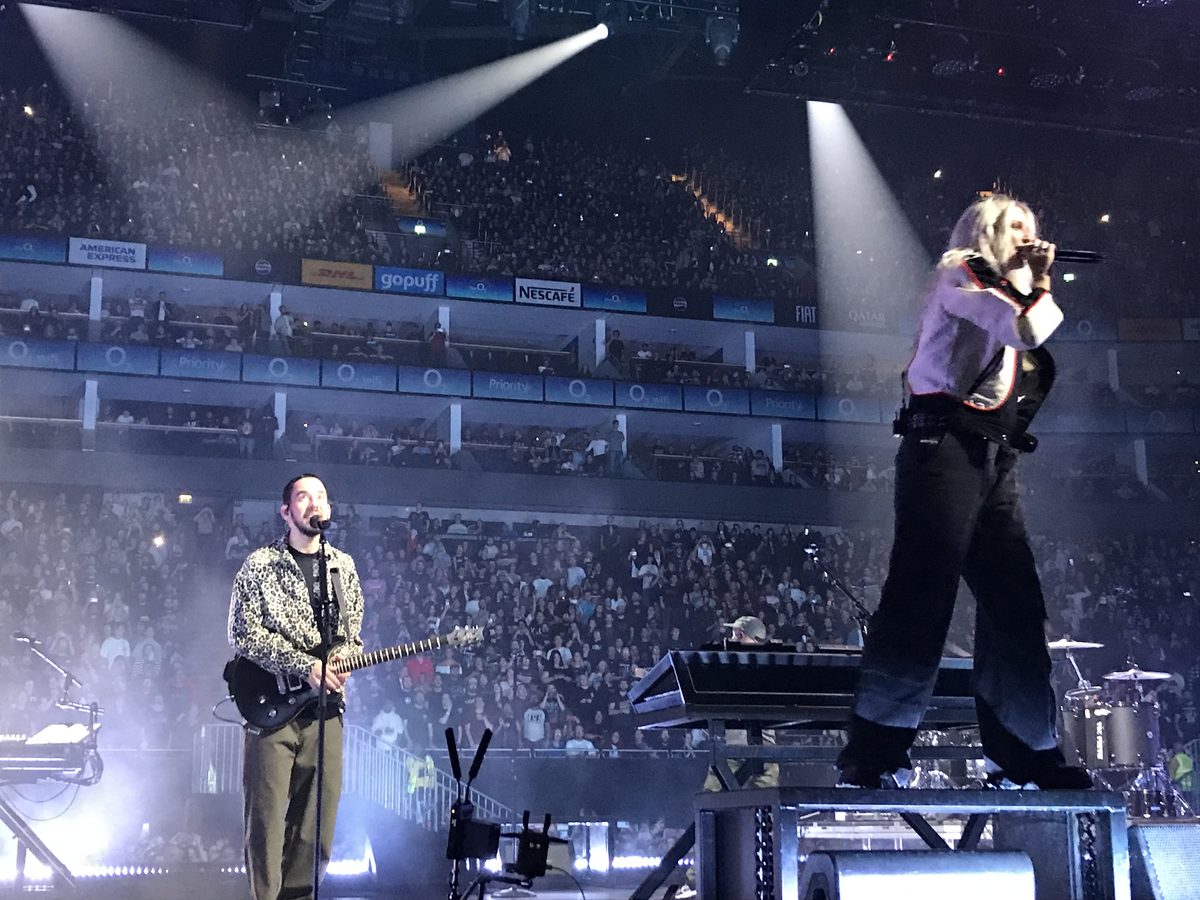
Mike Shinoda on guitar and Emily Armstrong at the O2 Arena in London on the From Zero tour, 24 September 2024.
Cheat sheet
Quick reference
Hybrid Theory (2000): Drop C♯ at A 440; Papercut at A 443. 7-string B Standard: With You, Runaway. E♭ Standard: A Place for My Head, Forgotten.
Meteora (2003): Drop C♯ at A 440. Drop B: Don't Stay, Nobody's Listening (disputed). B♭ Standard: Somewhere I Belong (disputed, A ≈ 442.5). E♭ Standard: Easier to Run.
Minutes to Midnight (2007): Drop D at A 440. Drop C♯: Shadow of the Day, No More Sorrow, In Between, In Pieces.
A Thousand Suns (2010): Drop D at A 440. E Standard: Waiting for the End, The Messenger, Jornada del Muerto. 7-string B Standard (tab): When They Come for Me.
Living Things (2012): Drop D at A 440. E Standard: I'll Be Gone, Castle of Glass, Roads Untraveled, Tinfoil. Drop C♯: Powerless.
The Hunting Party (2014): Drop D at A 440. E Standard: War, Drawbar. Drop C: Rebellion.
One More Light (2017): E Standard at A 440. E♭ Standard: Nobody Can Save Me.
From Zero (2024, not measured): Drop D. E Standard: Heavy Is the Crown, Overflow. Drop C♯: Two Faced, Stained.
Questions
What tuning does Linkin Park use?
Mostly Drop D: 5 of 8 albums. Hybrid Theory and Meteora are in Drop C♯; One More Light is in E Standard. Many albums also have songs in other tunings, and the album pages list them song by song.
How did TuneLit measure Linkin Park's records?
We played original CDs and LPs through TuneLit's pitch analysis: the strongest notes of each song are compared with the A 440 grid, which gives the offset in cents. That cannot tell the semitone, so the tuning name comes from interviews, the press and tabs. The audio is never stored or published.
Colors and font
Font
Colors
Menu
Install the app
Android (Chrome): menu ⋮ → Install app or Add to Home screen.
Computer (Chrome, Edge): the install icon at the right end of the address bar.
iPhone: Safari → Share → Add to Home Screen.
It opens full screen and keeps tuning with no connection.