


US · 1984–1997, 2010–2017 · 7 albums

Soundgarden tunings.

Drop D was only the start: Soundgarden wrote in a dozen tunings, from a low B to six strings of E.

See the albums Read the story

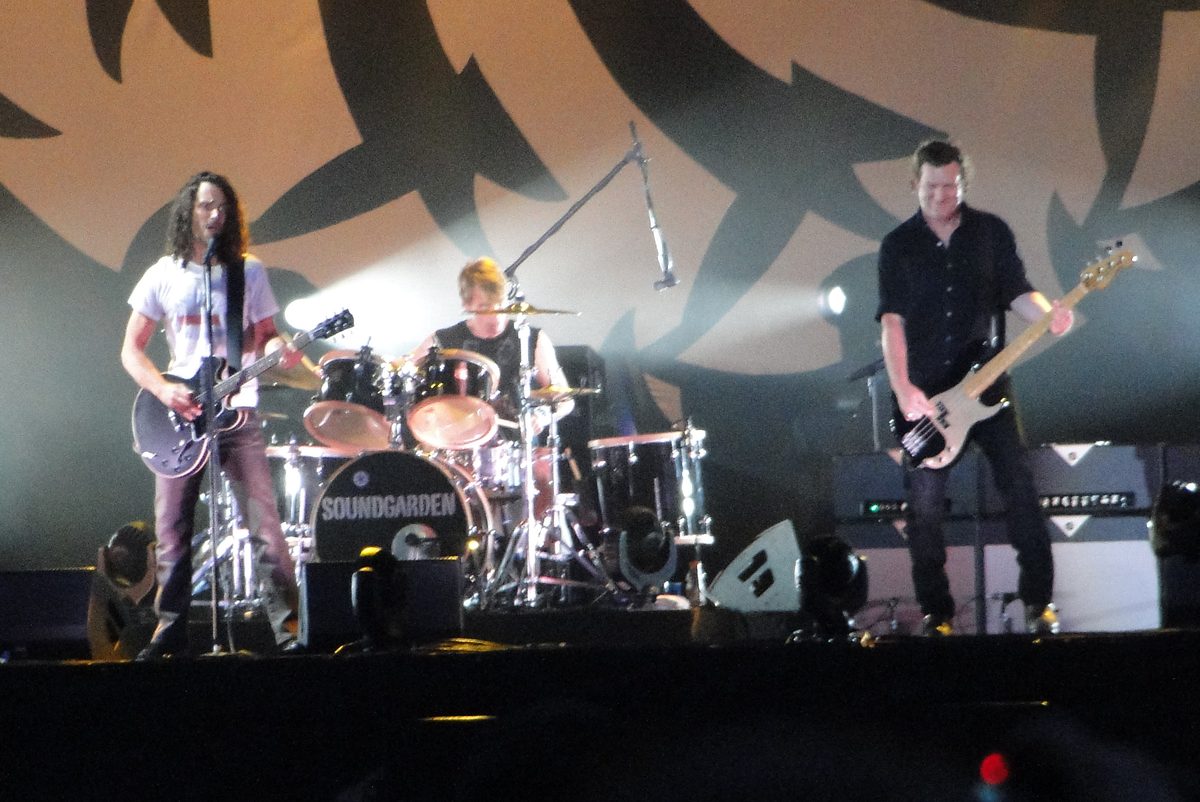
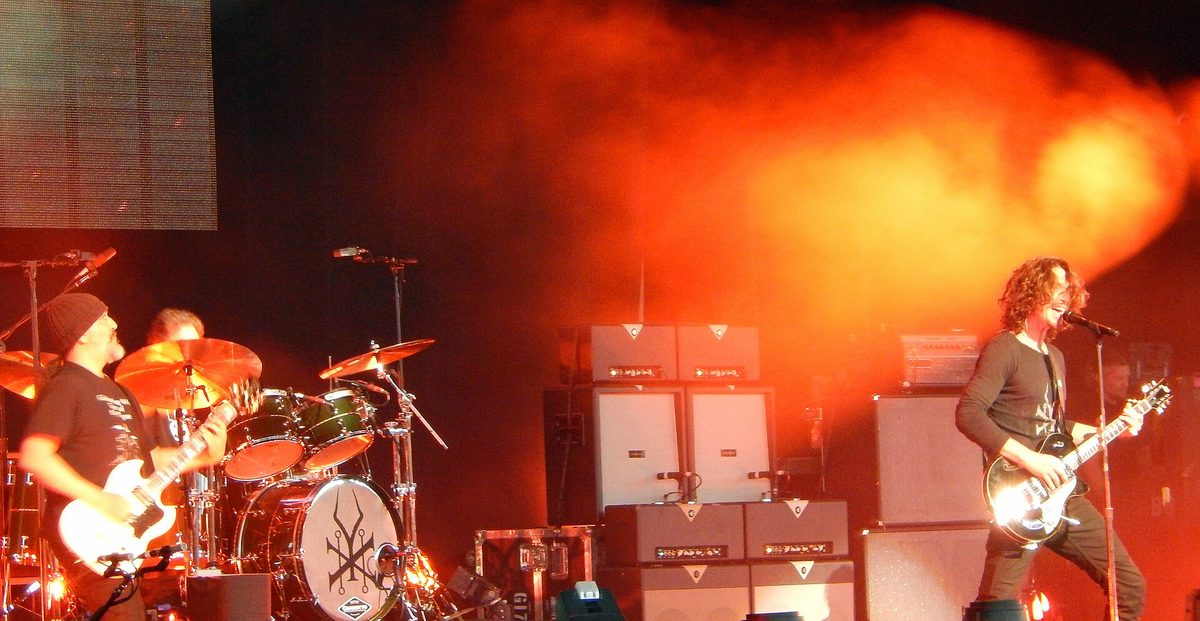
Soundgarden under their logo backdrop at Lollapalooza in Chicago on 8 August 2010: Chris Cornell on guitar, Matt Cameron behind the SOUNDGARDEN bass drum and Ben Shepherd on bass.

In short

How Soundgarden tunes

Soundgarden made Drop D the sound of Seattle after Kim Thayil learned it from the Melvins' Buzz Osborne in the mid-1980s, and then kept going: a low B for Rusty Cage, every string on E for Mind Riot, Ben Shepherd's E E B B B E and C G C G G E, C G D G B E, D G D G B E and a tuning used only once for 4th of July, often a different one for every song. TuneLit measured the six studio albums from the owner's CDs.

Read more

Every album sits within 3 to 6 cents of concert pitch, but single songs do not: on Superunknown the songs in the odd tunings run up to 21 cents sharp, The Day I Tried to Live sits a quarter tone sharp, and Black Hole Sun, played in Drop D, sounds almost a semitone higher. Three Louder Than Love songs run 31 to 42 cents sharp. Where the band named a tuning, this page follows the band, even against the tabs: My Wave is E E B B B E, Dusty is C G C G G E.

Album tunings

  • E Standard4 albums
  • Drop D3 albums

Plus the songs that break the pattern, and the pitch of each record.

7 albums · 87 songs

Pick an album

Each album shows its tuning and how far the record sits from A 440. Open it for every song and a Tune button.

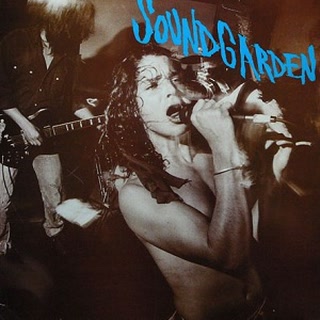
  1. Screaming Life album cover 1987EP Screaming Life E Standard A 440 From tabs · not measured 2 songs tuned differently
  2. Ultramega OK album cover 1988Studio album Ultramega OK E Standard +4 ¢ A 440 MeasuredCD +4.2 ¢ 2 songs tuned differently
  3. Louder Than Love album cover 1989Studio album Louder Than Love E Standard +5 ¢ +5 ¢ · A ≈ 441 MeasuredCD +5.2 ¢ 6 songs tuned differently
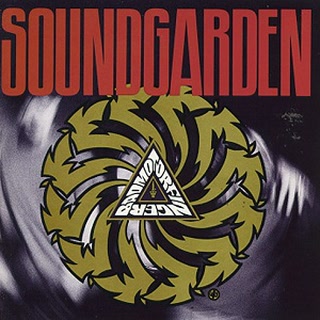
  4. Badmotorfinger album cover 1991Studio album Badmotorfinger Drop D +6 ¢ +6 ¢ · A ≈ 442 MeasuredCD +5.9 ¢ 8 songs tuned differently
  5. Superunknown album cover 1994Studio album Superunknown Drop D +6 ¢ +6 ¢ · A ≈ 442 MeasuredCD +5.9 ¢ 12 songs tuned differently
  6. Down on the Upside album cover 1996Studio album Down on the Upside E Standard A 440 MeasuredCD +3.2 ¢ 9 songs tuned differently
  7. King Animal album cover 2012Studio album King Animal Drop D A 440 MeasuredCD +3.9 ¢ 8 songs tuned differently

The full story

Soundgarden tunings, album by album

Soundgarden are the band that made Drop D the sound of Seattle, and then refused to stay there. Over six albums Kim Thayil, Chris Cornell and Ben Shepherd wrote in at least a dozen tunings: Drop D, a low B, D G D G B E, C G D G B E, C G C G G E, an E and B tuning, one song with all six strings on E and one tuning they used only once. On stage they carried eight or nine guitars, Thayil remembers, because the tuning changed every few songs. That is why Soundgarden tabs so often disagree, and why playing along can go wrong before you play a note.

This page collects what is known about each tuning, mostly from the band's own words, and adds what TuneLit measured on the owner's CDs: how far each record sits from concert pitch, which songs differ from their album, and two songs whose record does not match the tuning everyone plays them in. Every album page lists the songs with a Tune button that sets the tuner to that exact tuning and pitch, and a song tuned differently from its album gets a "How to get there" line: which strings to move, and how far, from the album's tuning.

Popular songs

Each song has its own page: the exact tuning, the record's pitch, how to get there string by string, and how to move the record into your own tuning.

The story

The short version

  • Most records are at concert pitch, give or take. Every album measures between 3 and 6 cents sharp, too little to hear. Tune to A 440 and you are close; the Tune buttons add the few cents.
  • The tuning changes from song to song, not from album to album. Superunknown alone uses eight different tunings. Check the song, not the album.
  • The band's word beats the tabs. In 2024 Thayil said many tunings online are wrong, and corrected the best-known one himself: My Wave and The Day I Tried to Live are E E B B B E, not E E B B B B.
  • Two famous songs are not where the tabs put them. Black Hole Sun is fingered in Drop D, but the record sounds almost a semitone higher. Half is fingered in C G C G G E, and the record sounds a full half step higher.
  • A few songs run sharp. The Day I Tried to Live sits about a quarter tone above its tuning, and three songs on Louder Than Love sit 31 to 42 cents sharp.
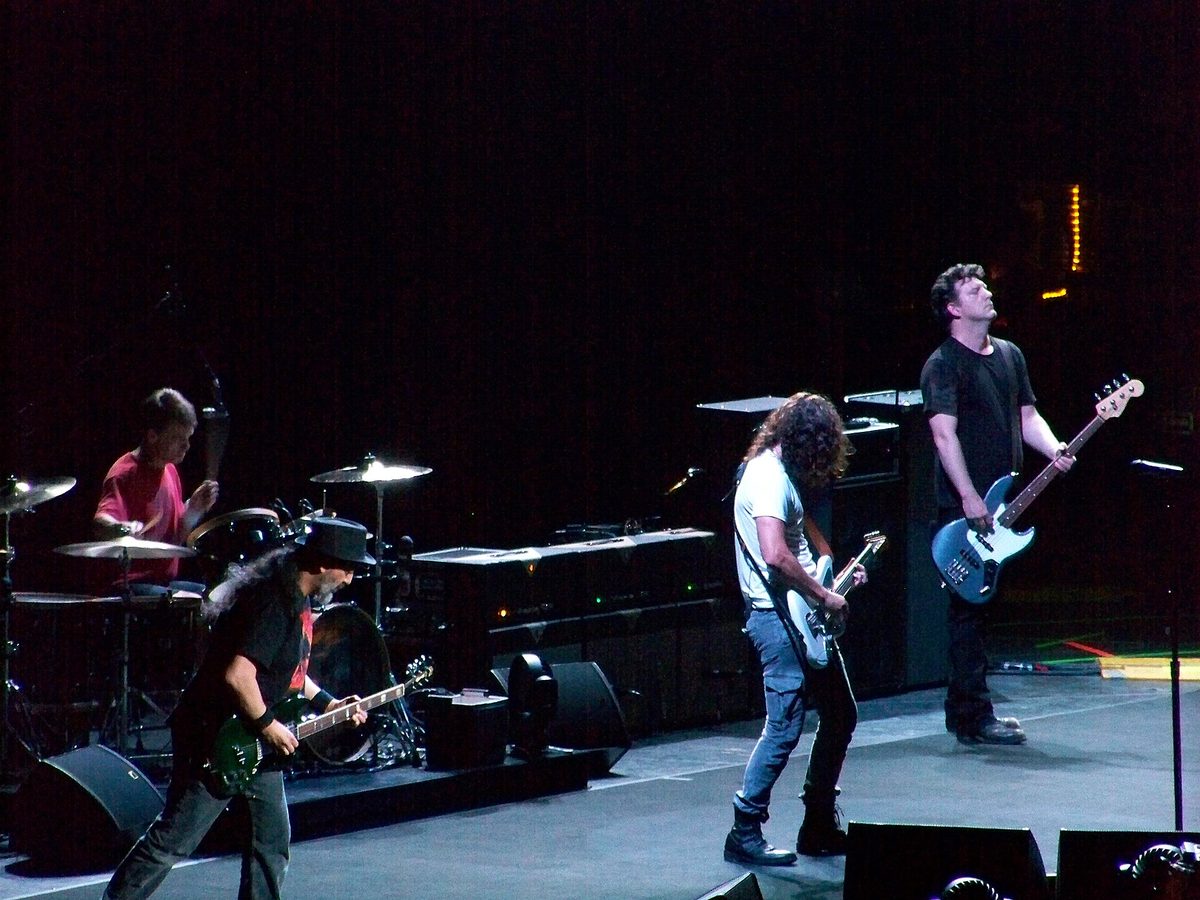
Soundgarden on stage in February 2012: Kim Thayil (left), Chris Cornell, Matt Cameron on drums and Ben Shepherd (right).

The story

The tunings, string by string

All tunings are listed from string 6 (the lowest) to string 1. Notes in brackets are the ones that change from E Standard.

TuningStrings (6 to 1)Main songs
E StandardE A D G B EHunted Down, Loud Love, Get on the Snake, Big Dumb Sex, Drawing Flies, Fell on Black Days, Blow Up the Outside World, Zero Chance, Ty Cobb, Non-State Actor, Halfway There
Drop D(D) A D G B ENothing to Say, Flower, Beyond the Wheel, Hands All Over, Outshined, Jesus Christ Pose, Slaves & Bulldozers, Spoonman, Let Me Drown, Kickstand, No Attention, By Crooked Steps, Bones of Birds
Low B(B) A D G B ERusty Cage, Searching with My Good Eye Closed, Holy Water
D A D G B B(D) A D G B (B)Face Pollution
D G D G B E(D G) D G B ENew Damage, Superunknown, Fresh Tendrils
D G D G B C(D G) D G B (C)Like Suicide
C G D G B E(C G) D G B EMailman, Limo Wreck, Blood on the Valley Floor
C G C G G E(C G C) G (G) EHead Down, Pretty Noose, Burden in My Hand, Dusty, Never the Machine Forever, A Thousand Days Before
C F C G B E(C F C) G B E4th of July
E E B B B EE (E B B) B ESomewhere, My Wave, The Day I Tried to Live, Been Away Too Long, Worse Dreams
All EE (E E E E) EMind Riot
D StandardD G C F A DOverfloater, Boot Camp

The band had nicknames for some of them. Thayil calls Drop D with the A string lowered to G the "digga digga" tuning, and says it took off for the band around Badmotorfinger. C G C G G E is the one they call open C or the slide tuning; it is not the open C in TuneLit's list (C G C G C E), because string 2 drops all the way to G instead of C. The Tune buttons handle every one of them as a custom tuning, so you do not need to remember the names.

TuneLit lab

What TuneLit measured

TuneLit measured the first CD editions in the owner's library: Ultramega OK on SST (1988), Louder Than Love on A&M (1989), Badmotorfinger from A&M's 1992 two-disc edition, Superunknown on the Japanese A&M CD (1994), Down on the Upside (1996) and King Animal (2012). Each song gives its offset from the A 440 grid; the album value is the middle of its songs.

AlbumMain tuningAlbum pitchSongs that differ
Ultramega OK (1988)E Standard+4 ¢ (A ≈ 441.1)none clearly; the readings are less certain on this rougher record
Louder Than Love (1989)E Standard+5 ¢ (A ≈ 441.3)Get on the Snake +31 ¢, Uncovered +33 ¢, I Awake +42 ¢
Badmotorfinger (1991)Drop D+6 ¢ (A ≈ 441.5)none
Superunknown (1994)Drop D+6 ¢ (A ≈ 441.5)My Wave +14, Fell on Black Days +15, Limo Wreck +15, Head Down +18, Superunknown +19, 4th of July +21 ¢; The Day I Tried to Live +51 ¢; Black Hole Sun a semitone up (Drop D♯ −29 ¢)
Down on the Upside (1996)E Standard+3 ¢ (concert pitch)Dusty and Never the Machine Forever +13 ¢
King Animal (2012)Drop D+4 ¢ (concert pitch)Non-State Actor +15 ¢

TuneLit also checks from the audio which semitone each song's lowest open string sits on. It agrees with the tuning listed here on 73 of the 80 songs it could hear, including every low B, every low C and the C G C G G E songs. That matters for this band: the check confirms Thayil's C G C G G E for Dusty, where the most-viewed tabs say D G D G B E, and the low D of Boot Camp, which he once listed as standard.

The owner's library also holds the LP versions of these albums and the 2014 remaster of Superunknown. The LP versions give the same values as the CDs within about 2 cents, song by song, including the sharp Louder Than Love songs and the Superunknown songs described below. The 2014 remaster of Superunknown runs about 3 cents lower than the 1994 CD on every song, a difference too small to hear.

The story

Ultramega OK (1988) and the early EPs

What the sources say. Thayil learned Drop D in 1985 or 1986, when Buzz Osborne of the Melvins told him and Mark Arm that Tony Iommi tuned his low E down to D. He went home and wrote Nothing to Say, which came out on the Screaming Life EP in 1987, and Chris Cornell soon wrote Beyond the Wheel in the same tuning. The rest of Screaming Life is tabbed in E Standard; one tab puts Tears to Forget a half step down.

On Ultramega OK, the SST debut album, Flower and Beyond the Wheel are the Drop D songs. Thayil has said that players asked him how he played Flower so fast, and the answer was simply the low string tuned to D, so a power chord takes one finger. The droning, sitar-like intro is him blowing across the strings. Everything else on the album is tabbed in E Standard. Nazi Driver is sometimes tabbed in Drop D for convenience, but its riff sits on the same notes in E Standard and nothing on the record goes below E.

What TuneLit measured. The SST CD sits about 4 cents sharp, a hair above concert pitch. The songs spread from about 3 cents flat to 17 sharp, but the sharpest readings come from the songs the measurement is least sure about, so no song gets its own value. The audio check agrees with E Standard and Drop D wherever it could hear the low string.

How to tune. E Standard at A 440 for most songs; drop string 6 to D for Flower and Beyond the Wheel. TuneLit has not measured Screaming Life, so its tunings come from tabs, at concert pitch.

The story

Louder Than Love (1989)

What the sources say. At the time, Thayil told Guitar World that a lot of the songs were tuned down to D, for loose, rubber-band strings and a heavier sound. The tabs and Guitar magazine's tuning list name four: Hands All Over, Gun, Full On Kevin's Mom and I Awake. Thayil describes Hands All Over as one riff, one note and one chord, built on that low string. The rest, including Loud Love, Get on the Snake and Big Dumb Sex, is in E Standard. Gun is the one in dispute: the careful hand-made tabs are in Drop D, while a tab that started life as an automatic transcription is in D Standard. Both share the low D the record leans on.

What TuneLit measured. The album sits about 5 cents sharp, and most songs are within a few cents of that. Three are not: Get on the Snake about 31 cents sharp (A ≈ 448), Uncovered about 33 cents sharp (A ≈ 448.6) and I Awake about 42 cents sharp (A ≈ 450.7). That is close to a quarter tone, enough to sound clearly out against a guitar at A 440. I Awake is close enough to the middle between two notes that its page offers both readings, Drop D 42 cents sharp or Drop C♯ 42 cents sharp; the audio check hears the low string on the sharp D, and the notes of the tab match the record only at that reading.

How to tune. E Standard or Drop D at concert pitch for most of the album, and the Tune button for the three sharp songs.

The story

Badmotorfinger (1991)

What the sources say. This is where the tunings took off. Drop D carries the best-known songs: Outshined, Jesus Christ Pose, Slaves & Bulldozers and Room a Thousand Years Wide. But Cornell started dropping string 6 even further, all the way to B, for Rusty Cage, Searching with My Good Eye Closed and Holy Water. Thayil likes how the octave then sits a whole step up on the next string; he also called the low string all wobbly. For Mind Riot, Cornell tuned every string to an E, after Pearl Jam's Jeff Ament joked about someone doing exactly that. New bassist Ben Shepherd arrived with open and slide tunings, and with the E and B tuning of his song Somewhere, which Cornell kept using for years. Face Pollution is Drop D with the high E lowered to B, so the top two strings ring in unison; Thayil compares the effect to a 12-string. New Damage is tabbed in D G D G B E. Drawing Flies, Matt Cameron's song, is the one plain E Standard track. Cornell said at the time that the band needed about seven tunings on stage.

What TuneLit measured. About 6 cents sharp (A ≈ 441.5), with every song close to the album. The audio check confirms the low B of all three B songs, the low E of Mind Riot and Somewhere and the low D of the rest.

How to tune. Start from Drop D. For the B songs, loosen string 6 a further minor third, from D down to B; Thayil generally used light .009 sets with a heavy .056 low string, and a heavier string 6 keeps a low B from flapping. For Mind Riot the octaves here follow the main tabs: E E E E E E as E2 E2 E3 E3 E4 E4, which takes string 2 up a fourth to E4. That is a lot of tension on a normal B string, so use a lighter string there, or follow the other tab, which tunes string 2 down to E3 instead.

The story

Superunknown (1994)

What the sources say. Almost every song has its own tuning, and Thayil has gone through them himself, first for Guitar Player in 1994 and again for the same magazine in 2024:

  • Drop D: Let Me Drown, Black Hole Sun, Spoonman, Kickstand.
  • E Standard: Fell on Black Days (the riff is in 6/4).
  • E E B B B E: My Wave and The Day I Tried to Live. Many tabs and articles, and even some older interviews, write E E B B B B; in 2024 Thayil said that is wrong and that string 1 stays on E.
  • C G D G B E: Mailman (Matt Cameron's riff, on which Cornell does not play) and Limo Wreck, which Thayil calls the most interesting tuning on the record.
  • D G D G B E: Superunknown and Fresh Tendrils.
  • C G C G G E: Head Down and Half, both Ben Shepherd's songs. Head Down is where the band first used this tuning.
  • D G D G B C: Like Suicide. Cornell could not reach the note he wanted for the arpeggio, so he tuned the high E down to C and let it ring.
  • C F C G B E: 4th of July, a tuning the band used only once. Thayil says it was hard to keep in tune: it needed heavy strings, and on stage a separate guitar with heavier low strings.

What TuneLit measured. The Drop D songs sit about 6 cents sharp, and that is the album's value. Most songs in the other tunings sit higher: Fresh Tendrils and Half about 9 to 11 cents, My Wave, Fell on Black Days and Limo Wreck 14 to 15, Mailman, Head Down and the title track 18 to 19, and 4th of July 21 cents sharp. Three songs need more care:

  • Black Hole Sun. Every source, and the fingering, says Drop D, but the record is not in Drop D at concert pitch. It sounds about 71 cents above Drop D, which is the same as Drop D♯ tuned 29 cents flat. The audio check rules out D for the low string, the commonest notes of the main tab are almost absent at their written pitch, and they are strong one semitone higher. One tab, titled "original tuning", is in Drop D♯. A guitar in Drop D at A 440 sounds almost a semitone flat against the record. Tune Drop D♯ 29 cents flat to play along, or play in Drop D and let Play along bring the record down to you.
  • The Day I Tried to Live sits about 51 cents above E E B B B E: a quarter tone sharp, reference A ≈ 453. A 440 tuner reads its low string as F about 49 cents flat. The audio check agrees, and the tab's notes match the record at that sharp reading.
  • Half is in C G C G G E by Thayil's account, but on the record the same shape sounds a half step higher, C♯ G♯ C♯ G♯ G♯ F. The most-viewed tab is written that way, and an older tab says the song may be in C♯. Tune those strings, or tune C G C G G E and put a capo on fret 1.

How to tune. Use each song's Tune button; this album rewards it more than any other. If you play the album straight through, the reference moves by up to 15 cents between neighbouring songs, and by much more around Black Hole Sun and The Day I Tried to Live.

Kim Thayil and Chris Cornell playing guitars side by side at a Soundgarden show in July 2014, Matt Cameron behind them.

The story

Down on the Upside (1996)

What the sources say. Thayil said the album had far more standard tuning than Superunknown: Zero Chance, Ty Cobb, Blow Up the Outside World, Never Named, Applebite, An Unkind and Tighter & Tighter. Ty Cobb's fast riff is played on mandolin and mandola. The other big tuning is C G C G G E, which Thayil was writing in at the time on single-coil guitars: Pretty Noose, Burden in My Hand (Cornell strummed a National resonator in it), Never the Machine Forever (Thayil's own song, in 9/8) and, by his account, Dusty. Rhinosaur is Drop D for Thayil, while accounts differ about whether the rest of the band stayed in standard. No Attention and Switch Opens are Drop D. Overfloater is standard tuning with every string down a whole step, so D Standard, though the most-viewed tabs play it in Drop D. Boot Camp is the odd one: Thayil once listed it as standard, but the record's lowest note is a D and the tabs agree it sits a whole step down.

What TuneLit measured. About 3 cents sharp, which counts as concert pitch. Dusty and Never the Machine Forever sit about 13 cents sharp. The audio check hears a low C on Dusty, with no low D, which backs Thayil's C G C G G E over the D G D G B E of the most-viewed tabs and the G G D G B D a magazine printed in 1997.

How to tune. E Standard at A 440 for most of it; C G C G G E for the four songs above. From E Standard that means string 6 down a major third to C, string 5 down a whole step to G, string 4 down a whole step to C, and string 2 down a major third to G, a unison with string 3.

The story

King Animal (2012)

What the sources say. The reunion album brought the old tunings back. Cornell found the riff of Been Away Too Long by picking up an old Gretsch that was hanging on his wall, still in the E and B tuning from Somewhere; Shepherd says its working title was "EBE" after the tuning. A Thousand Days Before, Thayil's song, is in C G C G G E, which he calls an open slide tuning; doubling the guitar in it gave the bagpipe sound of the solo. Thayil says he played a Firebird on the E and B songs, Telecasters in C G C G G E and his Guild S-100s for the Drop D material. The tabs put By Crooked Steps, Bones of Birds, Taree, Attrition and Rowing in Drop D, Non-State Actor, Halfway There, Black Saturday and Eyelid's Mouth in E Standard, Worse Dreams in the E and B tuning and Blood on the Valley Floor in C G D G B E.

What TuneLit measured. About 4 cents sharp, so concert pitch on the buttons. Non-State Actor sits about 15 cents sharp. The audio check confirms the low C of Blood on the Valley Floor (an automatic tab says Drop C; the hand-made one says C G D G B E) and the low E of Black Saturday, which one automatic tab put in Drop D.

The story

Getting the custom tunings right

  • Use enough string. Thayil has said that loose strings go sharp when you squeeze the neck, and that light strings bend out of tune in C G C G G E and E E B B B E. A heavier string 6 helps for the low B and low C songs; 4th of July needed heavy low strings to stay in tune at all.
  • Watch the strings that go up. E E B B B E raises string 3 from G to B, a major third, and the main Mind Riot layout raises string 2 from B to E. A lighter string in that slot avoids a snapped string.
  • Retune in an order that keeps the neck stable. Lower the big strings first, then bring up any string that goes higher, then check them all again: dropping three strings by a third changes the neck's tension enough to pull the others out.
  • Solo in the song's tuning. Thayil always did: he found the octave positions in each tuning and played from there, and the open, droning strings are part of the sound.
  • Keep a guitar per tuning if you can. The band did, eight or nine of them on a tour.

The story

Live recordings

TuneLit has measured only the studio albums. Live releases such as Louder Than Live (1990) and Live on I-5 (2011) use the same tunings, but their pitch has not been measured, so start from the studio song's tuning at concert pitch and check by ear.

Soundgarden at Great Woods (Comcast Center) in Mansfield, Massachusetts, 10 July 2011, with Thayil, Cornell and Shepherd at the front.

The story

About the sources

The tunings come first from the band: Kim Thayil's interviews with Guitar Player (1994, 1996, 2024), Guitar World (1989, 1996, 2013, 2023), The Guitar Magazine (1996), Guitar One (1996), Premier Guitar (2012), Total Guitar (2012, with Chris Cornell) and Musician (1992), several of them kept on an old fan site in the Internet Archive. Where the band never named a song's tuning, the tabs on Songsterr and Ultimate Guitar decide, and the song's status says so. Many tabs of the less famous songs are automatic transcriptions; where they disagree with a hand-made tab or with the record's low notes, this page says which one it follows and why. The pitch of each record is TuneLit's own measurement.

Questions

What tuning does Soundgarden use?

Mostly E Standard: 4 of 7 albums. Badmotorfinger, Superunknown and King Animal are in Drop D. Many albums also have songs in other tunings, and the album pages list them song by song.

How did TuneLit measure Soundgarden's records?

We played original CDs and LPs through TuneLit's pitch analysis: the strongest notes of each song are compared with the A 440 grid, which gives the offset in cents. That cannot tell the semitone, so the tuning name comes from interviews, the press and tabs, and for 2 songs from TuneLit's semitone check from the audio, backed by a tab or source. The audio is never stored or published.