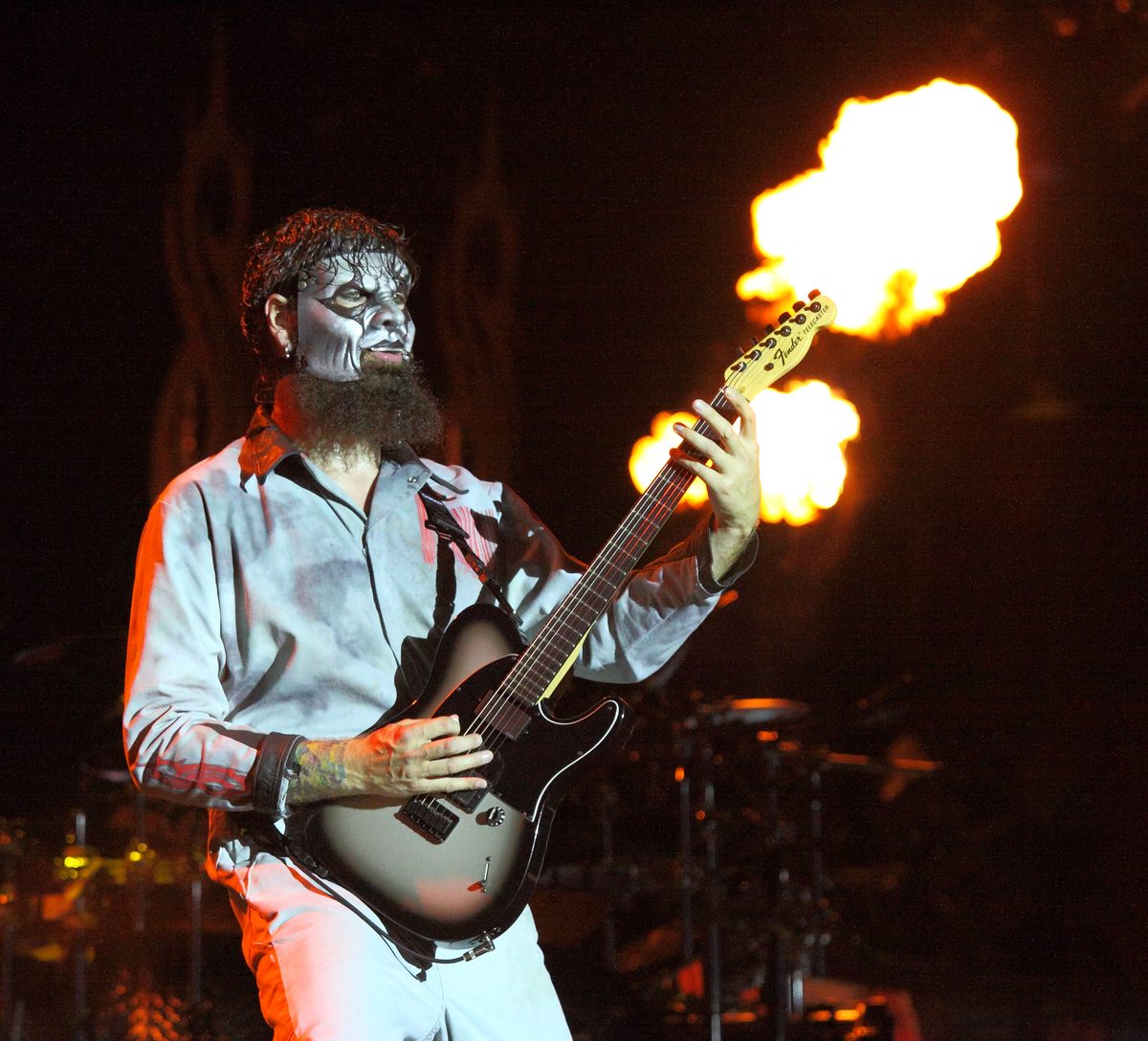
Jim Root playing his Fender Telecaster in front of a burst of flame with Slipknot at Roskilde Festival, Denmark, 4 July 2013.
In short
How Slipknot tunes
Slipknot have tuned to Drop B (B F♯ B E G♯ C♯) since their 1999 debut; Mick Thomson calls it C♯ with a dropped B, and the bass matches at B F♯ B E. From Iowa on, a few songs per album go a whole step lower to Drop A, among them My Plague, Psychosocial, The Devil in I and Yen, and a few break the pattern: Scissors with String 6 down to a low F♯, Circle in E Standard and Snuff in C♯ Standard.
Read more
TuneLit measured every studio album from the owner's CDs. From Vol. 3 on, the records sit within about 5 cents of concert pitch and Iowa about 9 cents sharp. The debut is the odd one: its songs spread between Drop B and a flat Drop C, from Spit It Out near concert pitch to (sic), Wait and Bleed and Diluted about 40 cents sharp, while its demos sit at concert pitch. The audio also backs the tabs against Thomson's memory that all of Iowa was in Drop A: half of it is Drop B.
Slipknot's sound rests on one tuning. Since the 1999 debut, almost every riff the band has recorded sits in Drop B: the six strings tuned B F♯ B E G♯ C♯, with the bass a matching B F♯ B E an octave down. From Iowa on, a handful of songs on each album go a whole step lower, to Drop A, and a few odd ones break the pattern completely. TuneLit measured every studio album from the owner's own CDs, and most of them sit at concert pitch within a few cents. The exception is the band's most famous record: the self-titled debut does not sit at one pitch at all, and several of its songs fall closer to C than to B.
This page covers the seven studio albums from Slipknot (1999) to The End, So Far (2022): the main tuning, the songs that break the pattern, what the tabs and the band say, and what the records measure. Each album page lists every song with a Tune button that opens the tuner in that tuning, measured pitch included.
Popular songs
How to tune for Slipknot's best-known songs
Each song has its own page: the exact tuning, the record's pitch, how to get there string by string, and how to move the record into your own tuning.
A tuner compares every note with a reference A, normally 440 Hz. When a record sits a little above or below that grid, the album pages add the offset to the tuning's name, such as "Drop B +9 ¢" for Iowa. A cent is a hundredth of a semitone, so +9 ¢ is less than a tenth of the way to the next note. You can think of the same offset as a different reference: +9 ¢ is A ≈ 442 Hz. Anything within 4 cents of concert pitch is shown as plain A 440, because a player cannot hear the difference and our measurement is not more precise than that.
The Tune buttons do this for you. To tune by hand, pick the tuning, tap the A 440 chip and type the value, for example 442 Hz for Iowa.
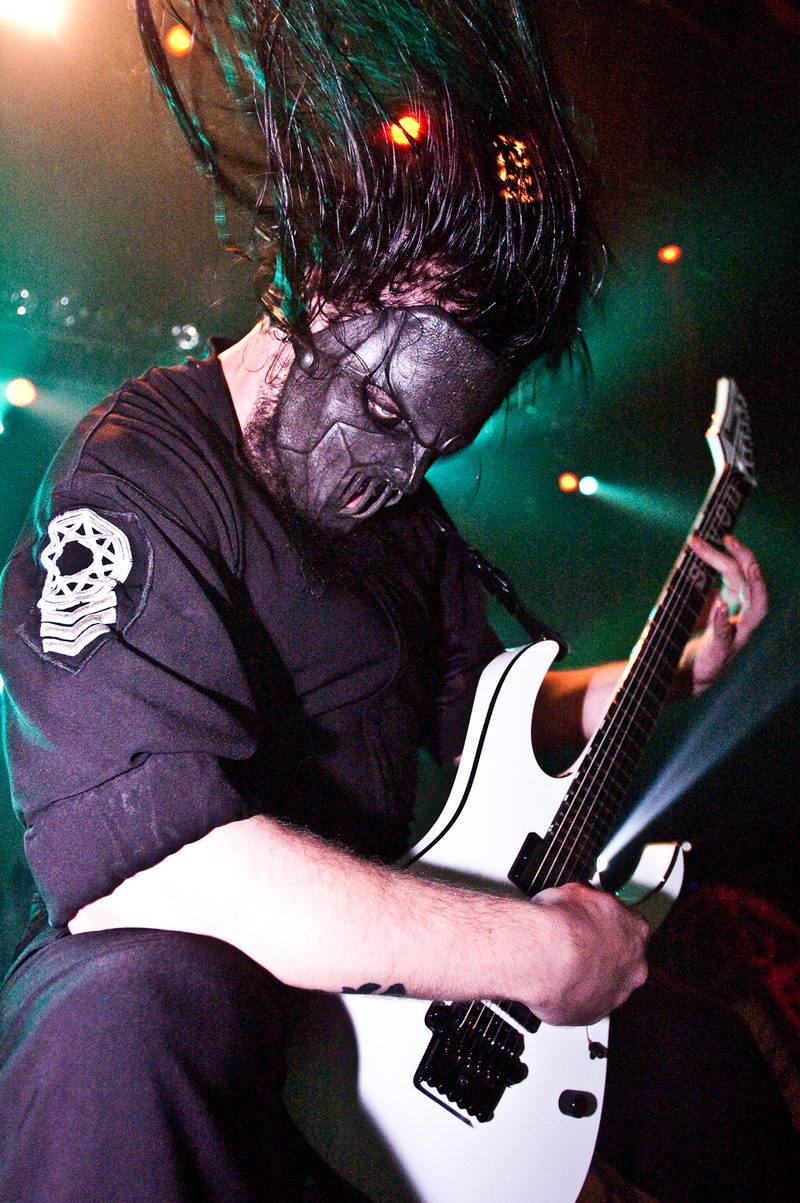
Mick Thomson headbanging over his white Ibanez guitar on stage with Slipknot in 2005.
The story
How Slipknot tune
Drop B, the house tuning. Mick Thomson described his usual tuning to Seymour Duncan in 2008 as C♯ with a dropped B. That is the clearest way to think about it: take standard tuning, lower every string three half steps to C♯ Standard (C♯ F♯ B E G♯ C♯), then drop String 6 another whole step to B. The result is Drop B, the same shape as Drop D a step and a half lower. Power chords on the three lowest strings take one finger, and the open B gives the band its weight. Kerrang!, writing about Paul Gray's best songs, names Drop B as the tuning of the whole debut album except Scissors, and the main tabs of nearly every Slipknot song since agree.
Drop A for the heaviest songs. Drop A is the same shape a whole step lower: A E A D F♯ B. In the tabs it first appears on Iowa (2001) and returns on every album after it, usually for two to four songs: Psychosocial, Gehenna, This Cold Black and Wherein Lies Continue on All Hope Is Gone, Sarcastrophe and The Devil in I on .5: The Gray Chapter, Critical Darling, Red Flag and Orphan on We Are Not Your Kind, Yen and Medicine for the Dead on The End, So Far. On stage the band keeps separate guitars in each tuning. Premier Guitar's 2015 Rig Rundown showed Thomson with Ibanez guitars set up for Drop B and Drop A, one of them kept for Sarcastrophe, and Jim Root explained in a 2020 interview with guitarguitar that the band groups three songs in its A tuning in the middle of the set, so nobody changes guitars between every song.
The bass. Paul Gray, and Alessandro Venturella after him, are tabbed on 4-string basses tuned with the guitars: B F♯ B E for Drop B songs and A E A D for Drop A songs. Songsterr also offers 5-string versions of many songs; those are arrangements for a 5-string bass in standard tuning.
Strings. Low tunings need heavier strings, or the slack low string flaps and goes sharp when you dig in. In the 2008 Seymour Duncan interview Thomson listed a .011 to .058 set; anything in that range, or heavier for Drop A, keeps Drop B stable on a standard-scale guitar.
The odd ones. Scissors (1999) slackens String 6 all the way down to a low F♯, an octave below String 5. Circle (2004) is an acoustic song in plain E Standard. Snuff (2008) keeps the album's top five strings but leaves String 6 at C♯: C♯ Standard. Adderall (2022) has one tab, in E Standard. Every other song is in Drop B or Drop A.
Not covered. The 1996 demo album Mate. Feed. Kill. Repeat., made with an earlier line-up and usually tabbed in Drop C, is not one of the band's official studio albums and was not measured. Neither were singles outside the albums.
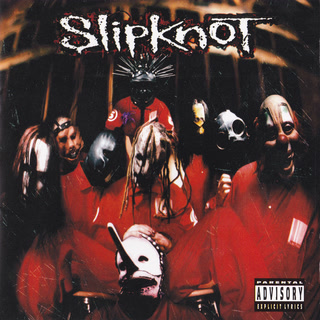
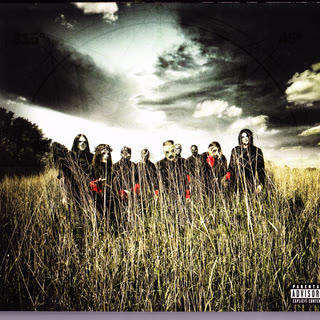
Main tuning: Drop B +7 ¢ (A ≈ 442) as an album value, measured by TuneLit on the Japanese CD (Roadrunner RRCY-1104), with low confidence and songs spread between Drop B and a flat Drop C.
The major-label debut was recorded with Ross Robinson at Indigo Ranch in Malibu and, according to Wikipedia, mixed on analog equipment. Josh Brainard plays on every song but Purity, which Jim Root recorded after joining. The tabs are simple: everything is in Drop B except Scissors, where String 6 goes down to a low F♯ (F♯ F♯ B E G♯ C♯). TuneLit's semitone check from the audio hears that low F♯ too.
The pitch is the surprise. The songs on this CD do not share one pitch, and most of them are far from concert pitch:
Spit It Out sits close to concert pitch, about 7 ¢ sharp. It is one of the most reliable readings on the album, and it sets the album value.
Purity sits about 26 ¢ sharp (A ≈ 447), clearly enough for its own Tune button.
(sic), Wait and Bleed and Diluted read about 37 to 45 ¢ sharp: a guitar in Drop B at A 440 sounds almost a quarter tone flat against them.
Tattered & Torn reads right between B and C, which may explain why two of its tabs name Drop C.
Liberate, No Life, Only One and Prosthetics go further. TuneLit's semitone check hears their low string 15 to 35 ¢ under C rather than anywhere near B: they sit closer to a flat Drop C (A ≈ 432 to 434) than to Drop B.
Every edition in the library, from the 1999 Japanese and US pressings to the 10th- and 25th-anniversary sets, gives the same readings song by song, within a few cents, so the pitch is in the master, not in one pressing. Later in 1999 the album was reissued with Frail Limb Nursery and Purity replaced by Me Inside after a lawsuit (Me Inside is not on the original track list, so the album page does not list it); Wikipedia says the reissue was also remastered, but it reads the same. The demos and alternate mixes added to the anniversary editions tell a different story: the demos of Wait and Bleed and Me Inside measure within a few cents of concert pitch, and Terry Date's mix of Wait and Bleed and Ulrich Wild's mix of (sic) within about 15 ¢; only the Jay Baumgardner mixes on the 25th-anniversary set scatter like the album. That points to a normal Drop B in the studio and to something in making the album versions that moved them. We found no source that explains it.
TuneLit's album value is a weighted median over songs that straddle the line between B and C, so it is only a starting point. The measurement confidence is low on most songs, because the dense, noisy mix is hard to read.
With TuneLit: Drop B +7 ¢ for the album, Drop B +26 ¢ for Purity and the low F♯ tuning for Scissors. For (sic), Wait and Bleed and Diluted, raise the reference to about 450 Hz. For Liberate and No Life, try Drop C with the reference lowered to about 432 Hz. On this album more than any other, fine-tune by ear.
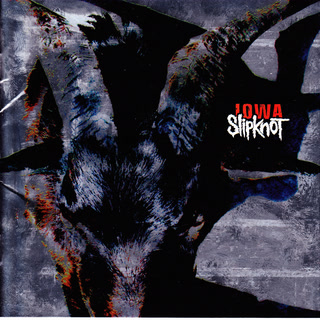
Main tuning: Drop B +9 ¢ (A ≈ 442), measured by TuneLit on the Japanese CD (RRCY-11146), with six songs in Drop A.
Iowa was recorded at Sound City and Sound Image in Los Angeles, again with Ross Robinson, and it is Jim Root's first full album with the band. In the 2008 Seymour Duncan interview, Mick Thomson said that every song on Iowa was in "B with a dropped A", a whole step below the band's usual tuning. The tabs only half agree: they put My Plague, Everything Ends, The Heretic Anthem, Skin Ticket, New Abortion and the title track in Drop A, but People = Shit, Disasterpiece, Gently, Left Behind, The Shape, I Am Hated and Metabolic in Drop B.
The record sides with the tabs. In a Drop A song the bass keeps returning to its open low A; in a Drop B song that A cannot sound at all, because the bass's lowest note is B. TuneLit's comparison of the lowest notes hears a low A in My Plague, Everything Ends, The Heretic Anthem, Skin Ticket and New Abortion, and a low B, with the A under it silent, in Disasterpiece, Left Behind, The Shape, I Am Hated and Metabolic. The same comparison matches the tabs on 52 of 55 songs on the later albums, so it is a good witness. Two songs stay open: People = Shit, whose pitch the measurement could not read at all, and the long title track, whose tab puts the guitars in Drop A and the bass in B with a low F♯, and whose lowest notes lean towards B.
The whole CD reads about 9 ¢ sharp, consistently but with low confidence, as dense and noisy as the debut. The 10th-anniversary edition and a later reissue read the same.
With TuneLit: Drop B +9 ¢ for the album and Drop A +9 ¢ for the six Drop A songs. A Drop A guitar can play the Drop B songs too, two frets up on String 6, but the open strings will not ring the same.
Main tuning: Drop B +5 ¢ (A ≈ 441), measured by TuneLit on a Japanese CD (WPCR-15978).
Rick Rubin's only Slipknot album, recorded at The Mansion in Los Angeles, brought guitar solos and acoustic guitars into the band's sound, but not a new tuning. Every heavy song is tabbed in Drop B, Wikipedia names Drop B for Duality, and no song is tabbed in Drop A. Vermilion Pt. 2 keeps its acoustic guitars in Drop B as well; the E Standard versions on Songsterr are labelled as simplified. Circle is the exception: an acoustic song in plain E Standard, and TuneLit's semitone check hears its low E. Danger – Keep Away, the quiet closer, has two tabs that disagree, one in Drop B and one in E Standard.
The CD sits about 5 ¢ sharp, close to concert pitch, and the semitone check confirms the low B on every heavy song it could read. Danger – Keep Away reads about 35 ¢ sharp (A ≈ 449). The special edition with a bonus disc reads the same as the Japanese CD.
With TuneLit: Drop B +5 ¢ for the album, E Standard +5 ¢ for Circle, and Drop B +35 ¢ for Danger – Keep Away.
Main tuning: Drop B at concert pitch (measured about 3 ¢ flat), on the Japanese CD (RRCY-29152/3).
Recorded with Dave Fortman at Sound Farm Studio in Jamaica, Iowa, this is the last album with Paul Gray and Joey Jordison. Most of it is tabbed in Drop B, and Premier Guitar's 2015 Rig Rundown says Thomson's Drop B Ibanez played most of its rhythm parts. Four songs go down a whole step to Drop A: Psychosocial, Gehenna, This Cold Black and Wherein Lies Continue. The ballad Snuff is tabbed in C♯ Standard, the album's strings with String 6 left at C♯.
The CD sits at concert pitch, and the semitone check confirms every Drop A and Drop B song it could read, as well as Snuff's low C♯. Snuff itself reads about 10 ¢ sharp (A ≈ 442.5). The 10th-anniversary edition reads the same.
With TuneLit: Drop B for the album, Drop A for the four songs above, C♯ Standard +10 ¢ for Snuff.
Main tuning: Drop B at concert pitch (measured about 1 ¢ sharp), on the EU CD (RR7545-2).
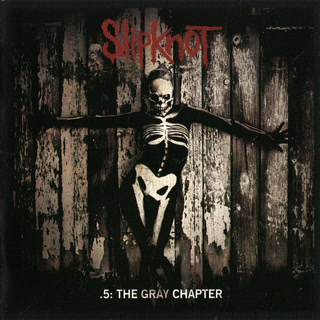
The first album after Paul Gray's death, produced by Greg Fidelman, with Jay Weinberg on drums and bass from Alessandro Venturella and, on some sessions, Donnie Steele. The tuning did not change: Drop B for the album, Drop A for Sarcastrophe and The Devil in I. Premier Guitar's Rig Rundown of the following tour shows Thomson keeping one guitar in Drop A just for Sarcastrophe, which opened the shows.
The CD sits at concert pitch, and the semitone check agrees with every song that has a riff. The opener XIX, a slow, droning piece with no guitar tab, reads about 39 ¢ sharp (A ≈ 450), which puts it between two notes. The deluxe edition reads the same.
With TuneLit: Drop B for the album, Drop A for Sarcastrophe and The Devil in I.
Main tuning: Drop B at concert pitch (measured about 3 ¢ sharp), on the EU CD.
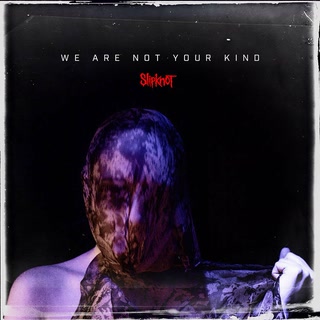
Recorded at EastWest Studios in Hollywood with Greg Fidelman, this album mixes full songs with short interludes. Unsainted, Birth of the Cruel, Nero Forte, A Liar's Funeral, Spiders, Not Long for This World and Solway Firth are tabbed in Drop B, Critical Darling, Red Flag and Orphan in Drop A. Insert Coin, Death Because of Death, What's Next and My Pain have no guitar riff to tune to.
The CD sits at concert pitch, and the semitone check agrees with every song that has a riff. Two tracks have values of their own: Not Long for This World reads about 19 ¢ flat (A ≈ 435) and the interlude Death Because of Death about 24 ¢ sharp. The Japanese edition reads the same; its bonus track, All Out Life, is tabbed in Drop B.
With TuneLit: Drop B for the album, Drop A for Critical Darling, Red Flag and Orphan, Drop B −19 ¢ for Not Long for This World.
Main tuning: Drop B at concert pitch (measured about 2 ¢ sharp), on the EU CD.
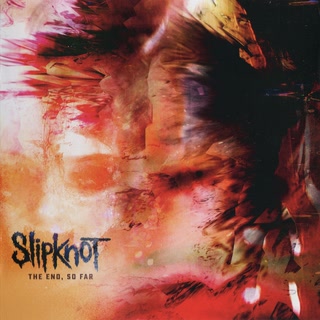
The band's last album for Roadrunner, and the last with Craig Jones and Jay Weinberg. Drop B again, with Yen and Medicine for the Dead in Drop A. The keyboard-led opener Adderall, with clean singing throughout, has a single tab, in E Standard; few people have used it, so treat it as a guess.
This is the most consistent Slipknot record we measured: every song sits within about 7 ¢ of concert pitch, and the semitone check agrees with every song that has a riff.
With TuneLit: Drop B for the album, Drop A for Yen and Medicine for the Dead, E Standard for Adderall.
TuneLit lab
What TuneLit measured
TuneLit's Match-a-recording estimator reads 90 seconds of each song, finds the strongest notes and compares them with the equal-tempered grid. That pins the offset down to a few cents, but only within one semitone, so the tuning's name (Drop B, Drop A) still comes from the tabs and sources. A second check listens for the lowest open string. It is a strong confirmation when it agrees and only a hint when it does not, so it moves a song only where a tab or source points the same way.
Album
Sources said
TuneLit measured
Equivalent A
Slipknot (1999)
Drop B (Kerrang!, tabs)
+7 ¢ album value, songs from +7 to a flat C (low confidence)
A ≈ 442
Iowa (2001)
Drop A (Thomson), Drop B and A (tabs)
+9 ¢ (low confidence)
A ≈ 442
Vol. 3 (2004)
Drop B
+5 ¢
A ≈ 441
All Hope Is Gone (2008)
Drop B and A
−3 ¢
A 440
.5: The Gray Chapter (2014)
Drop B and A
+1 ¢
A 440
We Are Not Your Kind (2019)
Drop B and A
+3 ¢
A 440
The End, So Far (2022)
Drop B and A
+2 ¢
A 440
None of our sources mentions the pitch of a Slipknot record, so every offset here is new. Three things stand out. From Vol. 3 on, the band's records are among the most precisely tuned we have measured: four albums within 3 ¢ of concert pitch and nearly every song with them. The debut is the opposite, with songs spread over most of a semitone in the master itself, while its demos and alternate mixes sit at concert pitch. And Iowa, remembered by its guitarist as a Drop A album, is half Drop B, as the tabs always said.
The semitone check agrees with 73 of the 95 album tracks. Its disagreements are either interludes without a riff, songs the measurement could hardly read, or the debut songs that sit near C. None of them has a second source pointing the same way, so no song was moved; they are named in the album notes as songs to check by ear.
Keep a few limits in mind. Heavy, noisy mixes are hard to read, so most songs use their album's value and only clear outliers get their own. Anything within ±4 ¢ counts as concert pitch. All numbers come from CDs in the owner's library; the audio is never uploaded or published, only the numbers.
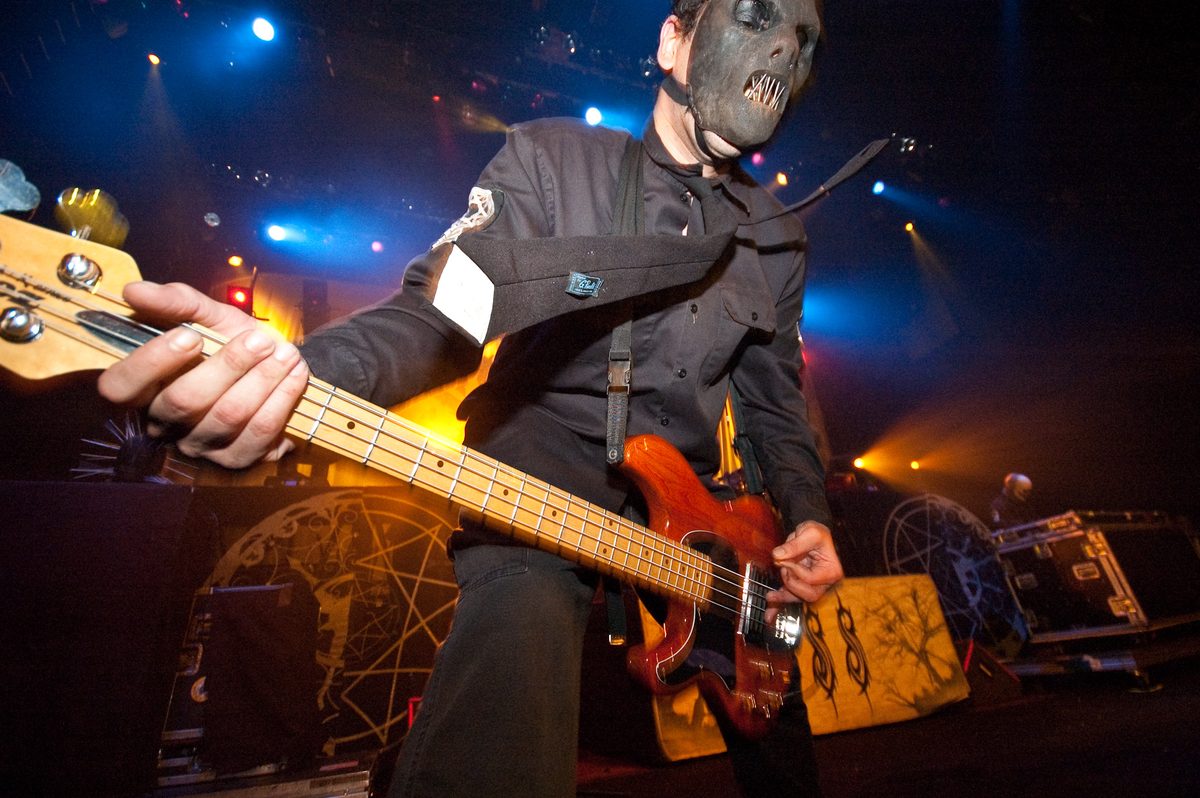
Founding bassist Paul Gray playing a four-string bass on stage with Slipknot in 2005.
Evidence
How sure are these numbers?
Every tuning on the album pages carries a status label. The offset in cents comes from our own measurement, so every album shows Measured by TuneLit. The tuning's name rests on the other kinds of evidence:
Official: the band said it. For Slipknot that is Mick Thomson's account of Iowa's Drop A, which holds for its Drop A songs.
Widely reported: trusted outlets or reference works agree, such as Kerrang! on the debut's Drop B, Wikipedia on Duality, or Premier Guitar on Sarcastrophe.
Community: community transcriptions, mostly Songsterr, cross-checked against Ultimate Guitar where it answered. Slipknot's tabs are unusually consistent, and the audio confirmed them almost everywhere.
Disputed: the sources disagree, as for Iowa's Drop B songs or Danger – Keep Away. We list the most likely tuning and say what the others are.
If a song still sounds a touch off, move the reference a hertz or two; near 440 Hz, one hertz is about 4 cents.
The story
Playing along
From standard to Drop B: lower Strings 5 to 1 three half steps each (A to F♯, D to B, G to E, B to G♯, E to C♯), then String 6 five half steps, from E to B. Tune the low B against the B an octave up on String 4 to check it.
From Drop B to Drop A: lower every string a whole step. With two guitars you save the retuning, which is what the band does on stage.
Strings: on a standard 25.5-inch scale, a set ending in .058 or heavier keeps Drop B tight; go heavier still for Drop A. A slack low string reads sharp on the attack, so tune it while it rings, not as you pick.
The debut: start from the album's Tune button, then nudge the reference while you play the open low string against the song's main riff, until the two stop beating. Expect to move it a lot between songs.
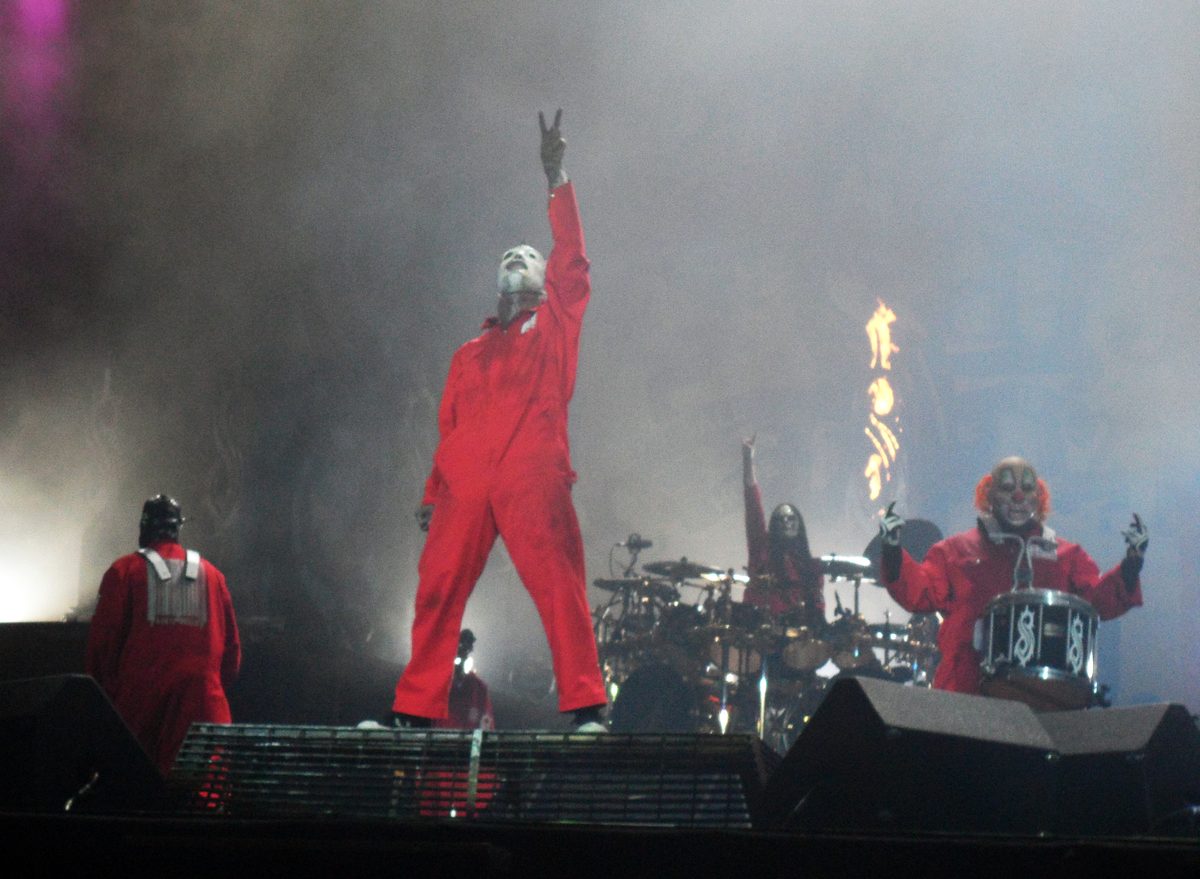
Slipknot in red jumpsuits at Graspop Metal Meeting, Dessel, Belgium, 26 June 2011, with Corey Taylor out front, Joey Jordison at the drums and Shawn Crahan on percussion.
Cheat sheet
Quick reference
Slipknot (1999): Drop B +7 ¢; Purity +26 ¢; Scissors F♯ F♯ B E G♯ C♯. (sic), Wait and Bleed, Diluted about 40 ¢ sharp; Liberate and No Life closer to Drop C at about A 432.
Iowa (2001): Drop B +9 ¢; Drop A +9 ¢ for My Plague, Everything Ends, The Heretic Anthem, Skin Ticket, New Abortion, Iowa.
Vol. 3 (2004): Drop B +5 ¢; Circle E Standard; Danger – Keep Away Drop B +35 ¢.
All Hope Is Gone (2008): Drop B; Drop A for Psychosocial, Gehenna, This Cold Black, Wherein Lies Continue; Snuff C♯ Standard +10 ¢.
.5: The Gray Chapter (2014): Drop B; Drop A for Sarcastrophe and The Devil in I.
We Are Not Your Kind (2019): Drop B; Drop A for Critical Darling, Red Flag, Orphan; Not Long for This World −19 ¢.
The End, So Far (2022): Drop B; Drop A for Yen and Medicine for the Dead; Adderall E Standard.
Golden rule: Drop B is home. If a Slipknot song sounds a whole step off, it is a Drop A song; if it sounds a little off, it is probably on the debut.
Questions
What tuning does Slipknot use?
Mostly Drop B: 7 of 7 albums. Many albums also have songs in other tunings, and the album pages list them song by song.
How did TuneLit measure Slipknot's records?
We played original CDs and LPs through TuneLit's pitch analysis: the strongest notes of each song are compared with the A 440 grid, which gives the offset in cents. That cannot tell the semitone, so the tuning name comes from interviews, the press and tabs. The audio is never stored or published.
Colors and font
Font
Colors
Menu
Install the app
Android (Chrome): menu ⋮ → Install app or Add to Home screen.
Computer (Chrome, Edge): the install icon at the right end of the address bar.
iPhone: Safari → Share → Add to Home Screen.
It opens full screen and keeps tuning with no connection.