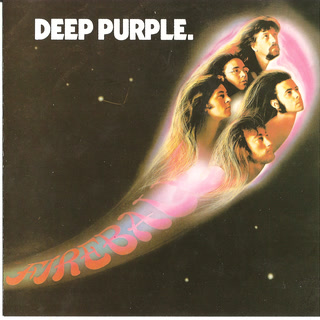
Deep Purple · 1971 · Studio album
Fireball tuning.
E Standard, about 6 cents sharp (A ≈ 442), measured on the CD. All 7 songs use it.
Album tuning
E Standard +6 ¢
About 6 cents sharp (A ≈ 442), measured on the CD.
MeasuredFrom tabs
Measured by TuneLit
6 ¢ sharp
| Source | Offset | Equivalent A | Songs | Spread | Confidence |
|---|---|---|---|---|---|
| CD, EMI CDP 7 46240 2 (Italy) | +5.6 ¢ | A 441.4 | 7 | +1.4 to +9.6 ¢ | High |
Before we measured, sources said: E Standard, with no pitch given (community).
Recorded in London and Devon between September 1970 and June 1971. E Standard throughout. Listed with the original European running order, which has Demon's Eye as track 3; the American edition swapped in Strange Kind of Woman, a single in Britain. The EMI CD (made in Italy) sits about 6 ¢ sharp (A ≈ 441.4); its songs range from −2 ¢ (Demon's Eye) to +12 ¢ (The Mule), none far enough from the rest for a value of its own.
7 songs
Every song, ready to tune
Tune opens the tuner in that song's tuning, pitch included. Play along opens the song player set to that tuning, so the track plays in yours. What the labels mean
-
1. Fireball
E Standard +6 ¢Measured
Notes
A fast opener, often named among the forerunners of speed metal.
-
2. No No No
E Standard +6 ¢Measured
-
3. Demon's Eye
E Standard +6 ¢Measured
Notes
The UK album track; the US edition had Strange Kind of Woman here.
On its own, this song measures flatter: CD −2.2 ¢. Tune uses the album's +6 ¢.
-
4. Anyone's Daughter
E Standard +6 ¢Measured
-
5. The Mule
E Standard +6 ¢Measured
Notes
The highest song of the album on this CD, about 12 ¢ sharp, but within the spread of the rest.
-
6. Fools
E Standard +6 ¢Measured
-
7. No One Came
E Standard +6 ¢Measured
What the labels mean
- Measured
- TuneLit measured the pitch on an original CD or LP. The tuning name still comes from the sources.
- Official
- The band, a member, their producer or their guitar tech said it.
- Widely reported
- Trusted outlets, guides and tabs agree, but the band did not say it directly.
- From tabs
- From community tabs, or from players who tune along with the record.
- Disputed
- Sources disagree. The likeliest setting is shown; the notes name the other one.
Each song shows one label, the strongest it has, in this order. How we measure recordings →
Questions
What tuning is Fireball in?
Deep Purple recorded Fireball (1971) in E Standard, about 6 cents sharp (A ≈ 442), measured by TuneLit on the CD. Every song uses it.