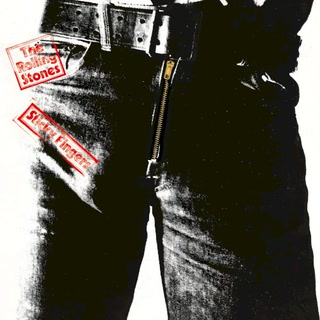
The Rolling Stones · 1971 · Studio album
Sticky Fingers tuning.
E Standard, about 11 cents flat (A ≈ 437), measured on the CD. 9 of 10 songs are tuned differently.
Album tuning
E Standard −11 ¢
About 11 cents flat (A ≈ 437), measured on the CD.
MeasuredFrom tabs
Measured by TuneLit
11 ¢ flat
| Source | Offset | Equivalent A | Songs | Spread | Confidence |
|---|---|---|---|---|---|
| CD (ALAC rip; pressing not identified) | −11.4 ¢ | A 437.1 | 10 | −15.9 to −5.1 ¢ | High |
Before we measured, sources said: E Standard, with no pitch given (community).
The first album of Keith Richards's five-string open G (Brown Sugar, Can't You Hear Me Knocking), with Mick Taylor in standard tuning beside him, an open-tuned 12-string on Wild Horses and Mick Jagger in open G on Sway and Moonlight Mile. TuneLit measured it about 11 ¢ flat (A ≈ 437.1).
10 songs · 9 tuned differently
Every song, ready to tune
Tune opens the tuner in that song's tuning, pitch included. Play along opens the song player set to that tuning, so the track plays in yours. What the labels mean
-
Notes
Keith Richards's riff is in his five-string open G: G D G B D with the low string taken off. Mick Taylor's second guitar is tabbed in standard tuning.
-
2. Sway
Different tuning
Open G −11 ¢Measured
Notes
How to get there from the album's E Standard: String 6 down a whole step (E → D), String 5 down a whole step (A → G), String 1 down a whole step (E → D); the other strings stay.
Mick Jagger's rhythm guitar is tabbed in open G (D G D G B D); Mick Taylor's lead and slide parts are in standard tuning.
-
Notes
How to get there from E Standard: String 12 down a whole step (E → D), String 11 down a whole step (E → D), String 10 down a whole step (A → G), String 9 down a whole step (A → G), String 2 down a whole step (E → D), String 1 down a whole step (E → D); the other strings stay.
Keith Richards wrote that he open-tuned a 12-string for it (five-string style, so ten strings); Mick Taylor plays an acoustic in Nashville tuning. Most community tabs play it in standard tuning on a six-string.
-
4. Can't You Hear Me Knocking
Different tuning
G2 D3 G3 B3 D4 −11 ¢Measured
Notes
Keith Richards said the riff came from his five-string open G tuning. Mick Taylor's guitar and solo are in standard tuning.
-
5. You Gotta Move
Different tuning
Open C −11 ¢Measured
Notes
How to get there from the album's E Standard: String 6 down 4 half steps (E → C), String 5 down a whole step (A → G), String 4 down a whole step (D → C), String 2 up a half step (B → C); the other strings stay.
The tab puts the slide guitar in open C (C G C G C E); the same tab also gives a standard-tuned slide part.
On its own, this song measures sharper: CD +10.3 ¢ (medium confidence). Tune uses the album's −11 ¢.
-
6. Bitch
Different pitch
E Standard −23 ¢Measured
Notes
Standard tuning, about 24 ¢ flat (A ≈ 434.1).
Bitch, Dead Flowers and I Got the Blues are in standard tuning. Brown Sugar and Can't You Hear Me Knocking carry Keith Richards's five-string open G, Wild Horses an open-tuned 12-string.
-
7. I Got the Blues
Different pitch
E Standard −20 ¢Measured
Notes
Bitch, Dead Flowers and I Got the Blues are in standard tuning. Brown Sugar and Can't You Hear Me Knocking carry Keith Richards's five-string open G, Wild Horses an open-tuned 12-string.
-
8. Sister Morphine
Different pitch
E StandardMeasured
Notes
Bitch, Dead Flowers and I Got the Blues are in standard tuning. Brown Sugar and Can't You Hear Me Knocking carry Keith Richards's five-string open G, Wild Horses an open-tuned 12-string.
-
9. Dead Flowers
E Standard −11 ¢Measured
Notes
Bitch, Dead Flowers and I Got the Blues are in standard tuning. Brown Sugar and Can't You Hear Me Knocking carry Keith Richards's five-string open G, Wild Horses an open-tuned 12-string.
-
10. Moonlight Mile
Different tuning
Open G −11 ¢Measured
Notes
How to get there from the album's E Standard: String 6 down a whole step (E → D), String 5 down a whole step (A → G), String 1 down a whole step (E → D); the other strings stay.
Mick Jagger's acoustic guitar is in open G (D G D G B D), as Premier Guitar's lesson and the tab say; Mick Taylor's slide is tabbed in open G too.
What the labels mean
- Measured
- TuneLit measured the pitch on an original CD or LP. The tuning name still comes from the sources.
- Official
- The band, a member, their producer or their guitar tech said it.
- Widely reported
- Trusted outlets, guides and tabs agree, but the band did not say it directly.
- From tabs
- From community tabs, or from players who tune along with the record.
- Disputed
- Sources disagree. The likeliest setting is shown; the notes name the other one.
Each song shows one label, the strongest it has, in this order. How we measure recordings →
Questions
What tuning is Sticky Fingers in?
The Rolling Stones recorded Sticky Fingers (1971) in E Standard, about 11 cents flat (A ≈ 437), measured by TuneLit on the CD. 9 songs use other tunings or pitches, listed song by song on this page.
Why does Sticky Fingers sound out of tune with my guitar?
The record sits about 11 cents flat (A ≈ 437), so a guitar tuned to A 440 clashes with it. The Tune buttons on this page set the tuner's reference to match the record, song by song, so you only tune the strings.