Bob Marley and the Wailers · 1976 · Studio album
Rastaman Vibration tuning.
E Standard, about 14 cents flat (A ≈ 436), measured on the CD. 3 of 10 songs are tuned differently.
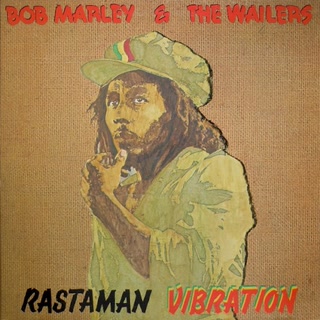
Album tuning
E Standard −14 ¢
About 14 cents flat (A ≈ 436), measured on the CD.
MeasuredFrom tabs
Measured by TuneLit
14 ¢ flat
| Source | Offset | Equivalent A | Songs | Spread | Confidence |
|---|---|---|---|---|---|
| CD, deluxe edition, MP3 copy | −13.7 ¢ | A 436.5 | 10 | −19.3 to −7.6 ¢ | Medium |
Before we measured, sources said: E Standard, with no pitch given (community).
From April 1976; the bonus tracks of the deluxe edition are not listed. E Standard by the record. TuneLit measured the deluxe edition, MP3 copy about 14 ¢ flat (A ≈ 436.5), from 10 tracks. 3 of its songs have their own setting.
10 songs · 3 tuned differently
Every song, ready to tune
Tune opens the tuner in that song's tuning, pitch included. Play along opens the song player set to that tuning, so the track plays in yours. What the labels mean
-
1. Positive Vibration
E Standard −14 ¢Measured
Notes
E Standard; the reading for Positive Vibration is −11.2 ¢, a fair reading, the same as the album's.
-
2. Roots,Rock,Reggae
Different pitch
E StandardMeasured
Notes
E Standard, and at concert pitch: Roots,Rock,Reggae was measured 14 ¢ apart from the songs around it, so its Tune button differs from the album's.
Standard tuning (E A D G B E), by the record: nothing in the low notes points to a lowered guitar. The bass on these records is played high and soft and seldom reaches its lowest string, so this rests on the album as a whole.
-
3. Johnny Was
Different pitch
E StandardMeasured
Notes
E Standard. Johnny Was sits at concert pitch by TuneLit's measurement (a fair reading, +1.2 ¢), 14 ¢ away from its album, and carries its own setting.
Standard tuning (E A D G B E), by the record: nothing in the low notes points to a lowered guitar. The bass on these records is played high and soft and seldom reaches its lowest string, so this rests on the album as a whole.
-
4. Cry to Me
E Standard −14 ¢Measured
Notes
E Standard. Cry to Me reads −3.2 ¢ (a weak reading), 10.8 ¢ above the album's value: not quite enough for a setting of its own, but you may hear it.
-
5. Want More
E Standard −14 ¢Measured
Notes
Want More follows its album: E Standard. TuneLit read it at −19.8 ¢, a few cents below the album's value.
-
6. Crazy Baldhead
E Standard −14 ¢Measured
Notes
Crazy Baldhead: E Standard. Its own reading is −4.0 ¢, a little above the album's; nudge the tuner if string 6 sounds flat against the record.
On its own, this song measures sharper: CD −4.0 ¢ (medium confidence). Tune uses the album's −14 ¢.
-
7. Who the Cap Fit
E Standard −14 ¢Measured
Notes
Who the Cap Fit follows its album: E Standard. TuneLit read it at −18.8 ¢, a few cents below the album's value.
-
8. Night Shift
E Standard −14 ¢Measured
Notes
E Standard; the reading for Night Shift is −13.7 ¢, a fair reading, the same as the album's.
-
9. War
E Standard −14 ¢Measured
Notes
War: E Standard. Its own reading is −28.7 ¢, a little below the album's; nudge the tuner if string 6 sounds sharp against the record.
-
10. Rat Race
Different pitch
E Standard −22 ¢Measured
Notes
Rat Race has a setting of its own: E Standard, about 22 ¢ flat (A ≈ 434.4). That is 8 ¢ from the album's pitch, too far to share one setting.
Standard tuning (E A D G B E), by the record: nothing in the low notes points to a lowered guitar. The bass on these records is played high and soft and seldom reaches its lowest string, so this rests on the album as a whole.
What the labels mean
- Measured
- TuneLit measured the pitch on an original CD or LP. The tuning name still comes from the sources.
- Official
- The band, a member, their producer or their guitar tech said it.
- Widely reported
- Trusted outlets, guides and tabs agree, but the band did not say it directly.
- From tabs
- From community tabs, or from players who tune along with the record.
- Disputed
- Sources disagree. The likeliest setting is shown; the notes name the other one.
Each song shows one label, the strongest it has, in this order. How we measure recordings →
Questions
What tuning is Rastaman Vibration in?
Bob Marley and the Wailers recorded Rastaman Vibration (1976) in E Standard, about 14 cents flat (A ≈ 436), measured by TuneLit on the CD. Roots,Rock,Reggae and Johnny Was use E Standard; Rat Race uses E Standard −22 ¢.
Why does Rastaman Vibration sound out of tune with my guitar?
The record sits about 14 cents flat (A ≈ 436), so a guitar tuned to A 440 clashes with it. The Tune buttons on this page set the tuner's reference to match the record, song by song, so you only tune the strings.