A drawing of Bob Marley by Daniel Alvarado Silvera, 2010.
In short
How Bob Marley and the Wailers tunes
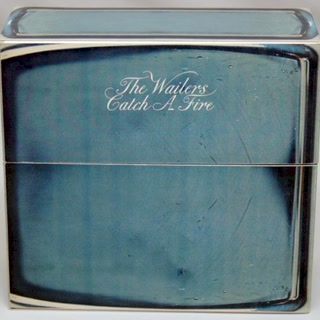
The Wailers played in standard tuning, but several of their records do not sit at concert pitch. Of the nine Island albums measured here, the first six, from Catch a Fire (1973) to Kaya (1978), are all flat, by 9 to 17 cents, Catch a Fire the most.
Read more
Survival (1979) and Confrontation (1983) are at concert pitch, and Uprising (1980) is about 9 cents sharp. A guitar tuned with a tuner sounds slightly sharp against the flat ones.
Bob Marley and the Wailers tunings, album by album
Reggae guitar is rhythm before anything else: a short, damped chord on the off-beats, the skank, played against the bass and the drums. The chords are simple and the tuning is ordinary. Matching the record's pitch is the one thing that takes care.
TuneLit measured the owner's copies of 9 studio albums and listened to the low notes of every song. No interview or tab was read for this page: what follows is what the records show. The album list above opens each record, where every song has a Tune button that sets the tuner exactly as listed, offset included.
Popular songs
How to tune for Bob Marley and the Wailers's best-known songs
Each song has its own page: the exact tuning, the record's pitch, how to get there string by string, and how to move the record into your own tuning.
Standard tuning is E A D G B E. The rhythm guitar plays small chord shapes on the top three or four strings, and the lead guitar adds short fills.
Reggae bass is played soft and round, in the middle of the instrument's range, so the lowest notes that TuneLit uses elsewhere to check a tuning say little here. The tuning rests on the albums as a whole.
The Marley family painted on the wall of the Bob Marley Museum, Kingston, Jamaica, photographed on 19 March 2025.
The story
Flat records
Six of the nine albums sit 9 to 17 cents below concert pitch. That is not a different tuning. It is the pitch the tape ended up at: the band tuned to a piano or organ in the studio, and tape machines of the time did not all run at exactly the same speed. For playing along, the album's Tune button lowers every string by the measured amount.
TuneLit lab
What TuneLit measured
Album
Tuning listed
Measured
Reference A
Songs with their own value
Catch a Fire (1973)
E Standard (by the record)
−17 ¢
A ≈ 435.8
Stop That Train +19 ¢
Burnin' (1973)
E Standard (by the record)
−11 ¢
A ≈ 437.1
Put It On +24 ¢, Burnin' and Lootin' −40 ¢, Hallelujah Time 0 ¢
Natty Dread (1974)
E Standard (by the record)
−11 ¢
A ≈ 437.3
No Woman, No Cry +5 ¢, Rebel Music −22 ¢
Rastaman Vibration (1976)
E Standard (by the record)
−14 ¢
A ≈ 436.5
Roots,Rock,Reggae 0 ¢, Johnny Was 0 ¢, Rat Race −22 ¢
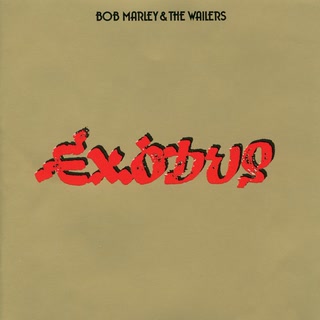
Exodus (1977)
E Standard (by the record)
−9 ¢
A ≈ 437.7
Three Little Birds −20 ¢, One Love,People Get Ready −20 ¢, Exodus −18 ¢
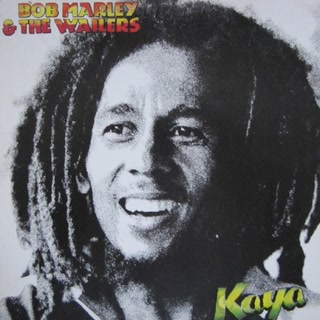
Kaya (1978)
E Standard (by the record)
−13 ¢
A ≈ 436.7
none
Survival (1979)
E Standard (by the record)
0 ¢
A ≈ 440
Survival +13 ¢
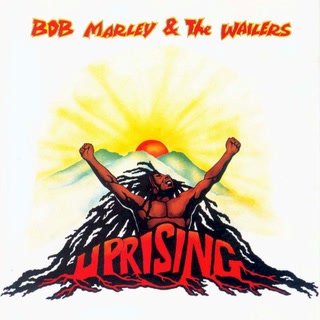
Uprising (1980)
E Standard (by the record)
+9 ¢
A ≈ 442.3
Could You Be Loved +50 ¢, Bad Card 0 ¢, Forever Loving Jah 0 ¢
From April 1973, the first album for Island Records, with Stir It Up and Concrete Jungle; the bonus tracks are not listed. E Standard; the album sits about 17 ¢ flat (A ≈ 435.7). Stop That Train sits about 19 ¢ sharp.
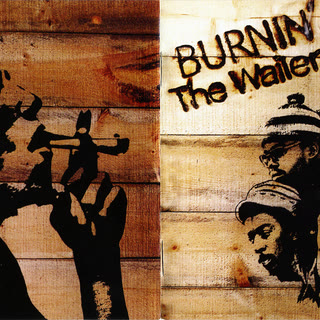
From October 1973, the last with Peter Tosh and Bunny Wailer, with Get Up, Stand Up and I Shot the Sheriff; the bonus tracks of the deluxe edition are not listed. E Standard; the album sits about 11 ¢ flat (A ≈ 437.2). Put It On sits about 24 ¢ sharp, Burnin' and Lootin' sits about 40 ¢ flat, Hallelujah Time sits at concert pitch.
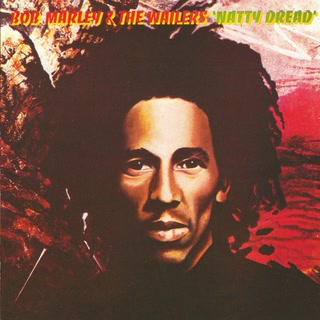
From October 1974, with the studio version of No Woman, No Cry; the bonus track is not listed. E Standard; the album sits about 11 ¢ flat (A ≈ 437.2). No Woman, No Cry sits about 5 ¢ sharp, Rebel Music sits about 22 ¢ flat.
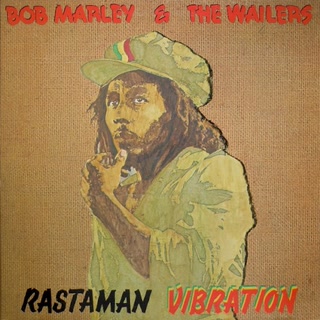
From April 1976; the bonus tracks of the deluxe edition are not listed. E Standard; the album sits about 14 ¢ flat (A ≈ 436.5). Roots,Rock,Reggae sits at concert pitch, Johnny Was sits at concert pitch, Rat Race sits about 22 ¢ flat.
From June 1977, recorded in London, with Jamming, Three Little Birds and One Love; the bonus tracks are not listed. E Standard; the album sits about 9 ¢ flat (A ≈ 437.7). Three Little Birds sits about 20 ¢ flat, One Love,People Get Ready sits about 20 ¢ flat, Exodus sits about 18 ¢ flat.
From March 1978, with Is This Love; the bonus track is not listed. E Standard; the album sits about 13 ¢ flat (A ≈ 436.7). No song sits far from the album.
From June 1980, the last album released in Marley's lifetime, with Could You Be Loved and Redemption Song; the bonus tracks are not listed. E Standard; the album sits about 9 ¢ sharp (A ≈ 442.3). Could You Be Loved sits about 50 ¢ sharp, Bad Card sits at concert pitch, Forever Loving Jah sits at concert pitch.
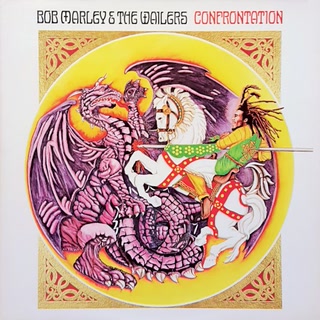
From May 1983, released after his death, with Buffalo Soldier; the bonus track is not listed. E Standard; the album sits at concert pitch, 2 ¢ above A 440 by the measurement. Chant Down Babylon sits about 13 ¢ sharp.
The story
Playing along
Tune to standard with the album's Tune button; on six albums it sits a little below concert pitch.
For the skank, play upstrokes on the off-beats and lift the fretting fingers at once to cut the chord short.
How the figures on this page were found, and how far to trust them, is on How we measure recordings.
Questions
What tuning does Bob Marley and the Wailers use?
Mostly E Standard: 9 of 9 albums. Many albums also have songs in other tunings, and the album pages list them song by song.
Why does Bob Marley and the Wailers sound out of tune when I play along?
Some records are not at concert pitch. Catch a Fire sits about 17 cents flat (A ≈ 436); Rastaman Vibration sits about 14 cents flat (A ≈ 436); Kaya sits about 13 cents flat (A ≈ 437). A guitar tuned to A 440 clashes with them. Every Tune button on these pages sets the measured pitch for you.
How did TuneLit measure Bob Marley and the Wailers's records?
We played original CDs and LPs through TuneLit's pitch analysis: the strongest notes of each song are compared with the A 440 grid, which gives the offset in cents. That cannot tell the semitone, so the tuning name comes from interviews, the press and tabs. The audio is never stored or published.
Menu
Theme
Language
This page is in English for now. Each language opens its home page.
Install the app
Android (Chrome): menu ⋮ → Install app or Add to Home screen.
Computer (Chrome, Edge): the install icon at the right end of the address bar.
iPhone: Safari → Share → Add to Home Screen.
It opens full screen and keeps tuning with no connection.