US · 1967–1972 · 7 albums

Creedence Clearwater Revival tunings.

Two guitars, two tunings: normal, and a whole step down for Proud Mary, Bad Moon Rising and Up Around the Bend. Half the albums sit about 19 cents flat.

See the albums Read the story

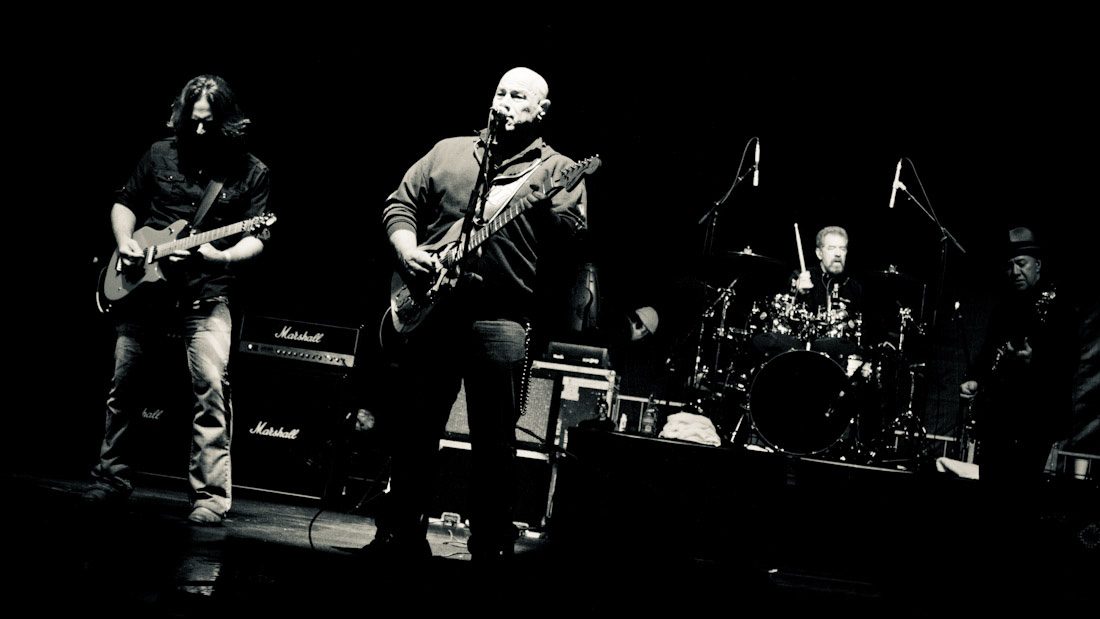
Creedence Clearwater Revisited, the band formed by Creedence's rhythm section, Stu Cook and Doug Clifford, playing in Utah on 29 May 2011.

In short

How Creedence Clearwater Revival tunes

Creedence Clearwater Revival sound simple and are not simple to match. By the record John Fogerty used two tunings: normal tuning, and a whole step down, D Standard, for many of the hits.

Read more

TuneLit hears the bass go down to a low D, a whole step under a normal bass's lowest note, on Proud Mary, Bad Moon Rising, Commotion, Up Around the Bend, Run Through the Jungle, Ramble Tamble and I Heard It Through the Grapevine; on Fortunate Son, Green River, Down on the Corner and Have You Ever Seen the Rain? it stops at E. The pitch is far from concert pitch on half the catalogue: the debut and Willy and the Poor Boys sit about 19 cents flat, Bayou Country about 37 cents flat, while Green River sits at A 440 and the last three albums about 6 cents sharp.

Album tunings

  • E Standard7 albums

Plus the songs that break the pattern, and the pitch of each record.

7 albums · 65 songs

Pick an album

Each album shows its tuning and how far the record sits from A 440. Open it for every song and a Tune button.

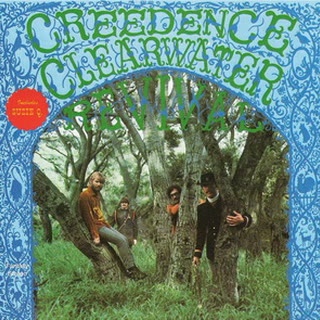
  1. Creedence Clearwater Revival album cover 1968Studio album Creedence Clearwater Revival E Standard −19 ¢ −19 ¢ · A ≈ 435 MeasuredCD −19.4 ¢ 2 songs tuned differently
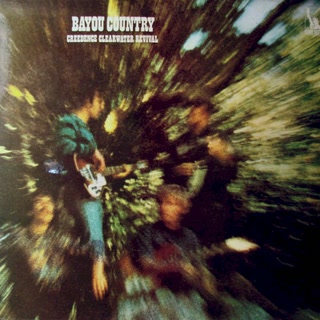
  2. Bayou Country album cover 1969Studio album Bayou Country E Standard −37 ¢ −37 ¢ · A ≈ 431 MeasuredCD −37.1 ¢ 4 songs tuned differently
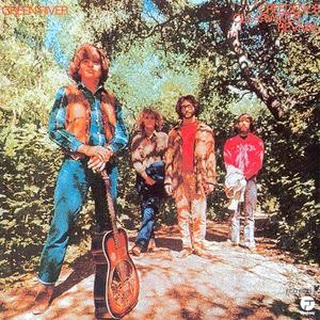
  3. Green River album cover 1969Studio album Green River E Standard A 440 MeasuredCD +0.4 ¢ 5 songs tuned differently
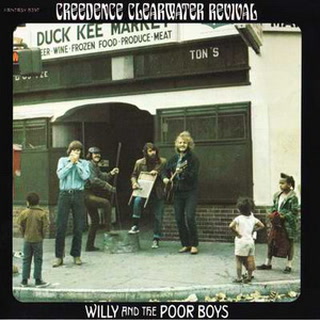
  4. Willy and the Poor Boys album cover 1969Studio album Willy and the Poor Boys E Standard −19 ¢ −19 ¢ · A ≈ 435 MeasuredCD −18.9 ¢ 4 songs tuned differently
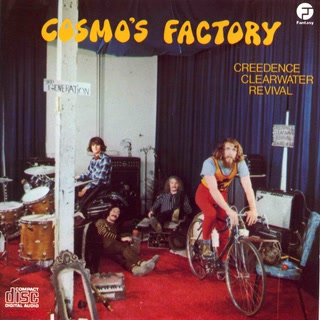
  5. Cosmo's Factory album cover 1970Studio album Cosmo's Factory E Standard +6 ¢ +6 ¢ · A ≈ 442 MeasuredCD +5.7 ¢ 4 songs tuned differently
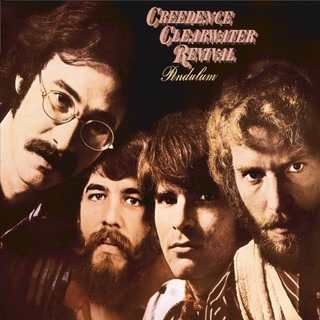
  6. Pendulum album cover 1970Studio album Pendulum E Standard +6 ¢ +6 ¢ · A ≈ 442 MeasuredCD +6.2 ¢ 1 song tuned differently
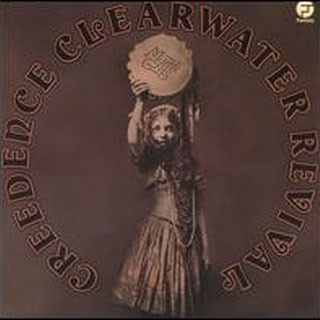
  7. Mardi Gras album cover 1972Studio album Mardi Gras E Standard +7 ¢ +7 ¢ · A ≈ 442 MeasuredCD +6.5 ¢ 5 songs tuned differently

The full story

Creedence Clearwater Revival tunings, album by album

Three chords, a plain beat and a voice like a foghorn: Creedence songs are the first thing many guitarists learn. Then they play along with the record and it sounds wrong. There are two reasons. John Fogerty kept one guitar tuned a whole step down and wrote many of the hits on it, and the records, made at speed in 1968 to 1972, often sit well off concert pitch.

TuneLit measured the owner's copies of the seven studio albums and listened to the low notes of every song. No interview or tab was read for this page: what follows is what the records show. The album list above opens each record, where every song has a Tune button that sets the tuner exactly as listed, offset included.

Popular songs

Each song has its own page: the exact tuning, the record's pitch, how to get there string by string, and how to move the record into your own tuning.

The story

Two tunings

Normal tuning (E A D G B E) and D Standard (D G C F A D), every string a whole step lower. In D Standard the chord shapes stay the same and sound a whole step lower: a song fingered in E comes out in D, which suited Fogerty's voice and gave the riffs their growl.

The bass shows which is which. Stu Cook's bass cannot go below its open E in normal tuning; where it sits on a low D, the band is tuned down. By that evidence:

  • D Standard: Bootleg, Penthouse Pauper and Proud Mary (Bayou Country); Commotion, Bad Moon Rising and Cross-Tie Walker (Green River); It Came Out of the Sky, Cotton Fields and The Midnight Special (Willy and the Poor Boys); Ramble Tamble, Run Through the Jungle, Up Around the Bend and I Heard It Through the Grapevine (Cosmo's Factory).
  • Normal tuning: everything else, including Suzie Q, Green River, Lodi, Down on the Corner, Fortunate Son, Travelin' Band, Who'll Stop the Rain and Have You Ever Seen the Rain?

Born on the Bayou and Keep on Chooglin' are left in normal tuning because the bass's low D is too rare in them to be sure; both are worth an ear check.

TuneLit lab

What TuneLit measured

AlbumSources saidMeasuredReference ASongs with their own value
Creedence Clearwater Revival (1968)mixed (by the record)−19 ¢A ≈ 435.1see the album
Bayou Country (1969)mixed (by the record)−37 ¢A ≈ 430.7see the album
Green River (1969)mixed (by the record)0 ¢A ≈ 440.1Lodi −19 ¢, Wrote a Song for Everyone −26 ¢, Commotion +18 ¢
Willy and the Poor Boys (1969)mixed (by the record)−19 ¢A ≈ 435.2Down on the Corner −35 ¢
Cosmo's Factory (1970)mixed (by the record)+6 ¢A ≈ 441.5Up Around the Bend +17 ¢, Run Through the Jungle +16 ¢
Pendulum (1970)E Standard (by the record)+6 ¢A ≈ 441.6Have You Ever Seen the Rain? −11 ¢
Mardi Gras (1972)E Standard (by the record)+7 ¢A ≈ 441.7see the album

Three of the first four albums sit far below concert pitch: the debut and Willy and the Poor Boys about 19 cents flat (A ≈ 435.2), and Bayou Country about 37 cents flat (A ≈ 430.7), more than a third of the way to the next note down. Fortunate Son sits about 26 cents flat and Down on the Corner about 35. Bayou Country's value is the least sure here: only five of its seven long tracks gave a confident reading.

From Cosmo's Factory on the records sit a few cents sharp, with single songs still wandering: Up Around the Bend is about 17 cents sharp, Have You Ever Seen the Rain? about 11 flat.

The story

Playing along

  • Keep a second guitar a whole step down if you can; it covers Proud Mary, Bad Moon Rising and Up Around the Bend without retuning.
  • Open each song. On these albums both the tuning and the pitch change from track to track.
  • On Bayou Country and Willy and the Poor Boys an ordinary tuner leaves you far out; the Tune button is not optional there.
  • How the figures on this page were found, and how far to trust them, is on How we measure recordings.

Questions

What tuning does Creedence Clearwater Revival use?

Mostly E Standard: 7 of 7 albums. Many albums also have songs in other tunings, and the album pages list them song by song.

Why does Creedence Clearwater Revival sound out of tune when I play along?

Some records are not at concert pitch. Bayou Country sits about 37 cents flat (A ≈ 431); Creedence Clearwater Revival sits about 19 cents flat (A ≈ 435); Willy and the Poor Boys sits about 19 cents flat (A ≈ 435). A guitar tuned to A 440 clashes with them. Every Tune button on these pages sets the measured pitch for you.

How did TuneLit measure Creedence Clearwater Revival's records?

We played original CDs and LPs through TuneLit's pitch analysis: the strongest notes of each song are compared with the A 440 grid, which gives the offset in cents. That cannot tell the semitone, so the tuning name comes from interviews, the press and tabs. The audio is never stored or published.