Arctic Monkeys at the Royal Albert Hall, London, on 7 June 2018.
In short
How Arctic Monkeys tunes
By the record, Arctic Monkeys are in normal tuning on the six albums TuneLit measured, from Whatever People Say I Am, That's What I'm Not (2006) to Tranquility Base Hotel & Casino (2018): the bass sits on its low E and seldom below. Favourite Worst Nightmare sits about 7 cents sharp and Humbug about 5; the other albums are within 4 cents of concert pitch. The band has tuned lower for some songs on stage and in tabs, which the record's low notes do not always show, so treat the heavier songs of Humbug and AM with care.
Alex Turner and Jamie Cook built the early Arctic Monkeys sound from fast, wiry riffs in normal tuning, played hard on bright guitars. Later albums slowed down and grew heavier, and with them came lower tunings on some songs.
TuneLit measured the owner's copies of 6 studio albums and listened to the low notes of every song. No interview or tab was read for this page: what follows is what the records show. The album list above opens each record, where every song has a Tune button that sets the tuner exactly as listed, offset included.
Popular songs
How to tune for Arctic Monkeys's best-known songs
Each song has its own page: the exact tuning, the record's pitch, how to get there string by string, and how to move the record into your own tuning.
On all six albums the bass sits on its low E, which is what a band in normal tuning gives. Where a song's bass clearly goes down to D, the song is listed a whole step down and marked as resting on the record alone.
That test has a blind spot. A song tuned down but played without its open low string leaves no trace in the bass's lowest notes. Tabs give several songs on Humbug and AM in lower tunings; if a riff on those albums will not sit under the hand in normal tuning, try a half step or a whole step down and compare with the record.
On stage at the Royal Albert Hall, London, during Arctic Monkeys' concert of 7 June 2018.
TuneLit lab
What TuneLit measured
Album
Tuning listed
Measured
Reference A
Songs with their own value
Whatever People Say I Am, That's What I'm Not (2006)
E Standard (by the record)
+4 ¢
A ≈ 440.9
You Probably Couldn't See for the Lights but You Were Staring Straight at Me +13 ¢, From the Ritz to the Rubble −7 ¢
From January 2006, the debut, with I Bet You Look Good on the Dancefloor. E Standard; the album sits at concert pitch, 4 ¢ above A 440 by the measurement. You Probably Couldn't See for the Lights but You Were Staring Straight at Me sits about 13 ¢ sharp, From the Ritz to the Rubble sits about 7 ¢ flat.
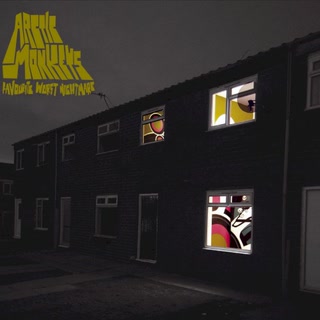
From April 2007, with Brianstorm and 505; the bonus tracks of the Japanese edition are not listed. E Standard; the album sits about 7 ¢ sharp (A ≈ 441.8). No song sits far from the album.
From August 2009, produced with Josh Homme; the bonus tracks of the Japanese edition are not listed. E Standard; the album sits about 5 ¢ sharp (A ≈ 441.3). No song sits far from the album.
From June 2011; the bonus track of the Japanese edition is not listed. E Standard; the album sits at concert pitch, 1 ¢ above A 440 by the measurement. No song sits far from the album. Listed in D Standard: Don't Sit Down 'Cause I've Moved Your Chair.
From September 2013, with Do I Wanna Know? and R U Mine?; the bonus track of the Japanese edition is not listed. E Standard; the album sits at concert pitch, 2 ¢ above A 440 by the measurement. No song sits far from the album.
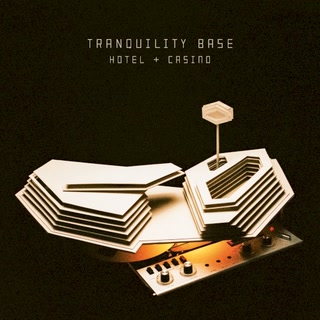
From May 2018, written at the piano. E Standard; the album sits at concert pitch, 2 ¢ above A 440 by the measurement. Four Out of Five sits about 6 ¢ flat.
Arctic Monkeys seen from the audience at the Royal Albert Hall on 7 June 2018.
The story
Playing along
Start in normal tuning; use the album's Tune button for Favourite Worst Nightmare.
If a heavy riff on Humbug or AM feels wrong, compare it a half step and a whole step down.
How the figures on this page were found, and how far to trust them, is on How we measure recordings.
Questions
What tuning does Arctic Monkeys use?
Mostly E Standard: 6 of 6 albums. Many albums also have songs in other tunings, and the album pages list them song by song.
How did TuneLit measure Arctic Monkeys's records?
We played original CDs and LPs through TuneLit's pitch analysis: the strongest notes of each song are compared with the A 440 grid, which gives the offset in cents. That cannot tell the semitone, so the tuning name comes from interviews, the press and tabs. The audio is never stored or published.
Menu
Theme
Language
This page is in English for now. Each language opens its home page.
Install the app
Android (Chrome): menu ⋮ → Install app or Add to Home screen.
Computer (Chrome, Edge): the install icon at the right end of the address bar.
iPhone: Safari → Share → Add to Home Screen.
It opens full screen and keeps tuning with no connection.