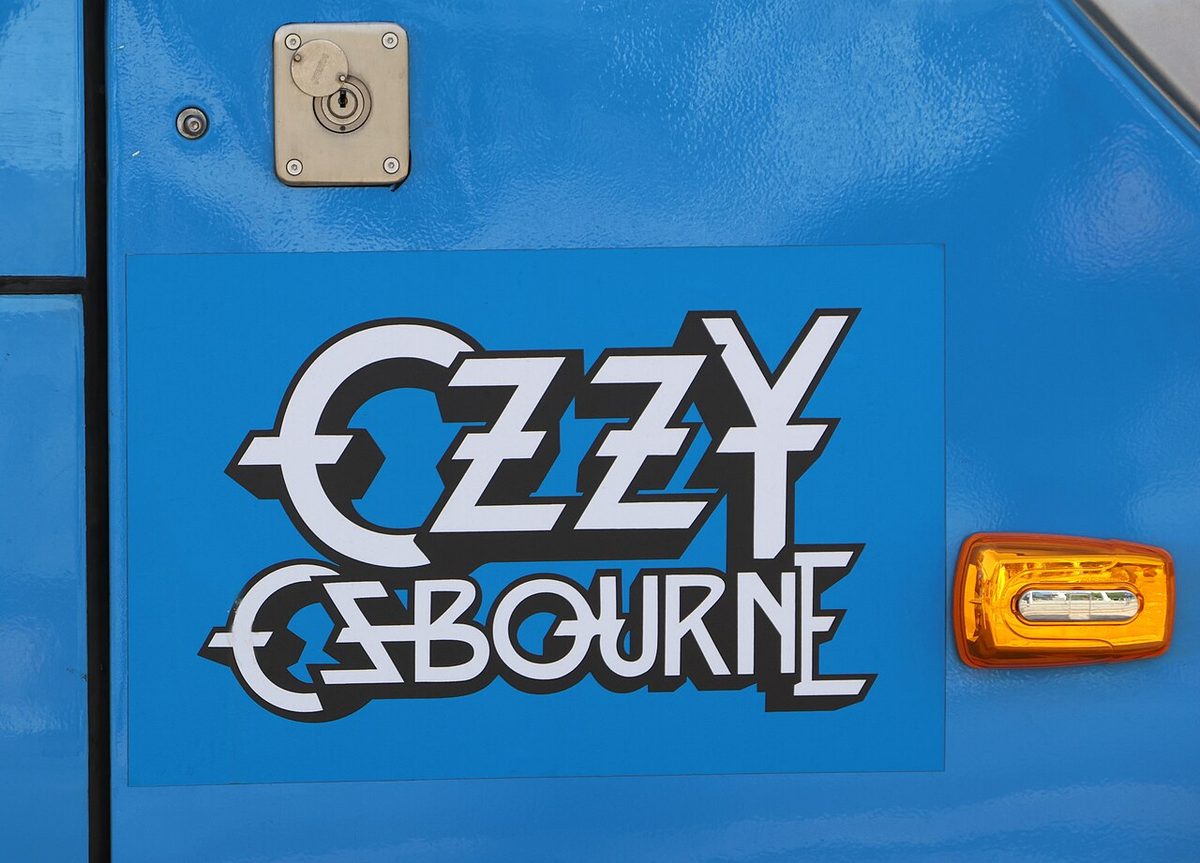
Ozzy Osbourne's name on West Midlands Metro tram 37 in his home region, photographed on 13 August 2025.
In short
How Ozzy Osbourne tunes
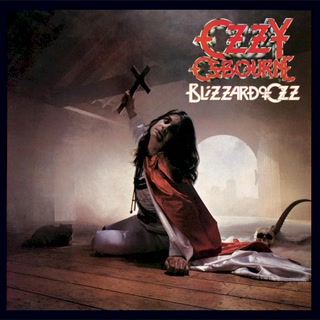
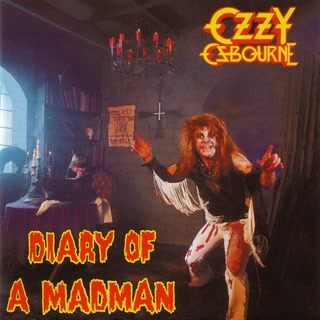
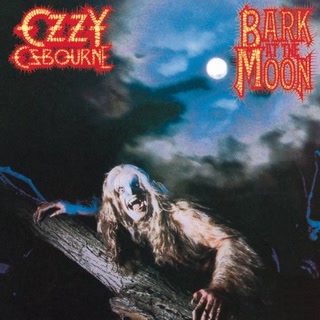
Ozzy Osbourne's solo records were made with three famous guitarists, and the tuning changes with them. By the record, Blizzard of Ozz (1980, Randy Rhoads) and Bark at the Moon (1983, Jake E.
Read more
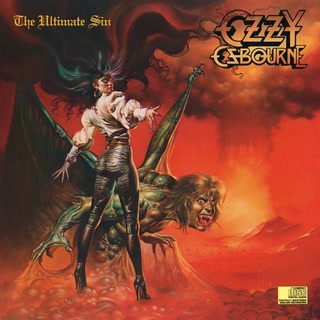
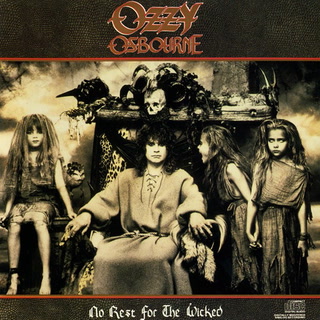
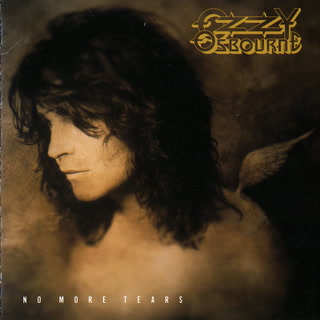
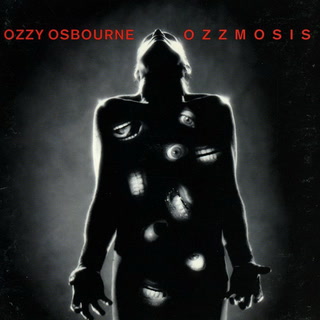
Lee) are in normal tuning, while Diary of a Madman (1981), The Ultimate Sin (1986) and the Zakk Wylde albums No Rest for the Wicked, No More Tears and Ozzmosis are a half step down: TuneLit hears the bass go down to a low E♭ on those and stop at E on the other two. The pitch is seldom at A 440. Blizzard of Ozz sits about 6 cents flat, No Rest for the Wicked about 13 cents sharp, and inside Diary of a Madman and Bark at the Moon whole groups of songs sit 15 to 30 cents from their neighbours. The owner's library holds up to six CD editions of each album, and they do not all agree: the 2002 reissues of the first two albums run about 6 to 8 cents above the first CDs.
Crazy Train, Mr. Crowley, Bark at the Moon, No More Tears: Ozzy Osbourne's solo catalogue is a guitar player's catalogue, built around Randy Rhoads, then Jake E. Lee, then Zakk Wylde. Each of them tuned his own way, and the records were made on tape in the years when a machine running slightly fast or slow was normal. So two questions matter for playing along: which songs are a half step down, and how far each record sits from concert pitch.
TuneLit measured the owner's CDs of the seven albums from 1980 to 1995, in every edition the library holds, and listened to the low notes of each song. No interview or tab was read for this page: what follows is what the records show. The album list above opens each record, where every song has a Tune button that sets the tuner exactly as listed, offset included.
Popular songs
How to tune for Ozzy Osbourne's best-known songs
Each song has its own page: the exact tuning, the record's pitch, how to get there string by string, and how to move the record into your own tuning.
A half step down means every string one fret's worth lower: E♭ A♭ D♭ G♭ B♭ E♭. Chord shapes and tabs stay the same. It was the common tuning of 1980s hard rock, kinder to singers and a little heavier.
The bass gives it away. A bass in normal tuning cannot play below its open E; a bass a half step down has an E♭ there and uses it. TuneLit counted the lowest notes of each song:
Blizzard of Ozz and Bark at the Moon: the bass sits on E and never on E♭. Normal tuning.
Diary of a Madman, The Ultimate Sin, No Rest for the Wicked, No More Tears and Ozzmosis: the bass sits on E♭. A half step down.
That puts Randy Rhoads's two albums in two different tunings, and the same for Jake E. Lee's two.
Zakk Wylde, Ozzy Osbourne's guitarist for many years, with his own band Black Label Society at Rockharz, Ballenstedt, Germany, on 1 July 2026.
TuneLit lab
What TuneLit measured
Album
Sources said
Measured
Reference A
Songs with their own value
Blizzard of Ozz (1980)
E Standard (by the record)
−6 ¢
A ≈ 438.6
Dee −32 ¢
Diary of a Madman (1981)
E♭ Standard (by the record)
−3 ¢
A ≈ 439.2
Over the Mountain +29 ¢, Little Dolls +14 ¢, Believer +11 ¢, You Can't Kill Rock and Roll −14 ¢, Diary of a Madman −15 ¢
Bark at the Moon (1983)
E Standard (by the record)
+5 ¢
A ≈ 441.2
You're No Different +24 ¢, Now You See It +25 ¢, Rock 'n' Roll Rebel +24 ¢
The Ultimate Sin (1986)
E♭ Standard (by the record)
+4 ¢
A ≈ 441
none
No Rest for the Wicked (1988)
E♭ Standard (by the record)
+13 ¢
A ≈ 443.4
none
No More Tears (1991)
E♭ Standard (by the record)
0 ¢
A = 440
none
Ozzmosis (1995)
E♭ Standard (by the record)
+3 ¢
A ≈ 440.7
Old L.A. Tonight +21 ¢
The early records wander most. On Diary of a Madman five of the eight songs sit 11 cents or more from the album value, in both directions. On Bark at the Moon three songs in a row, tracks 2 to 4, all sit about 24 cents sharp while the songs around them sit near concert pitch: they were plainly recorded or mixed with the tape at another speed. From 1991 the records settle at A 440.
The story
The editions do not all agree
The library holds each album as several CDs: first Japanese and American pressings from 1986 to 1988, the 1995 remasters, the 2002 reissues and later ones. For most albums they agree within a cent or two. Three do not:
Blizzard of Ozz, 2002 reissue: about 6 cents above the first CD (the album median is close to 0 where the 1986 CD reads −6).
Diary of a Madman, 2002 reissue: about 8 cents above the first CD.
The Ultimate Sin, 1995 remaster: about 5 cents above the 1986 CD.
The 2002 editions of the first two albums are the ones on which the bass and drums were recorded again by other players, so a different pitch is not a surprise there. The settings on this site follow the first CDs. If you play along with a 2002 edition, raise the tuner by 6 to 8 cents.
Randy Rhoads's first album with Osbourne: I Don't Know, Crazy Train, Mr. Crowley. Normal tuning, about 6 cents flat (A ≈ 438.5). Dee, Rhoads's short solo piece for classical guitar, sits about 32 cents flat (A ≈ 431.9) and has its own setting.
The second and last Rhoads album: Over the Mountain, Flying High Again. A half step down, by the bass's low E♭. The album value is close to concert pitch, but the songs are scattered: Over the Mountain about 29 cents sharp (A ≈ 447.4), Little Dolls 14 and Believer 11 cents sharp, You Can't Kill Rock and Roll 14 and the title song 15 cents flat. Use each song's own button.
With TuneLit: E♭ Standard at A 440 for the album; Over the Mountain at +29 ¢.
Jake E. Lee's first. Normal tuning, about 5 cents sharp (A ≈ 441.3). You're No Different, Now You See It (Now You Don't) and Rock 'n' Roll Rebel sit about 24 cents sharp and have their own settings.
The big one of the Wylde years: the title song, Mama, I'm Coming Home, I Don't Want to Change the World. A half step down, at concert pitch, with no song far from it.
Perry Mason, See You on the Other Side. A half step down, within 3 cents of concert pitch; Old L.A. Tonight, the closing ballad, sits about 21 cents sharp.
With TuneLit: E♭ Standard at A 440.
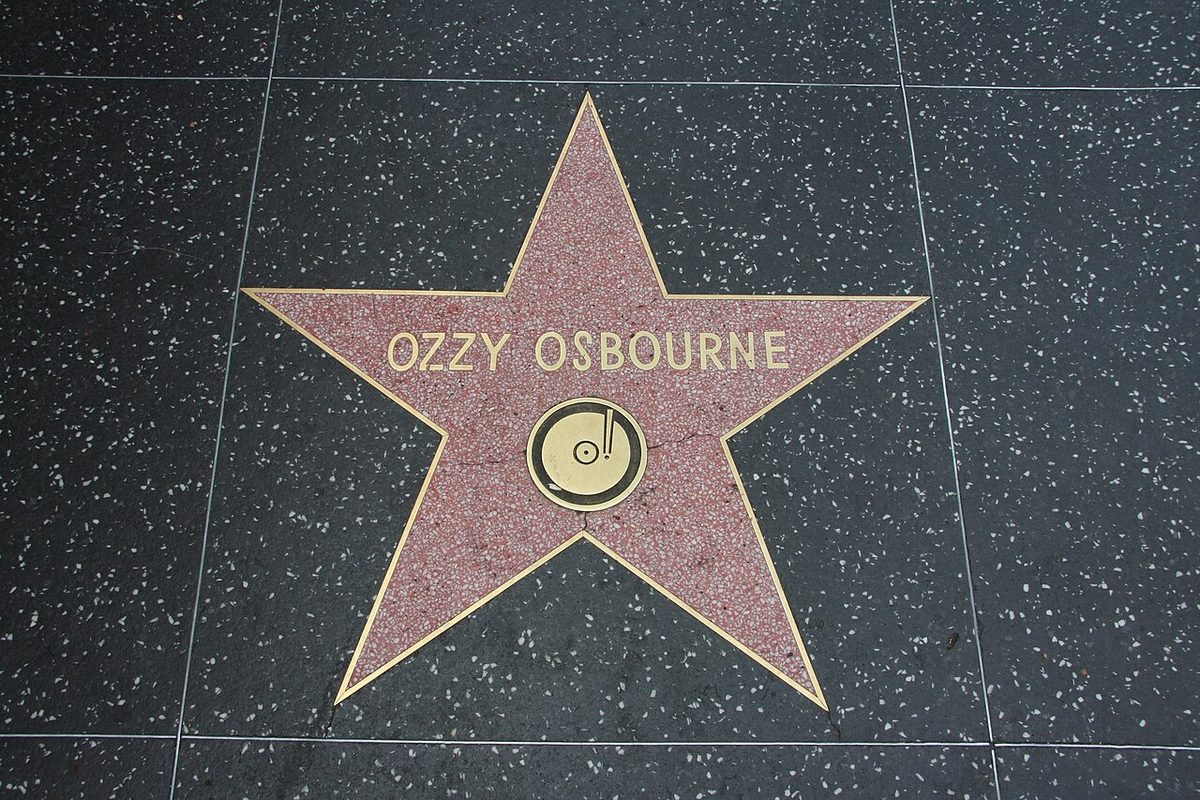
Ozzy Osbourne's star on the Hollywood Walk of Fame, Los Angeles, on 22 April 2012.
The story
Not on this page yet
Down to Earth, Black Rain, Scream and Ordinary Man are in the owner's library and were measured. On the first three the bass goes lower than E♭ on many songs, which points to dropped or lower tunings that need a source before they are listed.
The story
Playing along
Two guitars cover these seven albums: one in normal tuning for Blizzard of Ozz and Bark at the Moon, one a half step down for the rest.
On Diary of a Madman and Bark at the Moon do not trust the album's setting for every song; open the song.
Check which edition you are playing. A 2002 CD of the first two albums sits higher than the settings here.
How the figures on this page were found, and how far to trust them, is on How we measure recordings.
Questions
What tuning does Ozzy Osbourne use?
Mostly E♭ Standard: 5 of 7 albums. Blizzard of Ozz and Bark at the Moon are in E Standard. Many albums also have songs in other tunings, and the album pages list them song by song.
Why does Ozzy Osbourne sound out of tune when I play along?
Some records are not at concert pitch. No Rest for the Wicked sits about 13 cents sharp (A ≈ 443). A guitar tuned to A 440 clashes with them. Every Tune button on these pages sets the measured pitch for you.
How did TuneLit measure Ozzy Osbourne's records?
We played original CDs and LPs through TuneLit's pitch analysis: the strongest notes of each song are compared with the A 440 grid, which gives the offset in cents. That cannot tell the semitone, so the tuning name comes from interviews, the press and tabs. The audio is never stored or published.
Menu
Theme
Language
This page is in English for now. Each language opens its home page.
Install the app
Android (Chrome): menu ⋮ → Install app or Add to Home screen.
Computer (Chrome, Edge): the install icon at the right end of the address bar.
iPhone: Safari → Share → Add to Home Screen.
It opens full screen and keeps tuning with no connection.