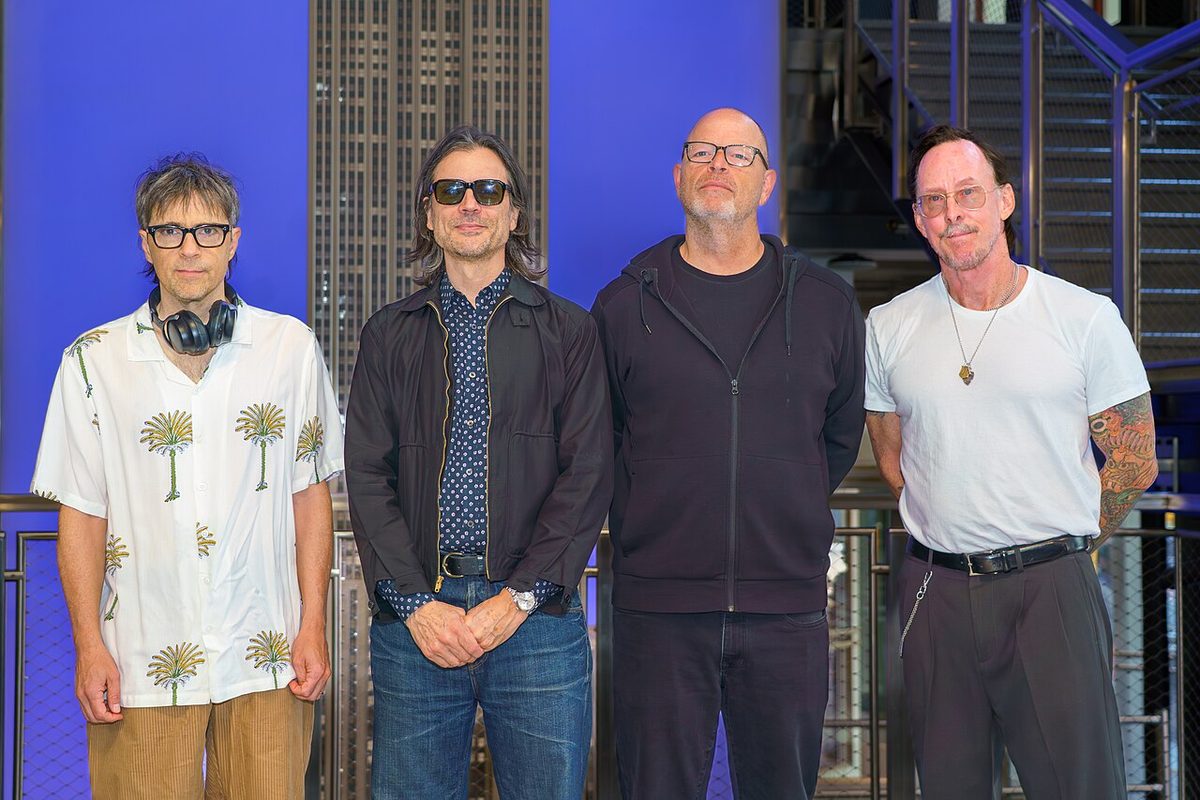
Weezer at the Empire State Building, New York, in August 2026.
In short
How Weezer tunes
Weezer has a house tuning, and guitarist Brian Bell has a name for it: "Weezer tuning", normal tuning lowered a half step (E♭ A♭ D♭ G♭ B♭ E♭). The Blue Album and Pinkerton are in it, and so are Make Believe, Everything Will Be Alright in the End, the White Album and Van Weezer.
Read more
TuneLit measured eight albums and listened to the bass: on those six it goes down to E♭, a note a bass in normal tuning does not have. On the Green Album and most of Maladroit it stops at E, so those two are listed in normal tuning. The pitch moves around too. The Blue Album sits about 6 cents sharp and Pinkerton 8, with Buddy Holly about 26 cents sharp and Pink Triangle 30. Make Believe sits about 5 cents flat. The later albums are at concert pitch.
Play Buddy Holly or Say It Ain't So along with the record on a guitar in normal tuning and every chord is a half step too high. Weezer tunes down. Brian Bell, the band's second guitarist since 1993, told Guitar World that the band's standard is normal tuning lowered a half step, that they call it "Weezer tuning", and that they write it as E-flat. From low to high: E♭ A♭ D♭ G♭ B♭ E♭.
That covers most of the catalogue, but not all of it, and the records are not all at the same pitch. TuneLit measured the owner's copies of eight albums, from the Blue Album to Van Weezer. This page explains the tuning, goes through the albums and shows what the measurements found. The album list above opens each record, where every song has a Tune button that sets the tuner exactly as listed, offset included.
Popular songs
How to tune for Weezer's best-known songs
Each song has its own page: the exact tuning, the record's pitch, how to get there string by string, and how to move the record into your own tuning.
E♭ Standard keeps the shape of normal tuning. Every string goes down one fret's worth: string 6 from E to E♭, string 5 from A to A♭, string 4 from D to D♭, string 3 from G to G♭, string 2 from B to B♭ and string 1 from E to E♭. Chord shapes and tabs stay exactly as they are; a G shape now sounds as G♭. The strings are a little slacker, which makes the big bends of the Blue Album's solos easier and gives the power chords more weight.
If you do not want to retune, a capo will not help: a capo only raises pitch. The other way round works, though. A guitar already in E♭ plays the songs in normal tuning with a capo on fret 1.
Weezer on stage in Arizona on 18 October 2008.
The story
How TuneLit checked it
A bass in normal tuning cannot play lower than its open E. A bass tuned down a half step can, and uses that low E♭ all the time. So TuneLit counted the lowest notes on each album. On the Blue Album, Pinkerton, Make Believe, Everything Will Be Alright in the End, the White Album and Van Weezer the bass keeps landing on E♭ and on the notes just above it in that tuning. On the Green Album it lands on E in all ten songs and never once on E♭. Maladroit is mostly the same, with four songs that do something else.
No interview read for this page says that the Green Album is in normal tuning; that comes from the record alone, so it is marked as such on the album's page.
TuneLit lab
What TuneLit measured
Album
Sources said
Measured
Reference A
Songs with their own value
Weezer (Blue Album) (1994)
E♭ Standard
+6 ¢
A ≈ 441.5
Buddy Holly +26 ¢, In the Garage +16 ¢
Pinkerton (1996)
E♭ Standard
+8 ¢
A ≈ 442.0
Pink Triangle +30 ¢, Tired of Sex −8 ¢
Weezer (Green Album) (2001)
E Standard (by the record)
+1 ¢
A ≈ 440.3
none
Maladroit (2002)
E Standard (by the record)
+1 ¢
A ≈ 440.3
none
Make Believe (2005)
E♭ Standard
−5 ¢
A ≈ 438.6
We Are All on Drugs −15 ¢, Freak Me Out −24 ¢
Everything Will Be Alright in the End (2014)
E♭ Standard
−5 ¢
A ≈ 438.8
I've Had It Up to Here +16 ¢
Weezer (White Album) (2016)
E♭ Standard
−1 ¢
A ≈ 439.7
Jacked Up +46 ¢
Van Weezer (2021)
E♭ Standard
−1 ¢
A ≈ 439.6
none
The two albums of the 1990s sit a little sharp and have songs well above the rest. The library also holds the 2004 deluxe edition of the Blue Album and the 2010 deluxe edition of Pinkerton; both agree with the original CDs within a cent or two on the album value, so the offsets belong to the recordings.
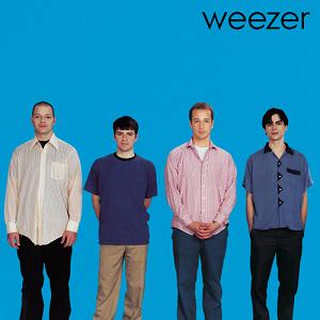
The debut, produced by Ric Ocasek of the Cars: My Name Is Jonas, Buddy Holly, Undone – The Sweater Song, Say It Ain't So. All ten songs are in E♭ Standard. TuneLit measured the album about 6 cents sharp (A ≈ 441.5). Buddy Holly is the outlier, about 26 cents sharp (A ≈ 446.7), a quarter of the way to the next note; In the Garage sits about 16 cents sharp (A ≈ 444.1). Both have their own settings.
With TuneLit: E♭ Standard +6 ¢; Buddy Holly at +26 ¢.
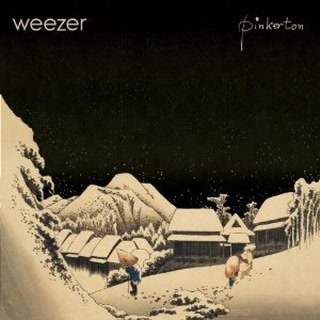
The rougher second album, produced by the band. E♭ Standard throughout. TuneLit measured it about 8 cents sharp (A ≈ 442.0). Pink Triangle sits about 30 cents sharp (A ≈ 447.7), and Tired of Sex, the opener, about 8 cents flat (A ≈ 438.0), so within one album the songs span almost 40 cents.
With TuneLit: E♭ Standard +8 ¢; Pink Triangle at +30 ¢.
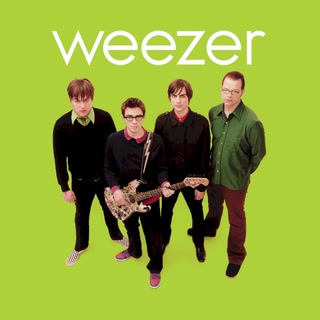
The comeback, again with Ric Ocasek: Hash Pipe, Island in the Sun, Photograph. By the record it is in normal tuning: the bass sits on its low E in every song. It is also right at concert pitch, with no song more than about 5 cents away. This is the easiest Weezer album to play along with.
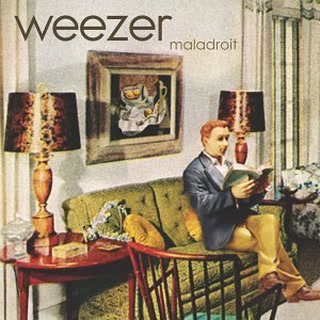
The heaviest of the early albums, produced by the band. Most of it is in normal tuning at concert pitch, like the Green Album. Four songs differ by the low notes of the bass: Dope Nose and Possibilities go down to E♭, and Death and Destruction and Slave go down to D, which points to Drop D. These four rest on the record alone; check them by ear before you trust them.
With TuneLit: E Standard at A 440; E♭ Standard for Dope Nose and Possibilities; Drop D for Death and Destruction and Slave.
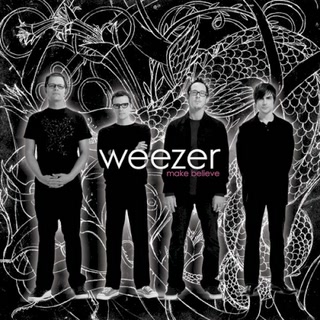
Produced by Rick Rubin, with Beverly Hills and Perfect Situation. Back in E♭ Standard, and this time a little flat: about 5 cents (A ≈ 438.7). We Are All on Drugs sits about 15 cents flat and Freak Me Out about 24 cents flat; both have their own settings.
A return to loud guitars, with Ocasek producing for the third time. E♭ Standard, about 5 cents flat (A ≈ 438.7). I've Had It Up to Here sits about 16 cents sharp and has its own setting.
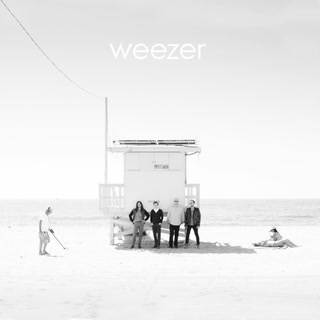
The beach album, produced by Jake Sinclair. E♭ Standard at concert pitch. Jacked Up, a piano song, reads about 46 cents sharp, almost exactly between two notes; its page offers both readings of the same pitch.
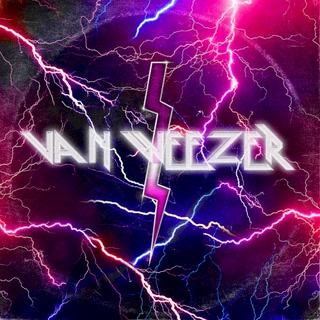
The band's salute to 1980s hard rock. E♭ Standard at concert pitch, as the bands it salutes often tuned.
With TuneLit: E♭ Standard at A 440.
The story
Not on this page yet
The Red Album, Raditude, Hurley, Pacific Daydream, the Black Album and OK Human are in the owner's library and were measured, but their songs do not share one tuning: the bass goes down to E in some songs, to E♭ or D in others, and several are built on keyboards or an orchestra. They need song-by-song sources before they can be listed honestly.
The story
Playing along
Keep one guitar in E♭ if you play Weezer often. With a capo on fret 1 it also covers the Green Album and Maladroit.
For the Blue Album and Pinkerton use the Tune button, and for Buddy Holly and Pink Triangle the song's own button: those two sit far enough from their albums to sound wrong otherwise.
How the figures on this page were found, and how far to trust them, is on How we measure recordings.
Questions
What tuning does Weezer use?
Mostly E♭ Standard: 6 of 8 albums. Green Album and Maladroit are in E Standard. Many albums also have songs in other tunings, and the album pages list them song by song.
How did TuneLit measure Weezer's records?
We played original CDs and LPs through TuneLit's pitch analysis: the strongest notes of each song are compared with the A 440 grid, which gives the offset in cents. That cannot tell the semitone, so the tuning name comes from interviews, the press and tabs. The audio is never stored or published.
Menu
Theme
Language
This page is in English for now. Each language opens its home page.
Install the app
Android (Chrome): menu ⋮ → Install app or Add to Home screen.
Computer (Chrome, Edge): the install icon at the right end of the address bar.
iPhone: Safari → Share → Add to Home Screen.
It opens full screen and keeps tuning with no connection.