Pink Floyd · 1975 · Studio album
Wish You Were Here tuning.
E Standard, about 10 cents flat (A ≈ 437), measured on the CD. 1 of 5 songs are tuned differently.
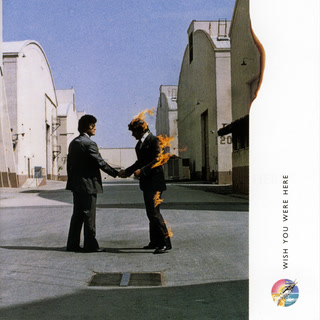
Album tuning
E Standard −10 ¢
About 10 cents flat (A ≈ 437), measured on the CD.
MeasuredWidely reported
Measured by TuneLit
10 ¢ flat
| Source | Offset | Equivalent A | Songs | Spread | Confidence |
|---|---|---|---|---|---|
| CD, Toshiba-EMI TOCP-65560 (Japan) | −9.6 ¢ | A 437.6 | 5 | −9.6 to −6.1 ¢ | High |
Before we measured, sources said: E Standard, with no pitch given (widely reported).
Standard tuning for every guitar part; only the steel parts use open G tunings. The CD (TOCP-65560) sits about 10 ¢ flat (A ≈ 437.6), except the title song, which is at concert pitch.
5 songs · 1 tuned differently
Every song, ready to tune
Tune opens the tuner in that song's tuning, pitch included. Play along opens the song player set to that tuning, so the track plays in yours. What the labels mean
-
1. Shine On You Crazy Diamond (Parts I–V)
E Standard −10 ¢Measured
Notes
Standard tuning, in G minor.
-
2. Welcome to the Machine
E Standard −10 ¢Measured
Notes
Acoustic 6- and 12-string guitars in standard tuning. Gilmour said the tape was slowed by half a semitone to record one vocal line and then set back, so the released track is not affected.
-
3. Have a Cigar
E Standard −10 ¢Measured
-
4. Wish You Were Here
Different pitch
E StandardMeasured
Notes
The intro is a 12-string made to sound like a radio, the solo and the strumming a Martin six-string, all in standard tuning without a capo. The pedal steel in the background is tabbed in open G (D G D G B D). At concert pitch, unlike the rest of the album.
Tabbed in standard tuning like the rest of the album; TuneLit measured this song on its own because its pitch differs from the album's.
-
5. Shine On You Crazy Diamond (Parts VI–IX)
E Standard −10 ¢Measured
Notes
Part VI opens with Gilmour's steel in open G6 (D G D G B E), per Wikipedia and gilmourish.com (one tab keeps it in standard); the Strat parts that follow are in standard tuning.
What the labels mean
- Measured
- TuneLit measured the pitch on an original CD or LP. The tuning name still comes from the sources.
- Official
- The band, a member, their producer or their guitar tech said it.
- Widely reported
- Trusted outlets, guides and tabs agree, but the band did not say it directly.
- Community
- From community tabs, or from players who tune along with the record.
- Disputed
- Sources disagree. The likeliest setting is shown; the notes name the other one.
Each song shows one label, the strongest it has, in this order. How we measure recordings →
Questions
What tuning is Wish You Were Here in?
Pink Floyd recorded Wish You Were Here (1975) in E Standard, about 10 cents flat (A ≈ 437), measured by TuneLit on the CD. Wish You Were Here uses E Standard.